
Table of Contents
Why LinkedIn Success Feels Impossible for Founders
You're building something important. Your startup is solving real problems. You know LinkedIn could help you attract investors, customers, and talent.
But every time you open the platform, you freeze.
What should you post? How do you sound authoritative without being boring? Why do your updates get three likes while some random consultant's motivational quote gets thousands?
You're not alone. Most startup founders struggle on LinkedIn in 2026, and it's not because they lack expertise or vision. The platform has specific rules, and most founders are breaking them without knowing it.
Here are the seven biggest reasons why startup founders struggle on LinkedIn — and exactly how to fix each one.
Reason 1: You're Posting Like a Corporate Brand
The Problem: You announce product updates, share company news, and post polished marketing content. Your voice sounds like a press release.
Why This Fails: LinkedIn rewards personal stories and human insights. The algorithm favors authentic founder voices over corporate messaging. When you post like a brand, you become invisible.
The Fix: Share your founder journey instead of company milestones. Talk about the problems you're solving, the mistakes you've made, and the lessons you've learned.
Instead of: "We're excited to announce our Series A funding round."
Try: "Six months ago, three investors told me our idea would never work. Today we closed our Series A. Here's what changed their minds."
The second version shows vulnerability, tells a story, and positions you as someone worth following.
Reason 2: You Don't Have a Content Strategy
The Problem: You post randomly when you remember to. Sometimes it's a product update, sometimes a motivational quote, sometimes an industry article you found interesting.
Why This Fails: Random posting confuses your audience and the algorithm. LinkedIn needs to understand what you're about to show your content to the right people.
The Fix: Pick three core themes that align with your expertise and stick to them. For most founders, this means:
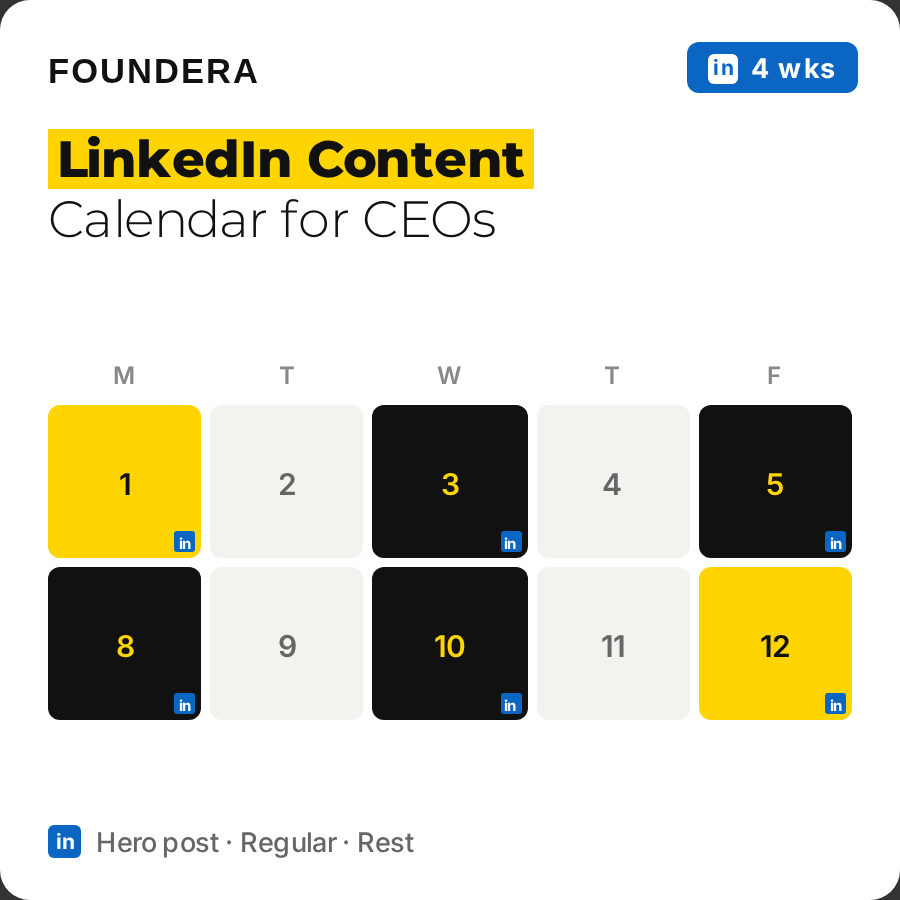
Plan your content calendar around these themes. Share one insight per theme each week. This consistency helps LinkedIn understand your niche and builds audience expectations.
Reason 3: You're Treating LinkedIn Like Twitter
The Problem: You write short, punchy posts with lots of hashtags and emojis. You think brevity wins on every platform.
Why This Fails: LinkedIn users want depth and context. The platform rewards longer-form content that provides real value. Quick hits don't build authority.
The Fix: Write posts that teach something specific. Aim for 150-300 words that tell a complete story or share a complete insight.
Use this structure:
Skip the hashtag spam. Use 2-3 relevant hashtags maximum. Let your content quality drive reach, not hashtag tricks.
Reason 4: Your Posts Have Zero Engagement
The Problem: You publish content into the void. Your posts get a few likes from your co-founders and maybe your mom. No comments, no shares, no meaningful conversations.
Why This Fails: LinkedIn's algorithm uses early engagement to determine reach. Without initial traction, your content stays buried. Low engagement signals to LinkedIn that your content isn't worth showing to others.
The Fix: Build engagement systematically, not accidentally. End every post with a specific question that invites responses. Ask for opinions, experiences, or advice.
Instead of: "What do you think?"
Try: "Have you seen this challenge in your industry? How did you handle it?"
Respond to every comment within the first hour. This signals to LinkedIn that your post is generating valuable conversation.
The secret most founders miss: behind every viral founder post is a strategy most people never see. The most successful founders don't rely on organic reach alone — they have networks that amplify their content from day one.
Reason 5: You're Inconsistent with Publishing
The Problem: You post three times in one week, then disappear for a month. You start strong but can't maintain momentum because you're busy building your company.
Why This Fails: LinkedIn rewards consistent creators. The algorithm favors accounts that publish regularly. Sporadic posting means you're constantly starting from zero.
The Fix: Choose a realistic posting schedule and stick to it. If you can only post once a week, that's better than posting daily for two weeks then vanishing.
Batch your content creation. Spend two hours every Sunday writing posts for the entire week. Schedule them using LinkedIn's native scheduling tool or a platform like Buffer.
Remember: you're building the future, your ideas deserve a bigger stage. But consistency beats intensity on LinkedIn.
Reason 6: You Don't Know Your Audience
The Problem: You're trying to speak to everyone — investors, customers, employees, other founders, industry peers. Your message gets diluted because you're not sure who you're talking to.
Why This Fails: Generic content resonates with no one. LinkedIn's algorithm shows your content to people based on their interests and behavior. If your content doesn't clearly target a specific audience, it won't reach anyone effectively.
The Fix: Pick your primary audience and write for them. Most founders should focus on one of these groups:
Once you pick your audience, tailor your language, examples, and insights to their specific interests and challenges.
Reason 7: You Think One Viral Post Will Change Everything
The Problem: You're chasing the viral moment. You think one breakout post will solve all your LinkedIn problems and transform your startup's visibility overnight.
Why This Fails: Viral posts are unpredictable and often don't translate to meaningful business results. Building real authority takes consistent value delivery over time.
The Fix: Focus on building a loyal audience instead of chasing viral moments. Aim for posts that get 20-50 engaged comments from your target audience rather than thousands of empty likes.
Track these metrics instead of vanity numbers:
Authority building is systematic, not lucky. The founders who succeed on LinkedIn treat it like a long-term investment, not a lottery ticket.
The Real Solution: Stop Fighting the Algorithm Alone
Here's what most founders don't realize: the founders you see succeeding on LinkedIn aren't doing it alone. They have systems, strategies, and often teams helping them create and amplify content.
That's exactly why services like Foundera exist. Instead of struggling with content creation, posting schedules, and engagement strategies, successful founders focus on what they do best — building their companies — while experts handle their LinkedIn presence.
The most effective approach combines professional content creation with systematic amplification. When you have thought leaders and industry voices engaging with your content from day one, you skip the empty void phase that kills most founders' LinkedIn efforts.
You don't have to choose between building your startup and building your authority. The smartest founders do both by getting the right help.
FAQs
How often should startup founders post on LinkedIn in 2026?
Consistency matters more than frequency. Post at least once per week, but daily posting works better if you can maintain quality. Choose a schedule you can stick to long-term rather than burning out with daily posts for two weeks.
What types of content perform best for startup founders on LinkedIn?
Personal stories about building your company, industry insights based on your experience, and lessons learned from mistakes or successes. Avoid pure promotional content and focus on sharing knowledge that helps your audience.
Should founders use LinkedIn automation tools to grow faster?
Avoid automation tools that send messages or engage automatically. LinkedIn actively penalizes accounts that use these tools, and they can get your account restricted. Focus on organic, authentic engagement instead.
How long should LinkedIn posts be for maximum engagement?
Aim for 150-300 words for most posts. This gives you enough space to tell a complete story or share a complete insight while staying within LinkedIn users' attention spans. Very short posts (under 100 words) often lack substance.
What's the biggest mistake startup founders make on LinkedIn?
Posting inconsistently and giving up too early. Most founders post a few times, see limited results, and quit. Building LinkedIn authority takes 3-6 months of consistent, valuable content creation.
How can founders measure LinkedIn success beyond vanity metrics?
Track business-relevant metrics like direct messages from potential customers, meeting requests from investors, speaking opportunities, and partnership inquiries. These indicate real authority building, not just social media popularity.
Is it worth hiring help for LinkedIn content creation?
If LinkedIn is important for your business goals but you lack time or expertise, professional help can be valuable. Look for services that understand startup founders specifically and can write in your authentic voice while providing systematic amplification.
Conclusion
LinkedIn success for startup founders isn't about luck or going viral. It's about understanding the platform's rules and playing the game strategically.
Stop posting like a corporate brand. Develop a consistent content strategy. Write for depth, not brevity. Build engagement systematically. Stay consistent with your publishing schedule. Know your audience. Focus on authority building over viral moments.
Most importantly, remember that you don't have to do this alone. The founders winning on LinkedIn in 2026 have systems and support helping them succeed.
Your startup deserves the visibility and credibility that comes with LinkedIn authority. The question is: will you keep struggling with the platform, or will you get the help you need to succeed?
Learn more at foundera.co.
Related reading
Each of the seven reasons gets a deeper treatment in one of these guides — start with the one that maps to your biggest blocker:
- Founder-Led LinkedIn Growth (2026) — the authentic growth approach for early-stage founders
- Founder-Led Marketing on LinkedIn (2026) — the B2B growth playbook turning founder content into pipeline
- LinkedIn Engagement Pods vs. Organic Growth — what actually works in 2026 — and why the pods era is over
- How to Build Your Personal Brand on LinkedIn — the 2026 founder branding guide
- LinkedIn Thought Leadership for Founders (2026) — 50+ examples and the frameworks behind them