Every founder gets pitched a personal branding tool at least once a month. Some are useful. Most are noise. A few are clever wrappers around features you can get for free inside LinkedIn itself.
I've tested the popular ones, talked to founders running them daily, and built our own opinion at Foundera after working with 50+ tech CEOs. Here's the honest 2026 roundup: what's worth your time, what's hype, and the one signal that should decide your tool choice before any feature does.
Short version for the busy founder: if you have under 5 hours a week to spend on LinkedIn, the right personal branding tool is not a tool. It's a system with a human running it. More on that at the bottom.
What is a personal branding tool, exactly?
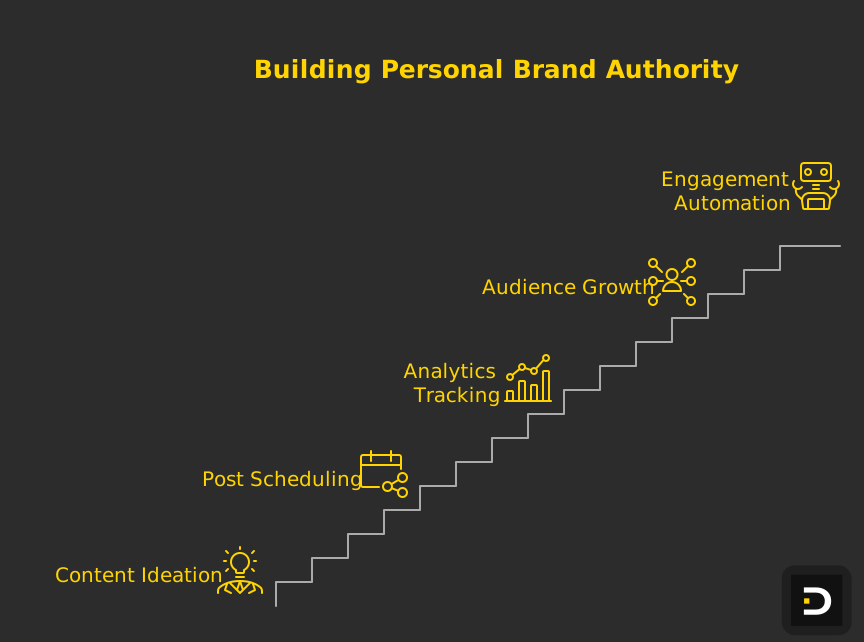
A personal branding tool is software that helps founders build authority on a platform (almost always LinkedIn) by handling some mix of these jobs: content ideation, post scheduling, analytics tracking, audience growth, and engagement automation.
Tools fall into four categories:
- Schedulers - Buffer, Hootsuite, Hypefury. You write the post, the tool publishes it on a set time.
- Content engines - Taplio, AuthoredUp, Postwise. AI helps you ideate and draft. Sometimes adds inspiration libraries from top creators.
- Analytics tools - Shield Analytics, inlytics. Surface the data LinkedIn buries from creators.
- Profile optimizers - Resume Worded, LinkedIn Premium itself. Score and improve your profile.
Each category solves a different problem. The mistake founders make is assuming one tool will do all four. None of them does. That's why most stacks end up costing $200-400 a month and still leave a founder posting twice a week with 12 likes.
The four jobs a personal branding tool should actually do
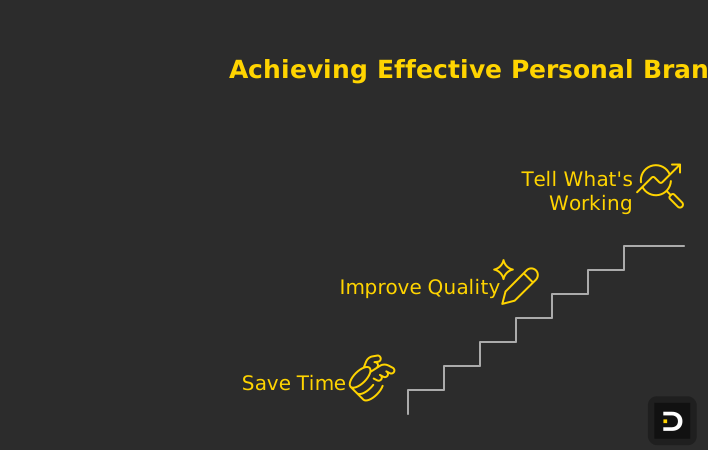
Strip every marketing page bare and a useful personal branding tool does four jobs for a founder. Score every candidate against these:
- Save you time. Not "save time over doing nothing." Save time over the way you already do it. A scheduler does this. A 47-step AI workflow does not.
- Improve quality. Your posts should be better with the tool than without it. If the tool's outputs sound like ChatGPT plus an emoji, it fails this test.
- Tell you what's working. LinkedIn's native analytics hide the data you need. A tool earns its money if it shows you which formats, hooks, and times actually move the needle for your audience.
- Compound your authority. Posts should build on each other. The best tools nudge you toward a content pillar strategy, not just more posts.
If a tool only does job 1, it's a calendar. If it does 1 and 2, it's worth $30 a month. If it does all four well, it's worth $150-300. If a person does all four for you, that's a service, and the math changes.
The 2026 honest roundup
Tested across founder accounts in cybersecurity, AI, DevOps, and B2B SaaS. Scores are subjective and reflect what tech founders need, not what generic creators need.
Taplio - best for solo founders who like AI drafting
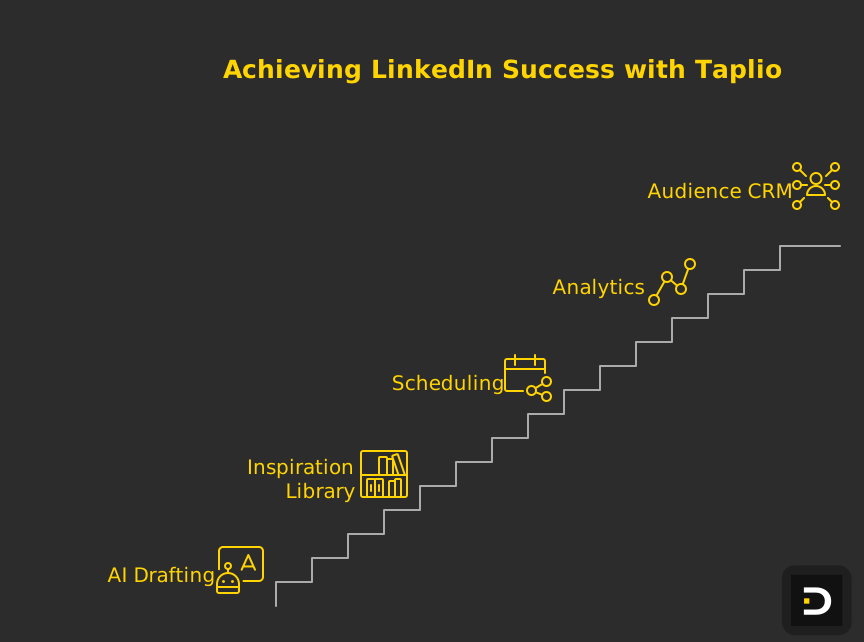
Taplio is the most popular personal branding tool aimed at LinkedIn creators. AI drafting, inspiration library, scheduling, analytics, audience CRM. It's well-built. It also leans heavy on AI-generated phrasing, which is now a liability after LinkedIn's 2026 algorithm updates flagged generic AI content for reduced reach.
Use it if: you write your own posts and want help with hooks and ideation.
Skip it if: you don't want your output to read like every other Taplio user.
Price 2026: $39-149/month.
AuthoredUp - best for founders who already write
AuthoredUp is a Chrome extension that helps you write LinkedIn posts directly inside LinkedIn. Better formatting, character counter, preview, drafts library, performance data. No AI ghostwriting. Smaller scope, sharper execution.
Use it if: you already enjoy writing and want a better interface for it.
Skip it if: you want the tool to write for you.
Price 2026: $19/month.
Shield Analytics - best for founders who need data
LinkedIn shows you almost nothing about why a post worked. Shield surfaces it: per-post deep analytics, comparison across posts, format performance, follower demographics. No content tools, pure analytics.
Use it if: you're posting at least 2x a week and want to know why your numbers move.
Skip it if: you're not posting yet. Analytics on nothing is nothing.
Price 2026: $8-30/month.
Buffer and Hootsuite - best for basic scheduling
If all you need is a calendar and a queue, Buffer at $6 a month does the job. Don't pay for more.
Use it if: scheduling is the only friction.
Skip it if: you need help with what to write, not when to post.
Resume Worded - best for one-time profile fixes
A scoring tool that audits your profile and suggests improvements. Worth running once. Not worth a monthly subscription.
Use it if: your profile is 5 years stale and you want a structured fix-it list.
Skip it if: you've already optimized your profile.
LinkedIn Premium - useful but not a branding tool
LinkedIn Premium gives you reach insights, who viewed your profile, and InMails. Sales Navigator adds prospect filtering. Neither builds your brand. Both can support brand-building if you're also doing the content side seriously.
The decision framework: which tool is right for you?
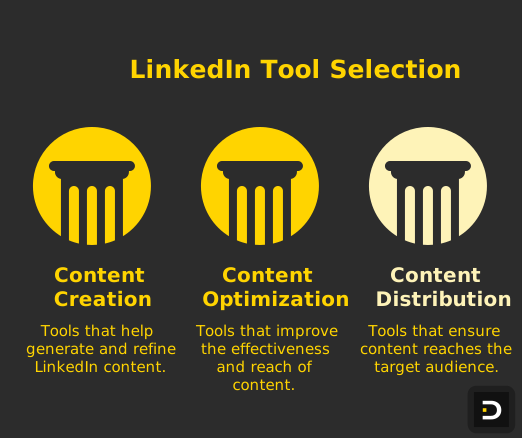
Use this 60-second test. Pick the answer that's most true.
1. How many hours per week do you actually spend on LinkedIn content?
- 0-2 hours: no tool will fix this. You need a service.
- 3-5 hours: AuthoredUp + Shield (~$50/month) is the sweet spot.
- 6+ hours: Taplio or full stack makes sense.
2. Where does the friction live?
- "I don't know what to write" - content engine (Taplio).
- "I write but it's slow" - AuthoredUp.
- "I post but don't know what's working" - Shield.
- "I post but no one sees it" - tools won't fix this. Distribution is the issue.
3. What's your founder time worth?
If you bill $300+/hour, every hour saved is worth $300. A $50/month tool that saves you 2 hours = $1,150 net gain per month before any LinkedIn impact.
When a personal branding tool is the wrong answer
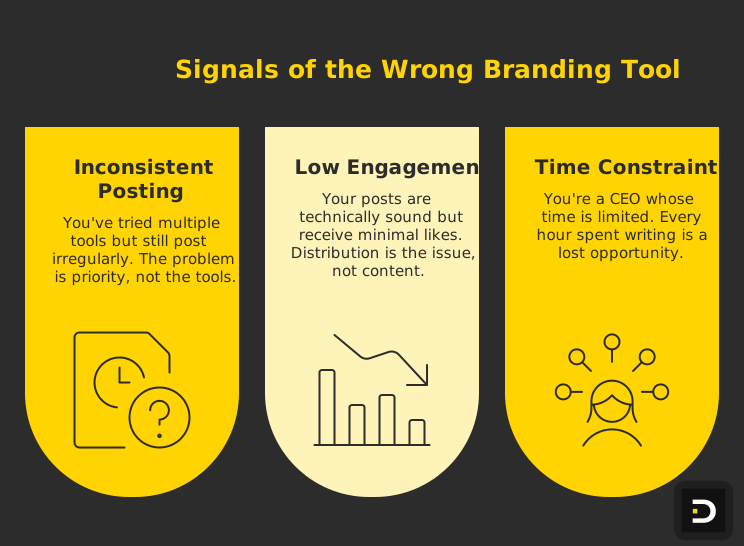
Three signals that a tool is not your problem:
Signal 1: You've tried 3+ tools and still post inconsistently. The issue is not tooling. It's that LinkedIn is not in your top 3 priorities for the week, every week. A tool can't fix priority.
Signal 2: Your posts are technically fine but get 5-15 likes. Distribution is the bottleneck, not content. No tool gives you distribution. You need either a network of people who amplify each other's posts on day one, or a service that brings one.
Signal 3: You're a CEO whose time is the limiting factor for the business. Every hour you spend writing posts is an hour not spent on the company. The right move at this stage isn't a $39/month AI drafter. It's a ghostwriter who knows your voice plus an amplification network. That's the model we run at Foundera for tech founders raising rounds, hiring, or entering new markets.
The honest take from Foundera
We've tested every tool on this list with real client accounts. The pattern is clear:
- Tools work for founders who already love writing.
- Tools don't work for founders who don't.
- For the second group (most founders), the right answer is a system with a human at the center, not more software.
If you're in the first group, our top stack pick for 2026 is AuthoredUp + Shield Analytics + LinkedIn native, total ~$50/month, used by you for ~5 hours a week.
If you're in the second group, that's where we come in. We write in your voice, our amplification network puts your posts in front of the right audience from hour one, and you spend 20 minutes a week on it.
Foundera's recommended stack for 2026

Three tiers based on how much time you have to invest:
Tier 1 - DIY ($50/month, 5 hours/week):- AuthoredUp for writing- Shield Analytics for data- LinkedIn native publishing
Tier 2 - Hybrid ($150/month, 3 hours/week):- Taplio or AuthoredUp for drafting- Shield Analytics- A virtual assistant for scheduling and basic engagement
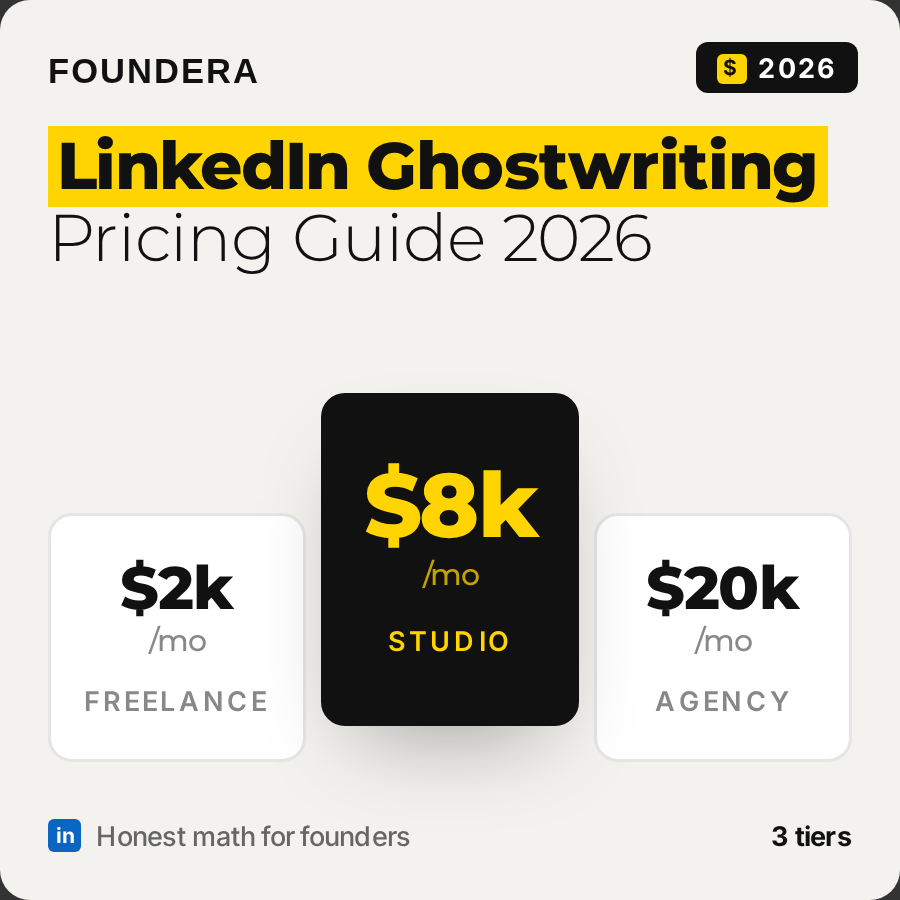
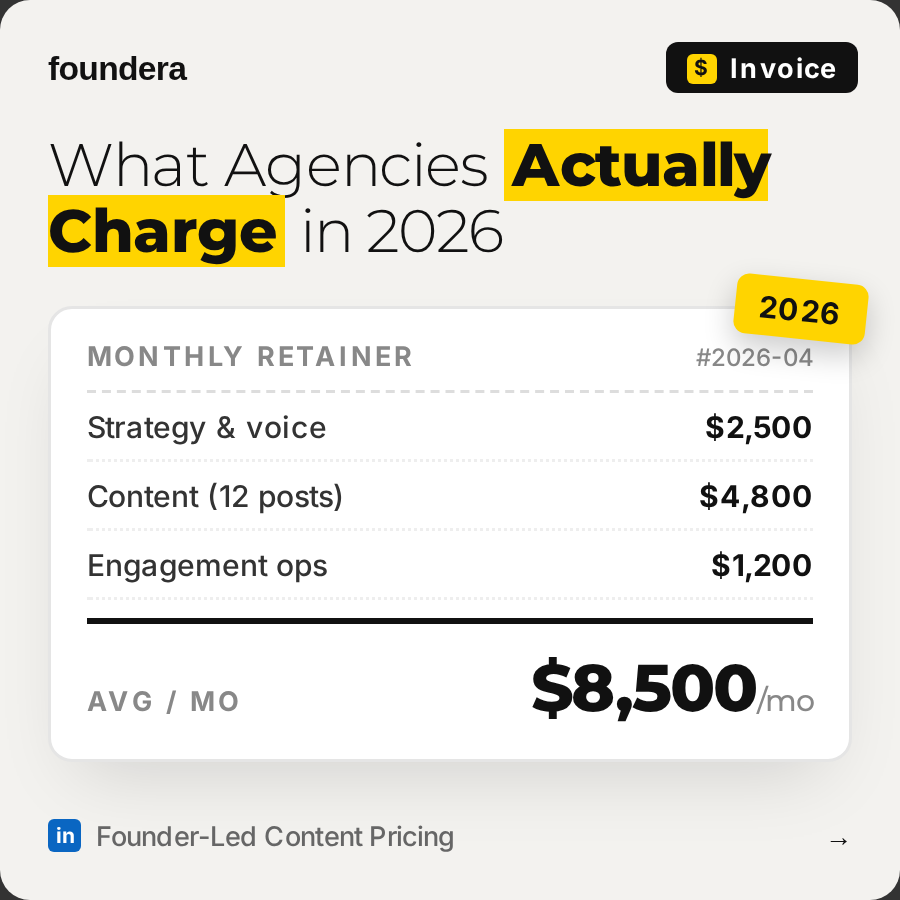
Tier 3 - Done for you ($4,000+/month, 20 minutes/week):- A ghostwriter who studies your voice- A real amplification network of relevant operators- Strategy, calendar, posts, and engagement managed end-to-end
Pick the tier that matches your time, not the one that matches your budget. A CEO who picks Tier 1 because it's cheap and then doesn't have 5 hours a week to use it has wasted the cheapest tier.
Frequently asked questions
What is the best personal branding tool for LinkedIn in 2026?
For founders who write their own posts, AuthoredUp paired with Shield Analytics is the most balanced 2026 stack. For founders who don't have time to write, the right answer isn't a tool. It's a founder-led content service.
Are personal branding tools worth the money?
If you're posting at least twice a week and have ~5 hours weekly to spend on LinkedIn, yes. Below that threshold, tools sit unused and you'd save more money by canceling them.
Will LinkedIn penalize me for using a personal branding tool?
LinkedIn's 2026 algorithm flags low-quality AI content for reduced reach, not the tools themselves. Tools that publish your own written posts through the official API are safe. Tools that auto-generate generic AI text get caught.
What's the cheapest useful personal branding tool?
AuthoredUp at $19/month is the best price-to-value for founders who write. Buffer at $6/month works if all you need is scheduling.
Can I use ChatGPT instead of a paid tool?
You can, but you'll spend more time prompting it than writing the post yourself. Specialized tools have better hook libraries and formatting. ChatGPT works as a sparring partner, not a workflow.
Is LinkedIn Premium a personal branding tool?
No. LinkedIn Premium gives you reach data and InMails. It supports brand building but doesn't drive it.
How do I know if my personal branding tool is working?
Track three metrics over 90 days: post impressions trend, profile views trend, inbound DMs from your target audience. If any one of them is up 50%+ versus baseline, the tool is earning its keep.
Your next move

If you want a stack: pick AuthoredUp + Shield, schedule 90 minutes a week, and revisit in 60 days.
If you want results without the time investment: we built Foundera for founders in your exact position. Tech CEOs, deep-tech founders, and scale-up CEOs hand us their LinkedIn and get back hours of their week plus the credibility their next round, hire, or partnership depends on.
What changes if you pick the wrong tier
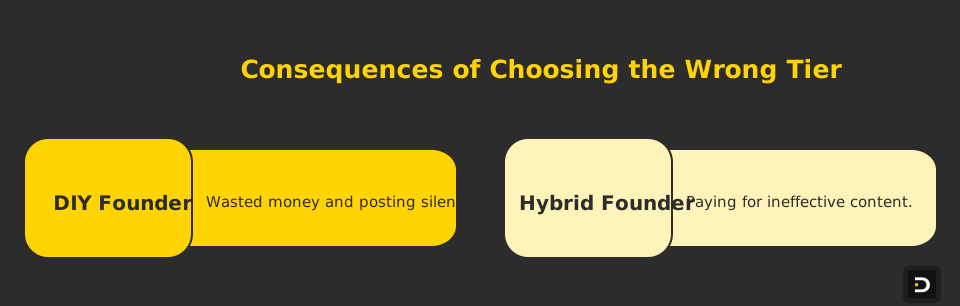
Most founders default to the cheapest tier that looks viable. The hidden cost shows up at month four. The DIY founder who picked Tier 1 but doesn't have five hours a week has wasted $200 in tool fees and accumulated 12 weeks of posting silence - which is harder to fix than starting from zero. The hybrid founder who picked Tier 2 but never set the VA's brief tightly is paying $1,800/month for content that doesn't sound like them. Pick the tier that matches your actual time. It costs less to pay more for the right tier than to underpay for the wrong one.
Three real founder tool stacks compared
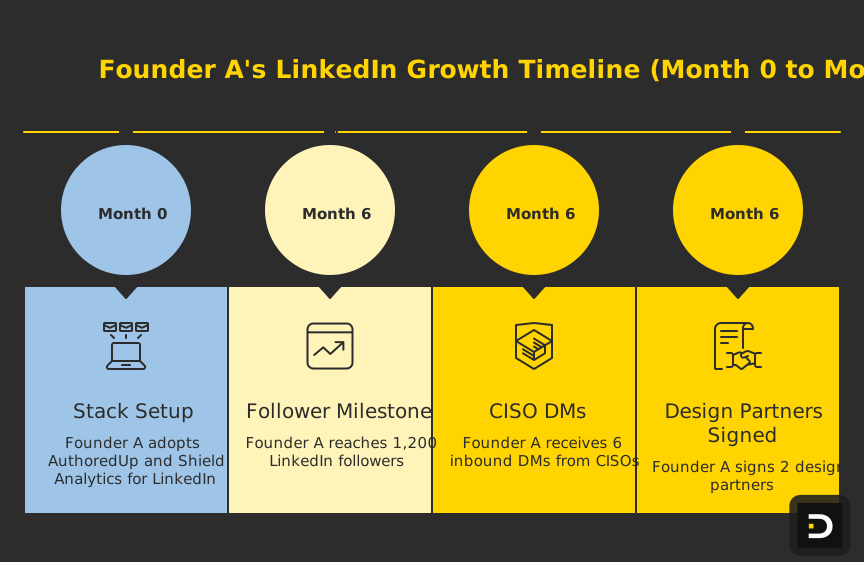
What founders actually use changes by stage and category. Three real examples from accounts we've watched:
Founder A - pre-seed cybersecurity CEO, technical background. Stack: AuthoredUp ($19/mo) for writing inside LinkedIn directly, Shield Analytics ($30/mo) for performance, that's it. Total $49/mo. Time: 4 hours/week. Outcome at month 6: 1,200 followers gained, 6 inbound DMs from CISOs, 2 design partners signed. The minimalist stack worked because he enjoyed writing and the content was technically sharp.
Founder B - Series A AI founder, marketing background. Stack: Taplio ($129/mo) for AI-assisted drafting, Shield ($30/mo) for analytics, virtual assistant ($800/mo) for scheduling and basic engagement. Total ~$1,000/mo. Time: 2 hours/week. Outcome at month 6: 2,800 followers, decent engagement but content started reading "Taplio-shaped" by month 4. Reset by month 8 to lean less on AI drafting.
Founder C - Series B SaaS CEO, post-fundraise. Stack: full done-for-you service ($6K/mo), no DIY tools. Time: 20 minutes/week. Outcome at month 6: 4,500 followers, 22 inbound DMs/month, 6 enterprise deals sourced from LinkedIn content, 3 senior hires citing posts in interviews. The math on her time alone justified the cost three times over.
Pattern: stage and time available decide the right stack. Budget alone is a poor signal.
Red flags inside any tool's own marketing
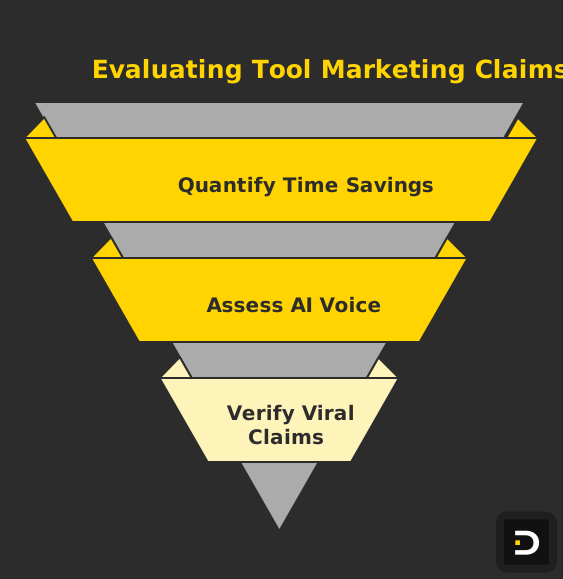
When you're evaluating tools, the way they market themselves often tells you the story their dashboards won't. Watch for:
"Save 10 hours a week" without specifying baseline. If a tool can't tell you what 10 hours of activity it replaces, the claim is empty. Real tools quantify the swap: "we replace 3 hours of weekly writing time and 2 hours of analytics digging."
"AI that sounds like you" pitches. No AI sounds like a specific founder. Tools that claim this are selling a generic voice template trained on viral creators. Your readers will detect it inside two weeks.
"Go viral in 30 days" guarantees. Virality is unpredictable and rarely converts to pipeline anyway. Any tool promising it is optimizing for the wrong outcome.
Pricing pages that hide the real cost. Three-tier pricing pages with hidden "contact us" enterprise tiers usually mean the visible tiers are loss-leaders. The real product sits behind a sales call.
"Trusted by 10,000 founders" social proof. Total client count means nothing if you can't see five examples in your specific category. Ask for them.
A useful tool's marketing reads boring and specific. Anything that reads thrilling is selling a story, not a workflow.
The integration question most founders forget
Tools don't live in isolation. The single biggest hidden cost of any new tool is the integration tax with everything else you already run.
Three integrations to verify before signing up for any LinkedIn tool:
CRM integration. Does the tool push engagement signals into HubSpot, Pipedrive, or Salesforce? If not, your inbound DMs become invisible to your sales team. Most tools claim CRM integration but only sync vanity data. Ask specifically: "When a CISO comments on my post, does my AE see it as a lead notification in the CRM?"
Calendar integration. If your tool surfaces inbound meetings, does it sync with your actual calendar? Tools that surface DMs but don't help you respond inside your existing flow add friction instead of removing it.
Analytics export. Can you export raw data, or are you locked into the tool's dashboard? Locked-in data is a long-term cost. The first time you want to switch tools, you'll wish you'd checked this.
A tool that scores well on features but fails any of these three integrations is technically inadequate for a B2B founder running a real pipeline.
The TL;DR
Quick answer
For founders who write their own posts, the best personal branding tool stack in 2026 is AuthoredUp ($19/month) plus Shield Analytics ($30/month) - roughly $50/month total. For founders without 5 hours a week to spend on LinkedIn, no tool is the right answer; a founder-led content service is.
Key takeaways
- Buffer or Hootsuite are calendar tools. They don't build authority.
- Taplio's AI drafting now gets flagged by LinkedIn's 2026 algorithm for generic content.
- AuthoredUp + Shield Analytics is the cheapest stack that builds real authority.
- Below 5 hours/week, tools don't help. A service with a human writing in your voice does.
- CEO time at $300+/hour makes done-for-you tier ($4-8K/month) cheaper than DIY.