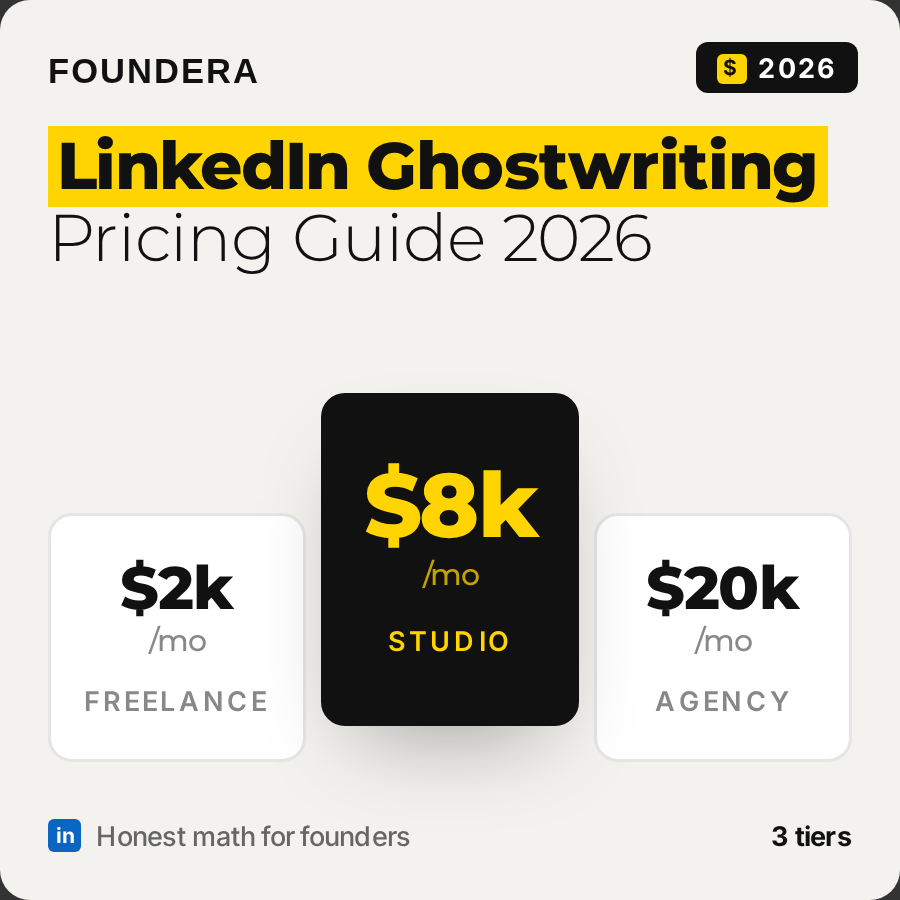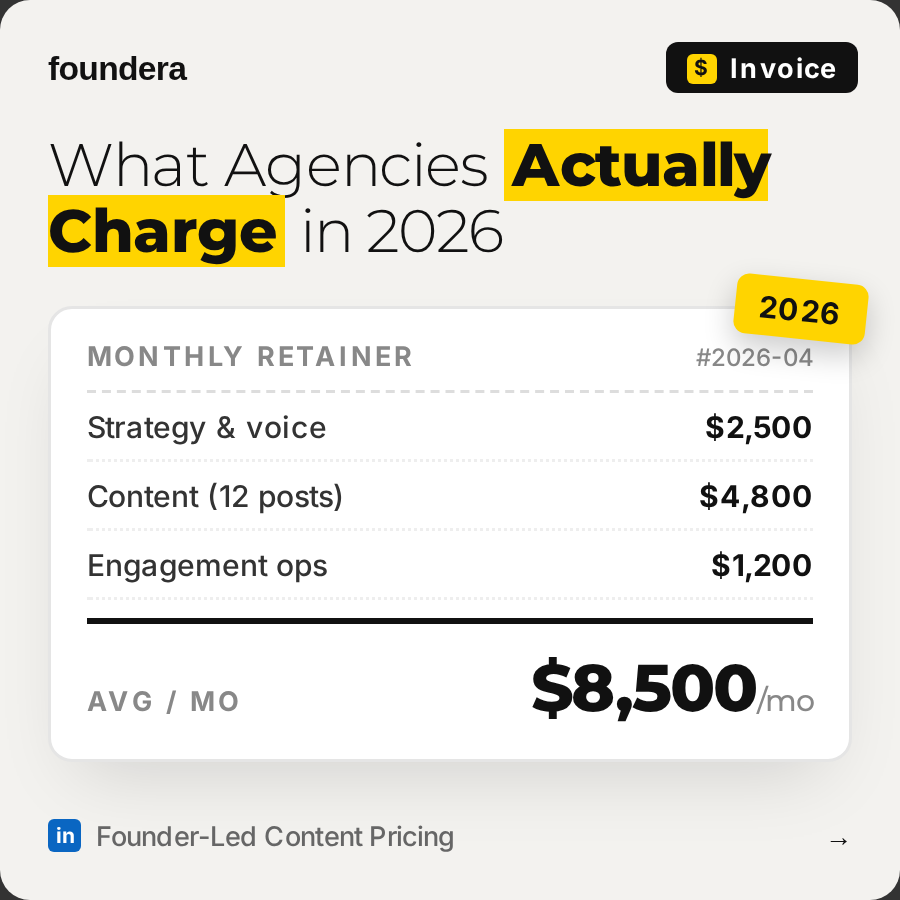
Premium LinkedIn ghostwriting starts at $4,000 a month and goes up from there. Every founder who hears that price asks the same question: what could possibly cost $50,000 a year on LinkedIn?
It's a fair question. Most LinkedIn ghostwriting in 2026 is closer to $1,500/month and produces interchangeable content. So what does premium actually buy you that justifies 3-5x the price?
This is the honest breakdown. Built from working with 50+ tech CEOs at Foundera and watching exactly what separates the premium tier from the rest.
What premium LinkedIn ghostwriting actually means in 2026
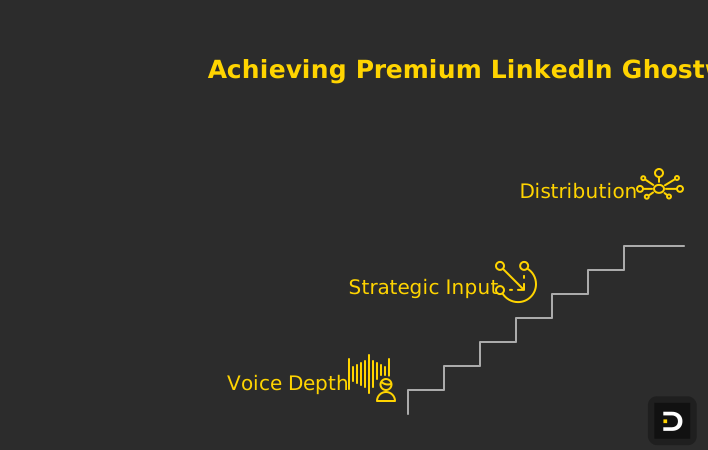
Three things separate premium ghostwriting from budget ghostwriting:
1. Voice depth. Premium agencies build a 15-30 page voice profile per founder, refreshed quarterly. Budget agencies use a 2-page brief and a content template.
2. Strategic input. Premium agencies treat the LinkedIn account as a business asset and connect content to your actual goals (fundraising, hiring, enterprise sales). Budget agencies treat it as a publishing schedule.
3. Distribution. Premium agencies have an amplification network of real operators who engage your posts in the first 30-60 minutes, signaling value to the algorithm. Budget agencies hope your existing network engages.
Without all three, you're not getting premium. You're getting a content factory with a premium price tag.
The hidden math on founder time
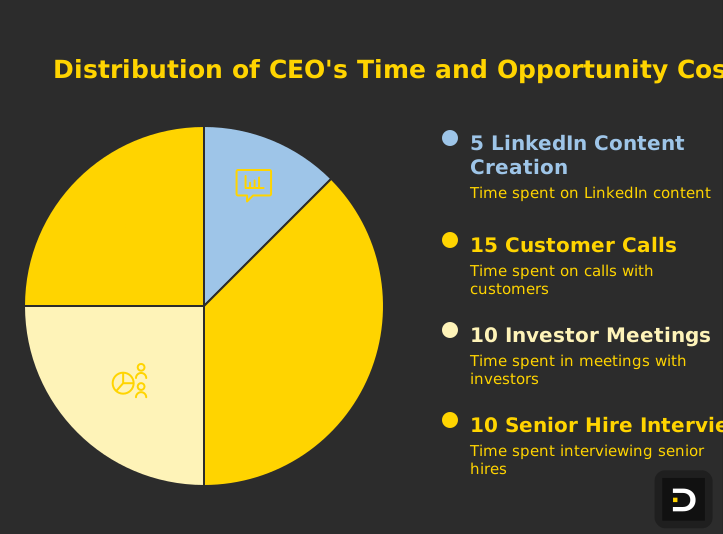
The price gets less scary when you do the founder-time math.
A tech CEO who bills out at $500/hour and spends 5 hours per week on LinkedIn content is spending $130,000 of opportunity cost annually. That's the time the CEO could be on calls with customers, in pitch meetings with investors, or interviewing senior hires.
Premium LinkedIn ghostwriting at $50K-$100K/year buys back $130K of CEO time, plus the brand and pipeline outcomes that come from consistent content. The cost looks high until you compare it to the alternative.
The math breaks the other way for founders whose time is cheap. A pre-revenue founder with no opportunity cost should write the posts themselves. Premium pricing only makes sense when CEO time is genuinely scarce.
What $4,000+/month buys you
The full premium stack:
Voice & strategy
- Initial voice profile: 5-10 hours of CEO interviews, sample collection, and synthesis
- Quarterly voice profile refreshes
- Monthly content strategy review tied to your business goals
- Pillar definition and content roadmap
Production
- 8-12 fully-drafted posts per month
- Written by a human writer who specializes in your category (cybersecurity, AI, DevOps, etc.)
- Voice gate review on every draft before it reaches you
- 20-minute weekly CEO review and approval
Distribution
- Amplification network of 20-50 real operators in your category
- First-30-minute engagement on every post
- Algorithmic boost from coordinated, authentic engagement
- Comment management on high-signal threads
Measurement
- Monthly performance review against business goals
- ICP-segmented analytics (not just total reach)
- Pipeline attribution where possible
- Sales cycle compression tracking
Account management
- Dedicated account lead, not a rotating team
- Direct Slack or WhatsApp channel for ideas and feedback
- Quarterly business review
What it doesn't buy you
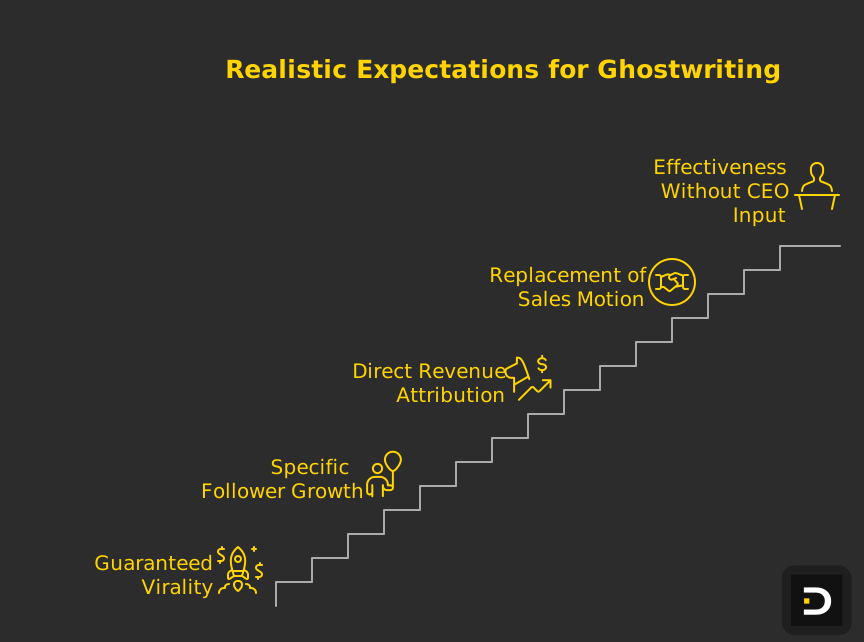
Premium ghostwriting isn't magic. Be skeptical of any agency that promises:
- Guaranteed virality - nobody can promise this honestly
- Specific follower growth targets - followers are a vanity metric anyway
- Direct revenue attribution - LinkedIn content influences pipeline but rarely sole-attributes
- Replacement of sales motion - content accelerates sales; it doesn't replace it
- Effectiveness without CEO input - even premium tier needs 20 minutes a week from you
Anyone promising those things is overselling.
The 5 questions to ask before signing
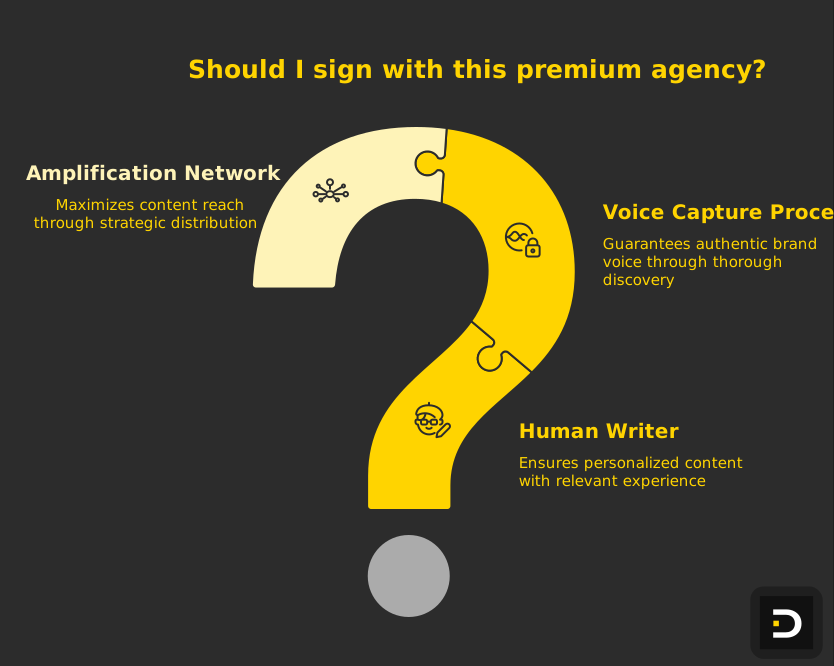
Run these on any premium agency you're considering:
1. Show me the writer who would handle my account
You want a human writer with a name and a portfolio, not "our content team." Look at their LinkedIn. Have they written in your category before? Have they written for a CEO at your stage?
2. What's your voice capture process and how long does it take?
Real answer: 4-6 weeks of discovery, interviews, sample collection, and voice profile drafting before the first post ships. Fast answer ("we'll be posting in week one"): they're using templates.
3. Describe your amplification network
You want specifics: how many operators, in what categories, how they coordinate, what kind of engagement they provide. Vague answer ("we have an engagement pod"): it's probably nothing or it's coordinated likes that LinkedIn penalizes.
4. What metric tells you a client is succeeding?
Real answer: inbound DMs from ICP buyers, sales cycle compression, hires citing specific posts, sometimes named-account engagement. Vague answer (likes, impressions, follower growth): they're optimizing for vanity.
5. What's the off-ramp if I'm not happy?
Real answer: 30-60 day satisfaction guarantee, month-to-month after initial term, you own all assets. Wrong answer: 12-month lock-in with steep cancellation.
If any of these answers are weak, the agency is probably not actually premium.
Premium vs. budget ghostwriting: a real comparison
Side by side on what changes when you go from $1,500/month to $4,500/month:
| Factor | Budget ($1,500/mo) | Premium ($4,500/mo) |
|---|---|---|
| Writer specialization | Generalist | Category specialist |
| Voice profile depth | 1-3 pages | 15-30 pages |
| Posts per month | 4-8 | 8-12 |
| Distribution | None or hope | Active network |
| Account management | Shared inbox | Dedicated lead |
| Strategy | None | Monthly review |
| Voice gate | Light or none | Required on every draft |
| Off-ramp | 6-12 month contract | Month-to-month |
| Typical client outcomes | Stable cadence, vanity metrics improve | Inbound DMs, deal acceleration, hires citing posts |
The 3x price gets you ~10x the actual outcome for most founders.
Who premium LinkedIn ghostwriting is for
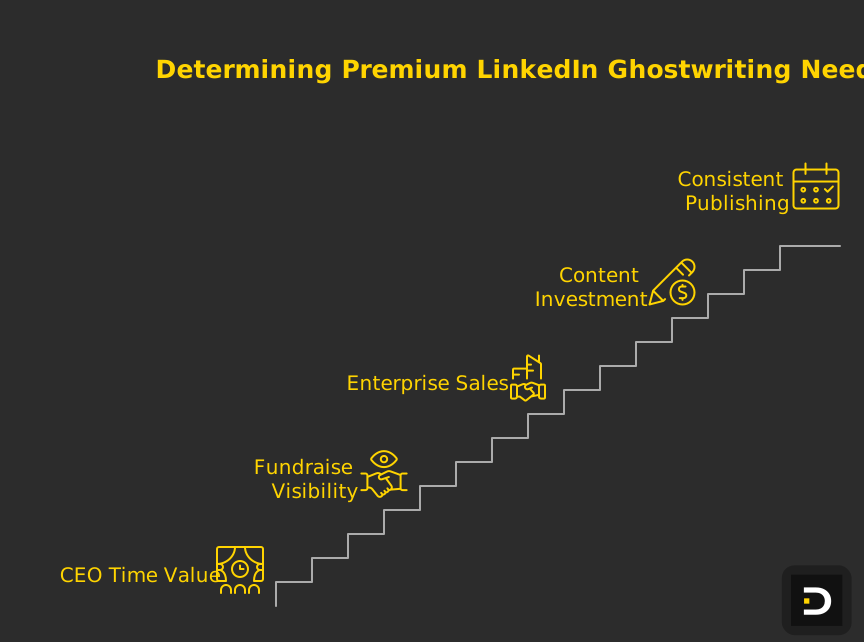
The honest answer: not everyone. Premium tier makes sense if:
- Your CEO time is worth $300+/hour
- You're pre or post a fundraise where founder visibility matters
- You're selling enterprise contracts where brand recognition shortens cycles
- You have $50K+/year to invest in content as a channel
- You're committed to 12+ months of consistent publishing
If those don't apply, the budget tier or DIY makes more sense. There's no shame in matching the tier to the stage.
Frequently asked questions
What is premium LinkedIn ghostwriting?
Premium LinkedIn ghostwriting is a full-service approach that includes deep voice work, strategic content planning, expert writers in your category, an active amplification network, and dedicated account management. Pricing starts around $4,000/month.
Is premium LinkedIn ghostwriting worth $4,000+ a month?
For tech CEOs whose time is worth $300+/hour, yes - the math works because the CEO time savings alone justify the cost. For early-stage founders without that opportunity cost, the budget tier or DIY is usually a better fit.
How does premium differ from budget LinkedIn ghostwriting?
Premium includes category-specialist writers, deep voice profile work, an amplification network, strategic planning, and dedicated account management. Budget is mostly drafting on a content calendar without distribution or strategy.
Can I do premium-quality LinkedIn ghostwriting myself?
Most CEOs cannot, because the bottleneck isn't the writing - it's the amplification network and the systematic voice work. A solo CEO can produce premium-quality content occasionally but rarely sustains it for years.
How long until premium ghostwriting pays off?
First measurable signals (inbound DMs from ICP) in 60-90 days. Real business outcomes (deal acceleration, named hires) in 6-9 months. The compound curve makes year two dramatically more valuable than year one.
What's the biggest mistake founders make with premium ghostwriting?
Buying premium pricing without verifying premium delivery. Many agencies charge premium rates for budget-level service. Run the 5-question test before signing.
Do I still need to write some posts myself?
Ideally yes, occasionally. One post a month written entirely by you (slightly rougher, more personal) signals the account is genuine. Pure ghostwritten accounts read too polished over time.
Your next move
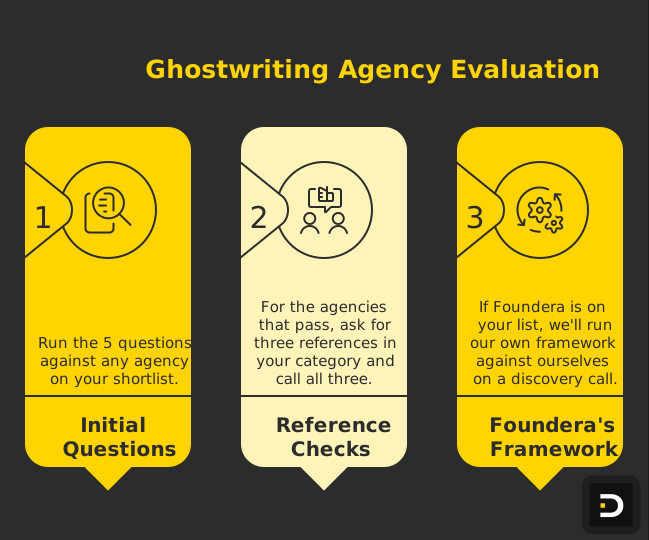
If you're considering premium LinkedIn ghostwriting in 2026, run the 5 questions above against any agency on your shortlist. Eliminate any that can't answer specifically. For the agencies that pass, ask for three references in your category and call all three.
We built Foundera as the premium-tier option for tech founders in cybersecurity, AI, DevOps, and B2B SaaS. If we're on your list, we'll run our own framework against ourselves on a discovery call.
The honest workflow inside a premium engagement
Most founders never see the inside of a premium ghostwriting workflow. Here's what an actual week looks like at the premium tier:
Monday morning. The CEO drops 15-30 minutes of voice memos into the shared channel - observations from weekend reading, customer calls last week, a meeting that didn't go well. Raw inputs, no structure required.
Monday afternoon. The lead writer transcribes the voice memos, tags them by content pillar, and pulls three to four post candidates. Each candidate gets a hook variation and a target format.
Tuesday. The writer drafts two of the candidates fully. The voice editor reads each draft against the voice profile and either approves or sends back with specific corrections. Generic phrasing flags include any "in the realm of," any AI-tells, any softened opinions.
Wednesday morning. The CEO reviews approved drafts in 10-15 minutes via mobile. The CEO can edit any line, kill any post, or add a sentence. Approved drafts go into the publishing queue.
Wednesday afternoon to Friday. Posts ship on the calendar. The amplification network is briefed 30 minutes before each post goes live. The first hour of engagement is coordinated - not faked, but coordinated - to give LinkedIn's algorithm the signal it needs.
Friday. Performance review. The writer pulls the metrics that matter (DMs, ICP profile views, deal pipeline references) and notes patterns. Next week's content adjusts based on what landed.
How to know premium is working at month three
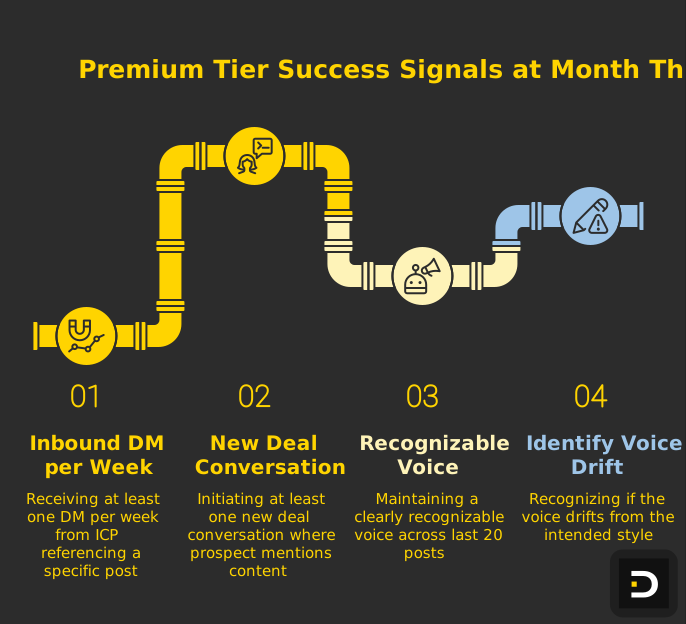
Three signals you should see by day 90 if premium tier is delivering:
- At least one inbound DM per week from your ICP that explicitly references a specific post.
- At least one new deal conversation where the prospect mentions reading your content before the call.
- A clearly recognizable voice across your last 20 posts - someone who knows you should be able to pick your posts out of a feed without seeing your name.
If you don't see all three by month three, the system is leaking. The most common leak is voice drift: the writer starts pulling toward their natural style and away from yours. The fix is a voice gate refresh, not more content.
If you see all three, the engine is healthy and the compound is starting. Year two will multiply year one results dramatically.
When to walk away from a premium agency mid-contract
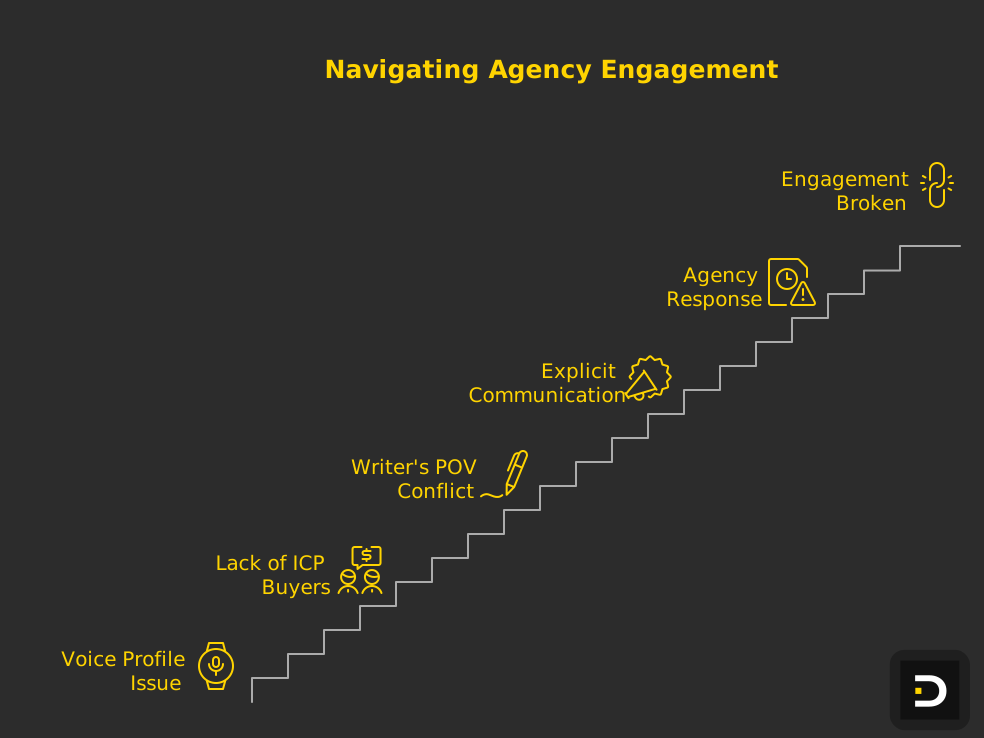
Three signals say the engagement is failing and a polite exit is the right move. First: month three arrives and your voice profile still doesn't capture you. Second: posts are shipping but ICP buyers haven't shown up in your DMs. Third: the writer keeps drafting around your POV instead of through it. If any one of these holds at the 90-day mark, raise it explicitly. If the agency can't fix it inside 30 more days, the engagement is broken. The premium tier exists because it delivers premium outcomes - if it doesn't, you're paying premium for budget output and the math stops working.
ROI math: three founder case studies
What does premium ghostwriting actually return? Three real scenarios:
Case 1: Cybersecurity Series A CEO. $6K/month engagement, 12-month commitment. Six months in: one closed enterprise deal at $180K ARR directly attributed to a specific post. Two senior engineers hired who cited posts in interviews. Estimated direct ROI: $180K deal alone covers 30 months of spend.
Case 2: AI infrastructure Series B CEO. $8K/month engagement. Nine months in: three closed deals totaling $520K ARR with content attribution. One Series B fundraise where two participating investors said the LinkedIn presence was decisive in their decision to invest. Estimated direct ROI: 6.7x on content spend, plus harder-to-quantify fundraise impact.
Case 3: B2B SaaS Series C CEO. $10K/month engagement. Twelve months in: content sourced 18% of new pipeline (measured via CRM source tagging). Two C-suite hires sourced via inbound DMs. Estimated direct ROI: significant but harder to fully attribute. Indirect value: category authority she now trades on in every conversation.
Pattern across all three: premium ghostwriting paid for itself within 3-6 months on direct attribution alone, before factoring in the harder-to-measure brand and recruiting value.
When premium tier becomes the wrong fit
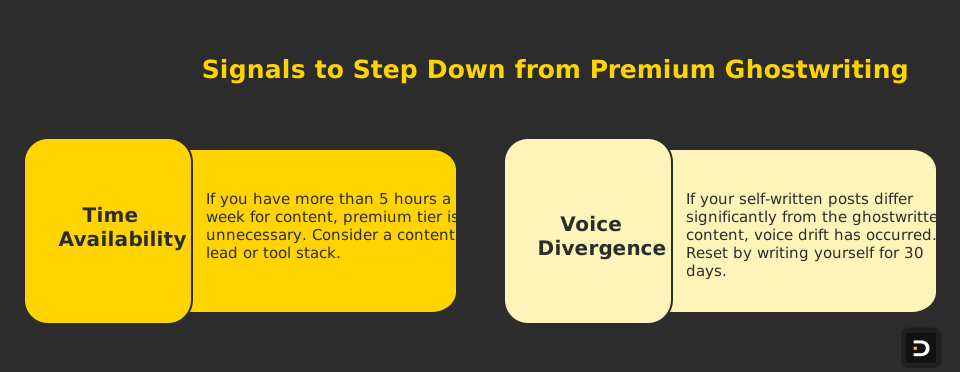
Premium ghostwriting is the right answer for many tech CEOs, but not all. Three signals you should step down to mid-market or DIY:
Signal 1: Your time stopped being scarce. If your company hit a stage where you can again spend 5+ hours a week on content yourself, premium tier is over-spec. Drop to a content lead or tool stack.
Signal 2: Your voice diverged from your output. If your own self-written posts (the occasional ones) sound markedly different from the ghostwritten content, voice drift has set in. Reset by writing yourself for 30 days, then either re-onboard the agency with a fresh voice profile or transition to a part-time content lead who knows you better.
Signal 3: The amplification network stopped helping. If first-hour engagement stops moving the needle, the network has either dissolved or moved on. Without the distribution, you're paying premium for budget output. Re-negotiate or end.
Premium tier should be reviewed annually. The CEO who renews on autopilot wastes money. The CEO who renews intentionally compounds it.
What this looks like as a strategic asset
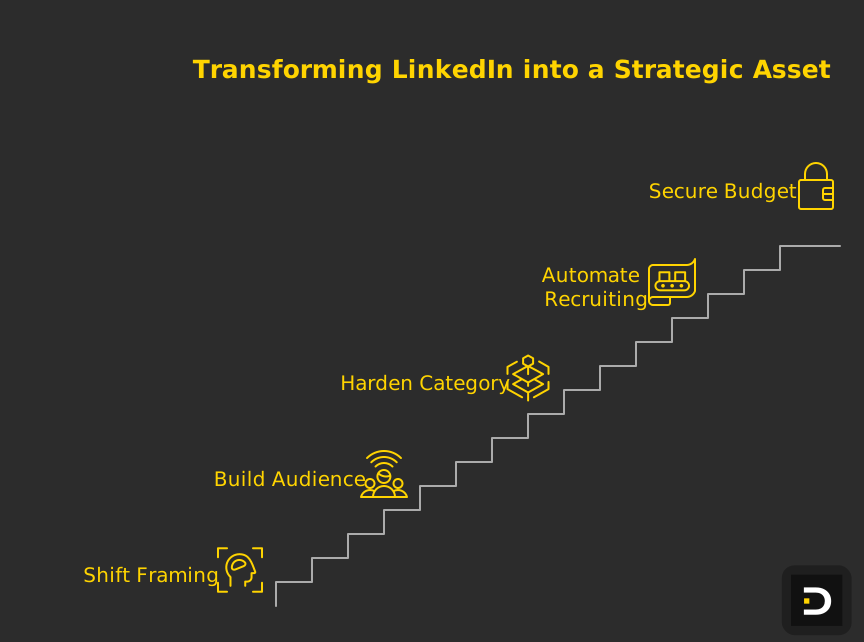
Most CEOs treat their LinkedIn account as a marketing surface. The CEOs who get the most out of premium engagements treat it as a strategic asset on the company balance sheet - an audience that compounds, a category position that hardens, a recruiting funnel that operates without active management.
This shift in framing changes how you budget for the engagement. Marketing surfaces get cut in down quarters. Strategic assets don't.
How to evaluate the annual renewal
Twelve months in, the renewal decision should be a structured review, not a gut call. Five questions to answer in writing before signing the second year:
1. How much pipeline did the engagement source this year? Specific dollar amount tied to content via CRM tagging.
2. How many senior hires cited your content? Specific names and roles.
3. Did fundraise outcomes improve relative to no-content baseline? Hard to measure precisely but ask your board members who closed the round to assess.
4. Did your category position visibly harden? Are you mentioned in industry analyst reports? Did journalists reach out without you pitching them?
5. Did the CEO's net time spent decrease or stay the same? If the CEO is spending more time managing the agency than they were managing content before, the operational model failed.
Two of five positive answers means continue with adjustments. Four or five means double down. One or zero means switch agencies or move in-house.
The TL;DR
Quick answer
Premium LinkedIn ghostwriting starts at $4,000/month in 2026 and buys three things budget tier doesn't: deep voice profile work (15-30 pages, quarterly refresh), strategic content tied to business goals, and an amplification network of real operators who engage in the first 30 minutes. For a CEO billing $500/hour, the math pays back in 3-6 months on direct attribution alone.
Key takeaways
- Three things separate premium from budget: voice depth, strategic input, and distribution network.
- Founder time at $130K/year opportunity cost is the math that justifies $50-100K agency fees.
- Premium agencies have 3-5 clients per writer. Budget agencies have 10+, which is where output collapses to templates.
- Five questions filter premium from premium-priced: writer, voice process, network, success metric, off-ramp.
- By month 3 you should see inbound DMs weekly + clearly recognizable voice. If not, voice drift has set in.