LinkedIn Stories quietly returned in early 2026 after a four-year absence. Most founders missed the relaunch. The ones who didn't are quietly building reach the rest of the platform can't access yet.
This is the 2026 strategy for founders who want to use Stories as a real channel - not a vanity feature. Built from watching what works across cybersecurity, AI, DevOps, and B2B SaaS accounts in the months since launch.
Short version: Stories are not a replacement for posts. They are the warm-up act that makes your posts hit harder, plus a back-channel for the high-context content that doesn't belong in your feed.
Why LinkedIn brought Stories back
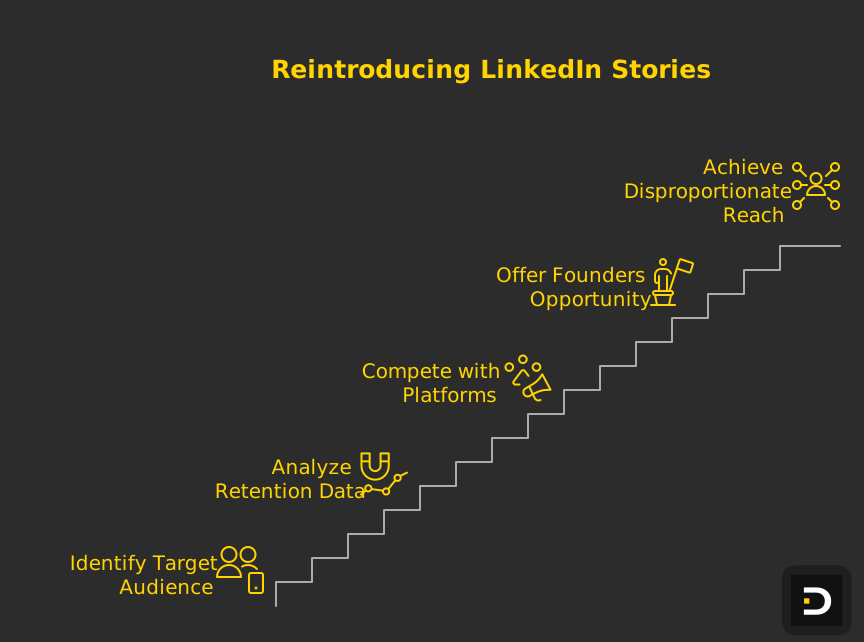
LinkedIn killed Stories in 2021 because nobody used them. The 2026 relaunch is different because the platform has different goals now. LinkedIn needs to compete with TikTok and Instagram for the under-30 professional audience. Stories are the format that retention data shows works for that segment.
For founders, the relaunch creates a temporary opportunity: low competition, high algorithmic boost for early adopters, and a parallel content surface that doesn't dilute your main feed.
Most platforms reward early adopters of new formats with disproportionate reach. LinkedIn Stories in 2026 is no exception.
What founders should post in Stories
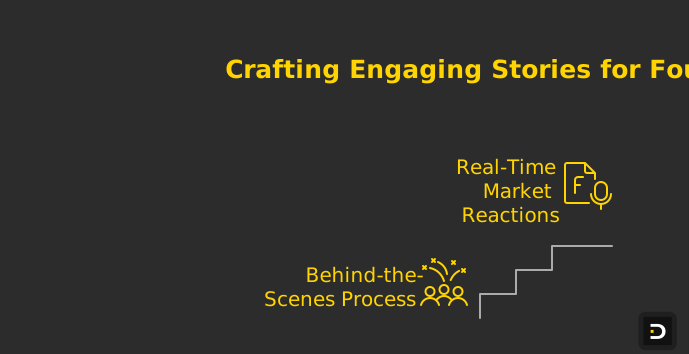
Three categories of content work in Stories that don't work in regular posts:
Behind-the-scenes process content. A 15-second clip of you reviewing a deck before an investor meeting. A photo of your office whiteboard mid-strategy session. A voice-over of you thinking through a customer objection. Content too rough or contextual for the feed, perfect for Stories.
Real-time market reactions. Something happened in your industry today and you have a hot take. The feed expects polished. Stories accept rough. A 30-second voice memo of your reaction posted within an hour of news landing has better signal than a 3-paragraph post written the next morning.
Customer or team moments. A celebration after a deal closed. A hire's first day. A milestone hit. Stories make these feel native; feed posts about them feel performative.
The pattern: Stories are for the texture of building a company. The feed is for the lessons learned from building it.
What to skip
Three categories of content fail in Stories every time:
Sales pitches. Stories with "DM me to learn more" or "book a demo" tags get scrolled past at 95% rates. Stories are not a sales channel.
Polished essays in story format. If your content reads like a feed post chopped into 9-frame story panels, you've missed the format. People who want polished content go to your feed.
Inconsistent quality. A founder who posts one great Story per week is more valuable than one who posts five mediocre Stories. Pick a baseline quality bar and don't drop below it.
The 5 Stories formats that actually drive reach
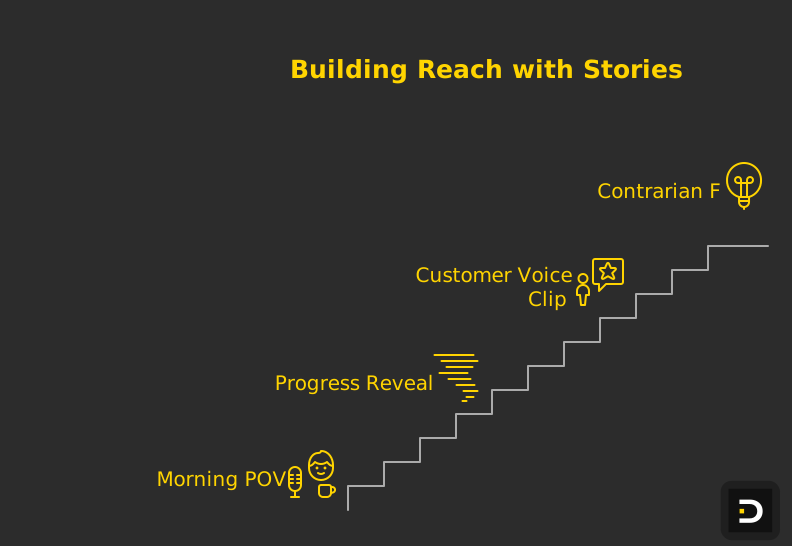
Format 1: The morning POV. A 30-second voice-over recorded between your first coffee and your first meeting, sharing one observation about your category. Builds compound recognition with daily viewers.
Format 2: The progress reveal. Mid-build, mid-launch, mid-fundraise. "Here's where we are today" with one screenshot and one line of context. Investors and recruits save these.
Format 3: The customer voice clip. A 15-second snippet of a real customer call (with permission) saying something specific about your product. Massive social proof, no marketing polish.
Format 4: The contrarian frame. A photo of something in your office or industry with a one-line caption that takes a position your peers wouldn't say out loud. Starts conversations in DMs.
Format 5: The behind-the-curtain Q&A. Use the Question sticker. Let your audience ask one question. Answer the most interesting one in your next Story. Conversational rhythm that the feed format can't replicate.
How Stories fit founder-led content strategy
Stories are a complement to your feed, not a substitute. The right rhythm:
Feed posts: 2-3 per week, polished, POV-driven. This is your core thought leadership engine.
Stories: 3-5 per week, rough, contextual. This is your atmosphere and texture layer.
LinkedIn newsletter (if you have one): monthly. This is your long-form depth surface.
Stories viewers convert to feed viewers at 3-5x the rate of cold profile visitors. Treat Stories as the funnel that warms up your serious audience.
Time investment: realistic numbers
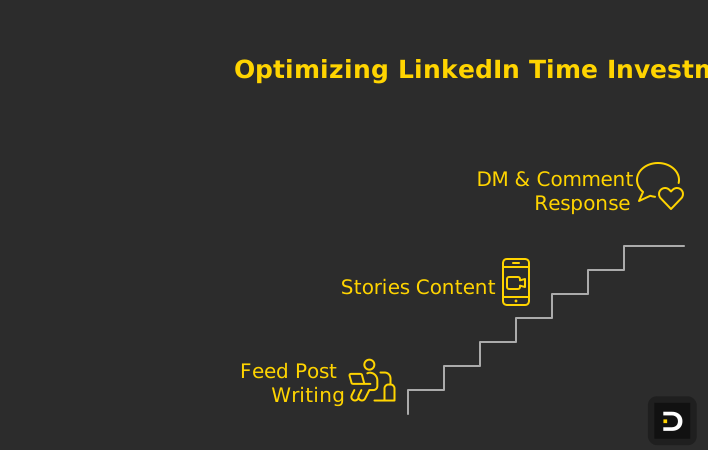
A founder spending 5 hours per week on LinkedIn should allocate:- 3 hours: feed post writing, review, engagement- 1 hour: Stories content (filming, captioning, posting)- 1 hour: response time on DMs and comments
If Stories take more than an hour a week, you're over-producing them. The format rewards rough, fast, frequent.
Common Stories mistakes founders make
Mistake 1: Cross-posting from Instagram. Instagram Stories and LinkedIn Stories share the format but not the audience. The cute dog photo that crushes on Instagram dies on LinkedIn. Re-record for LinkedIn specifically.
Mistake 2: Treating Stories like a status update. "Just landed in Austin for a conference!" with a stock airport photo adds nothing. Either give context or skip the Story.
Mistake 3: Burst posting then disappearing. Five Stories in one day, then nothing for three weeks, signals erratic operator energy. Three Stories per week consistently beats fifteen Stories in a burst.
Mistake 4: Ignoring the analytics. Stories show view counts and reply rates. The data tells you which formats land. Most founders never check.
Frequently asked questions
Are LinkedIn Stories worth a founder's time in 2026? Yes, especially right now. Low competition, high algorithmic boost for early adopters, complementary to your feed strategy.
How is LinkedIn Stories different from Twitter or Instagram? LinkedIn Stories audience is B2B professionals during work hours. Content that works on consumer platforms doesn't translate.
Can I outsource Stories to my ghostwriter? Voice can be drafted by a ghostwriter, but Stories work best when they have the texture of you specifically. The behind-the-scenes voice memo is hard to delegate.
Should I post Stories during a fundraise? Yes, but selectively. Stories during fundraise show investors the founder-energy texture. Avoid posting metrics or product news that might leak deal terms.
Do LinkedIn Stories help SEO? Indirectly. Stories don't get indexed, but they drive profile views which improve your overall LinkedIn search ranking and discoverability.
How long should a Story be? 15-30 seconds for video. One frame for photo. Anything longer and most viewers scroll.
Can I save high-performing Stories as posts? Yes. If a Story gets unexpectedly high engagement, repurpose the core insight into a feed post within 48 hours.
Your next move
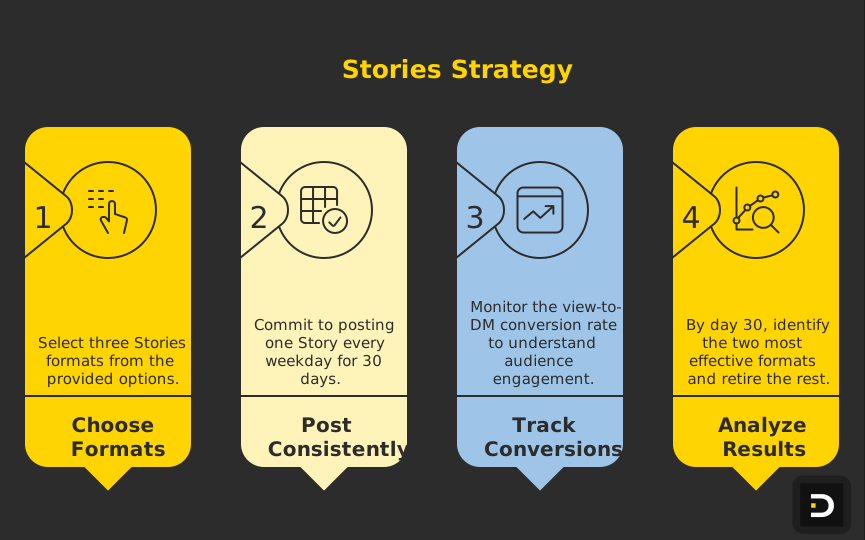
Pick three Stories formats from above. Commit to posting one Story per weekday for 30 days. Track view-to-DM conversion. By day 30, you'll know which two formats work for your specific audience and which to retire.
The founders who built early audiences on LinkedIn in 2013-2015 had a similar window. Stories in 2026 is that same opportunity, smaller in scope but real. We help founders run this layer at Foundera.
One sentence to take away
LinkedIn Stories in 2026 are the warm-up channel that makes your serious content hit harder - used right, they multiply your feed's reach without doubling your time investment.
How Stories interact with the LinkedIn algorithm in 2026
The LinkedIn algorithm treats Stories differently from feed posts. Three mechanics worth understanding:
Stories drive profile views, not feed reach. A Story that gets 500 views doesn't boost your next feed post's reach directly. It boosts profile visits, which over time improves your overall account signal to the algorithm.
Stories engagement counts toward your creator score. LinkedIn rewards consistent creators with broader reach across all surfaces. Stories engagement contributes to the score even when each individual Story stays inside the Stories surface.
Stories audience is a subset of your follower base. Roughly 15-30% of your followers see your Stories regularly. This is your warmest audience - the people who chose to opt into the texture of your day-to-day building.
The implication: Stories don't replace feed strategy. They tighten the relationship with your warmest 20% and signal to the algorithm that you're an active creator worth boosting elsewhere.
Three Stories patterns that surprised us in 2026
We watched dozens of accounts adopt Stories in the first six months after relaunch. Three patterns we did not expect:
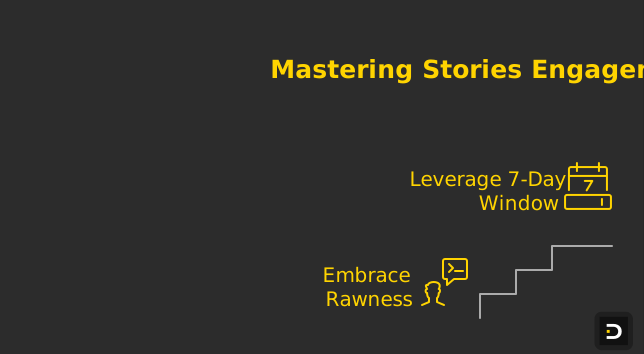
Pattern 1: Stories voice differs from feed voice - and that's good. Founders who tried to make their Stories voice match their polished feed voice underperformed founders who let Stories be looser. The format rewards rawness. Match your Stories voice to your texts-with-a-friend register, not your conference-keynote register.
Pattern 2: The 7-day window matters. Stories disappear after 24 hours by default, but the engagement window for any Story is the first 7 days of viewer behavior. Founders who post a Story Monday and check analytics Tuesday miss the real data. Check on day 7.
Pattern 3: Stories beat feed for specific recruiting moments. Senior candidates who follow founder accounts watch Stories for texture cues that the feed doesn't reveal. "What's it like to work for this person day-to-day?" is answered better by 30 seconds of unscripted Story content than by ten polished feed posts.
A 30-day Stories experiment plan
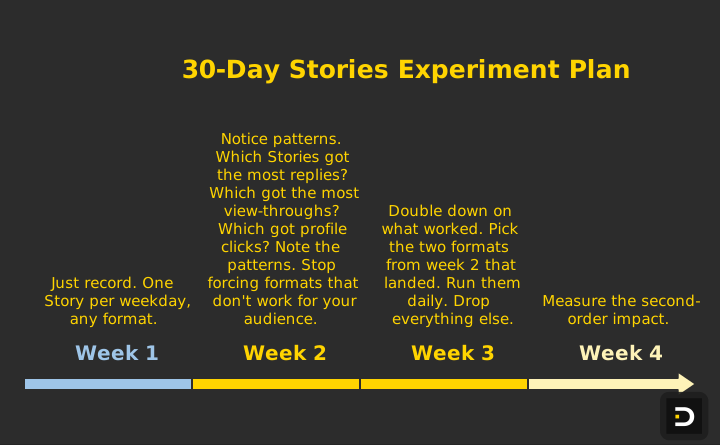
If you've never used Stories seriously, run this:
Week 1: Just record. One Story per weekday, any format. The goal is to remove friction. Don't optimize. Don't agonize over the quality bar. Build the muscle of recording quickly.
Week 2: Notice patterns. Which Stories got the most replies? Which got the most view-throughs? Which got profile clicks? Note the patterns. Stop forcing formats that don't work for your audience.
Week 3: Double down on what worked. Pick the two formats from week 2 that landed. Run them daily. Drop everything else.
Week 4: Measure the second-order impact. Did your feed posts in week 4 perform better than week 1? Did your profile views increase? Did inbound DMs change in volume or quality?
By day 30, you'll have a Stories operating rhythm that fits your account specifically. Most founders find that 3 Stories per week (not 5) is the sustainable equilibrium.
The relationship between Stories and your DMs
The most underrated function of Stories in 2026: they generate DM conversations that feed posts don't.
Stories feel intimate. The viewer is opted in. Reaching out to someone after watching their Story feels different from cold-DMing them after seeing a feed post. The DM conversion from Stories views runs 3-5x the rate from equivalent feed post impressions.
The implication for founder-led sales: Stories warm up high-signal viewers in a way that prepares them to start conversations. Track your DM inbound by source. If you can attribute even 10-20% of your warm DMs to Stories viewers, the channel pays for itself.
What Stories cannot do for you
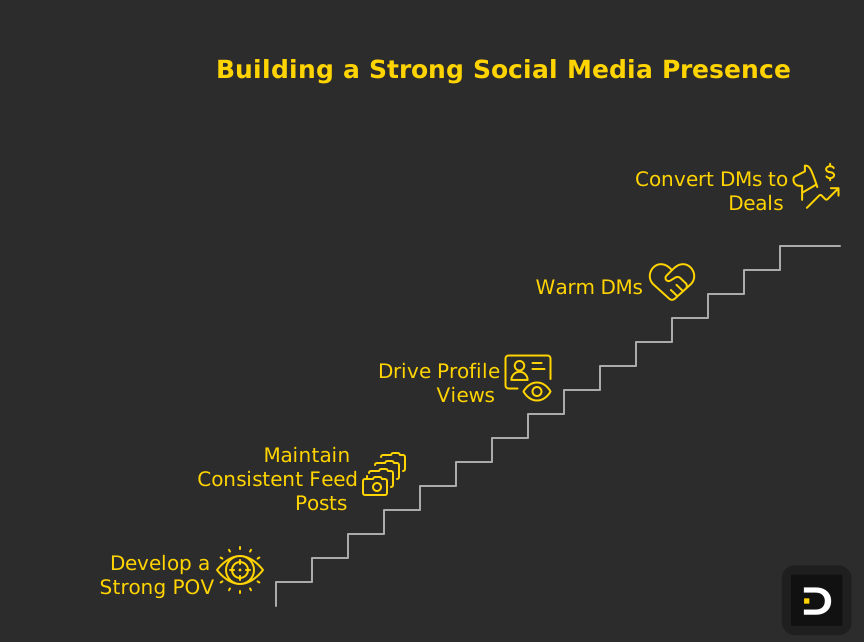
Three things Stories will not fix:
They won't fix a weak POV. Stories are a delivery mechanism. If your underlying point of view is mushy, posting 50 Stories won't sharpen it.
They won't compensate for inconsistent feed posts. Stories are the warm-up. The feed is the main act. A weak feed cannot be saved by a strong Stories presence.
They won't generate pipeline alone. Stories drive profile views and warm DMs. The conversion from DM to deal is a separate motion that requires its own discipline.
Stories work as a force multiplier on top of a working content engine. They don't work as a substitute for one.
Frequently asked questions, expanded
How is LinkedIn Stories different from LinkedIn Live or LinkedIn Newsletter? Stories are short, casual, 24-hour. Live is real-time broadcast for events or AMAs. Newsletter is long-form opt-in for serious readers. Three surfaces, three audiences, three rhythms.
Do Stories work for all categories of founder? B2B SaaS, cybersecurity, AI infrastructure, DevOps: yes. Consumer founders: less so - your audience lives elsewhere. Hardware founders: yes, especially for build-in-public content.
Should I cross-post Stories with team members? Yes, selectively. Your head of engineering posting a Story about a technical challenge ladders up to your company's overall presence. Coordinate so you're not posting the same beats.
Can I delete a Story that flops? Yes, within 24 hours, no permanent record. Use this freedom - there's no penalty for experimenting.
What's the right tone for a serious topic in Stories? Match the seriousness, just remove the polish. A 30-second voice memo about a hard customer conversation can be serious without being polished.
One last thing about Stories and AI content
LinkedIn's 2026 algorithm flags low-quality AI content for reduced reach. Stories are the format where this filter matters least, because the format itself signals "this is human, this is rough, this is real." Stories are essentially AI-detection-immune by virtue of format.
This is another reason the founders who adopt Stories early in 2026 are getting outsized reach: the format works around the platform's AI suspicion in a way that polished feed posts cannot.
The 12-month rhythm with Stories
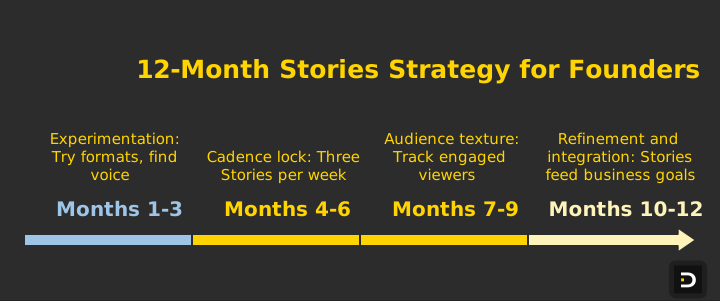
For founders committing to Stories as a real channel, the 12-month rhythm settles into this shape:
Months 1-3: Experimentation. Try formats. Find the two or three that fit your voice. Drop the rest.
Months 4-6: Cadence lock. Three Stories per week, same approximate cadence. Audience starts to expect you.
Months 7-9: Audience texture. Specific viewers start engaging consistently. Track them. These are your warmest audience.
Months 10-12: Refinement and integration. Stories now feed your sales motion, your recruiting, your investor relations. The format is no longer separate from your overall strategy.
Year 2 of Stories is when the format starts paying back what year 1 invested.
Your next move with Stories
Open LinkedIn on your phone. Record one 30-second voice memo Story right now about one observation you had this week. Post it. Don't agonize over quality. The barrier to Stories is friction - eliminate it. We help founders build the full Stories layer at Foundera.
What about Stories vs. Twitter/X for the same audience?
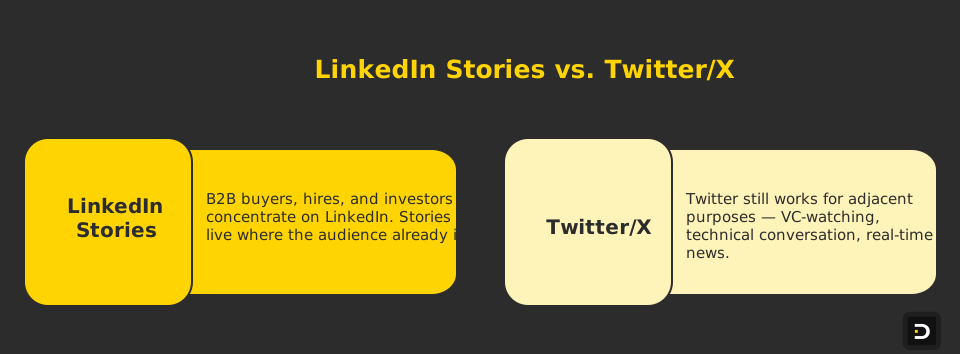
Some founders ask why bother with LinkedIn Stories when Twitter/X already has Spaces, threads, and a faster posting culture.
The honest answer: B2B buyers don't live on Twitter anymore. The platform fragmented into separate communities by 2024. Your buyers, hires, and investors concentrate on LinkedIn. Stories live where the audience already is.
Twitter still works for adjacent purposes - VC-watching, technical conversation, real-time news. But for systematic founder presence in B2B in 2026, LinkedIn Stories pair with LinkedIn feed posts. Twitter sits in a different lane.
One last operating note
Stories require less effort than feed posts but more discipline. The temptation to skip a day because you don't have a perfect Story idea is the discipline test. Three rough Stories per week beat one polished Story per month. Lower the quality bar slightly, raise the frequency. The format rewards consistent imperfection.
The TL;DR
Quick answer
LinkedIn relaunched Stories in 2026 and most founders are using them wrong. The strategy that drives reach: ephemeral behind-the-scenes content that supports your main posts, never replaces them. Three formats work for founders - the build-in-public update, the contrarian quick-take, the meeting-aftermath reflection. Skip pure promotion and viral templates.
Key takeaways
- Stories are atmosphere, not substance. They support your main posts, never replace them.
- Three formats work: build-in-public, contrarian quick-take, meeting-aftermath. Skip promo content.
- Cadence: 3-5 Stories per week. More than that signals over-investment in disposable content.
- Cross-post Story to main feed only when the content earns it. Otherwise Stories live and die in 24h.
- Track Story-to-DM conversion. If Stories generate zero DMs from ICP, the format isn't working for you.