
Most LinkedIn personal brand guides are paint-by-numbers. Pick a niche. Post consistently. Engage. Clean headshot. Repeat for 12 months and pray.
That advice isn't wrong. It's written for creators and consultants whose job is the content. For a founder, the LinkedIn personal brand is a side effect of the company you're building, not the product itself.
The founder version of this playbook differs in three critical ways:
- Time budget. A creator spends three hours a day on content. A founder running a Series A has 30 minutes. The system has to compound on a fraction of the input.
- Audience composition. Creators want broad reach. Founders want the right 500 people: investors, design partners, future hires, journalists. Vanity reach is worse than no reach.
- Risk tolerance. A creator can pivot a niche. A founder is anchored to a company and a category. Every post is a tiny bet on the same position.
This guide walks through the framework, profile audit, content pillars, publishing cadence, and 90-day plan we use at Foundera with deep-tech founders.
What "personal brand on LinkedIn" really means for a founder (not a creator)
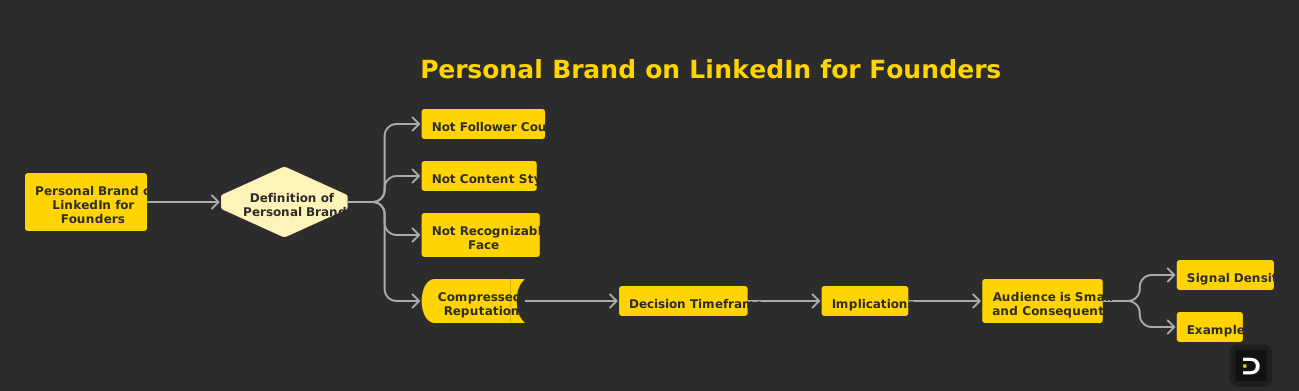
Before any tactics, get the definition right. For a founder, a personal brand on LinkedIn is not a follower count, a content style, or a recognizable face. It's a compressed reputation, what someone thinks about you in the 30 seconds between seeing your name and deciding whether to take a meeting or send a term sheet.
Three implications follow.
The audience is small and consequential. A founder doesn't need 100,000 followers. We've seen Series B rounds raised on 4,000-follower accounts where every follower was the right operator or investor. The math is signal density in the rooms that matter.
The content compounds with the company. Every post should make the next conversation easier. When a VC pulls up your profile before a first call, your last 10 posts should pre-answer their first 10 questions.
The brand is anchored to a thesis, not a personality. Founder brands that last are organized around a contrarian, defensible POV. Personality is delivery. The thesis is the asset.
The founder personal brand framework: 5 components
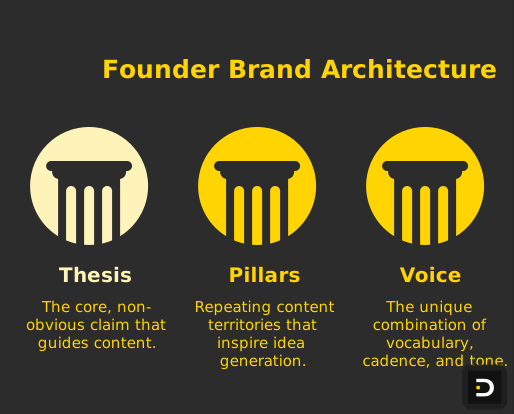
Every founder brand we build at Foundera runs on the same five-part architecture.
- Thesis. The non-obvious claim about your category that the rest of your content defends. "Identity is the new perimeter." "AI agents will obsolete most of the SOC tier-1 layer by 2028." One sentence. Defensible. Specific.
- Pillars. Three repeating content territories that map to the thesis. Pillars give you a way to generate ideas without staring at a blank page.
- Voice. The unique combination of vocabulary, cadence, and tone that makes a post recognizable as yours. Voice is built from artifacts (transcripts, Slack messages, internal memos), not invented in a writer's room.
- Cadence. The rhythm at which posts ship, plus the operational system behind them. Without cadence, the other four components don't compound.
- Distribution. The people and channels that move each post into the right inboxes. This is where most founder brands quietly die.
If you only had a weekend, build in this order: Thesis to Pillars to Voice to Cadence to Distribution. We follow that order below.
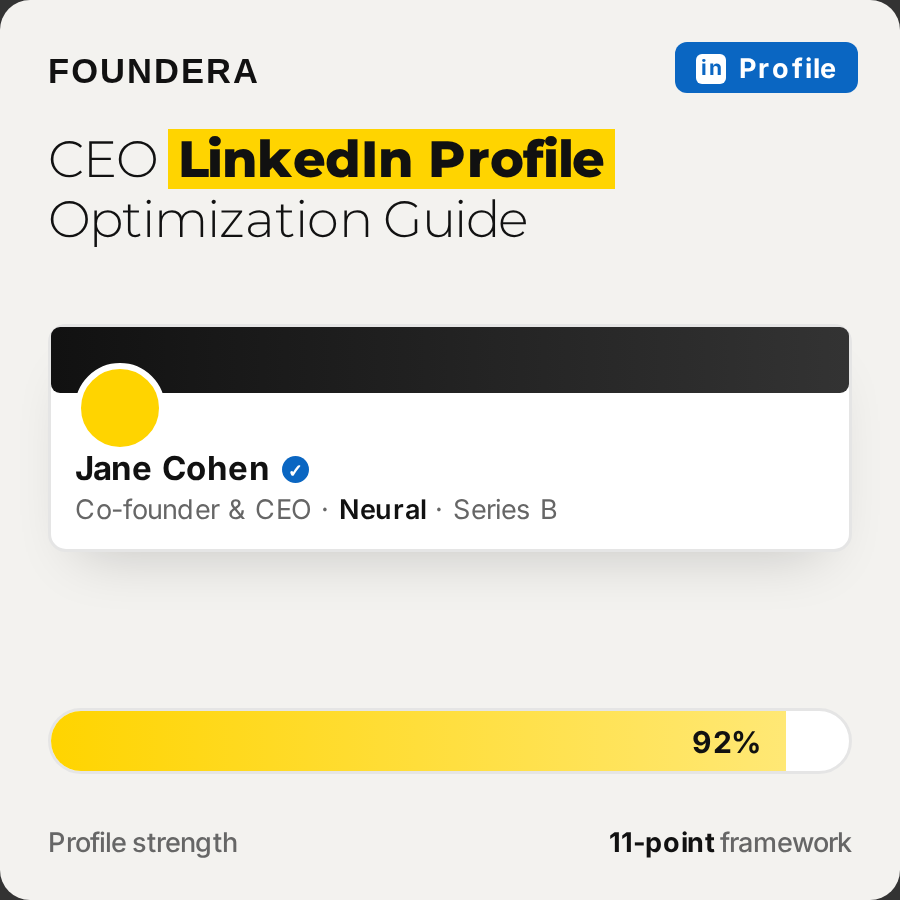
Step 1: Audit your current profile (the 12-point checklist)

Before producing any new content, audit what's already there. The profile is the conversion surface for every post. If the surface leaks, the content can't fix it.
Here is the 12-point checklist we run with every founder client at Foundera.
| # | Element | Pass criteria | Common failure mode |
|---|---|---|---|
| 1 | Profile photo | Recent, recognizable face, looks like a Zoom call | Old conference photo or a logo |
| 2 | Banner image | Company + category + visual hook in under 2 seconds | Stock "innovation" photo |
| 3 | Headline | Company, thesis, why-now hook, not a job title | "CEO at [Company]" alone |
| 4 | About section | Opens with a hook, builds to thesis, closes with the ask | Bio written like 2014 LinkedIn |
| 5 | Featured section | 3-5 pinned posts that pre-answer common questions | Empty or random reposts |
| 6 | Experience entries | One sentence of why-it-matters per role | Resume bullets from a CV |
| 7 | Open-to fields | Configured for the right outcomes | Defaulted to "open to work" |
| 8 | Custom URL | linkedin.com/in/firstname-lastname | ...firstname-lastname-58a2c1 |
| 9 | Skills | Top 3 align with thesis and category | "Microsoft Office" still listed |
| 10 | Recommendations | 3-5 recent, names that matter to buyers/investors | One from 2015 by a college friend |
| 11 | Activity feed | Last 10 interactions on-thesis | Likes on memes or unrelated reposts |
| 12 | Contact info | Real email, real site, no broken links | Old company email or 404'd site |
Score one point per pass. Under 9 means the profile is bleeding attention before content can fix it.
Step 2: Define your 3 content pillars
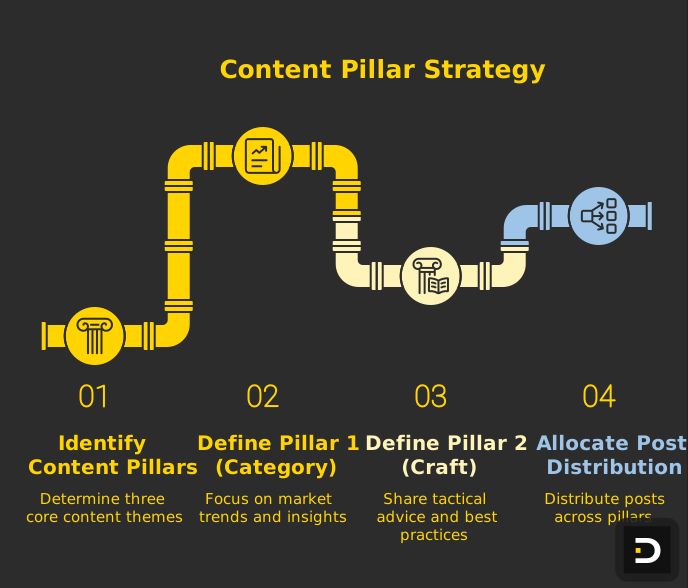
Pillars solve the daily question of what do I post about today? Without them, every post starts from zero. With them, every post is a deposit into one of three accounts that compound.
The founder pillar triangle:
- Pillar 1, Category. Thesis-level content. Where the market is going, why now, what's broken. Earns you the right to be considered a serious voice. Roughly 30% of posts.
- Pillar 2, Craft. Tactical, in-the-weeds content. How you make hiring decisions, structure pricing, run roadmap. Earns trust. What candidates and design partners care about most. Roughly 50% of posts.
- Pillar 3, Character. Personal, story-driven content. Why you started, what you got wrong, inside-the-fire moments. Makes the other two pillars travel. Roughly 20% of posts.
The 30/50/20 split is starting calibration. Some categories want more Character (consumer, dev tooling). Some want more Craft (cybersecurity, fintech). Test and adjust.
The rule that keeps pillars sharp: every post should be classifiable as exactly one pillar. If a draft is "kind of Category, kind of Craft," it's unfocused. Cut until it lands cleanly in one.
For deeper examples of how a founder's brand statement informs pillar selection, see our personal leadership brand statement examples for founders.
Step 3: Write your one-sentence brand statement
Before any post ships, you need a single sentence that captures who you are, what you believe, and who you serve. This is not the company one-liner. It's the founder-level statement that explains why anyone should follow you.
The format:
I'm [name], building [company] for [audience], because I believe [non-obvious thesis].
Examples:
- "I'm David, building identity-first security for AI agents, because I believe the next major breach class isn't human-driven and the existing IAM stack can't see it."
- "I'm Maya, building vertical AI for legal operations, because I believe horizontal copilots will lose to deeply embedded vertical software in every regulated industry."
Each names a person, a company, an audience, and a non-obvious belief. The belief is the part that does the work. It's the part founders most often skip.
Test yours on three people who know you and three who don't. If everyone nods politely, it's not sharp enough. A good brand statement makes at least one reader push back.
Step 4: Optimize your profile (headline, banner, about, featured)
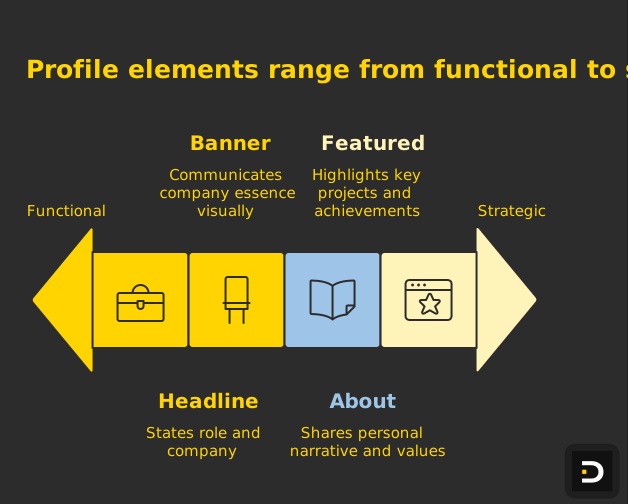
With pillars and brand statement in hand, rebuild the four highest-leverage profile elements.
Headline. The trap is to write a job title. The opportunity is a 220-character mini-pitch. Formula: [Role] @ [Company] | [What you do in one sentence] | [Thesis positioning]. Example: "Co-founder & CEO @ Lumen Security | Identity-first security for the AI agent era | Building the layer that catches what IAM was never designed to see."
Banner. Treat it as a billboard. Communicate, in two seconds, what the company is and why someone should care. Avoid stock imagery. Use one visual idea: a product screenshot, a single statistic, or a categorical claim. Our best personal branding tools for founders covers the design tools we use.
About section. Five paragraphs:
- One-sentence hook (often a contrarian claim from your thesis)
- Two sentences on what you're building and why
- Two sentences of background, what gives you the right to work on this
- Three to five bullets of what you're focused on right now
- One closing sentence on how to reach you
Featured section. Pick 3-5 posts that function as a highlight reel. Rotate every 60 days. Include: one thesis post, one company milestone, one character post, one tactical craft post, and optionally one media mention.
If you want the full ghostwriting infrastructure we wire into founder profiles, explore Foundera's LinkedIn ghostwriting service.
Step 5: Build your idea capture system
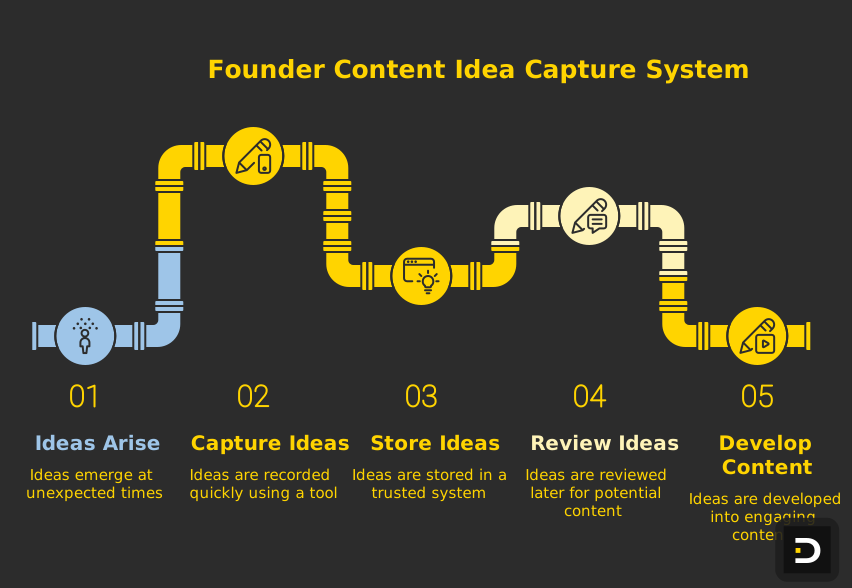
The biggest reason founder content programs die isn't lack of ideas. It's that ideas show up at the wrong time and there's no place to put them. The good ones happen at 11pm after a board call, in a Lyft to a customer meeting, in a Slack thread with your CTO. By the time you sit down to write, the spark is gone.
The fix is an idea capture system. The tool doesn't matter (Notion, Apple Notes, Telegram-to-self, voice memo). What matters is that capture takes under 10 seconds and you trust the system enough to use it.
What goes in:
- Customer quotes that surprised you
- Things your team said that made the room go quiet
- Frameworks you find yourself re-explaining to investors or hires
- Strong opinions you held five years ago that turned out wrong
- Counterintuitive numbers from your own data
- Articles that made you productively angry, the angry-because-they're-wrong kind
Tag each captured idea with one of the three pillars. By Sunday night you should have 15-20 fragments to choose from. The job stops being "what do I write about" and becomes "which fragment do I expand."
Step 6: Set your publishing cadence
The most common cadence question is "how often should a founder post?" The honest answer: less than you think, more consistently than you think.
What we recommend:
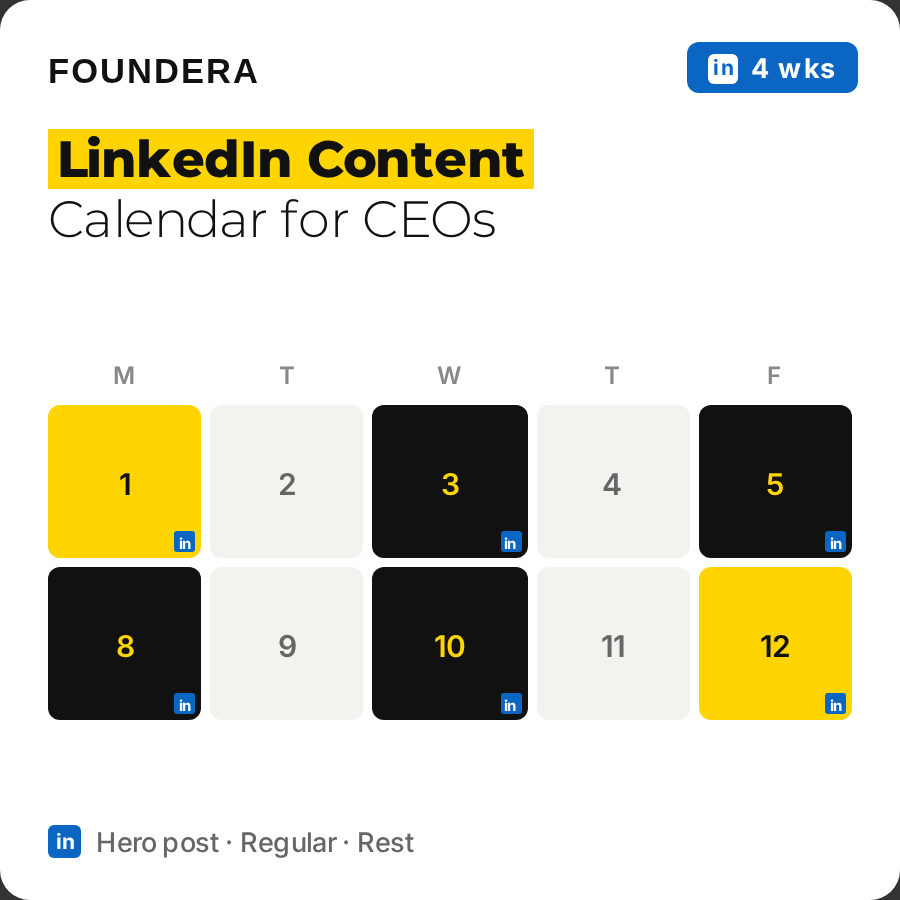
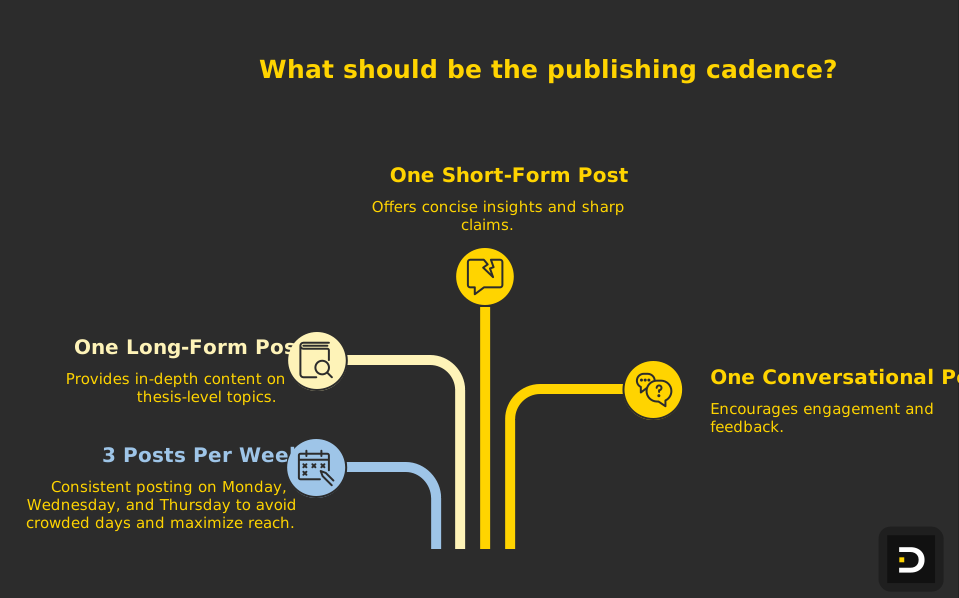
- 3 posts per week, Monday/Wednesday/Thursday. Tuesday is overcrowded. Friday and weekend dilute reach.
- One long-form (250-400 words). Pillar 1 or 2 thesis-level content.
- One short-form (under 120 words). Single insight, single sharp claim.
- One conversational post. A question, a half-formed thought you want pushback on.
Three posts. Twelve a month. 144 a year. If half land, you have 72 pieces of content compounding into the founder brand.
Cadence beats volume. Posting three times this week, zero next, five the week after, then nothing for a month is worse than posting once a week consistently. LinkedIn's algorithm rewards rhythm and your audience trains itself on rhythm.
One more rule: batch the writing, ship on schedule. Don't write on the day you publish. Block 90 minutes on Sunday, draft all three posts, then ship on schedule. Real-time writing is the fastest path to skipped weeks.
For a deeper take, see thought leadership content for founders.
Step 7: Build your amplification network
The most underrated lever in founder LinkedIn is the amplification network. Most founders publish and hope. The ones who break out have 15-50 people who reliably engage in the first 60 minutes after a post goes live.
LinkedIn weights early engagement heavily. A post with 10 thoughtful comments in its first hour will out-reach one that gets 50 comments spread over three days.
How to build it:
- Identify 30-50 people who care about your space and with whom you have a real relationship. Founders, investors, peers, ex-colleagues, journalists on your beat.
- Engage on their posts first. For two weeks before asking anything, leave substantive comments on their content. Not "great post" but actual engagement.
- Make a small private group. Slack, WhatsApp, doesn't matter. "I'm posting more seriously this year. Would love a small group to read drafts and engage early. Happy to do the same." Most people say yes.
- Cross-engage. When anyone in the group posts, the rest engage in the first hour with real comments.
This is not a pod. Pods are coordinated reciprocal liking and LinkedIn detects and suppresses them. An amplification network is real peers commenting substantively because the content earns it.
For deeper mechanics, see founder-led marketing on LinkedIn.
Step 8: Track the right metrics
Most LinkedIn dashboards are misleading for founders. They optimize for engagement rate, impressions, and follower growth. None of those are the metrics that matter.
What actually matters:
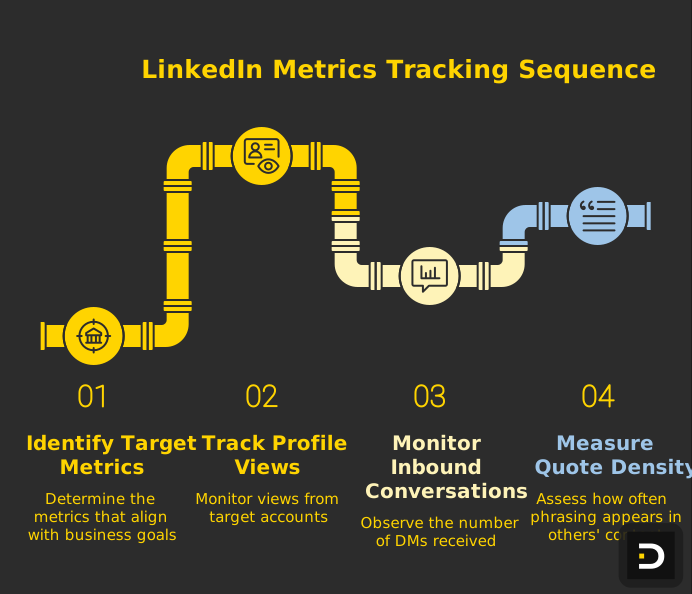
- Profile views from target accounts. Investors at firms you'd take a check from, candidates at companies you'd hire from, journalists on your beat.
- Inbound conversations. DMs that start with "saw your post about X." Aim for 2-5 a month in month one, 15-25 by month nine.
- Quote density. How often does your phrasing show up in others' posts or pitches? When prospects use your framework back at you, the brand is working.
- Funnel velocity. Time from first conversation to next meaningful step (term sheet, signed pilot, offer). A working brand compresses this.
- Inbound vs. outbound opportunity ratio. What percentage of candidates, investors, design partners came inbound? Track quarterly.
Ignore: total impressions, follower count (until it crosses 10k), engagement rate of individual posts in isolation.
HubSpot's marketing research covers what's actually working in B2B content. LinkedIn's Marketing Solutions creator resources and the official algorithm post from Dan Roth are worth reading once a year.
The 90-day plan (week by week)
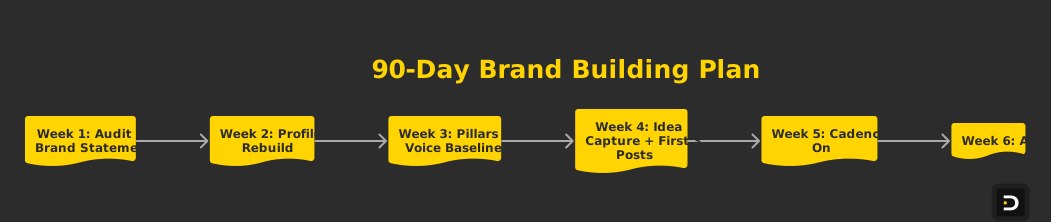
Theory ends here. The next 90 days are when the brand gets built. Week-by-week:
| Week | Focus | Output |
|---|---|---|
| 1 | Audit + brand statement | 12-point audit complete, brand statement written, top 3 issues queued |
| 2 | Profile rebuild | New headline, banner, About, Featured live |
| 3 | Pillars + voice baseline | 3 pillars defined, voice profile built from 5 artifacts |
| 4 | Idea capture + first 3 posts | Capture system live, first 3 posts shipped, one per pillar |
| 5 | Cadence on | 3 posts shipped Mon/Wed/Thu, batched on Sunday |
| 6 | Amplification network seeded | 30 people identified, pre-engagement done, group formed |
| 7 | First thesis post | Big Pillar 1 post shipped, amplified, becomes Featured candidate |
| 8 | Voice tightening | Review posts 1-21, identify what's working, double down |
| 9 | First metric review | Check profile views from target accounts, inbound DMs, quality |
| 10 | Repurposing engine | Top post turned into long-form essay, thread, short clip |
| 11 | Pillar rebalance | Adjust mix. Most founders learn Craft outperforms Category |
| 12 | 90-day audit + 6-month plan | Retrospective. What worked, what didn't. Commit to next quarter |
By week 12, a founder following this plan has shipped 30-36 posts, optimized their profile, built an amplification network, and seen the first signals of inbound. If that didn't happen, the issue is almost always one of two things: cadence broke, or the brand statement was too soft.
For a longer arc, see our 12-month founder personal brand roadmap.
Common mistakes founders make in each step
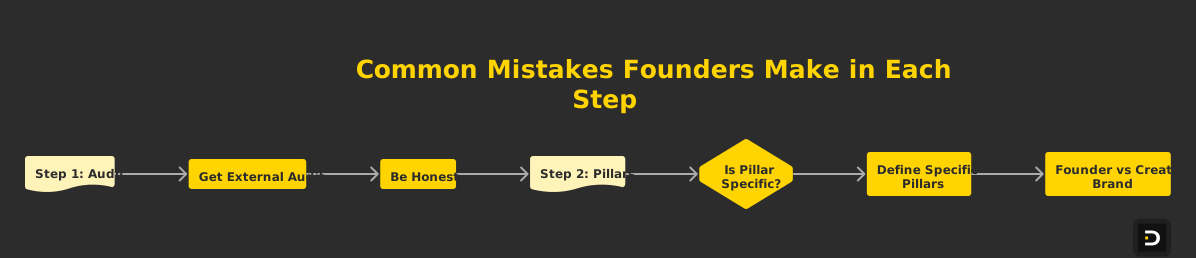
Across hundreds of founder engagements, the same mistakes show up in the same steps.
Step 1, Audit. Founders score themselves too generously. Have someone else run the 12-point audit. A peer founder or your head of marketing will be honest in ways you can't be.
Step 2, Pillars. Picking pillars too broad. "Tech" is not a pillar. "Leadership" is not a pillar. A pillar should be specific enough for 30 posts without repeating yourself but narrow enough that readers know exactly what you stand for.
Founder vs creator brand, in one comparison table:
| Dimension | Creator brand | Founder brand |
|---|---|---|
| Primary goal | Audience growth | Compress reputation in target rooms |
| Success metric | Followers, engagement rate | Inbound conversations from target accounts |
| Content volume | 5-7 posts/week | 3 posts/week, deeply on-thesis |
| Voice source | Constructed persona | Real artifacts from how the founder actually thinks |
| Risk profile | Can pivot niche | Anchored to company and category |
| Compounding mechanism | Algorithmic reach | Peer network + cited POV in industry |
| Time budget | 15+ hrs/week | 3-5 hrs/week with a system |
Step 3, Brand statement. Writing one nobody could disagree with. If it could go on any founder's profile in your category, it's too generic. Sharpen until it cuts.
Step 4, Profile. Treating the About section like a resume. It's a sales letter to four audiences (investors, candidates, customers, journalists). Write it that way.
Step 5, Idea capture. Over-engineering the system. The fanciest Notion database loses to an Apple Notes list the founder actually opens.
Step 6, Cadence. Writing three posts the morning they ship. Batch on Sunday. Always batch.
Step 7, Amplification. Asking for engagement before earning it. Engage on others' content for two weeks first.
Step 8, Metrics. Optimizing for impressions because they feel good. Profile views from target accounts and inbound conversations are the only metrics that matter in months 1-6.
For an executive-level lens on how thought leadership and brand connect strategically, see our executive thought leadership framework.
Your next move
If you've read this far, you know what to do. The work is the doing, in 90-minute Sunday blocks, three times a week, for the next 90 days.
The founders we work with who break out don't have more time, talent, or interesting companies. They have a system that survives a bad week. A brand statement they can say in one breath. Three pillars. A cadence they trust. A network that shows up early. Metrics that tell them whether the brand is doing real work.
That's what this guide gives you. The rest is reps.
If you want to skip the build phase and run this system with a team that's done it across 40+ deep-tech founders, that's what we do at Foundera. Talk to us when you're ready.
Frequently asked questions
How long does it take to build a personal brand on LinkedIn as a founder?
Visible inbound starts at 60-90 days with consistent posting. Compounding effects (inbound dominates outbound, your phrasing shows up in others' posts, journalists reach out) take 9-12 months. Brands that read as "established" take 18-24 months. The 90-day plan is the on-ramp.
How many followers do I need for a founder brand to work?
Less than you think. We've seen Series B rounds and category-defining hires happen on 3,000-4,000 follower profiles where every follower was the right person. Focus on follower composition, not count.
Should I post about my personal life or stay strictly professional?
Pillar 3 (Character) is non-negotiable, roughly 20% of content. "Personal" doesn't mean weekend photos. It means the moments that shaped why you're building what you're building, the things you got wrong, the inside-the-fire decisions.
Is it worth hiring a ghostwriter as a founder?
Yes, with one condition: the ghostwriter builds from your real voice (transcripts, internal memos) rather than inventing one. A ghostwriter who writes at you produces generic content that erodes trust. One who captures your actual cadence is the highest-leverage outsourcing decision most founders make.
What if I have a strong opinion that might alienate some of my audience?
Post it. A brand that everyone likes is one nobody remembers. The constraint is not "will this alienate some people," it's "is the belief defensible and consistent with my company's position."
How do I handle posting about my company without sounding like marketing?
The test: would you say this to a founder you respect over coffee? If yes, post it. If it sounds like a press release, rewrite it as if explaining the same thing to a peer. Voice should be the same in DMs, dinners, and posts.
What should I do if I miss a week?
Resume on the next Monday. Don't double up. The audience tracks rhythm, not volume. Skipped weeks are part of the work. Founders who treat them as catastrophes quit; founders who treat them as Tuesday continue.
The TL;DR
Quick answer
Founder personal brand on LinkedIn is a compressed reputation, what someone thinks in the 30 seconds between seeing your name and deciding to take a meeting. Five components: thesis, pillars, voice, cadence, distribution. The 90-day plan: profile audit, brand statement, pillars, voice baseline, idea capture, cadence lock, amplification network, metric review.
Key takeaways
- Founder brand is not follower count. It's compressed reputation in target rooms.
- Series B rounds raised on 4,000-follower accounts where every follower was the right operator.
- Pillar triangle: 30% Category, 50% Craft, 20% Character. Each post lands in exactly one.
- Three posts/week on Mon/Wed/Thu. Tuesday is overcrowded. Weekends dilute reach.
- Track profile views from target accounts and inbound DMs, not impressions or followers.