
Investor Outreach on LinkedIn: The Warm-Intro Playbook for Founders
The median VC firm considers 100 deals for every single one it funds. Only 10% of those deals arrive cold from founders. More than half come through professional networks and referrals from other investors.
That is the entire story of investor outreach on LinkedIn, compressed into three numbers. The inbox is not where deals start. The network is.
Most founders treat LinkedIn outreach as a volume game: more DMs, more decks, more hope. The founders who actually raise treat it as a warmth game — they engineer the path so that by the time the message lands, it doesn't feel cold at all.
This is that playbook.
Table of Contents
- The Deal-Source Math Every Founder Should Know
- Warm vs Cold: The Real Conversion Numbers
- Why Content Warms Cold Outreach
- The Connection-Mapping Method
- DM Sequencing That Respects VC Norms
- Outreach Volume: What a Real Raise Takes
- What Never to Do
- Frequently Asked Questions
- TL;DR
The Deal-Source Math Every Founder Should Know
VC deals come from networks, not inboxes. In the NBER survey of 885 institutional VCs by Gompers, Gornall, Kaplan, and Strebulaev, over 30% of deals came through professional networks, 20% through referrals from other investors, and 8% from portfolio companies. Only 10% arrived inbound from company management — the cold pile.
Here's the full breakdown:
| Deal source | Share of VC deals | What it means for you |
|---|---|---|
| Professional networks | Over 30% | Your warm paths are the main pipe |
| Proactively sourced by the VC | Almost 30% | Visibility makes them find you |
| Referred by other investors | 20% | Investors are each other's best filter |
| Portfolio companies | 8% | Portfolio founders are golden bridges |
| Cold inbound from founders | 10% | The smallest, most crowded door |

Two things jump out.
First, the "cold inbound" door is the smallest one — and it's the one most founders queue in front of. Second, almost 30% of deals are self-generated by the VC. They went looking and found the founder. That's not luck. That's visibility doing outreach for you.
Then there's the funnel itself. The same survey found the median firm considers 100 deals per investment — and IT-focused firms consider 151. You're not trying to get into a room. You're trying to survive a 100:1 filter. Anything that moves you out of the anonymous pile changes your odds more than any subject line ever will.

For the broader strategy behind this, see our full guide to how to use LinkedIn for fundraising.
Warm vs Cold: The Real Conversion Numbers
Warm introductions convert to first meetings at roughly 20-30%. Cold emails convert at 1-2%, according to aggregated fundraising and B2B outreach datasets. That's a 10-20x gap for the same startup, the same deck, the same founder.

LinkedIn specifically follows the same pattern. Qubit Capital's analysis puts general B2B LinkedIn outreach response rates around 10% — but when founders cold-pitch VCs, that drops to 1-2%.
Read that again. The same channel that gets a 10% response for a normal business conversation gets 1-2% for a cold pitch. The channel isn't the problem. The coldness is.
VCs are drowning in decks. A cold pitch asks them to do the diligence work of figuring out who you are. A warm intro means someone they trust already did that work. You're not paying for access — you're borrowing credibility.
So the playbook isn't "write better cold DMs." It's "make fewer of your DMs cold."
Why Content Warms Cold Outreach
Content turns cold outreach into recognized outreach. Remember: almost 30% of deals in the NBER data are sourced by the VC — they discover the founder themselves. LinkedIn is where that discovery happens, and consistent posting is what makes you discoverable.
This isn't passive. Qubit Capital documents VCs running LinkedIn keyword searches — terms like "funding round" and "scaling SaaS" — to surface founders sharing funding milestones, hiring updates, and product launches. Investors are literally querying LinkedIn for founders like you. If you're not posting, you don't exist in those results.
Content also changes what happens when your name does land in an investor's inbox. A warm intro triggers a quick background check — LinkedIn profile, recent posts, news. If that check surfaces three months of sharp thinking about your market, the meeting starts half-won. If it surfaces a dead profile with a company link, you've handed back the credibility your introducer lent you.
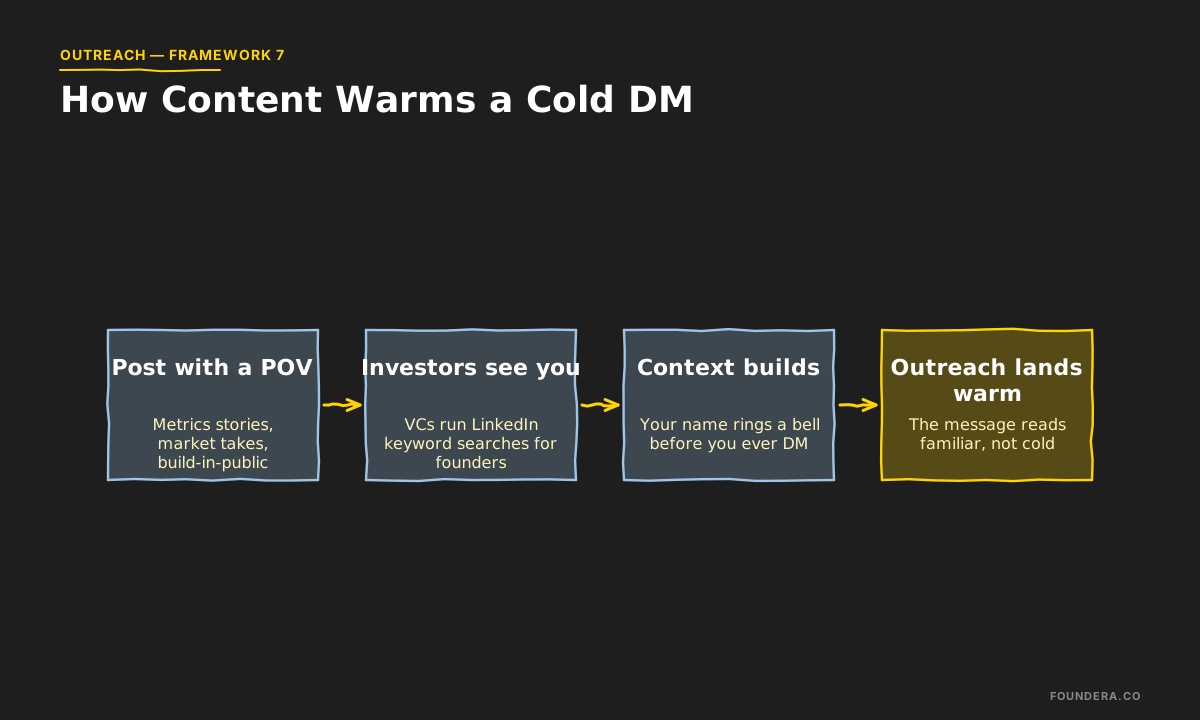
Think of it as a loop:
- You post with a real point of view — metrics stories, market takes, build-in-public updates.
- Investors see you — in the feed, in searches, in the background check.
- Context accumulates — your name starts ringing a bell.
- Your outreach lands warm — even when technically no intro happened.
Start this loop before the raise, not during. We break down the timing in LinkedIn visibility before fundraising, and the content itself in thought leadership content for founders.
The Connection-Mapping Method
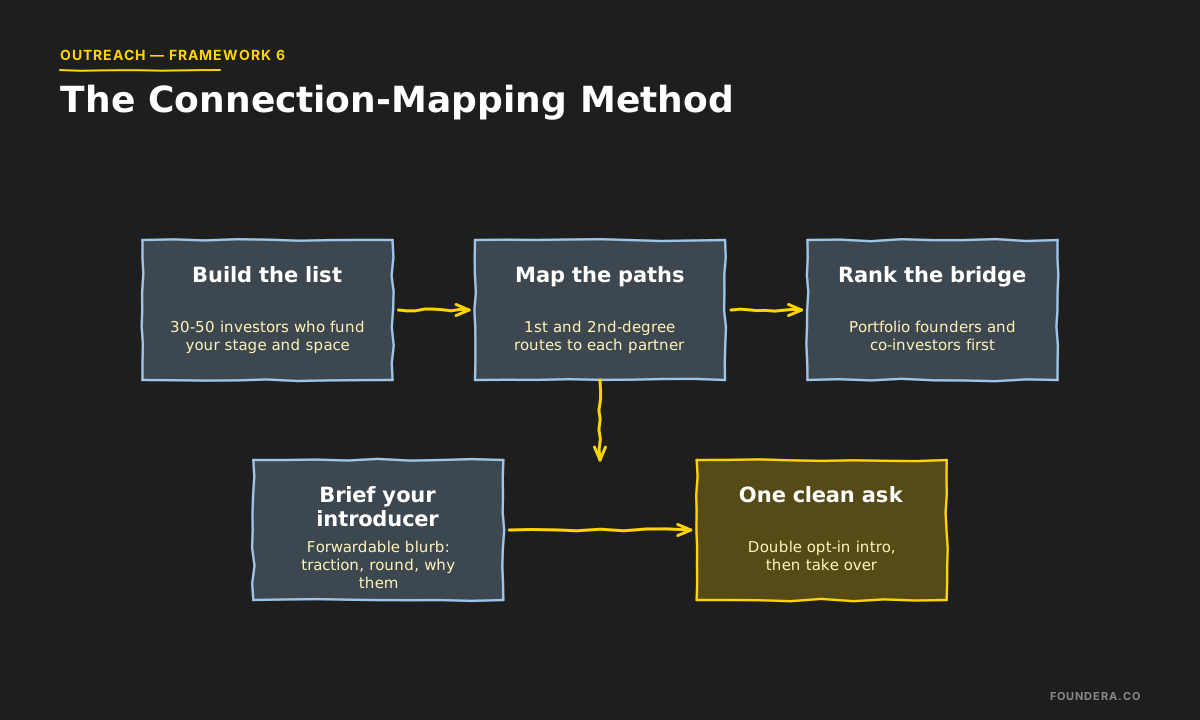
Connection mapping is the disciplined way to find your warm paths: list your target investors, map every first- and second-degree route to each one, then rank the routes by trust — not convenience. Most founders discover they have far more warm paths than they thought. They just never mapped them.
Here's the method, step by step:
1. Build the target list. 30-50 investors who actually fund your stage, sector, and geography. Not "every VC on LinkedIn." A partner who led two deals in your space is worth twenty generalists.
2. Map the paths. For each target, check LinkedIn's shared connections. Who do you both know? Look at their portfolio founders, their co-investors, operators they engage with. Second-degree is workable; third-degree usually isn't.
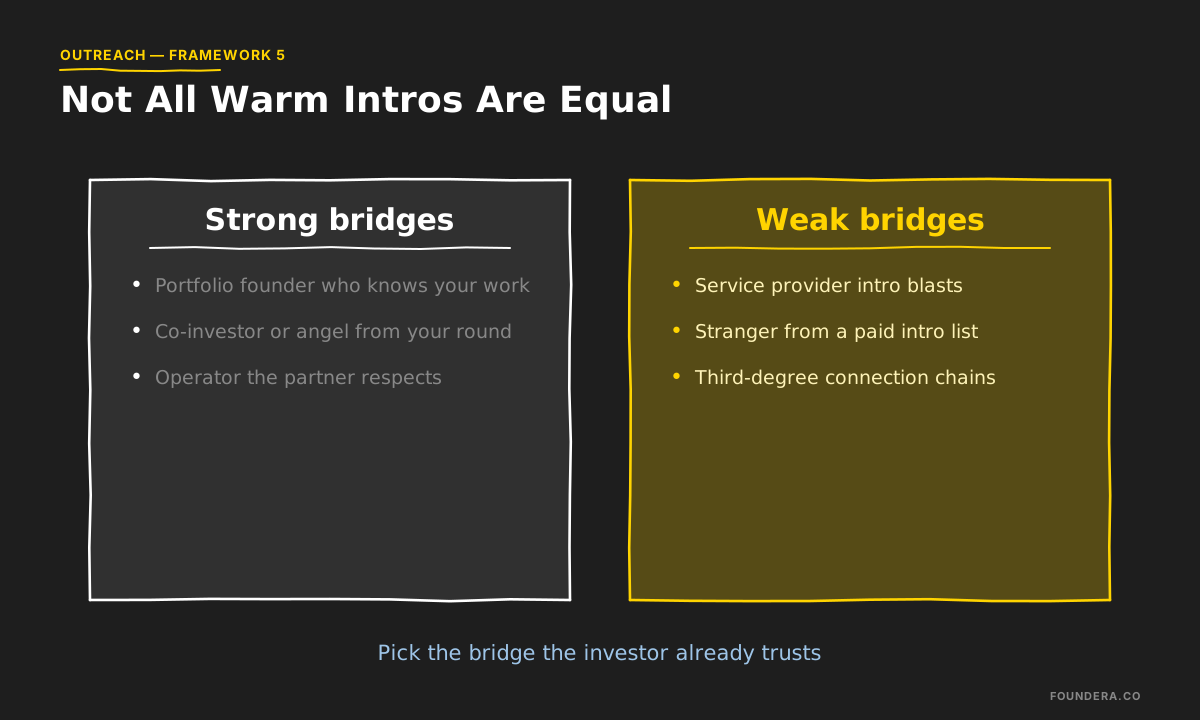
3. Rank the bridge. Not all warm intros are equal. Rank by how much the investor trusts the introducer:
| Bridge | Strength | Why |
|---|---|---|
| Portfolio founder who knows your work | Strongest | VCs trust founders they've backed |
| Co-investor or angel from your round | Strong | Investors filter deals for each other |
| Operator the partner respects | Good | Real signal, less deal context |
| Service provider (lawyer, banker) | Weak | Intros are their marketing |
| Stranger from a paid intro list | Avoid | Negative signal, not neutral |
4. Brief your introducer. Never make your bridge write the pitch. Send a short, forwardable blurb: what you're building, one line of traction, round size, why this specific investor. Make forwarding it a ten-second job.
5. Make one clean ask. Request a double opt-in intro — the introducer checks with the investor first. It respects everyone's time, and a "yes" means the investor already chose to hear from you. That's a warm start by definition.
DM Sequencing That Respects VC Norms
When no bridge exists, a direct LinkedIn approach can still work — if you sequence it like a relationship instead of an ambush. The rule: earn familiarity before you ask for time. Here's the sequence we recommend at Foundera.
| Touch | Timing | What to send | What NOT to send |
|---|---|---|---|
| 1. Connect | Day 0 | Short note referencing something specific they wrote or funded | Your pitch. Any pitch. |
| 2. Engage | Weeks 1-3 | Substantive comments on their posts — add insight, not applause | "Great post!" |
| 3. Context DM | Week 3-4 | One useful observation about their thesis or portfolio space | A deck attachment |
| 4. The ask | Week 4+ | One-liner on your company + traction + why them, and a clear, small ask | "Can I pick your brain?" |
| 5. Stop rule | After 2 follow-ups | A graceful close ("I'll keep you posted via updates") | Follow-up #3 |
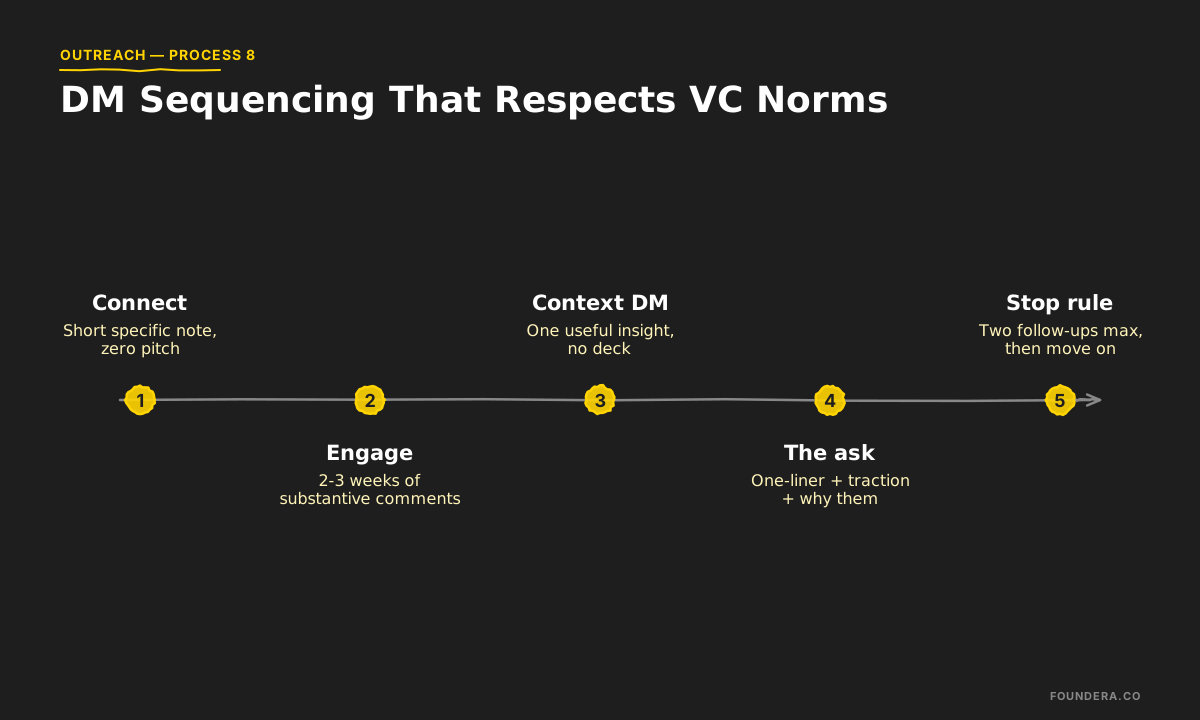
Why this works: each touch deposits context before the ask withdraws attention. By touch 4, you're not a stranger — you're the founder with the sharp comments about their space.
Keep the ask itself brutally short. Investors skim. One line on what you're building, one line of traction — real numbers, framed the way we describe in startup traction metrics investors notice on LinkedIn — and one line on why this specific partner. Then a small ask: "Worth a 20-minute call?"
And respect the stop rule. Two follow-ups, spaced a week apart, then stop. Silence is an answer. The founders who send follow-up number five aren't persistent; they're future fund-meeting anecdotes.
Outreach Volume: What a Real Raise Takes
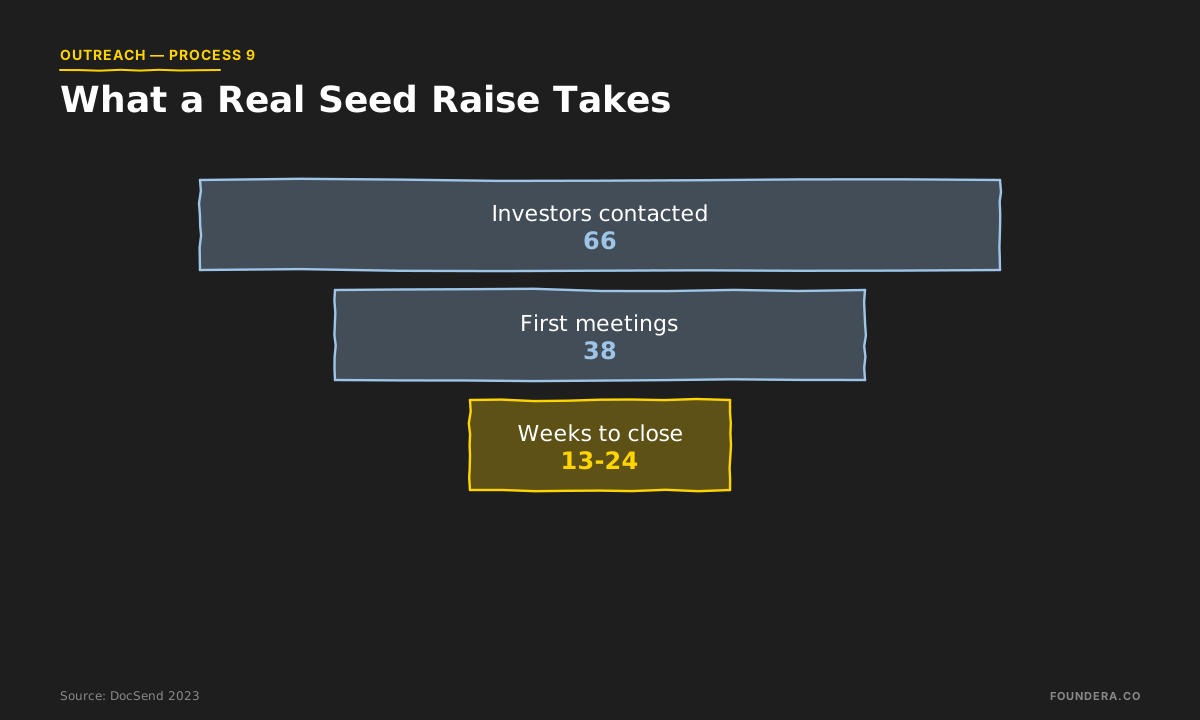
Plan for more outreach and fewer meetings than you think. DocSend's seed fundraising data shows seed founders contacted an average of 66 investors in 2023, up from 48 the year before — while average investor meetings fell from 56 to 38.

More doors knocked, fewer doors opened. That's the market you're raising in.
The duration data says the same thing: 50% of successful seed raises took 13-24 weeks in 2023. Four to six months of sustained outreach — not a two-week blitz.
Three planning implications:
- Your target list needs depth. If the average raise touches 66 investors, a list of 15 "dream funds" is not a pipeline. Build the 30-50 list, then expand.
- Your warm paths need to be pre-built. You cannot connection-map 66 investors in the week you launch the raise. The mapping, the content, the engagement — that's a quarter of groundwork before the first ask.
- Your energy needs pacing. A 13-24 week process rewards founders with a system — a tracked list, a sequence, a weekly rhythm — over founders running on adrenaline.
The math is sobering, but it cuts both ways: every percentage point of response rate you gain from warmth compounds across 66 conversations.
What Never to Do
The fastest way to lose an investor on LinkedIn is to confirm you didn't do your homework. Every mistake below signals exactly that — and remember, investors will scan your profile the moment your name surfaces. We cover what they're scanning for in what investors look for on a founder's LinkedIn.
Never do these:
- Never pitch inside the connection request. It's the LinkedIn equivalent of proposing marriage through the peephole. Connect first, pitch much later.
- Never mass-blast a templated deck. Investors compare notes. Identical "personalized" messages travel through partner meetings faster than your deck does.
- Never open with fake flattery. "Huge fan of your fund!" with zero specifics reads as the template it is. Name the deal, the post, or the thesis — or say nothing.
- Never ask to "pick your brain." It's a withdrawal with no deposit. Every ask should be specific, small, and time-boxed.
- Never follow up daily. Two follow-ups, a week apart. After that, the message you're sending is not persistence — it's poor judgment.
- Never pitch the associate and the partner simultaneously. They sit ten feet apart. Pick one path and let it play out.
- Never send the full deck unsolicited. Earn the ask. A one-line traction summary that prompts "send me the deck" beats an attachment nobody requested.

One theme runs through all seven: each mistake tries to skip the warmth step. The warmth step is the outreach.
Frequently Asked Questions
Should I cold DM investors on LinkedIn?
Only as a last resort, and never as a first touch. Cold pitches to VCs on LinkedIn get 1-2% response rates versus roughly 10% for general B2B outreach, per Qubit Capital. Before any DM, exhaust your warm paths: map shared connections, portfolio founders, and co-investors. If you must go direct, use the five-touch sequence — connect, engage, add context, then make one small ask.
How many investors should I contact when raising a seed round?
Plan for 50-70. DocSend's data shows seed founders contacted an average of 66 investors in 2023 (up from 48 in 2022) and took an average of 38 meetings. Build a ranked list of 30-50 targets before the raise, and expect to extend it mid-process.
What should my first LinkedIn message to an investor say?
Almost nothing about your company. The first message is a connection note: one or two sentences referencing something specific — a deal they led, a post they wrote, a thesis they've shared. No pitch, no deck, no ask. The pitch comes weeks later, after you've engaged with their content and earned basic familiarity. Cold message plus instant pitch is the combination with the worst numbers in the channel.
How do I get warm intros if I don't have a network?
Build the network before the raise — it takes months, not years. Three moves: (1) post consistently so investors and operators in your space start recognizing you, since VCs actively search LinkedIn for founders sharing milestones; (2) engage genuinely with portfolio founders of your target funds — founders are the most trusted bridge to their investors; (3) get one or two angels or advisors involved early, because their co-investor relationships become your second-degree paths.
Do investors actually pay attention to LinkedIn?
Yes — structurally, not casually. Almost 30% of VC deals are proactively self-generated by investors who found the founder themselves, per the NBER survey of 885 VCs, and VCs run LinkedIn keyword searches to surface funding and traction signals. Your profile and posting history function as pre-diligence whether you participate or not.
How long does investor outreach take?
Budget four to six months for the raise itself — 50% of successful seed raises took 13-24 weeks in 2023, per DocSend — plus at least a quarter of groundwork before it: connection mapping, content cadence, and investor engagement. The founders who "raise fast" almost always spent months warming the network first. The speed is an illusion; the groundwork isn't.
TL;DR
- Only 10% of VC deals arrive cold; 50%+ come through networks and investor referrals (NBER, 885 VCs). The median firm filters 100 deals per investment.
- Warm intros convert to meetings at ~20-30% vs 1-2% for cold email. Cold-pitching VCs on LinkedIn gets 1-2% responses — the channel works, the coldness doesn't.
- Content is outreach infrastructure: almost 30% of deals are sourced by VCs who found the founder, and they're running LinkedIn keyword searches to do it.
- Map connections before you need them: rank bridges by trust (portfolio founders > co-investors > operators), brief your introducer, ask for double opt-in intros.
- Sequence DMs like a relationship: connect without pitching, engage for 2-3 weeks, add context, then one small ask. Two follow-ups max.
- Plan for volume: 66 investors contacted, 38 meetings, 13-24 weeks is the average seed raise (DocSend).
- Want the visibility engine that makes outreach warm — built and run for you? That's what Foundera does. Let's talk.
Related Reading
- How to Use LinkedIn for Fundraising — the full-funnel strategy this playbook plugs into
- LinkedIn Visibility Before Fundraising — the groundwork quarter, step by step
- What Investors Look For on a Founder's LinkedIn — the background check you should assume is happening
- Founder-Led Marketing on LinkedIn — why the founder's profile outperforms the company page