What Investors Look for in Founders on LinkedIn: The Diligence You Never See
Before a VC ever takes your call, they've read your LinkedIn. That's not a hunch — it's measured behavior.
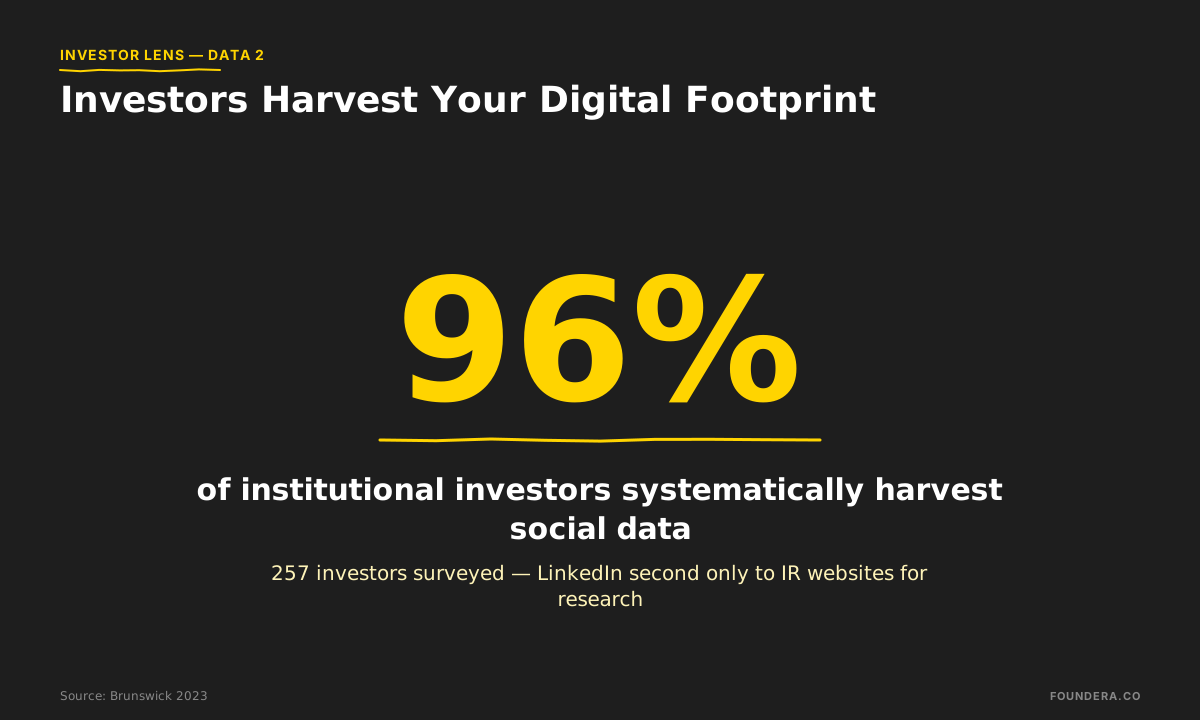
In the Brunswick Group Digital Investor Survey of 257 institutional investors, LinkedIn scored 7.83 out of 10 in importance for equity research — second only to a company's own investor-relations website (8.21), and ahead of Google search results (7.81). The same survey found 96% of institutional investors systematically harvest data from social and digital sources. Not browse. Harvest.
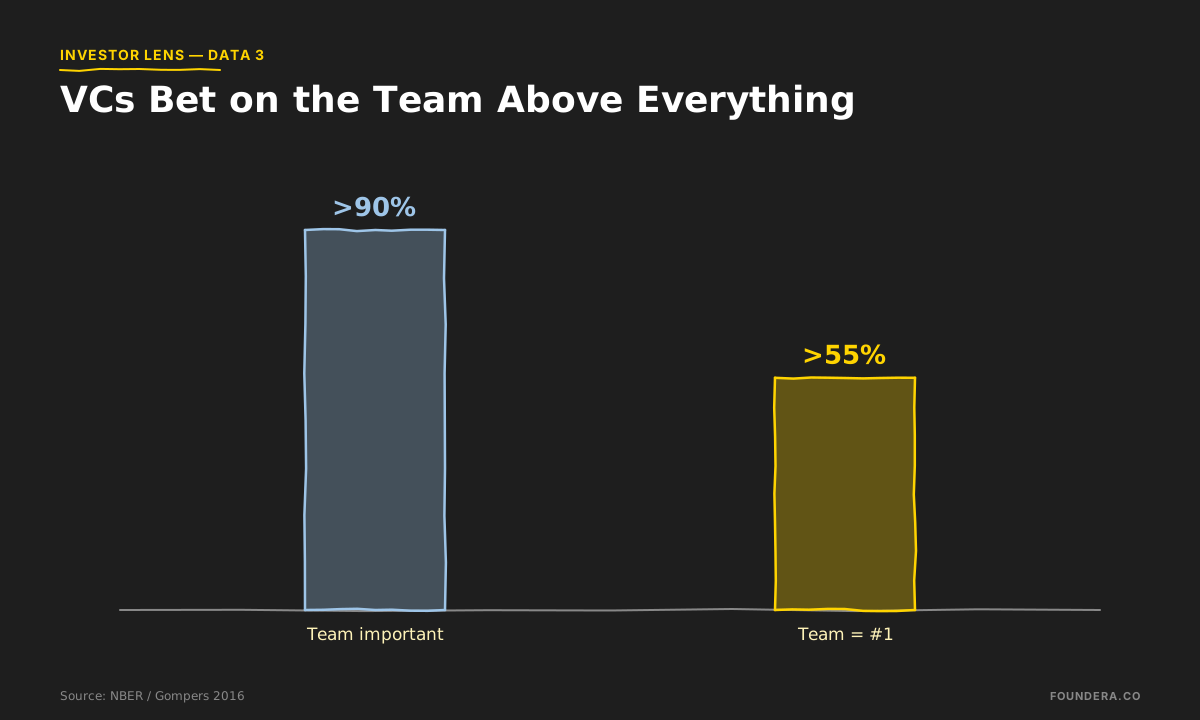
And what are they trying to learn? Mostly, about you. In the landmark Gompers, Gornall, Kaplan & Strebulaev survey of 885 VCs, more than 90% of venture capitalists named the management team an important factor in investment success or failure — and over 55% ranked the team as the most important factor. Ahead of product. Ahead of market.
Put those two findings together and you get the thesis of this post: the team is the number-one thing VCs evaluate, and LinkedIn is one of the top channels they evaluate it through. Your profile isn't a resume. It's a diligence document you get to write yourself.
Here's what investors are actually reading for — and how to make sure the file they compile on you is the one you'd want them to find.
Table of Contents
- Investors Bet on Teams — the Data Is Unambiguous
- Your LinkedIn Is Already in the Diligence File
- How VC Deals Actually Get Sourced
- The Four Signals Investors Read on a Founder Profile
- The Investor-Ready Profile Checklist
- Start Six Months Before the Raise
- Frequently Asked Questions
- TL;DR
Investors Bet on Teams — the Data Is Unambiguous
What do investors look for in founders? The team itself, above everything else. In the NBER-published survey of 885 institutional VCs, more than 90% said the management team is an important factor in a deal's success or failure, and over 55% ranked the team as the single most important factor.
This is the most useful fundraising fact most founders never internalize. Founders obsess over the product demo and the market-size slide. The people writing checks say, in the largest survey of its kind, that they're mostly underwriting you — your judgment, your ability to attract talent, your read on the market.
That has a direct consequence for how you show up online. Deck sections can be rehearsed. A digital footprint can't be faked retroactively. Eighteen months of posts, comments, and career history is the closest thing an investor has to time-series data on how a founder actually thinks. Which is exactly why they read it — and why building it deliberately is worth your time long before you need it. If you're still not convinced the effort compounds, start with why personal branding matters for tech entrepreneurs.
Your LinkedIn Is Already in the Diligence File
Investors treat digital channels — LinkedIn first among social platforms — as core research infrastructure, not a casual scroll. Brunswick's survey found 47% of institutional investors rank digital communications the most important form of communication informing equity research — ahead of direct engagement (31%) and traditional communications (22%).
The channel scores tell the story:
| Research channel | Importance score (out of 10) |
|---|---|
| Company IR website | 8.21 |
| 7.83 | |
| Google search results | 7.81 |
Source: Brunswick Group Digital Investor Survey 2023, 257 institutional investors.

For an early-stage startup with no IR website, LinkedIn effectively tops that table. And this isn't passive reading: roughly nine in ten investors in the Brunswick survey report having made a recommendation or investment decision based on information from digital or social media.
The pattern shows up in independent research too. Coalition Greenwich found almost 80% of institutional investors use social media as part of their regular workflow. The chain reaction they documented is the part founders should memorize: 48% said information from social media prompted additional research, 34% said it influenced a decision to work with a particular company, and roughly 30% said it directly influenced an investment recommendation or decision. Among investors using LinkedIn professionally, 85% are on it at least weekly.

So the question isn't whether investors will look. It's what they'll find. A dead profile with a job title and no point of view isn't neutral — in a process where digital channels are the research, absence reads as a signal too.
How VC Deals Actually Get Sourced
Deals overwhelmingly reach VCs through networks and the VC's own scouting — which means being findable and referable is half the game. Per the Gompers et al. data: over 30% of deals come through professional networks, 20% are referred by other investors, 8% come from portfolio companies, and almost 30% are proactively self-generated by the VC. Only 10% arrive as cold inbound from founders.
| How the deal reached the VC | Share |
|---|---|
| Professional networks | >30% |
| VC self-generated (they found you) | ~30% |
| Referred by other investors | 20% |
| Cold inbound from management | 10% |
| Portfolio company referral | 8% |
Source: Gompers, Gornall, Kaplan & Strebulaev, NBER Digest, survey of 885 VCs.
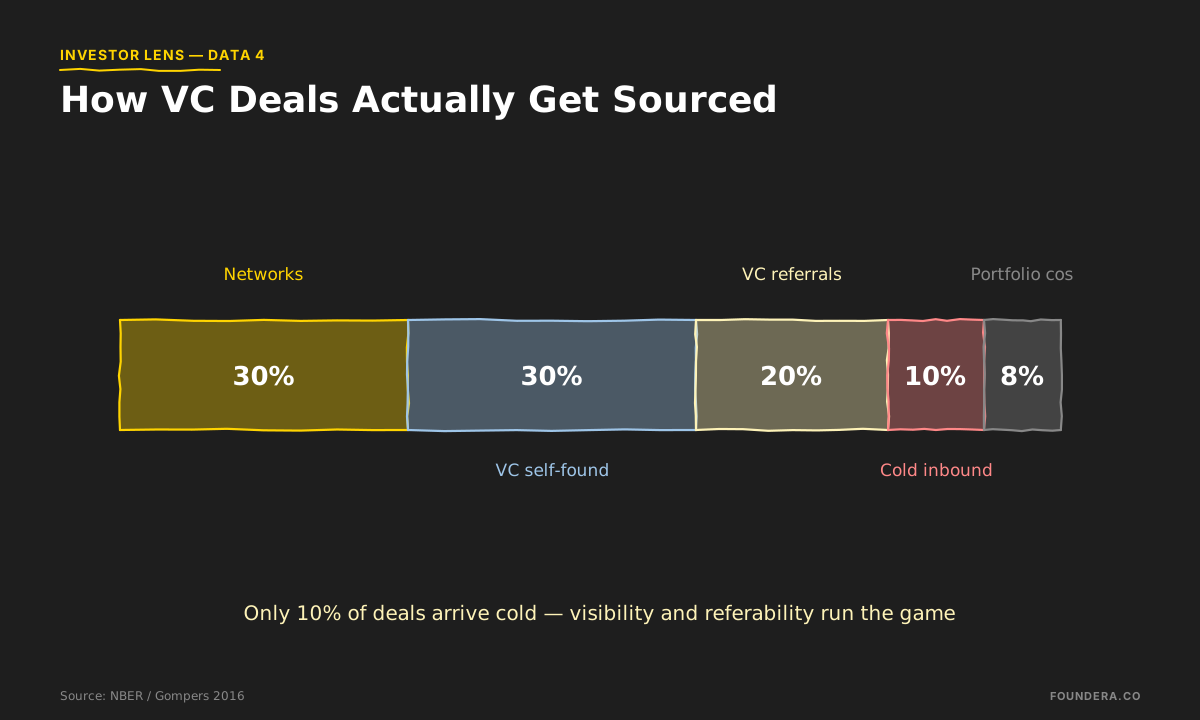
Two lines in that table are pure visibility math. The ~30% of deals VCs generate themselves go to founders who were discoverable — visible in the feeds, searches, and conversations where investors hunt. And the 50%+ that arrive via networks and referrals go to founders that other people could describe and vouch for. Both are downstream of the same asset: a public, legible presence.
The funnel makes visibility even less optional: the median VC firm considers 100 deals for every one it closes. You're not trying to be adequate in that pile — you're trying to be the founder the partner already half-knows before the meeting. The tactical playbook for that is our guide on how to use LinkedIn for fundraising.
The Four Signals Investors Read on a Founder Profile
When investors read a founder's LinkedIn, the evidence they're scanning for clusters into four signals: clarity, consistency, market insight, and team magnetism. This four-signal framework is our synthesis — the diligence questions we see investors asking, mapped to what a profile can actually prove — not a survey result. Use it as a lens, then audit yourself against it.
| Signal | The question the investor is asking | What proves it on LinkedIn |
|---|---|---|
| Clarity | Can this founder explain the business in one breath? | A headline and About section that state problem, customer, and wedge — no jargon |
| Consistency | Does this person execute without an audience clapping? | A regular posting cadence over months, not a burst before the raise |
| Market insight | Do they see something the market is mispricing? | Posts with a genuine point of view on the space — analysis, not announcements |
| Team magnetism | Can they attract people better than the company can pay for? | Hires announcing they joined, team engagement, credible people in the comments |
Clarity is the cheapest signal to fix and the most brutal to fail. If a partner reads your profile for thirty seconds and can't repeat what you do to a colleague, the diligence file starts with a question mark.
Consistency is the one founders underestimate. Anyone can post for two weeks. A founder who has shipped a thoughtful post every week for a year is showing the same muscle that ships product every week — and investors read cadence exactly that way, as a proxy for discipline.
Market insight is where thought leadership stops being a marketing word and starts being diligence evidence. Remember what investors weigh most — team, meaning judgment. Public analysis of your market is your judgment, timestamped. If you don't yet have a system for producing it, our executive thought leadership framework is the place to start, and our guide to thought leadership content for founders covers what to actually write.

Team magnetism is the quietest signal and often the decisive one. Investors notice who engages with you. When your engineers repost your product notes with their own commentary, when a respected operator comments substantively, when new hires announce they joined — that's third-party evidence of the exact trait over 55% of VCs rank first.
The Investor-Ready Profile Checklist
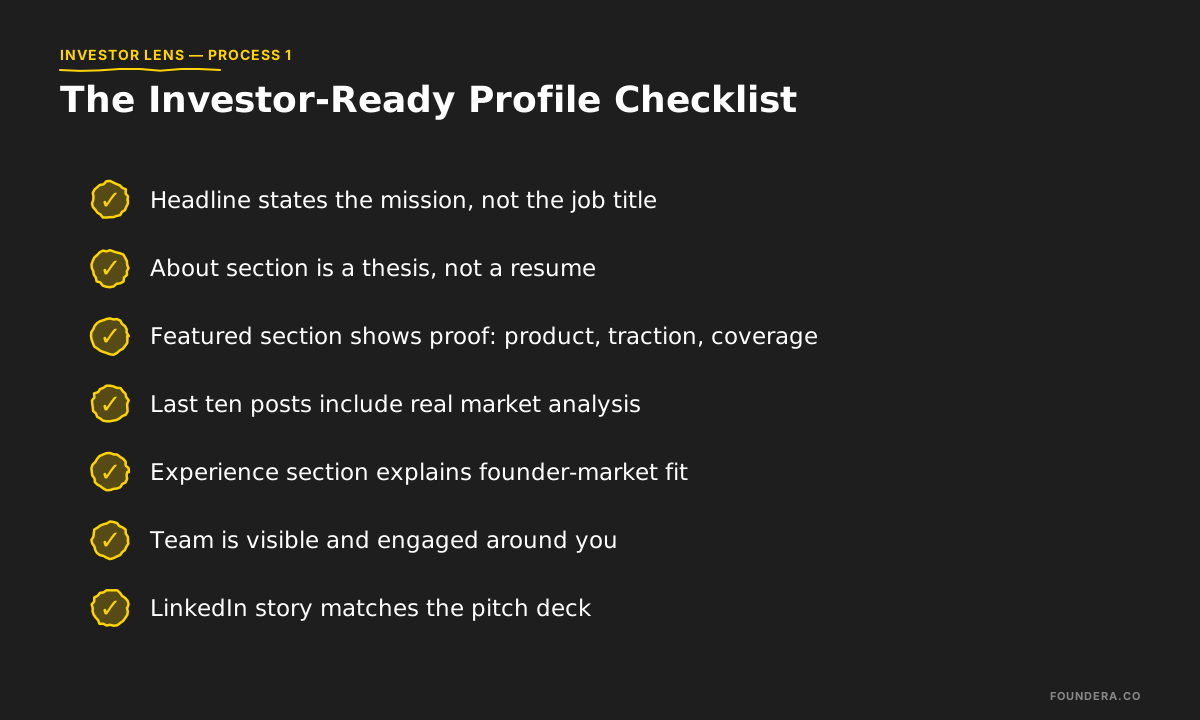
An investor-ready LinkedIn profile answers the diligence questions before they're asked: what you're building, for whom, why you, why now, and who's with you. Run this checklist honestly — each item maps to one of the four signals above.
- Headline states the mission, not the title. "Building X so Y can Z" beats "CEO at Stealth." (Clarity)
- About section is a thesis, not a resume. The problem, why it's now, why your team — in your own voice, under 150 words. (Clarity + insight)
- Featured section shows proof. Product, launch post, traction milestone, notable coverage — two to four items, current. (Clarity)
- Activity shows a weekly point of view. Your last ten posts include real analysis of your market, not just company announcements. (Consistency + insight)
- Experience section explains the founder-market fit. Each past role has one line connecting it to what you're building now. (Insight)
- Your team is visible around you. Employees list the company, engage with your posts, and post their own wins. (Team magnetism)
- The story matches the deck. Positioning, market, and stage on LinkedIn agree with what you're pitching — investors diff these documents. (Clarity)
None of this requires being an influencer. It requires being legible. An investor who spends four minutes on your profile should leave able to pitch your company to their partners — because, if things go well, that's literally what they'll do next.

Start Six Months Before the Raise
Start building the profile investors will diligence at least six months before you need term sheets, because the signals that matter — consistency, insight, magnetism — can't be manufactured in a sprint. A burst of activity three weeks before the raise proves the opposite of consistency, and investors have seen that pattern a thousand times.
A realistic ramp:
- T-6 months: Fix the static profile (checklist above). Pick the one market thesis you'll be known for.
- T-5 to T-3 months: Publish weekly. Analysis of your space, honest build lessons, customer problems — the material covered in thought leadership content for founders. Engage investors' content genuinely, no pitching.
- T-3 to T-1 months: Let traction into the narrative — milestones, hires, customer stories. Your network warms up your target list without a single cold email.
- Raise: Your profile now corroborates the deck instead of contradicting it. Warm paths do the introductions.

This mirrors how the diligence actually flows: intro → LinkedIn scan → your content and podcasts → mutual connections → first call. By the time you're in the room, the room has read you. The full pre-raise playbook is in LinkedIn visibility before fundraising — it publishes the groundwork this post assumes.

And if you'd rather spend those six months building the company while a team builds the presence — that's our whole job. Talk to Foundera.
Frequently Asked Questions
Do VCs actually check a founder's LinkedIn before investing?
Yes — digital research is standard practice. Brunswick's survey of 257 institutional investors found 96% systematically harvest data from social and digital sources, and rated LinkedIn 7.83/10 in importance for equity research, second only to company IR websites. Coalition Greenwich similarly found almost 80% of institutional investors use social media as part of their regular workflow, and 85% of those on LinkedIn use it at least weekly.
What do investors look for in founders before investing?
The team, first and foremost. In the Gompers et al. survey of 885 VCs, more than 90% called the management team an important factor in success or failure, and over 55% ranked it the single most important factor — ahead of product, market, or business model. On LinkedIn, that translates into four readable signals: clarity of thinking, consistency of execution, genuine market insight, and the ability to attract strong people.
Can a LinkedIn presence really influence an investment decision?
The evidence says yes. In the Coalition Greenwich research, 48% of institutional investors said information from social media prompted additional research, 34% said it influenced a decision to work with a particular company, and roughly 30% said it directly influenced an investment recommendation or decision. Brunswick found roughly nine in ten investors have made a recommendation or decision based on digital or social information.
What should a founder post on LinkedIn before fundraising?
Post the evidence investors are looking for: analysis of your market (insight), honest lessons from building (clarity and authenticity), milestones and customer stories (traction), and team wins (magnetism). Weekly cadence over months matters more than any single viral post — investors read consistency itself as a signal of discipline.
How long before a raise should I start building LinkedIn visibility?
Six months is a practical minimum. Consistency is one of the core signals investors read, and it can only be demonstrated over time — a three-week burst right before the raise is itself a red flag. Six months is enough to fix the static profile, establish a weekly publishing rhythm, and let your market thesis accumulate a visible track record.
What are red flags investors notice on a founder's profile?
The mirror image of the four signals: a headline and About section that can't explain the business (clarity failure), a feed that's been dead for months or only lights up pre-raise (consistency failure), posts that are all announcements and no analysis (insight failure), and zero visible team engagement (magnetism failure). A positioning mismatch between the profile and the pitch deck is the quiet killer — investors compare them.
TL;DR
- VCs underwrite teams first: >90% call the team important, >55% rank it the most important factor (Gompers et al., NBER).
- LinkedIn is core diligence infrastructure: investors rate it 7.83/10 for equity research — second only to IR websites — and 96% systematically harvest social/digital data (Brunswick 2023).
- Social research moves money: ~80% of institutional investors use social media at work; 48% → deeper research, 34% → partner decisions, ~30% → direct influence on investment decisions (Coalition Greenwich).
- Deal flow favors the visible: 30%+ of deals come via networks, ~30% are found by the VC, only 10% are cold inbound — and the median firm screens 100 deals per investment.
- Investors read four signals on a founder profile: clarity, consistency, market insight, team magnetism (our framework — use it as an audit lens).
- Run the 7-point profile checklist, and start six months before the raise — consistency can't be faked in a sprint.
Related Reading
- LinkedIn Visibility Before Fundraising — the pre-raise groundwork this post builds on
- How to Use LinkedIn for Fundraising — the full raise-cycle playbook
- Thought Leadership Content for Founders — what to publish to prove market insight
- Executive Thought Leadership Framework — the system behind a consistent point of view
- LinkedIn Thought Leadership Statistics — the numbers behind founder visibility
- Why Personal Branding Matters for Tech Entrepreneurs — the long-game case for building in public