LinkedIn Hooks: The 210-Character Fold and a 24-Pattern Library for Founders
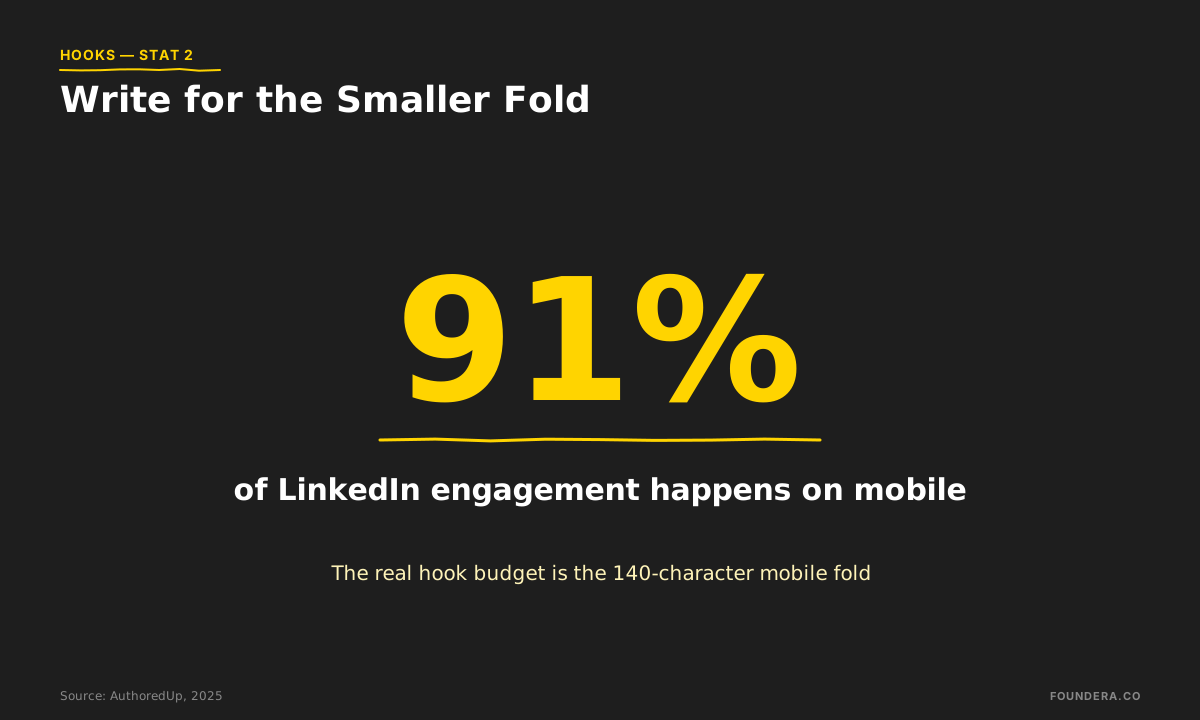
LinkedIn hooks operate inside a brutal constraint: only about 210 characters show in the desktop feed — and roughly 140 on mobile — before "…see more" truncates everything else, per AuthoredUp's analysis of 372,126 posts. You get 3,000 characters per post. The first two or three lines decide whether anyone reads the other 2,800. And since 91% of LinkedIn engagement happens on mobile (AuthoredUp), the real budget is 140.
That's the entire case for treating hooks as a craft, not an afterthought. This post covers the mechanics the data supports — why hooks exist, what they must accomplish in order, and the rules that hold up across 372K analyzed posts — then hands you a working library: 24 hook patterns organized by type, each with a founder-context example you can adapt tonight.
Table of Contents
- The Fold: 210 Characters Decide Everything
- What a Hook Has to Do — In Order
- Hook Mechanics: Five Rules the Data Supports
- The Hook Library: 24 Patterns for Founders
- How to Test Your Hooks
- Frequently Asked Questions
The Fold: 210 Characters Decide Everything
The math of the feed is unforgiving:
| Surface | Characters shown before "…see more" |
|---|---|
| Desktop feed | ~210 |
| Mobile feed | ~140 |
| Actual post limit | 3,000 |
Source: AuthoredUp, 372,126 posts analyzed, Sep 2025–Feb 2026.
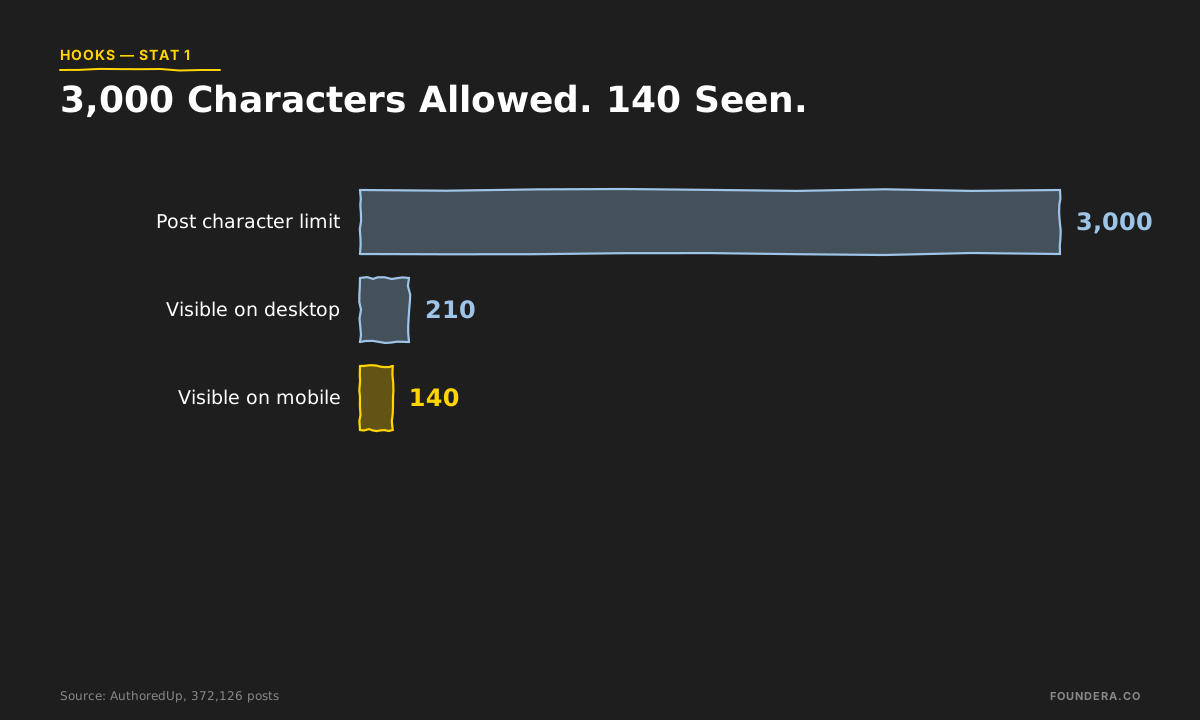
Under 5% of your post is visible by default. Everything else — your framework, your story, your CTA — sits behind a tap that most readers never make. The hook isn't decoration on top of the post. The hook is the post, as far as the feed is concerned; the rest is what the hook unlocks.
And write for the smaller number. With 91% of engagement happening on mobile, the desktop fold is a luxury you don't get to count on. If your first 140 characters can't stand alone, your post doesn't exist for nine out of ten readers.
Here's the founder-shaped opportunity hiding in that constraint: LinkedIn has 1.3 billion members, but just over 1 million publish content weekly, per DemandSage's 2026 statistics. The competition for the feed is thinner than it looks. Most of the people you're competing against waste their 140 characters on throat-clearing. You won't.
What a Hook Has to Do — In Order
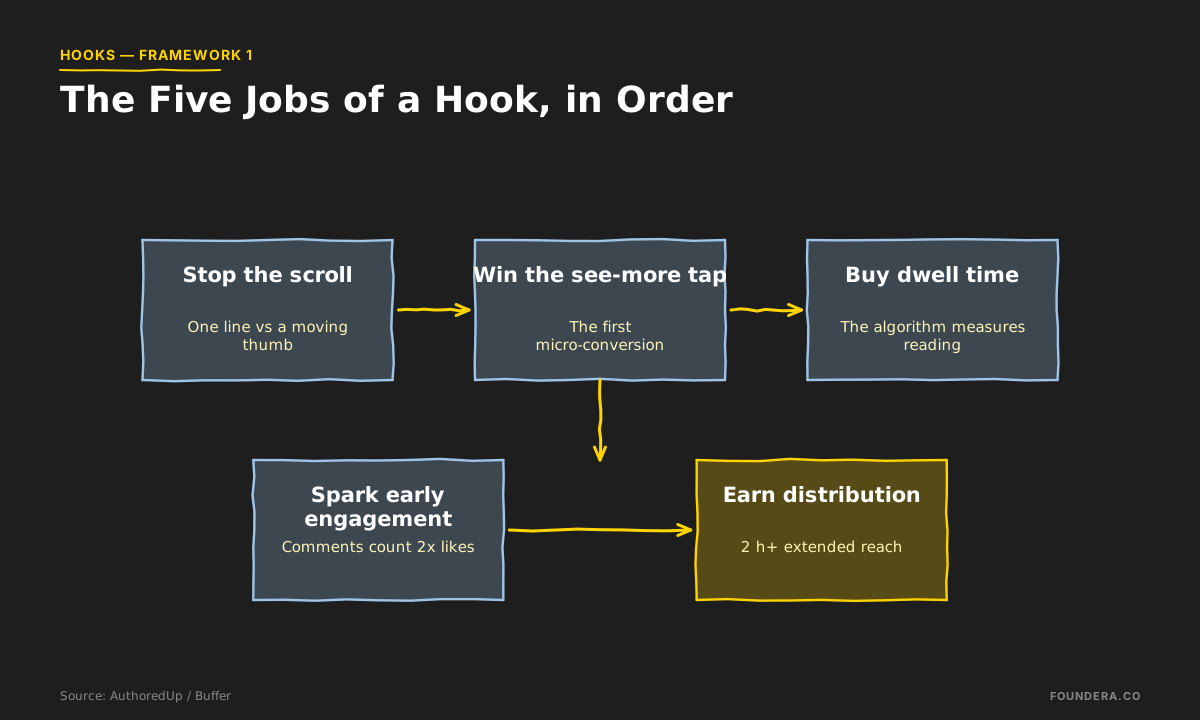
A hook has five jobs, and they happen in sequence. Miss one and the chain breaks:
- Stop the scroll. One line against a moving thumb.
- Win the "see more" tap. The first micro-conversion of the post.
- Buy dwell time. The algorithm measures whether people actually read — dwell is a core ranking signal in the engagement-testing stage (AuthoredUp).
- Spark early engagement. In the 1–2 hour testing window, comments count roughly 2x likes.
- Earn extended distribution. Pass the test and the post gets pushed beyond your network from 2 hours on.
Note what this means for timing folklore: Buffer's 4.8M-post study found "there's no official 60- or 90-minute window confirmed by LinkedIn," but early engagement signals do influence how widely content is distributed. The hook is your main lever on those early signals — it determines how many people enter the post at all during the testing window.
Everything downstream of the tap — structure, saves, comment strategy, the long tail — is its own discipline. We dissected it in the data-backed anatomy of viral LinkedIn posts. This post stays above the fold.
Hook Mechanics: Five Rules the Data Supports
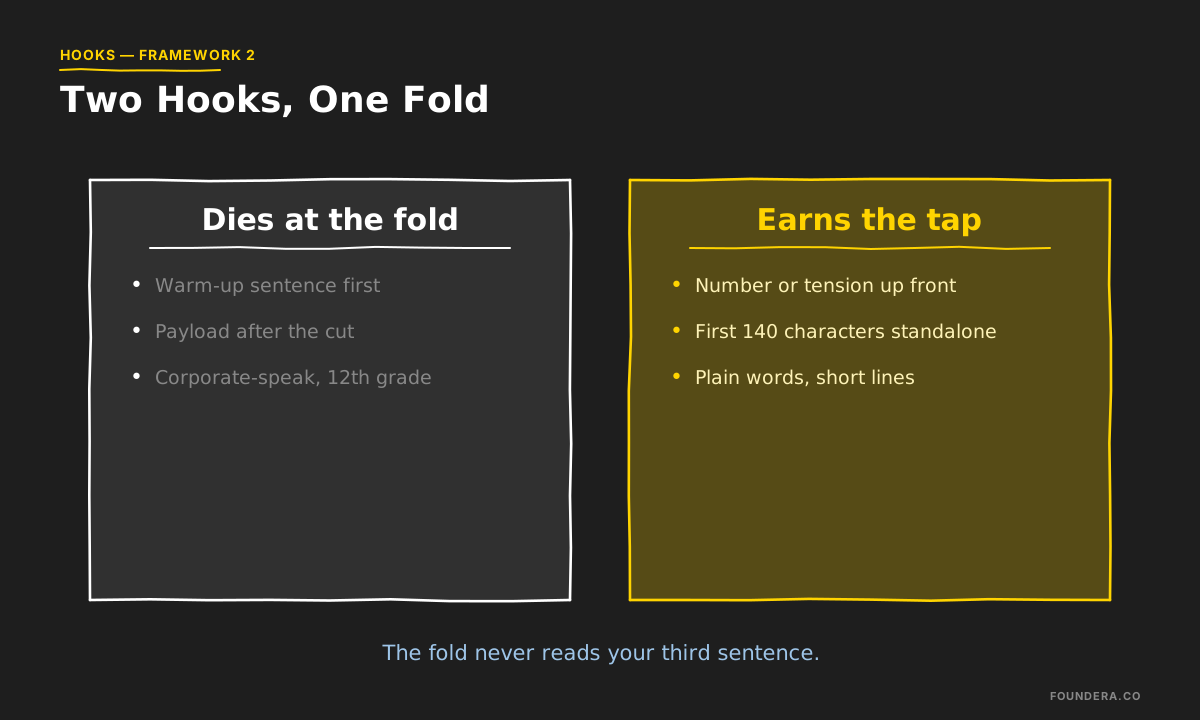
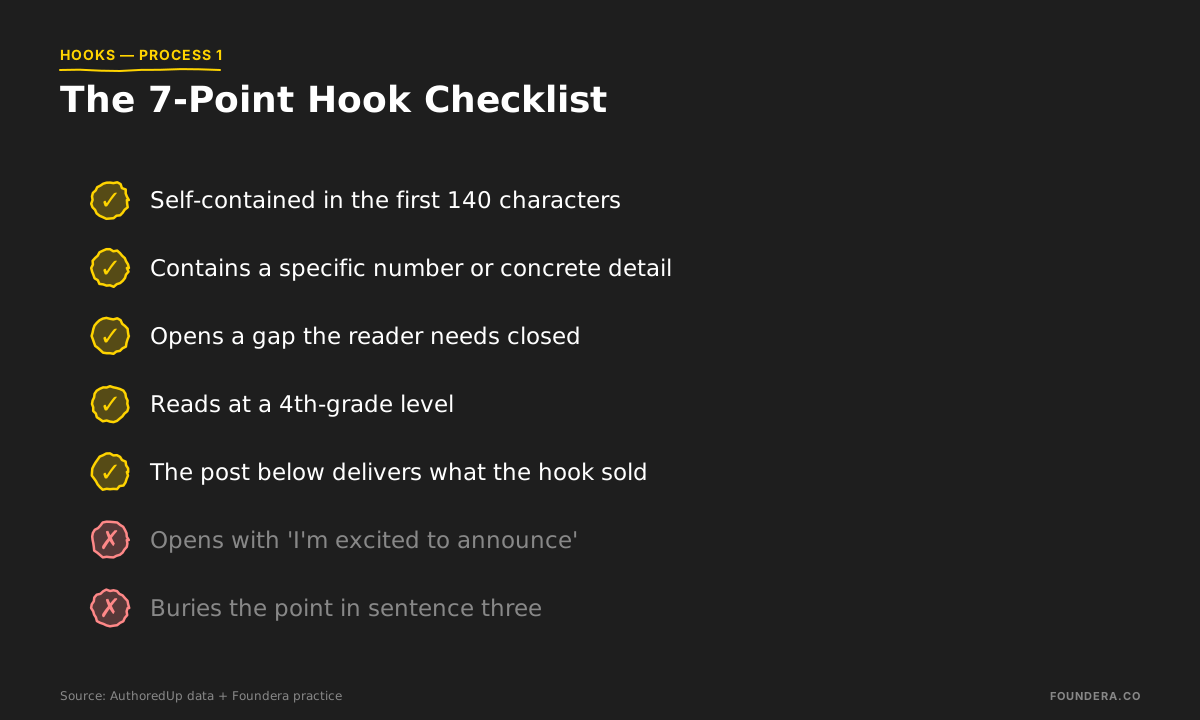
Rule 1: Front-load the payload. The number, the tension, or the verdict goes in the first line — not after context-setting. If the fold cut your post at character 140, would what remains make someone tap? If not, rewrite. Your first line should work as a standalone piece of content.
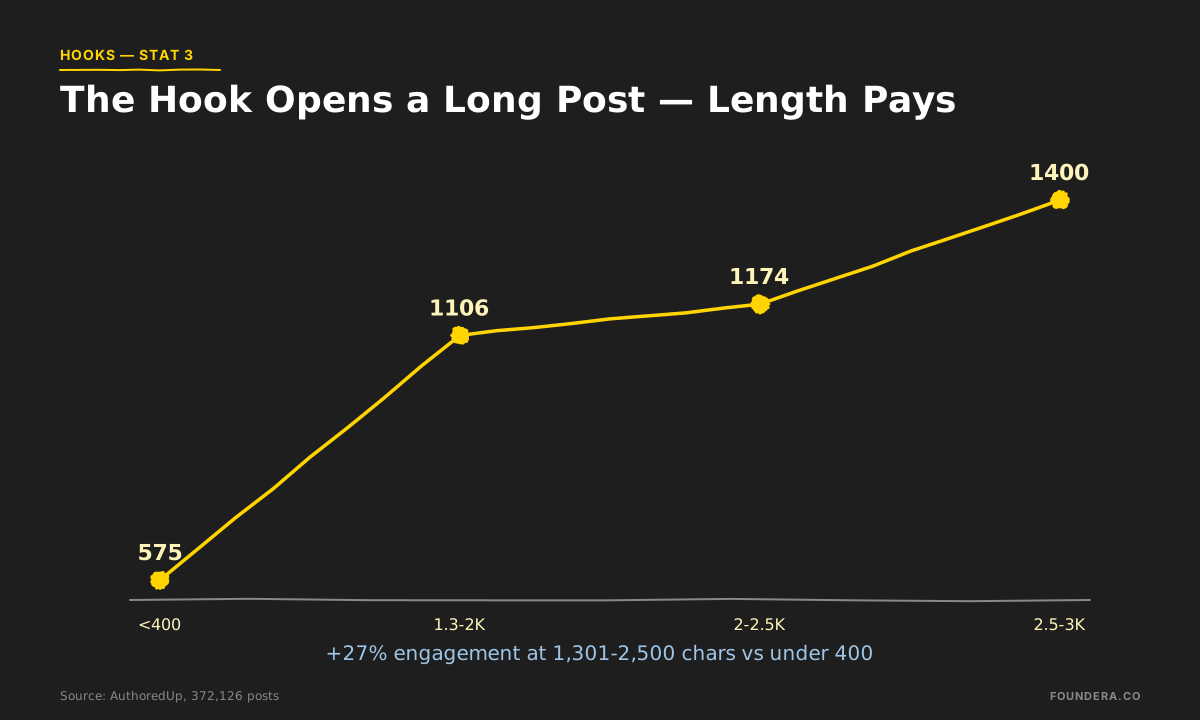
Rule 2: Hook short, deliver long. The hook's job is to open a substantial post. Posts of 1,301–2,500 characters generate 27% higher engagement than posts under 400 characters, and median impressions climb from 575 (short posts) to 1,400 at 2,501–3,000 characters (AuthoredUp). Median engagement rate rises with length too: 2.10% under 400 characters vs 2.67% at 2,001–2,500. A great hook on a hollow post is a wasted tap.
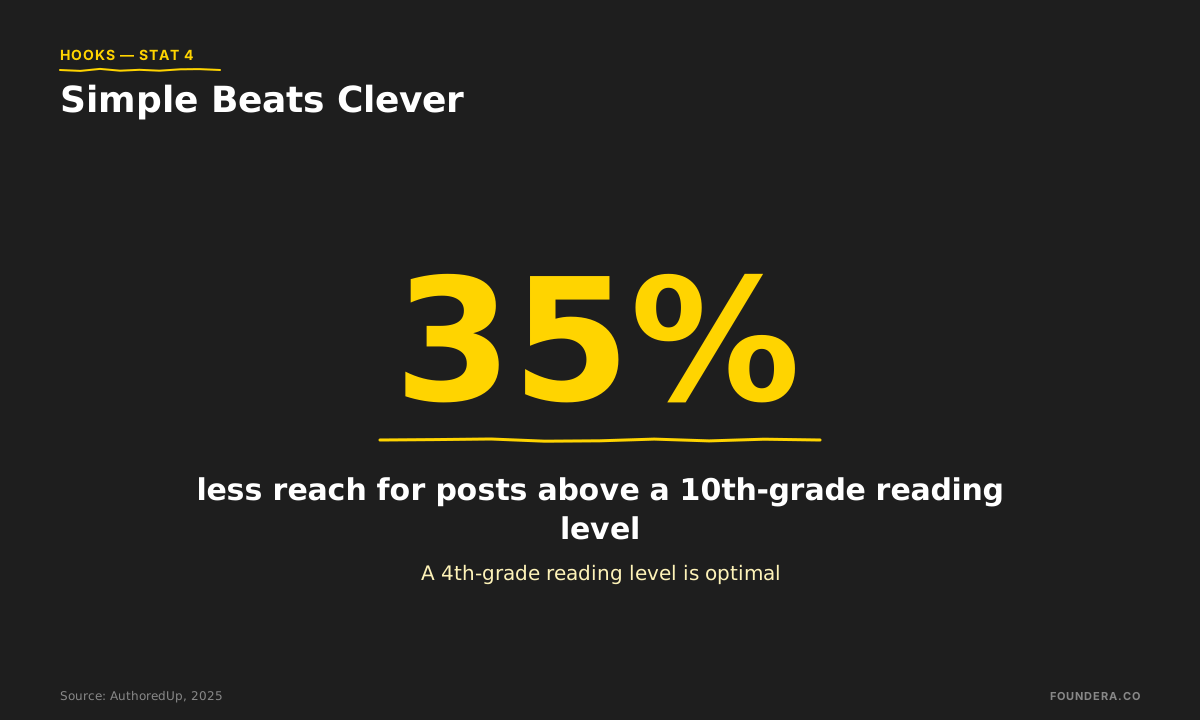
Rule 3: Write down, not up. Posts written above a 10th-grade reading level get over 35% less reach; a 4th-grade reading level is optimal (AuthoredUp). This is doubly true for the hook, which gets processed in under a second. "We reduced churn 60%" beats "We achieved a significant improvement in retention metrics" — every time, in every dataset.
Rule 4: Specificity beats cleverness. "$180K on ads. Three demos." out-hooks any wordplay you'll ever write. Numbers, timestamps, named stakes — concrete details signal that a real story follows. Vague hooks promise vague posts, and readers price that in instantly.
Rule 5: Never bait what you can't pay. The algorithm measures dwell time. A hook that oversells gets the tap, loses the reader in five seconds, and teaches the testing stage that your post disappoints. The hook sets the check; the post has to cash it.
Watch the rules work in a rewrite:
Before: "I've been reflecting lately on our journey as a company and wanted to share some thoughts about what we've learned about enterprise sales over the past year…" (148 characters of nothing — the fold cuts here)
After: "Our first enterprise deal took 11 months. Our fifth took 3 weeks. Here's everything we changed in between."
Same story. One survives the fold.
The Hook Library: 24 Patterns for Founders
The patterns below are organized by type. Every example is an original, generic B2B-founder scenario — swap in your own numbers and context. A hook pattern is scaffolding, not a script: readers can smell a template when the details are fake, which is the same reason AI-generated founder content keeps falling flat.
Contrarian hooks
1. The sacred-cow slaughter. Attack a practice your audience treats as obviously correct. "We killed our free trial. Signups dropped 40%. Revenue went up."
2. The everyone-is-wrong. Disqualify the standard advice by its source. "Most fundraising advice comes from people who have never raised in a down market."
3. The stop-doing. Open with a prohibition against something the reader did this week. "Stop demoing your product in the first sales call. You're answering questions nobody asked yet."
4. The quiet heresy. State an unpopular position flatly — no 'unpopular opinion' label, no hedge. "Product-market fit isn't found. It's negotiated — one pricing call at a time."
Number-led hooks
5. The brutal stat. Lead with your own painful number and promise the breakdown. "We spent $180K on paid ads in six months. It generated three demos. Founder-led content generated forty."
6. The money number. Attach a dollar figure to an unexpected origin. "Our first enterprise deal was worth $240K. It started as a comment on someone else's post."
7. The time-cost. Contrast what a lesson cost you with what it costs the reader. "It took me four years and two failed startups to learn this about hiring. It'll take you two minutes."
8. The before/after. Two numbers, one timeframe, one variable. "Churn went from 9% to 3% in one quarter. We changed one onboarding email."
Story-open hooks
9. The mid-scene drop. Start inside the moment, context be damned. "The investor closed his laptop 11 minutes into our pitch. Best thing that ever happened to us."
10. The worst-day open. Name the date and the damage. "On March 14th, our biggest customer churned. They were 31% of our revenue."
11. The conversation replay. Open with a line of dialogue in quotes. "'You're not selling software. You're selling a shorter to-do list.' A customer said that to me on Tuesday. I can't stop thinking about it."
12. The timestamp contrast. Then vs now, compressed to two sentences. "Three years ago I was writing cold emails nobody answered. This morning a Fortune 500 CISO booked a call from one post."
Question hooks
13. The mirror question. Ask the thing the reader privately worries about. "Would your pipeline survive if you stopped doing outbound for 90 days?"
14. The either/or. Force a choice between two things the reader wants. "You can have a polished brand or a visible founder. Early stage, you only get one. Which are you picking?"
15. The cost question. Put a price tag on inaction. "What does a silent founder cost a startup? I did the math on our last raise."
Credibility-flex hooks
16. The earned-lesson. Reps first, insight second. "I've reviewed 300+ inbound sales calls this year. One question predicts a closed deal better than anything else."
17. The receipts. State the result, promise the boring system behind it. "We booked 62 sales meetings last quarter without a single cold call. The system is boring, and it fits in one post."
18. The reverse-flex. Undercut your own credential. "My technical PhD made me a worse founder for two years. Here's what it broke."
Confession hooks
19. The mistake admission. Own an expensive error, name the motive. "I ignored our churn data for two quarters because the growth chart looked better in board meetings. Expensive mistake."
20. The insecurity. Say the vulnerable thing operators feel but don't post. "I still get nervous hitting publish here. Three rounds raised, 40 employees — and a LinkedIn post scares me more than a board meeting."
21. The changed-mind. Old belief, new belief, and the bill in between. "I used to think sales was something a founder should escape as fast as possible. Delegating it too early cost us a year of learning."
Promise and list hooks
22. The playbook promise. Commit to specifics up front. "Exactly how we ran our seed raise in 9 weeks — every email template, every mistake:"
23. The save-this. Frame the post as a tool for a future moment. "The 7 questions I wish someone had handed me before my first enterprise negotiation. Save this for yours:"
24. The negative promise. List what not to do — and tease one item. "5 things not to put in your investor update. Number 3 is in almost every update I get."
Every hook here needs a body that delivers. For full post structures to hang these on — story arcs, list posts, teardown formats — use the companion piece: the LinkedIn post template library for founders.
How to Test Your Hooks
Honest caveat first: no large-scale controlled A/B study of LinkedIn hooks exists publicly. The fold sizes, length data, and readability penalties above are measured; which pattern works best for your audience is something only your own data can tell you. So run the test yourself:
- Hold everything else constant. Same topic area, same format, same posting window — vary only the hook family.
- Rotate families deliberately. Two weeks of number-led, two weeks of story-open. One post proves nothing; compare medians across 8–10 posts.
- Read the right metrics. First-hour impressions and comments tell you the hook stopped scrolls; total reach and saves tell you the post paid off the tap. High impressions with zero engagement = a hook that baited what the post couldn't pay.
- Keep a swipe file. When a hook stops your scroll, save the post and note which pattern it maps to. Your library should grow monthly.
One more calibration: the hook is the loudest expression of your voice, which means it's also where generic writing is most visible. Patterns give you structure; the details — your numbers, your scars, your phrasing — are what make a hook sound like a founder instead of a content farm. That authenticity gap is measurable, and it's the subject of our deep-dive on founder voice and AI content. For where hooks fit in the bigger picture of the 2026 feed, see how the LinkedIn algorithm treats AI-era content.
Frequently Asked Questions
What is a LinkedIn hook?
The first 1–3 lines of a post — specifically the ~210 characters (desktop) or ~140 characters (mobile) visible before "…see more" truncates the rest, per AuthoredUp's 372K-post analysis. Its job is to stop the scroll and win the tap that exposes the other 2,800 characters.
How long should a LinkedIn hook be?
Treat 140 characters as the hard budget, because that's the mobile fold and 91% of engagement happens on mobile (AuthoredUp). If your opening line needs more room than a tweet, it's carrying context that belongs below the fold.
What are the best LinkedIn hook examples for founders?
The patterns that convert best for founders lean on what only founders have: real operating numbers and earned scars. Number-led hooks ("Churn went from 9% to 3% in one quarter. We changed one onboarding email.") and confession hooks ("I ignored our churn data for two quarters…") outperform generic motivational openers because specificity signals substance. The library above has 24 LinkedIn hook examples across seven types.
Do question hooks still work on LinkedIn?
Yes, if the question has stakes. Weak: "What's your favorite productivity tip?" Strong: "Would your pipeline survive if you stopped doing outbound for 90 days?" The second targets a real fear and implies the post has an answer. Bonus: questions seed comments, which count roughly 2x likes during the algorithm's engagement-testing window (AuthoredUp).
Why do my posts get impressions but no engagement?
Usually a hook-body mismatch. The hook wins taps, then the post underdelivers — and dwell time collapses, which the algorithm reads as disappointment. Check three things: the post is substantial (1,301–2,500 characters earns 27% more engagement), it's readable (above 10th-grade level costs 35% of reach), and it pays off exactly what the hook promised.
Should I write hooks with AI?
Use AI to generate variations, not the core. A hook works because of specific, verifiable details — your numbers, your dates, your phrasing — and that's precisely what generic AI drafts lack. Draft the hook yourself from a real moment, then let AI stress-test alternatives. More on the trade-offs in founder voice and AI content.
TL;DR
- The fold decides everything: ~210 characters visible on desktop, ~140 on mobile, out of a 3,000-character limit (AuthoredUp, 372,126 posts). Write to 140 — 91% of engagement is mobile.
- A hook has five sequential jobs: stop the scroll → win the tap → buy dwell time → spark early engagement (comments ~2x likes) → earn extended distribution.
- The data-backed rules: front-load the payload, open a long post (1,301–2,500 chars = +27% engagement), write at a 4th-grade level (35% reach penalty above 10th grade), be specific, never bait what the post can't pay.
- 24 patterns, seven families: contrarian, number-led, story-open, question, credibility-flex, confession, promise/list. Steal the scaffolding, supply your own numbers.
- No public hook A/B study exists — test on your own feed: rotate families, hold format constant, compare medians across 8–10 posts.
- Every hook needs a body: pair this library with the post template library.