
Most LinkedIn "content strategies" are not strategies. They are calendars with feelings. A spreadsheet of post ideas, a vague commitment to "show up consistently," and a private hope the algorithm will notice. Six weeks in, the founder is exhausted, the impressions are flat, and the deck gets moved to "we will revisit this next quarter."
This is what happens when you confuse a publishing schedule with an operating system.
A real content strategy on LinkedIn for a founder is not a list of topics. It is a closed-loop machine with inputs (voice, beliefs, evidence), production (pillars, cadence, formats), distribution (network, comments, amplification), and measurement (the right metrics, not the vanity ones). When the six components are wired correctly, LinkedIn stops feeling like a chore and starts compounding. Pipeline arrives in your inbox. Hires self-select. Investors message first.
This guide is the operating system we run for 50+ deep-tech and security founders. It is opinionated, built for 2026 after two years of AI-generated noise rewired what works, and assumes you do not want to be a content creator. You want to be a founder whose company grows faster because of the content that goes out under your name.
What founder-led growth on LinkedIn actually means
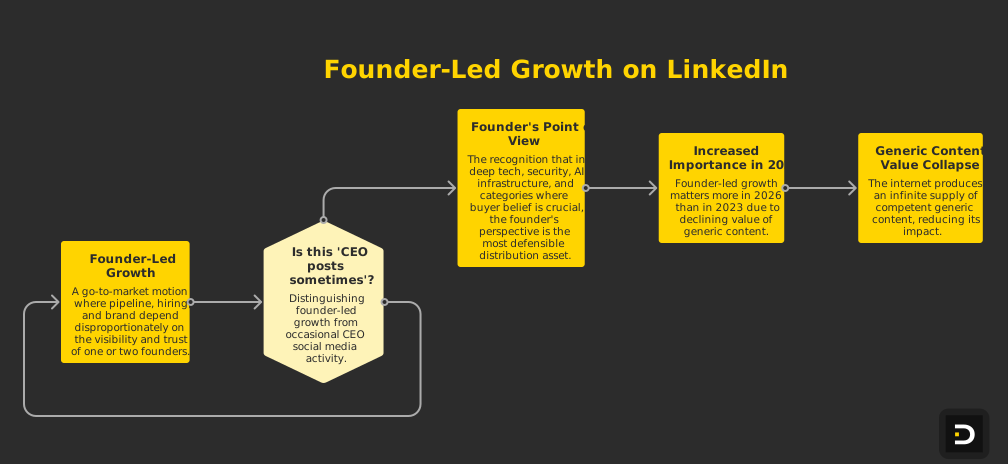
Founder-led growth is a go-to-market motion where the company's pipeline, hiring, and brand depend disproportionately on the visibility and trust of one or two founders. It is not "the CEO posts sometimes." It is the recognition that in deep tech, security, AI infrastructure, and any category where the buyer needs to believe before they buy, the founder's point of view is the most defensible distribution asset the company has.
In 2026, this matters more than it did in 2023 for three reasons. First, generic content has collapsed in value. The internet produces an infinite supply of competent-sounding posts written by language models, which means competent is the new invisible. Second, buyers discount brand pages and trust people. Third, the buying committee has fragmented. Procurement, security, engineering, finance, and the CEO each form an independent view, and they form it on LinkedIn between board meetings.
Founder-led growth on LinkedIn is the discipline of making sure those views are shaped by yours, not your competitor's.
The 6-component operating system (overview)
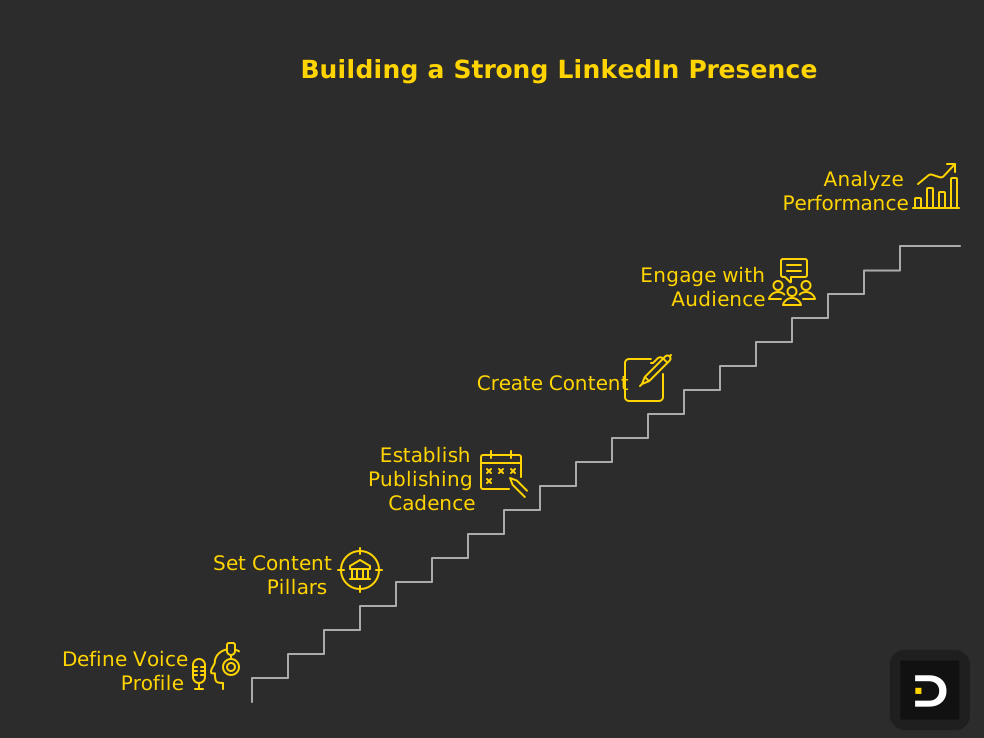
Every founder we work with has these six components, even if they call them different things. The companies that grow on LinkedIn have all six wired together. The companies that stall have three of the six and wonder why.
| # | Component | What it does | Owner | Cadence |
|---|---|---|---|---|
| 1 | Voice profile | Defines how the founder sounds, what they believe, what they refuse to say | Founder + ghostwriter | Built once, refreshed quarterly |
| 2 | Content pillars | The 3-4 territories the founder owns. Everything published maps to one | Founder + strategist | Set quarterly, adjusted monthly |
| 3 | Publishing cadence | Format mix, frequency, and rhythm across the week | Content operator | Weekly batch, daily execution |
| 4 | Distribution and amplification | How each post reaches beyond the founder's first-degree network | Marketing + founder | Per post, then 24-hour windows |
| 5 | Engagement workflow | The disciplined practice of commenting, DMs, and inbound triage | Founder + EA | Daily, 20-30 minutes |
| 6 | Measurement | Tracking what compounds (saves, profile views, qualified DMs) vs. what does not (likes) | Marketing | Weekly review, monthly synthesis |
Notice what is not on this list. No "viral hooks" formula. No "post 5 times a day" mandate. No engagement pods. Those are tactics. The operating system makes tactics legible.
Component 1: Voice profile
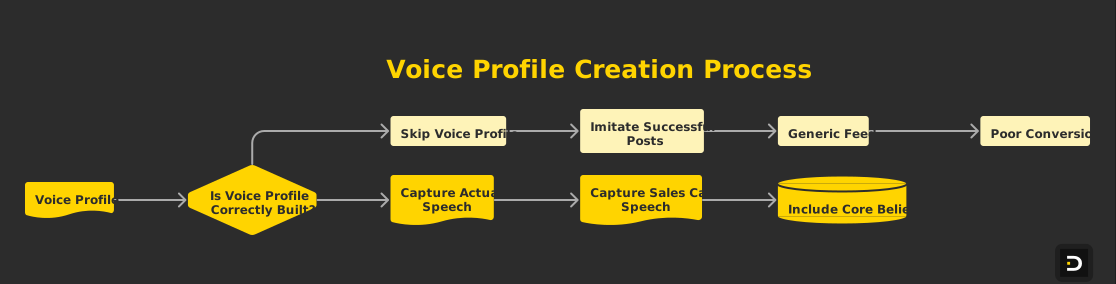
The voice profile is the foundation, and almost no one builds it correctly. Most founders skip it. They see a post that performed well for someone else and try to imitate the structure. The result is a feed that sounds like everyone else and converts like a stock photo.
A voice profile is a written document, four to eight pages, capturing how the founder actually speaks. Not how they think they should sound on LinkedIn. How they speak in a sales call after the second meeting, when the polish drops and the conviction shows up. It includes core beliefs (three to five things they will defend in public), signature phrases, forbidden phrases (corporate filler they refuse), reference points (books, frameworks, analogies they reach for), and their stance on the four or five live debates in their category.
To build it, we transcribe two or three customer calls, an investor pitch, and a long unfiltered conversation about the category. Then we pattern-match. The voice that emerges is almost always more specific, more opinionated, and more unusual than the founder thought. That is the voice that needs to go on LinkedIn, because that is the voice their best customers already trust.
Once it exists, every post runs against it. If a post could have been written by any other founder in the category, it goes back. The voice profile is the answer to "why would anyone follow this person specifically?" For a deeper walkthrough across the executive team, see our framework on executive thought leadership.
Component 2: Content pillars (3-4 max)
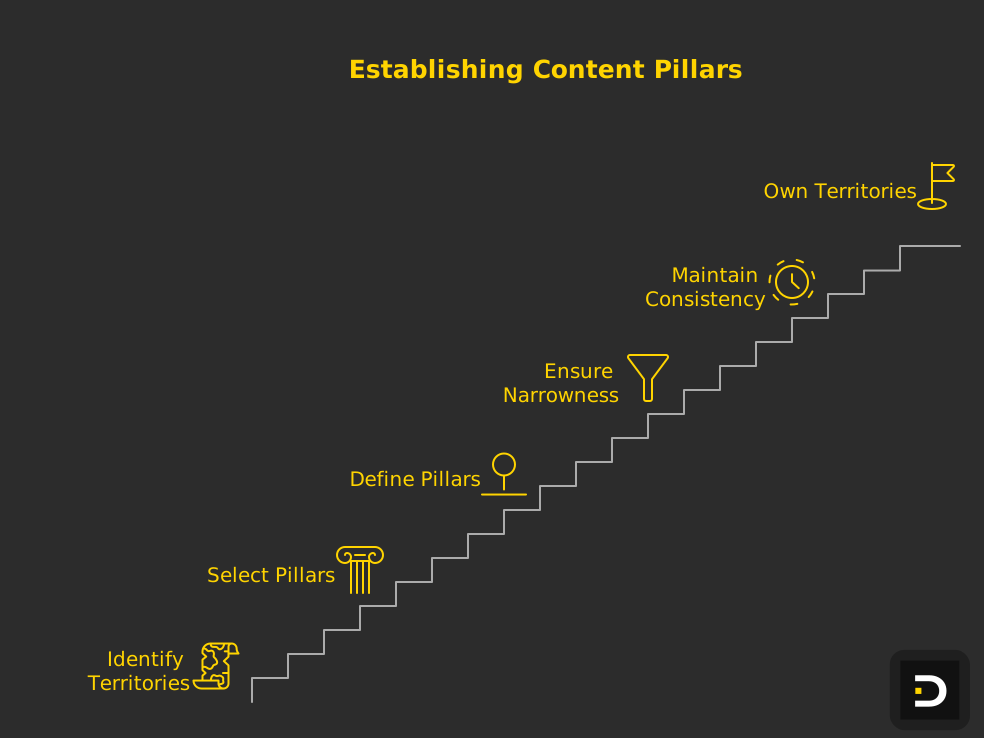
A content pillar is a territory you intend to own in your audience's mind. Not a topic. A territory. "AI security" is not a pillar. "Why the SOC of 2027 will not have a SIEM" is closer. "Things I have learned firing engineers" is a pillar. "How to think about pricing when your buyer does not have a budget line for you yet" is a pillar.
The rule is three to four pillars. Founders who try to cover seven end up owning none, because the audience cannot form a clear association. The brain stores you under one or two tags. Pick them deliberately.
Good pillars share four properties. Narrow enough that you have an actual edge. Broad enough to generate 50 posts a year without repeating. Contested (smart people disagree, which means your stake is real). And they ladder up to a commercial outcome.
The mix: one "category-defining" pillar (where the industry is going), one "operating" pillar (how you build the company), one "customer reality" pillar (what your buyers struggle with that nobody else is naming), and optionally one "personal" pillar (used sparingly).
This is where most founders break the system. They confuse pillars with product marketing. Pillars are not product positioning. They are the belief system that makes the product positioning land later. If every post is about your product, you are running ads with bad targeting. See thought leadership content for founders for the structural difference.
Component 3: Publishing cadence
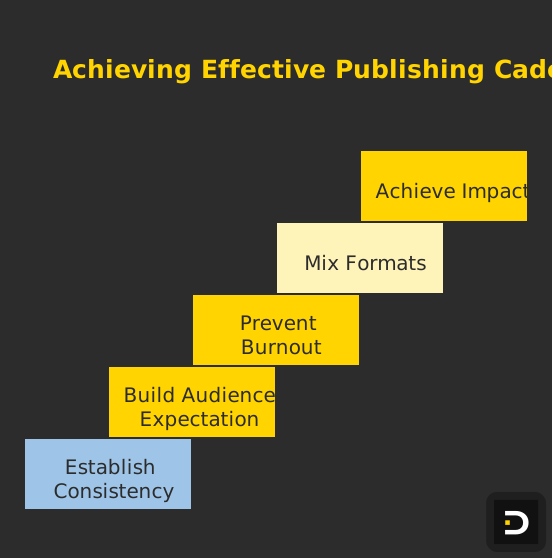
Cadence is the component founders obsess over and the one that matters least in isolation. It works when the other five are in place. Without them, cadence is just frequency, and frequency without voice is noise.
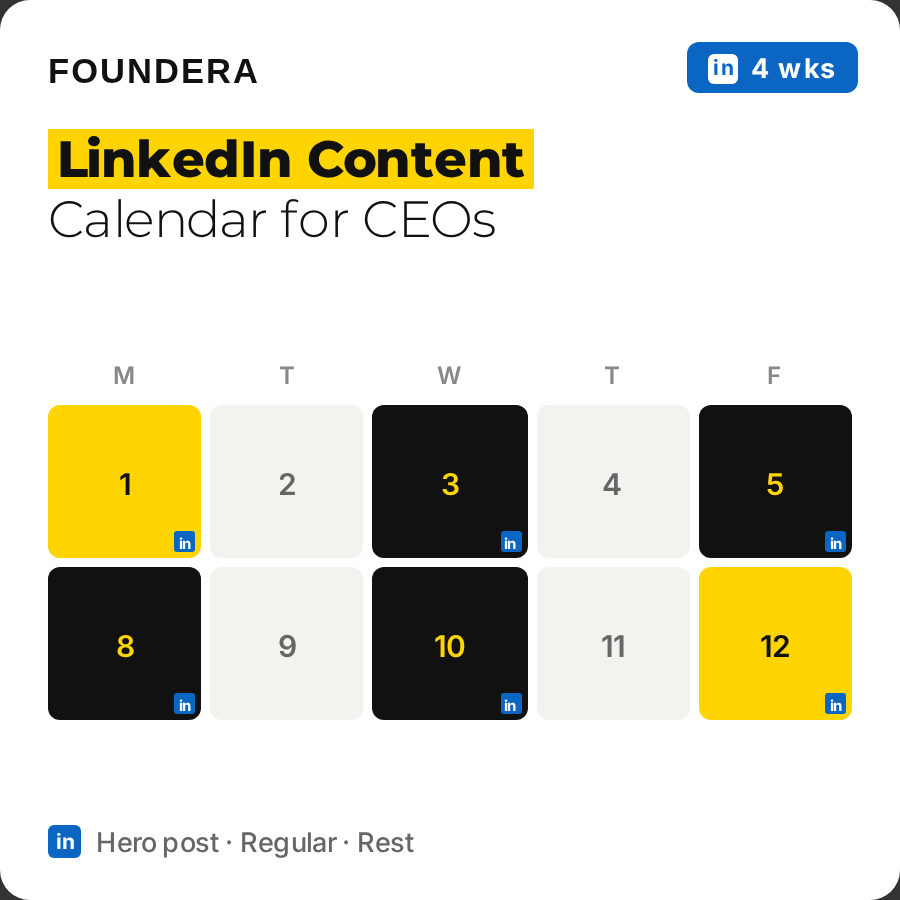
Three to four posts per week. Not seven, not one. Three to four is the sweet spot where the algorithm recognizes you as consistent, your audience expects your voice, and you do not burn out. Five works if you have an operator. One a week does not compound fast enough to matter.
Format mix matters more than total volume. We run roughly 40 percent text-only posts (the workhorse), 25 percent text plus a single image or screenshot, 20 percent carousel or document posts (the format that gets saved), 10 percent video (short, founder-shot), and 5 percent polls or lightweight formats. Avoid newsletters as your primary format unless you have a dedicated team.
Timing matters less than people claim. Post when your audience is on LinkedIn, which for most B2B founders is Tuesday through Thursday, 7 to 10 in the morning local time. The lift from posting at 8:47 versus 9:14 is rounding error compared to the lift from a sharper hook.
Component 4: Distribution and amplification
This is the component most founders ignore, which is why their content does not break out of their existing network. Posting is not distributing. Posting is the start of distribution.
A post lives or dies in its first 60 to 90 minutes. The algorithm uses that window to decide whether to show your post to more of your network, then beyond. The signals it watches are dwell time, engagement velocity, and engagement quality (long comments from people the algorithm trusts).
The playbook: when the post goes live, the founder spends 15 minutes engaging on other people's posts. This signals "this account is active." Then a Slack or WhatsApp channel of internal team members, advisors, and friendly customers gets a notification (not "please like this," an actual "we are talking about X today, jump in if you have a view"). The first eight to twelve comments should be substantive. One-word "great post" comments are worse than nothing because they teach the algorithm your audience is shallow.
For the next 24 hours, the founder replies to every comment with at least a sentence of real engagement. People who comment thoughtfully often get their network to see the exchange. For a deeper breakdown, see founder-led marketing on LinkedIn.
Component 5: Engagement workflow
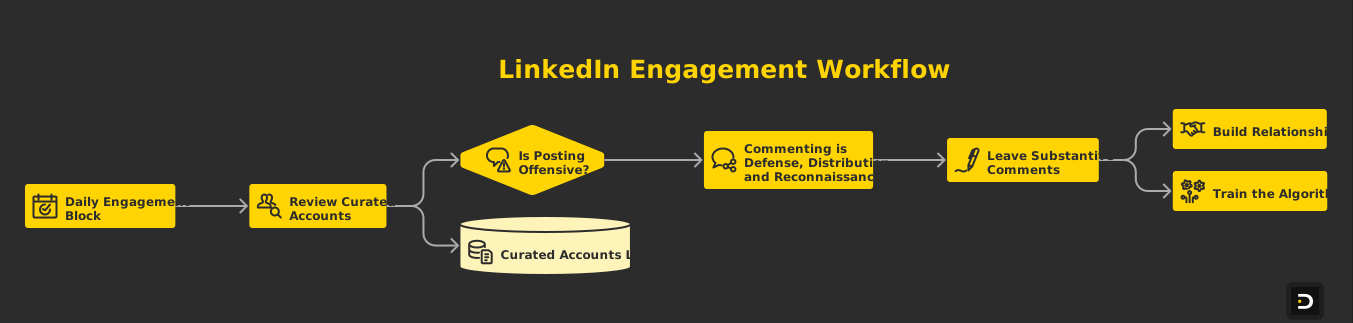
If posting is offense, commenting is defense, distribution, and reconnaissance at once. The founders who win on LinkedIn spend more time commenting on other people's posts than writing their own. Comments put your voice in front of audiences that already exist, build relationships without the awkwardness of a cold DM, and train the algorithm that you are an active contributor.
The engagement workflow we run is a daily 20 to 30 minute block. The founder reviews a curated list of 40 to 60 accounts (customers, prospects, peers, journalists, investors, category-relevant thinkers) and leaves substantive comments on three to five of them. Substantive means at least two sentences, ideally adding a counterpoint, a relevant example, or a specific data point. Never "great post." Never an emoji-only reply.
This is also where inbound triage lives. As presence grows, DMs increase. A workflow matters: hot pipeline goes to the founder, warm relationships to a designated team member, cold pitches get a polite template, irrelevant noise gets ignored. Without this, the inbox becomes a graveyard and warm leads die in there.
Founders underestimate the compounding. After 90 days of disciplined commenting, the founder has trained 200 to 400 accounts to associate their face with thoughtful interventions. Those people read the founder's posts. They share them. They DM. The flywheel turns on.
Component 6: Measurement that matters
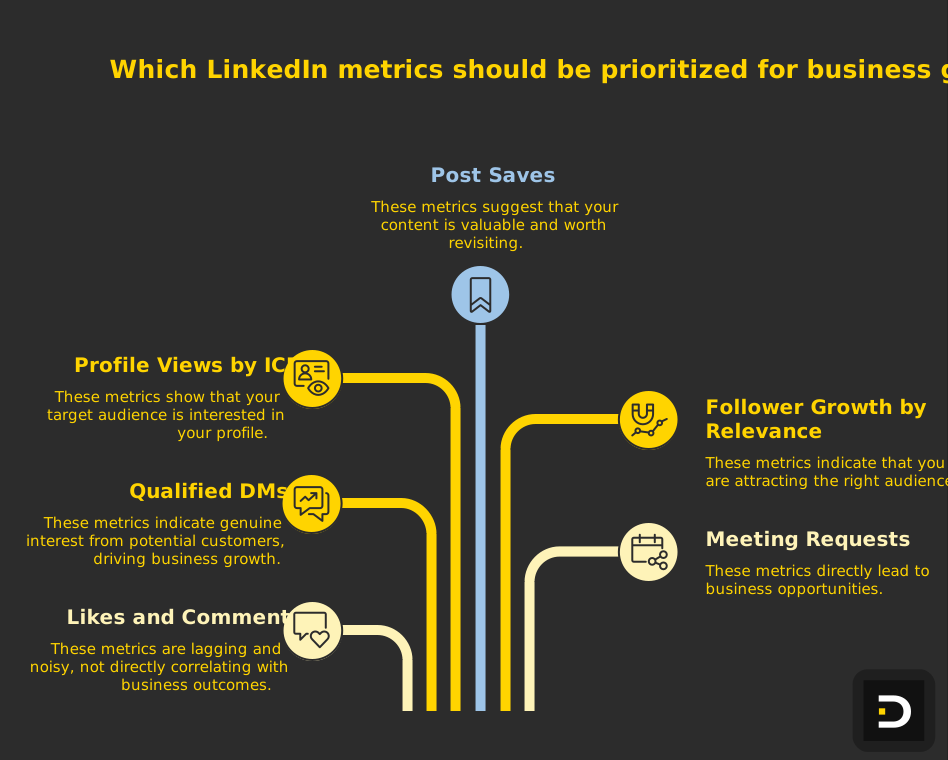
Most founders measure LinkedIn the way they measured term papers in college: by how much praise they got. Likes, comment counts, "this post went viral." These metrics are not useless, but they are lagging and noisy, and they almost never correlate with the outcomes that matter.
The metrics that compound: qualified inbound DMs (someone in your ICP starting a conversation), profile views by ICP, post saves (the strongest signal that content was useful enough to return to), follower growth by relevance, and meeting requests sourced from content.
A post with 800 likes and zero qualified DMs is worse than a post with 80 likes and three qualified DMs. The former told the algorithm you had a popular take. The latter told your buyers you understand their problem.
Run a weekly review: 20 minutes, founder plus marketing lead. Which post drove the most qualified inbound? Which got the most saves? Which got reshared by someone in our buyer set? Those three answers tell you what to write more of. For founders building their brand from the systems angle, our piece on the best personal branding tool for founders goes deeper. The Bessemer State of the Cloud and HubSpot Research are useful sanity checks once you have a baseline.
How the 6 components fit together (weekly rhythm)
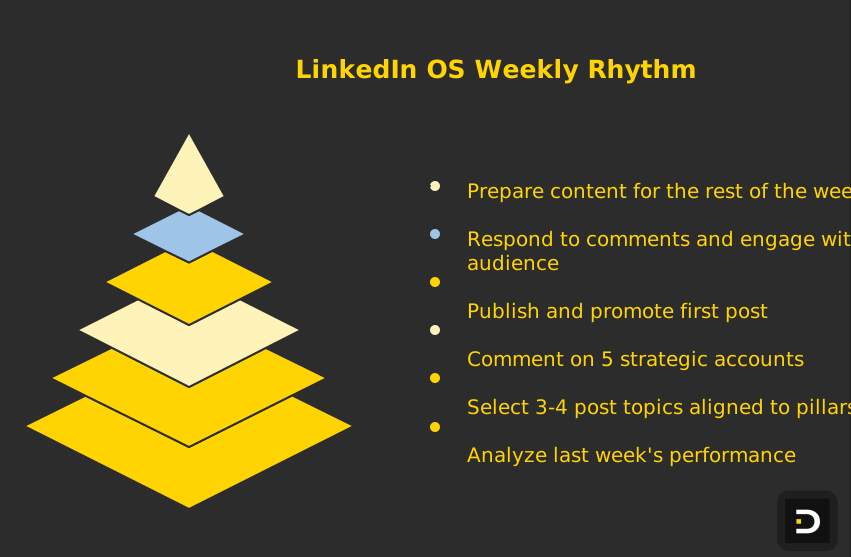
The OS only works on a rhythm. The weekly cadence below is what we observe in founders who treat LinkedIn as infrastructure rather than a side project.
| Day | Founder time | What happens | Owner |
|---|---|---|---|
| Monday | 30 min | Review last week's metrics, pick this week's 3-4 post angles aligned to pillars | Founder + content operator |
| Monday | 20 min | Engagement block: comment on 5 strategic accounts | Founder |
| Tuesday | 45 min | Post #1 published. Founder distributes, engages, replies to comments | Founder + marketing |
| Wednesday | 20 min | Engagement block. Light writing day (drafts for the rest of the week) | Founder |
| Thursday | 45 min | Post #2 published. Distribute, engage, reply | Founder + marketing |
| Friday | 30 min | Post #3 (often a reflection or framework). Triage week's DMs, route to sales | Founder |
| Weekend | 15 min | Optional Sunday post. Async voice memo to ghostwriter for next week | Founder |
Total founder time: 3 to 4 hours a week. That is the realistic ceiling. Anything more and the founder starts neglecting the business. Anything less and the system does not compound. The job of the surrounding team (ghostwriter, content operator, marketing) is to absorb the other 12 to 15 hours that make those 3 to 4 hours productive.
If you have pillars but no cadence, or cadence but no distribution, or distribution but no measurement, that is the gap Foundera fills. We run the operating system for deep-tech and security founders so the founder only spends the 3 to 4 hours that actually require them. Talk to us if you want to see how that looks for your category.
30-60-90 day rollout for founders starting from zero
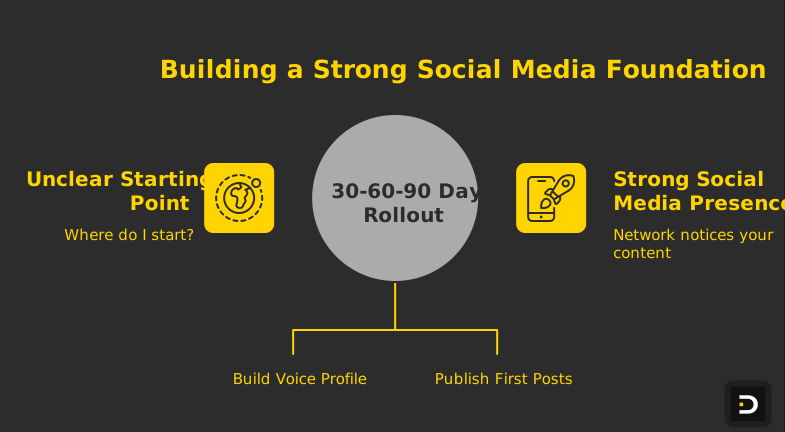
The most common question we get is "where do I start." The answer is not "post your first piece on Monday." Build the system in order, because skipping foundation steps creates posts that do not compound.
| Window | Milestone | Outcome |
|---|---|---|
| Day 0-15 | Voice profile built. Pillars chosen and documented. Profile rewritten (banner, headline, about, featured) | Foundation. Anyone visiting your profile understands your stake in 10 seconds. |
| Day 15-30 | First 6-8 posts published. Engagement workflow started (daily 20-min block). Metrics dashboard set up | Signal. Your network starts to notice you are showing up. |
| Day 30-60 | Cadence locked at 3-4 posts/week. Distribution playbook running. First inbound DMs from ICP arriving | Compounding begins. Profile views from buyers triple. Reach per post climbs. |
| Day 60-90 | One post breaks out (10x your baseline reach). Sales team starts noting "deal came from LinkedIn." Hiring pipeline self-sources | The system is real. Pipeline and hires both improve measurably. |
| Day 90+ | Quarterly voice and pillar review. Refine, double down on what works, prune what does not | Compounding asset. Your LinkedIn presence is now a moat, not a chore. |
Two notes. Breakout posts in the day 60-90 window are not luck. They are the predictable outcome of a system running long enough to know what resonates. The "viral" post is usually the seventeenth post in a pillar, not the first. And the timeline assumes the founder actually puts in the 3 to 4 hours a week. The system requires consistency at the cadence level, not heroic effort.
Common ways the OS breaks (and how to fix it)
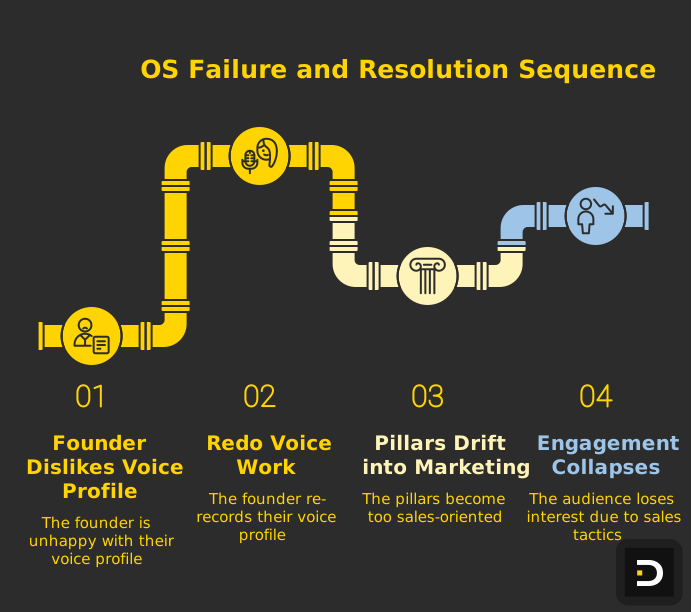
After running this system for 50+ founders, the failure modes are remarkably consistent. Six of them account for roughly 80 percent of the times the system stalls.
1. The founder hates their voice profile. The profile was built from how the founder thinks they should sound, not how they actually sound. Fix: redo the voice work using customer calls and recorded conversations. The spoken voice is almost always sharper than the written one.
2. Pillars drift into product marketing. Posts become veiled feature announcements. Engagement collapses because the audience smells the sales motion. Fix: no more than one in every five posts mentions the company directly.
3. Cadence becomes irregular. The founder posts daily for two weeks, then disappears for three. The algorithm punishes this more than it punishes lower cadence. Fix: drop to twice a week, but be religious about it.
4. Distribution is skipped. The founder publishes and walks away. The post dies in the first 90 minutes. Fix: put the distribution sequence on a checklist that runs every time a post goes live.
5. Engagement is treated as optional. The founder writes posts but never comments. The flywheel never turns because the founder is broadcasting into a vacuum. Fix: tie the engagement block to a recurring calendar event. 20 minutes, daily, non-negotiable.
6. Measurement defaults to likes. The founder gets discouraged because viral aspirations are not landing, even though pipeline is improving. Fix: change the dashboard. Track qualified DMs, ICP profile views, saves, and meeting requests sourced from content.
For founders running a sales motion alongside content, see sales methodology for founders on LinkedIn. Reviewing your personal leadership brand statement alongside this rollout is useful, since the brand statement is what your pillars should ladder up to. For algorithmic context, the LinkedIn Marketing Blog publishes updates when the platform changes signal weighting.
Your next move
You are one of two founders. Either you are starting from zero and needed a system, or you are already posting and needed a diagnostic to figure out which component you are missing.
The founders who win on LinkedIn in 2026 are not the most prolific or the most polished. They are the ones who treat the channel as a system, run it with discipline, and protect the founder's time so the founder can do the parts only they can: have a point of view and stand behind it in public. Everything else is operating. That part can be built, run, and measured. That is the work Foundera does for the founders we partner with.
If you want help running this operating system, talk to us. We will look at your current posts, your pillars, and your pipeline, and tell you which of the six components you need to build first. No deck, no sales motion. A working diagnostic and a recommendation.
Frequently asked questions
How long does it take to see results from a LinkedIn content strategy?
If the operating system is built correctly, founders typically see meaningful signal (qualified DMs, ICP profile views climbing, sales noting LinkedIn-sourced conversations) within 60 to 90 days. Breakout posts and self-sourced pipeline arrive in the 90-to-180-day window. Anyone promising results in 30 days is selling tactics, not systems.
How many posts per week should a founder publish?
Three to four. Less and the algorithm does not recognize you as consistent enough to lift. More and you dilute quality and burn out the founder. Three to four is the durable cadence that compounds without breaking the system.
Should founders write their own posts or hire a ghostwriter?
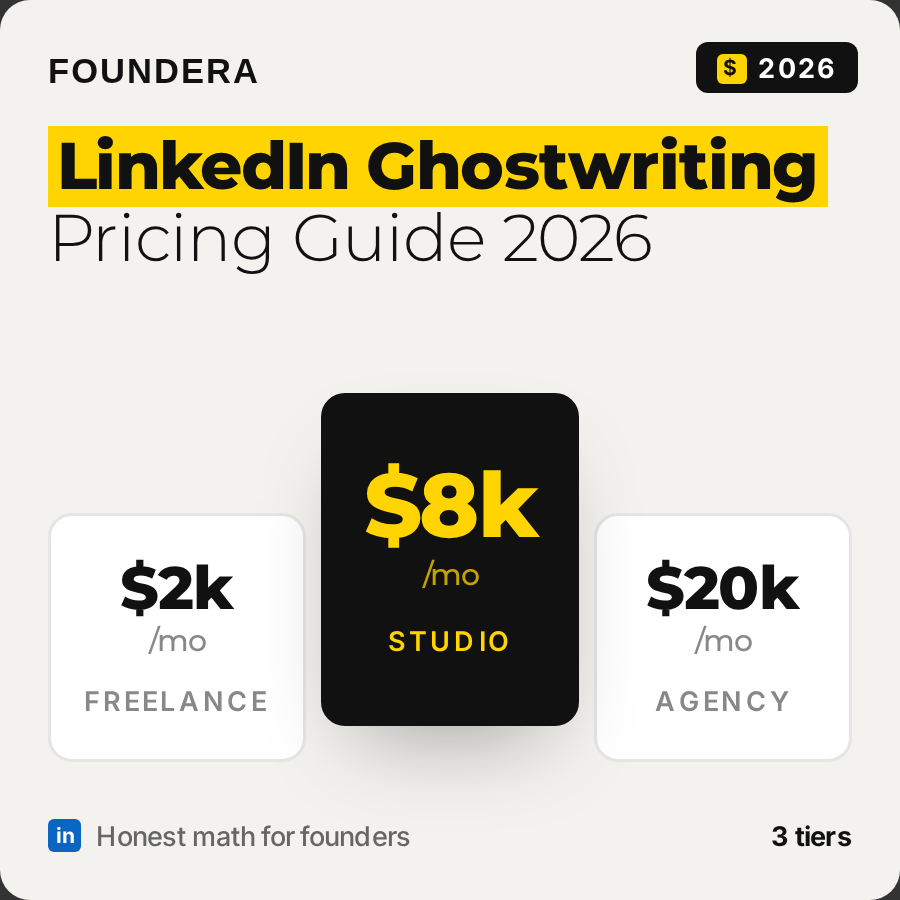
Most founders should not write every post themselves. They set the voice, pillars, and point of view; a ghostwriter handles drafting and operations. The founder edits, approves, and adds the final 10 percent that makes it sound like them. This is how founders preserve 3 to 4 hours a week without sacrificing voice.
What is the biggest mistake founders make on LinkedIn?
Treating posting and distribution as the same activity. They are not. Posting is the 10 percent. Distribution, engagement, and the surrounding workflow are the other 90. Founders who only post never break through.
How do you measure LinkedIn ROI for founder-led growth?
Track qualified inbound DMs from ICP, profile views by ICP, post saves, follower growth by relevance, and meeting requests sourced from content. Tie those to pipeline created and closed-won deals over 6 to 12 months. LinkedIn's contribution is rarely first-touch attribution. It is the conversation that started 90 days before the demo.
Do I need to use video on LinkedIn?
Not as a primary format. Video can amplify a strong pillar, but text posts and carousels still drive the majority of saves, comments, and qualified inbound. If video feels unnatural, skip it.
How is 2026 different from 2024 for LinkedIn content?
AI-generated content has saturated the feed, so distinctive voice wins by larger margins. LinkedIn's algorithm has continued moving toward dwell time and meaningful comments as primary signals, which penalizes shallow content harder. And buying committees have fragmented further, which means founders need to speak to multiple personas without becoming generic.
The TL;DR
Quick answer
A real LinkedIn content strategy is not a calendar with feelings. It's a closed-loop operating system with six components: voice profile, content pillars, publishing cadence, distribution, engagement workflow, measurement. Founders who treat LinkedIn as infrastructure spend 3-4 hours a week. The surrounding team absorbs the other 12-15 hours that make those productive.
Key takeaways
- Six components: voice profile, pillars, cadence, distribution, engagement, measurement.
- Three to four posts a week is the durable cadence. Less doesn't compound; more burns out.
- A post lives or dies in its first 60-90 minutes. Posting is not distributing.
- Track qualified inbound DMs, ICP profile views, saves. Skip likes and impressions.
- By day 60-90 a post breaks out 10x baseline. Breakouts are predictable, not luck.