Viral LinkedIn Posts: The Data-Backed Anatomy for Founders
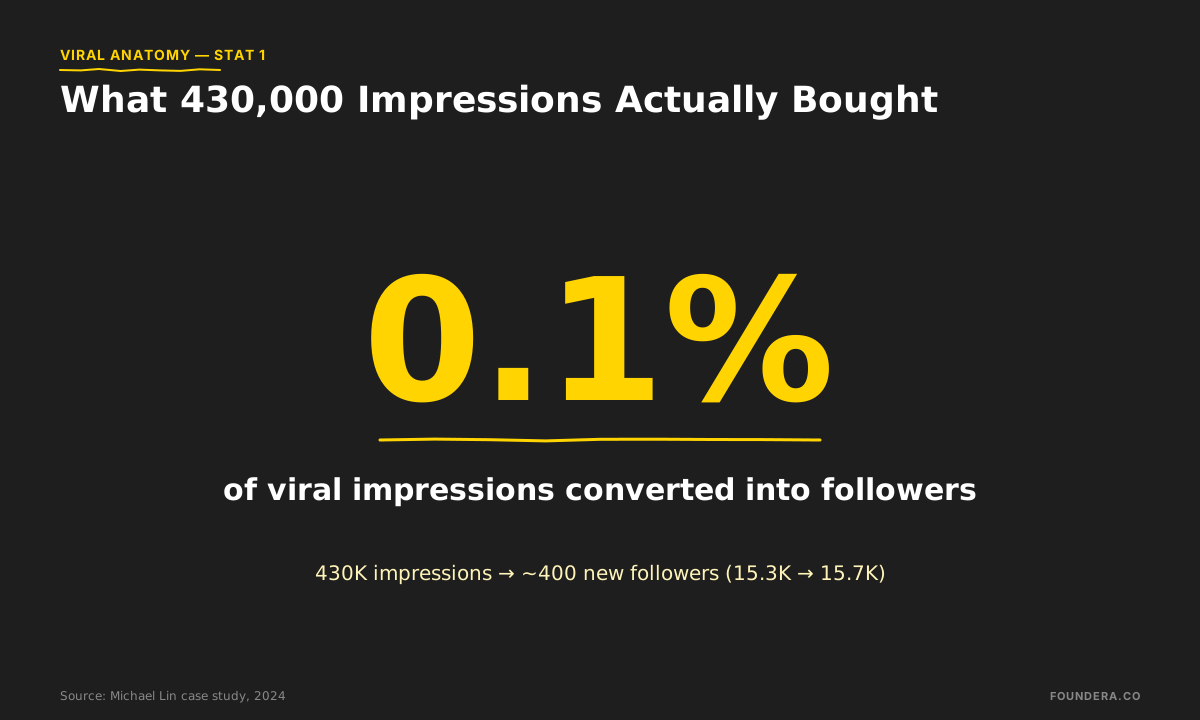
Viral LinkedIn posts are the most misunderstood prize in founder content — and there's a documented number that proves it. When Michael Lin's post hit 430,000 impressions, his follower count moved from 15.3K to 15.7K: roughly 400 new followers, a 0.1% impression-to-follower conversion rate, by his own published post-mortem. At that rate, you'd need about a million impressions to gain 1,000 followers.
Virality is real. It's measurable. And for a founder, it's mostly worthless — unless you understand what actually makes posts travel and point that machinery at the right audience. This post breaks down what the data shows: the three-stage distribution test every post runs, an engagement hierarchy where one save outweighs five likes, an early window that's half real mechanism and half folklore, and the structural elements that repeat across posts that travel. Then it makes the argument the growth gurus won't: the right 10,000 impressions beat any 400,000.
Table of Contents
- The 430K-Impression Reality Check
- How LinkedIn Decides What Travels: The Three-Stage Test
- The Engagement Hierarchy: Saves Beat Likes
- The Early Window: Real Mechanism, Fake Folklore
- The Anatomy: Seven Structural Elements That Repeat
- Optimize for the Right 10,000 Impressions
- Frequently Asked Questions
The 430K-Impression Reality Check
Start with the case study every founder should read before chasing reach. Michael Lin — ex-Netflix engineer turned writer — landed a genuinely viral post: 430,000 impressions and days of buzzing notifications. Then he did what almost nobody does: published the aftermath, with numbers.
| What the viral post delivered | Number |
|---|---|
| Impressions | 430,000 |
| Followers before | 15.3K |
| Followers after | 15.7K |
| New followers gained | ~400 |
| Impression-to-follower conversion | 0.1% |
| Impressions needed for 1,000 followers at that rate | ~1,000,000 |
Source: Michael Lin, "Aftermath of a Viral 430K Impression LinkedIn Post".
Why is the conversion so brutal? Because viral reach is, by definition, out-of-network reach. The post traveled precisely because it appealed broadly — which means it landed in front of hundreds of thousands of people with no reason to care who wrote it. They consumed the moment and scrolled on. Impressions are not audience. Audience is not pipeline.
That's the trap in "how to go viral on LinkedIn" as a goal. Virality measures how far a post spread, not who it reached or what they did next. For a founder selling security software to CISOs, 430,000 impressions among job-seekers and engagement tourists is a vanity spike. The rest of this post is about the machinery — because the same machinery that produces empty virality can be aimed at buyers instead.
How LinkedIn Decides What Travels: The Three-Stage Test
Every post you publish runs the same gauntlet. Per AuthoredUp's algorithm research, built on 621,833+ analyzed posts, distribution happens in three stages:
| Stage | Window | What's measured | Your job |
|---|---|---|---|
| Initial classification | 0–60 min | Quality and spam check, small test audience | Clean formatting, no bait signals |
| Engagement testing | 1–2 hours | Comments (weighted ~2x likes), dwell time, click patterns | Earn real replies — and reply back |
| Extended distribution | 2+ hours | Sustained meaningful engagement | Discussion keeps it compounding |
Source: AuthoredUp algorithm research, 2025.
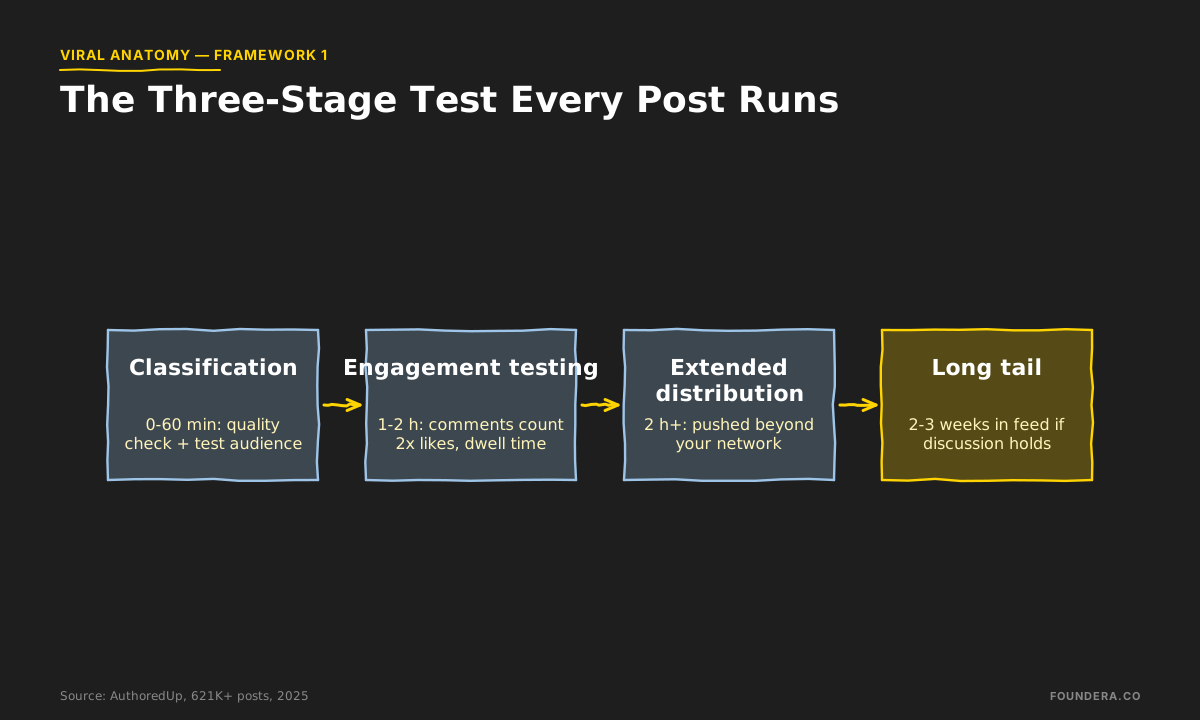
Two details in that model deserve a founder's attention. First: in the testing stage, comments count roughly twice as much as likes, and dwell time — whether people actually stop and read — is weighed alongside them. The algorithm is measuring attention quality, not applause volume.
Second: the game no longer ends the same day. Posts that spark meaningful conversation now stay visible in the feed for 2–3 weeks, per the same AuthoredUp research. LinkedIn stopped being a 24-hour platform. A post that keeps generating discussion on day four gets re-served on day ten. Virality in 2026 is less an explosion and more a slow burn with a long tail — which favors substance over stunts.
The feed has also changed what it wants. We broke down how the 2026 algorithm treats AI-generated content — and what it rewards instead — in our LinkedIn algorithm and AI content analysis.
The Engagement Hierarchy: Saves Beat Likes
If you still measure posts in likes, you're using 2021 math. In AuthoredUp's dataset, one save gives a post 5x more reach than one like — and boosts distribution roughly twice as much as a meaningful comment. Saves are also rare: fewer than 3% of posts earn even one. That scarcity is exactly why the algorithm treats a save as the strongest quality signal available.
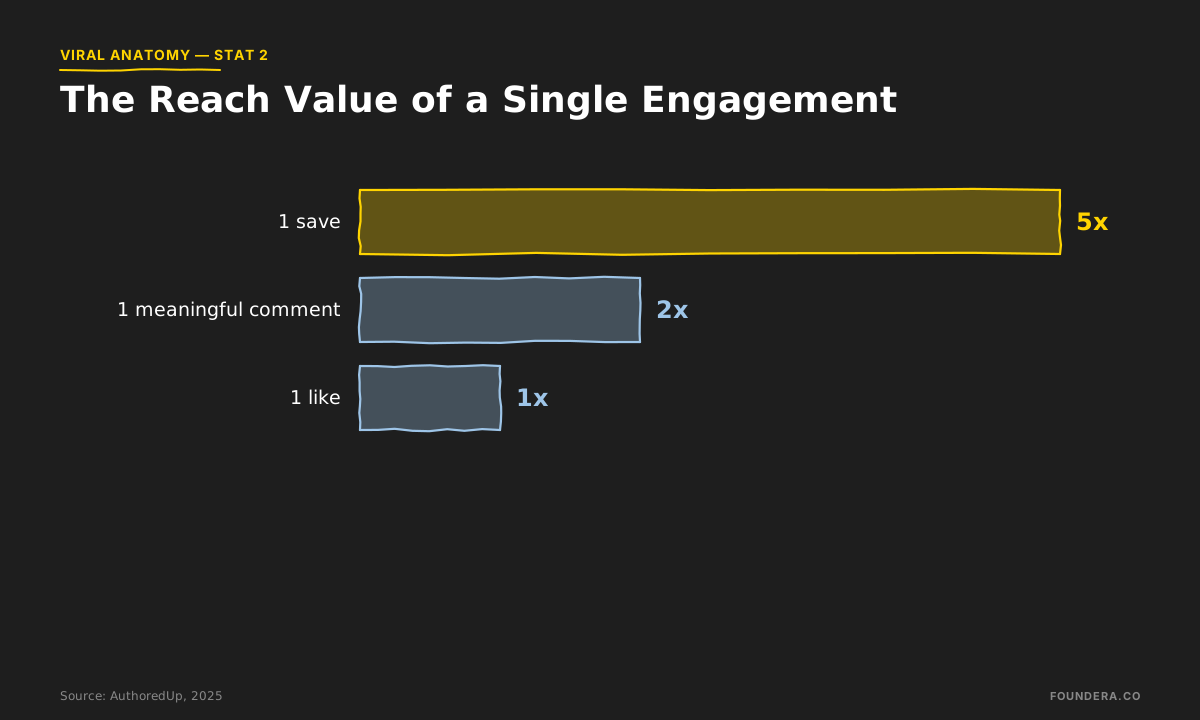
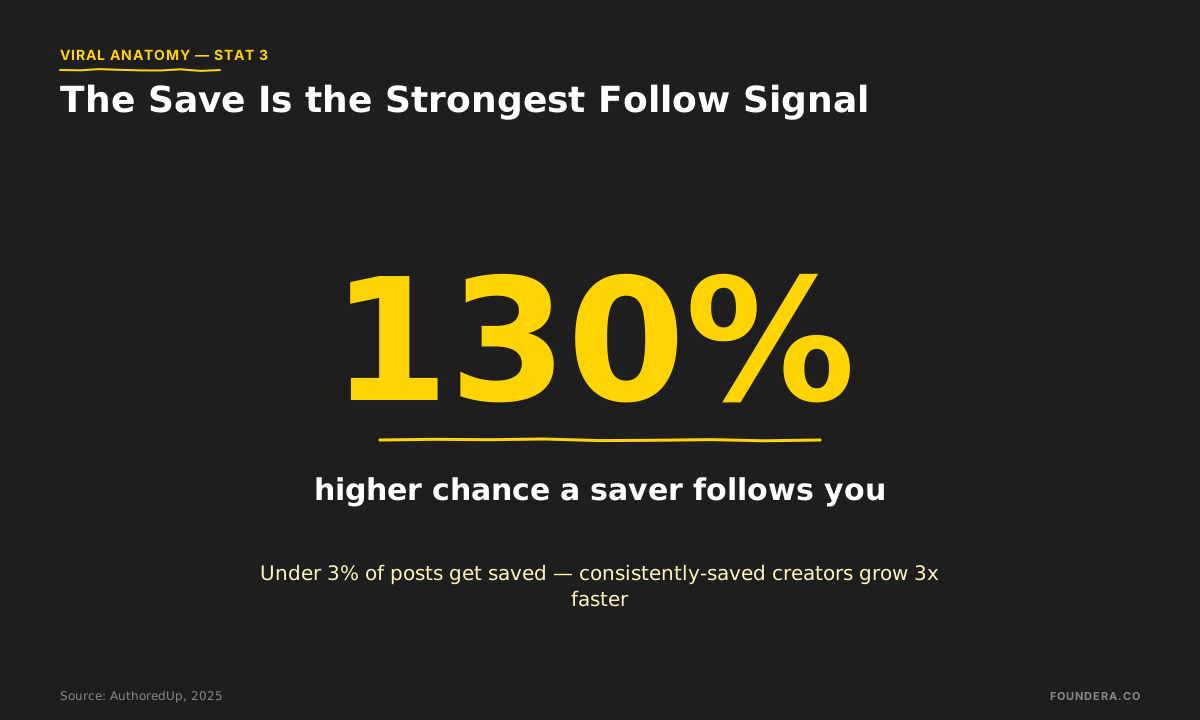
The follower math flips too. A reader who saves your post is 130% more likely to follow you, and creators who get saved consistently grow their audiences 3x faster — the strongest follower-conversion signal in the AuthoredUp dataset. Hold that against the 0.1% conversion from the viral case study. Broad reach converts strangers at a rounding-error rate; saves convert readers into audience at the highest rate the data has found. They are opposite strategies.
This isn't a fringe metric anymore. LinkedIn made save and send counts visible in late 2025, and per van der Blom's Algorithm Insights Report 2025 (coverage summarized by AuthoredUp) the algorithm now weights saves, sends, meaningful comments and dwell time above likes. One more discussion stat worth knowing: posts whose comment sections contain real back-and-forth — replies to other comments, not drive-by praise — see up to 2.4x more reach than regular posts.
So what earns a save? Reference material. Frameworks, checklists, benchmark tables, pricing breakdowns, templates — the post a VP of Sales will need again next quarter. What earns a like? A hot take forgotten by lunch. Founders have a structural advantage here: you sit on operating data and hard-won process nobody else can publish. That's save-bait, and it's the honest kind.
The Early Window: Real Mechanism, Fake Folklore
The "golden hour" is the most repeated rule in LinkedIn growth advice: your post lives or dies in the first 60 minutes. Here's what Buffer found after analyzing 4.8 million posts: "There's no official 60- or 90-minute window confirmed by LinkedIn. LinkedIn has said that early engagement signals can influence how widely content is distributed."
Translation: the folklore is wrong and directionally right at the same time. There is no cliff at minute 61. But early engagement genuinely matters — van der Blom's Algorithm Insights data (cited by AuthoredUp) shows the first 30–60 minutes after posting are crucial, with early likes, comments and shares lifting a post's ultimate reach. The clock is real. The countdown is not.
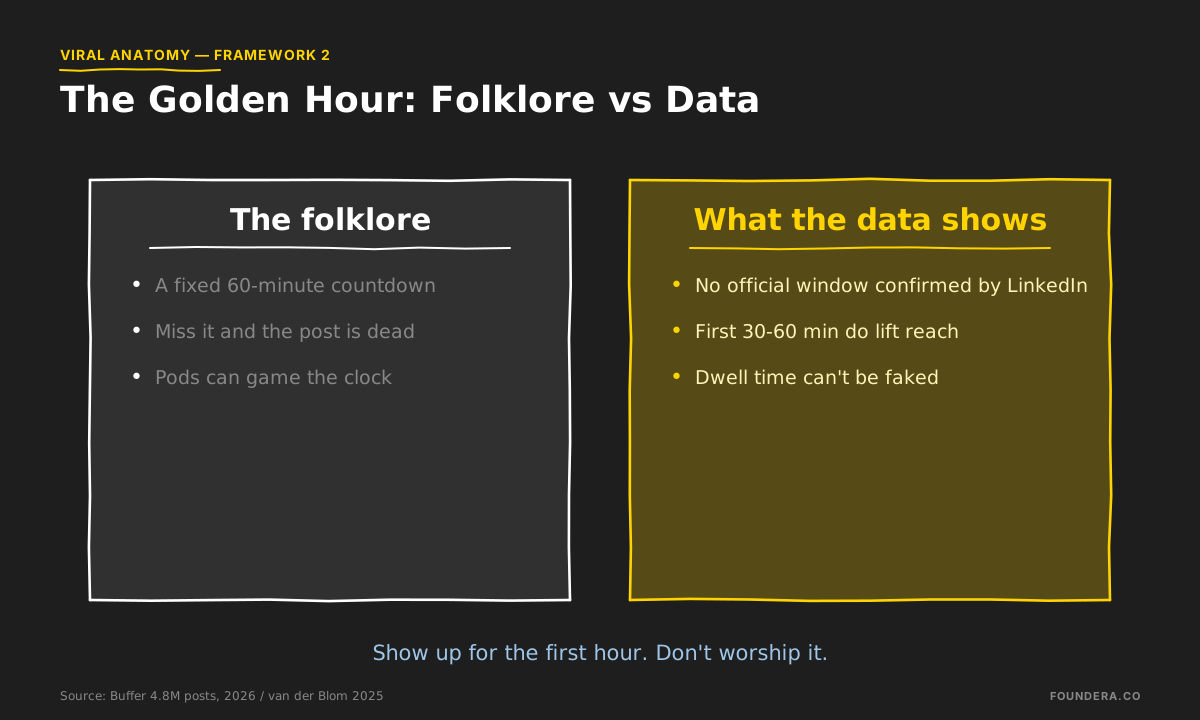
The practical play: publish when you can stay in the room. Replying to comments on your own post boosts engagement by 30%, per Buffer's engagement research — and every reply you write is a fresh comment feeding the testing stage. Block 30 minutes after posting the way you'd block time after sending a board deck.
The anti-play: renting fake early engagement. Pods and auto-comment bots manufacture likes without dwell time — and dwell time is precisely the signal the 2026 algorithm trusts. Saves, reading time, and genuine reply threads are the metrics bots can't fake, which is why automated engagement keeps aging badly. We covered the tooling risks in detail in our breakdown of LinkedIn automation tools for founders.
The Anatomy: Seven Structural Elements That Repeat
Deconstruct the posts that travel and keep converting, and the same load-bearing elements show up. None of them are magic. All of them are measurable.
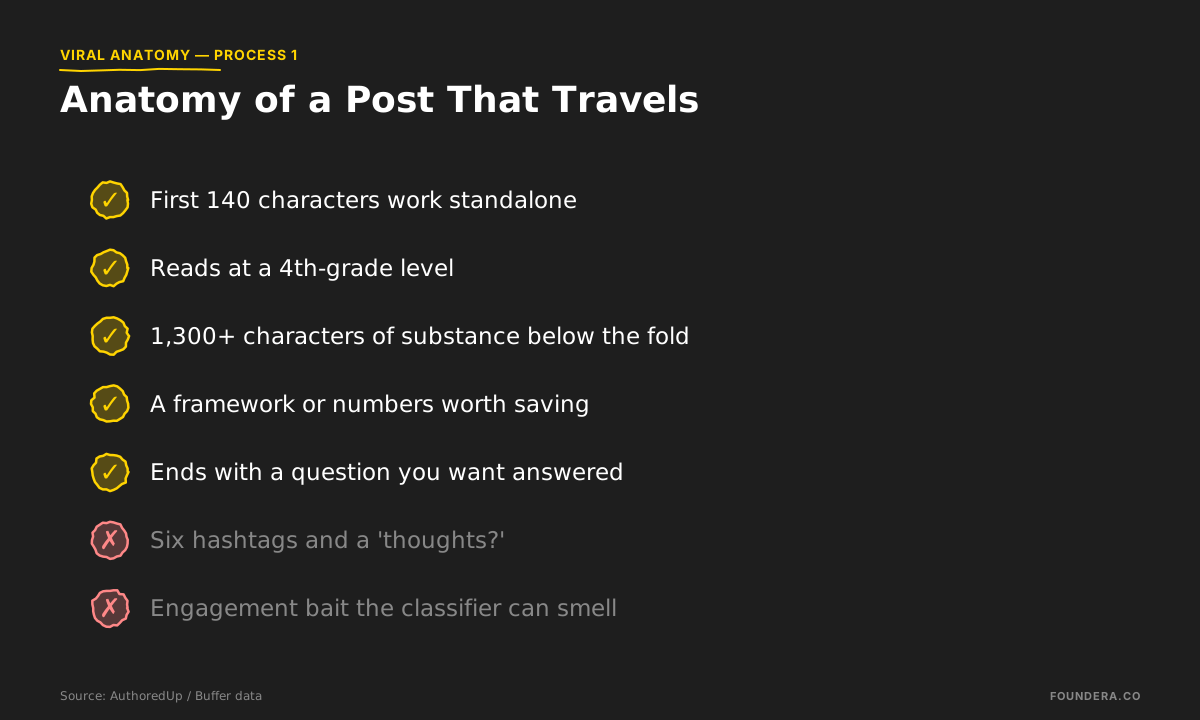
1. A first line built for the fold. Only ~210 characters show on desktop and ~140 on mobile before "…see more" truncates everything, per AuthoredUp's analysis of 372,126 posts. Of a 3,000-character limit, the first two or three lines do all the work. Lead with the number, the tension, or the verdict — never a warm-up sentence.
2. Fourth-grade readability. Posts written above a 10th-grade reading level get over 35% less reach; a 4th-grade level is optimal (AuthoredUp). Short words, short sentences. Simple isn't dumbed down — it's friction removed.
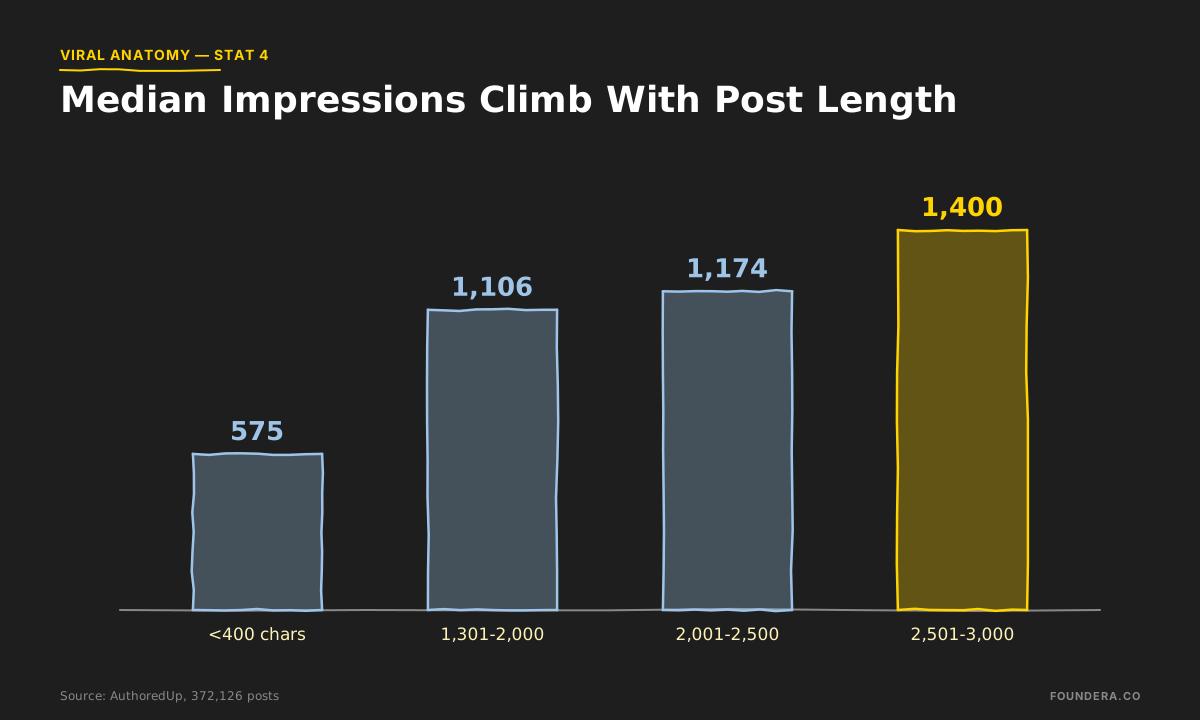
3. Length below the fold. Posts of 1,301–2,500 characters generate 27% higher engagement than posts under 400 characters, and median impressions climb with length: 575 for short posts, rising to 1,400 at 2,501–3,000 characters. The hook earns the click; substance earns the distribution.
4. A save-worthy core. A framework, a numbered process, a benchmark table — one element the reader will want again later. Remember: a save is worth 5x a like, and fewer than 3% of posts get one. Build for the 3%.
5. Format that carries. Carousels (native documents) drive nearly 600% more engagement than text posts, per Buffer's study of 2M+ posts. When your idea is a list, a process, or a teardown, ship it as a document.
6. An ending that starts a discussion. Comments weigh ~2x likes in the testing window, and real comment-section discussion lifts reach up to 2.4x. Close with a question you genuinely want answered — a specific one. "Thoughts?" is not a question; it's a shrug.
7. Nothing that smells like bait. Hashtags have had no measurable impact on reach for 8+ months, hashtag pages were disabled in October 2024, and 6+ hashtags actively hurts (AuthoredUp). Engagement-bait phrasing gets caught in the classification stage. Strip it all.
If you'd rather start from proven structures than a blank page, we maintain a full set in the LinkedIn post template library for founders.
Optimize for the Right 10,000 Impressions
Now zoom out, because the raw-impressions game is getting worse on its own. Average reach fell 34% in 2025 and is down year-over-year for 98% of users, per AuthoredUp's 621K-post dataset. Chasing maximum impressions means chasing a shrinking pie against more competitors.
The founder question was never "how do I go viral?" It's "who saw it, and what did they do next?" Run the two scenarios:
- 400,000 impressions, wrong audience. The documented outcome: ~400 followers, 0.1% conversion, zero pipeline. A sugar high with analytics.
- 10,000 impressions, right audience. Every one a buyer, investor, candidate, or peer in your category. These compound — profile visits, saves, DMs that open with "been reading your posts," deals that start warm.
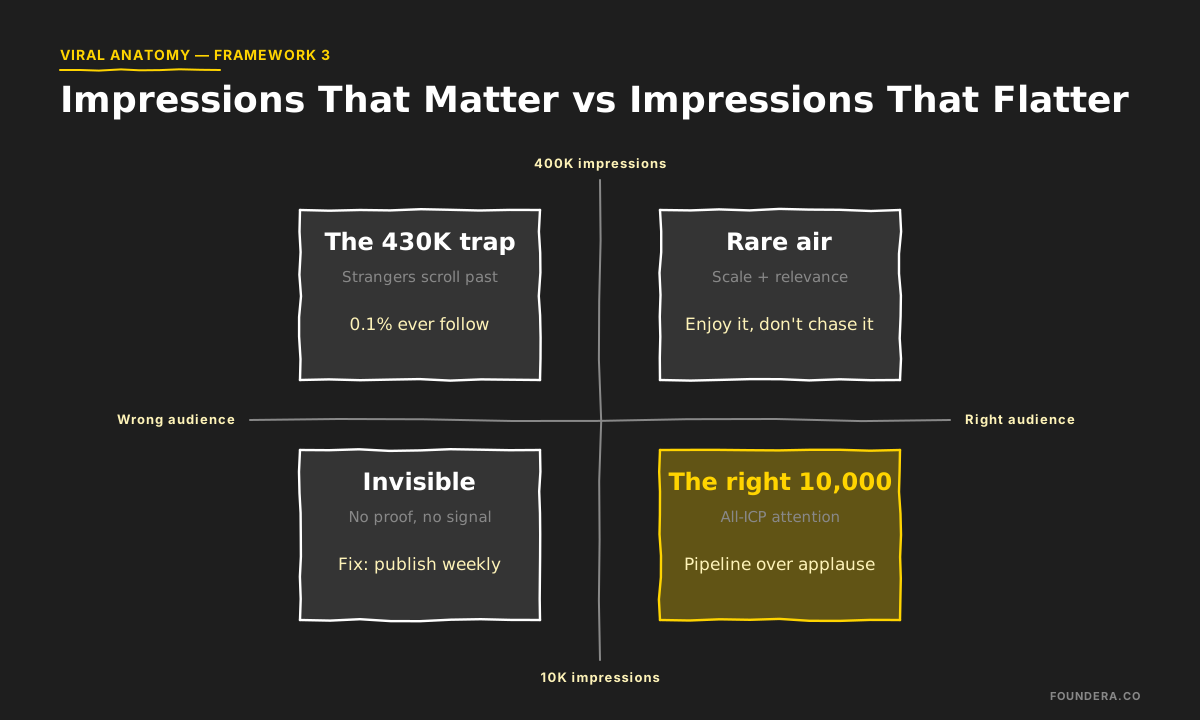
This reframe changes what you write. Broad relatability — the raw material of virality — attracts everyone and converts no one. Niche specificity — the pricing teardown, the postmortem with real numbers, the unpopular take on your own category — caps your ceiling at a few thousand impressions and fills the room with exactly the people you want. That's the engine behind a founder-led LinkedIn content strategy, and the pattern shows up across every dataset in our LinkedIn thought-leadership statistics roundup: the founders winning deals from LinkedIn are rarely the ones going viral.
Use the anatomy above — the fold-ready first line, the save-worthy core, the discussion-bait ending — but aim it at buyers, not at everyone. If pipeline is the goal, here's how founders actually find clients on LinkedIn.
Frequently Asked Questions
Do viral LinkedIn posts grow your following?
Barely. The best-documented case study — Michael Lin's 430K-impression post — converted 0.1% of impressions into followers: about 400 people. Viral reach is out-of-network reach, so almost none of it sticks. Saves convert far better: a saver is 130% more likely to follow you (AuthoredUp).
How does the LinkedIn algorithm decide what goes viral?
In three stages, per AuthoredUp's research: a 0–60 minute classification pass with a small test audience, a 1–2 hour engagement test where comments count ~2x likes and dwell time is measured, then extended distribution. Posts that keep sparking real discussion can stay in feeds for 2–3 weeks.
What matters more on LinkedIn — likes, comments, or saves?
Saves, then comments, then likes. One save is worth 5x a like in reach and roughly 2x a meaningful comment; fewer than 3% of posts get saved at all (AuthoredUp). Comments still punch hard — they're weighted about double a like during engagement testing, and comment-section discussion lifts reach up to 2.4x.
Is the LinkedIn golden hour real?
Half real. Buffer's 4.8M-post study is blunt: no official 60- or 90-minute window is confirmed by LinkedIn. But early engagement signals do influence distribution, and van der Blom's data puts the crucial window at the first 30–60 minutes. Stay online after posting and reply to every comment — replies alone boost engagement 30%.
How do you go viral on LinkedIn on purpose?
You stack the measurable elements: a first line that survives the 140-character mobile fold, 4th-grade readability, 1,300+ characters of substance, a save-worthy framework, a document format when it fits (~600% more engagement than text), and an ending that starts discussion. Then you accept that the algorithm favors relevance over raw scale — which is good news if you'd rather reach buyers than strangers.
Should founders even optimize for virality?
Optimize for the anatomy, not the outcome. Reach fell 34% in 2025 across the platform, and the documented payoff of untargeted virality is ~0.1% conversion. A founder is better served by 10,000 impressions inside their ICP than 400,000 outside it — same craft, different target, and it's the version that produces pipeline.
TL;DR
- Virality ≠ audience: a documented 430K-impression post gained ~400 followers — a 0.1% conversion (Michael Lin).
- Distribution runs a three-stage test — classification (0–60 min), engagement testing (1–2 h, comments ~2x likes, dwell time), extended distribution — and strong posts live 2–3 weeks (AuthoredUp).
- Saves are the new currency: 1 save = 5x a like, savers are 130% more likely to follow, under 3% of posts get saved. Write reference material, not hot takes.
- The golden hour is folklore built on a real mechanism: no official window exists (Buffer), but the first 30–60 minutes lift reach — stay and reply (+30% engagement).
- The repeatable anatomy: fold-ready first line, 4th-grade readability, 1,301–2,500 characters (+27% engagement), a save-worthy core, document format when it fits, a discussion-starting ending, zero hashtags.
- Optimize for the right 10,000 impressions, not any 400,000. Relevance compounds into pipeline; raw reach compounds into nothing.