LinkedIn Algorithm 2026: The Founder's Guide to What Actually Ranks
The LinkedIn algorithm in 2026 distributes every post through three stages — a 0–60 minute classification with a small test audience, a 1–2 hour engagement test where comments count roughly twice as much as likes, and extended distribution after that — and it now weights saves, sends, meaningful comments, and dwell time above likes, per van der Blom's Algorithm Insights Report 2025 (1.8 million posts) and AuthoredUp's 621,833-post dataset. Organic views fell 50% year-over-year while the platform rebuilt itself around relevance instead of volume.
That's the whole guide in one paragraph. The rest is the evidence: what LinkedIn has actually said on the record, what the large-scale studies measured, which formats win, and which beliefs — starting with the "golden hour" — don't survive contact with the data.
One scope note before we start. This is the general mechanics guide. The algorithm's specific treatment of AI-generated content — detection, distribution, and what it means for founders using AI to draft — is its own battlefield, and we covered it separately in how the LinkedIn algorithm handles AI content in 2026. Read that one alongside this.
Table of Contents
- What LinkedIn Has Officially Said
- What the Large-Scale Studies Show
- The Three-Stage Distribution Model
- Format Performance Ranking in 2026
- The Golden Hour: Truth vs Myth
- Saves, Sends, Comments: The New Hierarchy
- What Changed From 2024 to 2026
- Frequently Asked Questions
What LinkedIn Has Officially Said
LinkedIn doesn't publish its ranking math, but its executives have been unusually direct about the intent. Three statements matter:
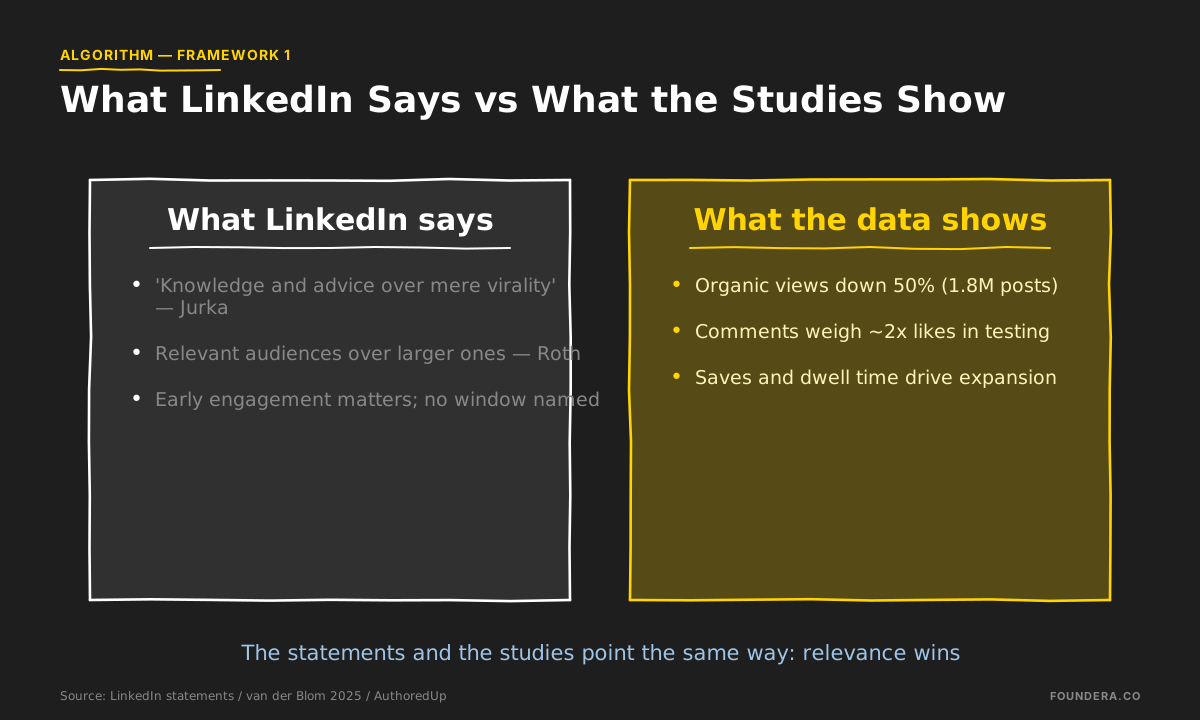
"Knowledge and advice over mere virality." When LinkedIn shipped its suggested-posts change, Tim Jurka, LinkedIn's senior director of engineering, told Entrepreneur it was "the latest step in our ongoing efforts to emphasize knowledge and advice over mere virality." That is a design goal, stated plainly: the feed is being tuned against viral mechanics and toward expertise.
Relevance over reach. Daniel Roth, LinkedIn's editor-in-chief, confirmed the platform is intentionally helping content reach more relevant audiences rather than larger ones, per WrittenlyHub's coverage of the 2025 algorithm data. If your impressions dropped while your comment quality rose, that's the system working as designed.
Early engagement matters — but no window was ever named. LinkedIn has said that early engagement signals can influence how widely content is distributed. What it has never done is confirm any specific time window. Hold that thought for the golden-hour section.
What the Large-Scale Studies Show
Because LinkedIn won't show its math, the field runs on large-scale observation. Two datasets dominate: Richard van der Blom's Algorithm Insights Report 2025, built on 1.8 million posts, and AuthoredUp's research across 621,833 posts. Their headline findings agree with each other — and with the official statements above.
| Finding | Number | Dataset |
|---|---|---|
| Organic views, year-over-year | −50% | van der Blom, 1.8M posts |
| Engagement, year-over-year | −25% | van der Blom |
| Follower growth, year-over-year | −59% | van der Blom |
| Average reach in 2025 | −34% | AuthoredUp, 621,833 posts |
| Users with declining reach | 98% | AuthoredUp |
Sources: van der Blom via WrittenlyHub; AuthoredUp.
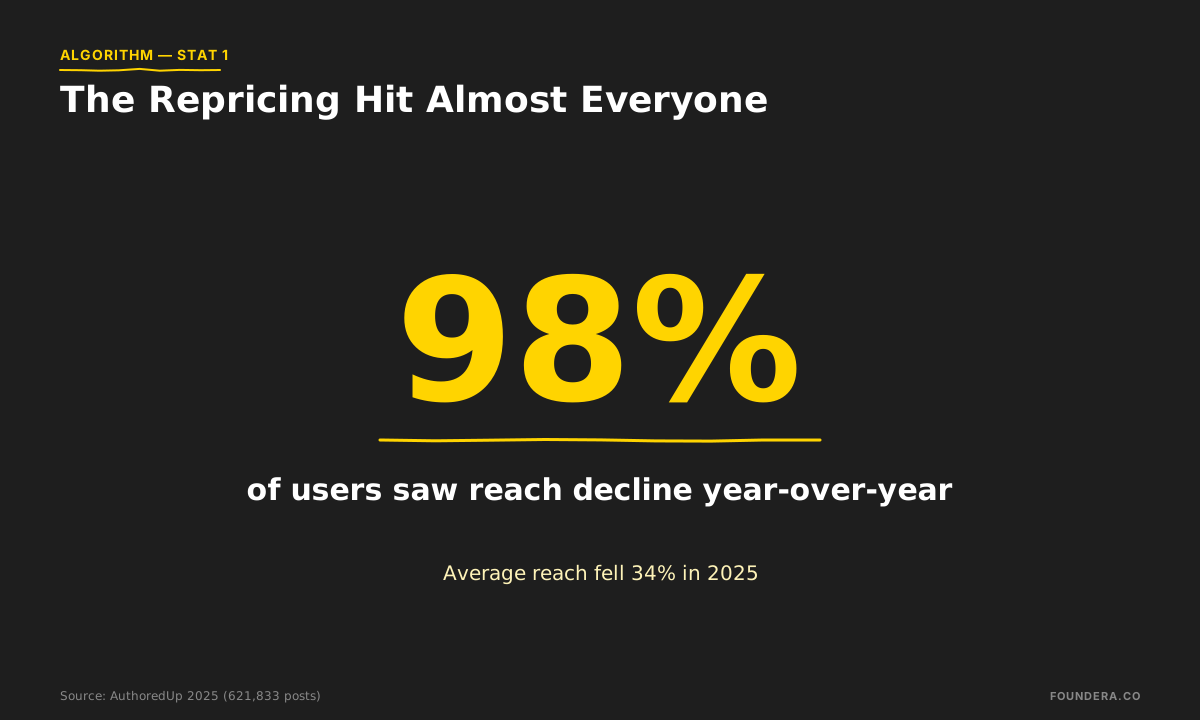
The instinct is to read this as an apocalypse. Read it as a repricing instead. The algorithm stopped paying for volume and started paying for signals that fake engagement can't cheaply counterfeit: saves, sends, genuine discussion, held attention. Posts whose comment sections contain actual back-and-forth see up to 2.4x more reach than regular posts, per AuthoredUp. Meanwhile virality itself pays worse than founders assume — one documented 430K-impression viral post converted at 0.1% into followers, a case we dissected in the anatomy of viral LinkedIn posts.
Put the official statements and the measurements side by side and they describe the same machine:
The Three-Stage Distribution Model
Both major datasets converge on the same distribution pipeline for every post:
- Initial classification (0–60 minutes). Quality and spam check, then exposure to a small test audience drawn from your network.
- Engagement testing (1–2 hours). Comments weighted roughly 2x likes; dwell time and click patterns analyzed.
- Extended distribution (2+ hours). Expansion to wider, interest-matched audiences — with posts that sustain conversation staying visible for 2–3 weeks.
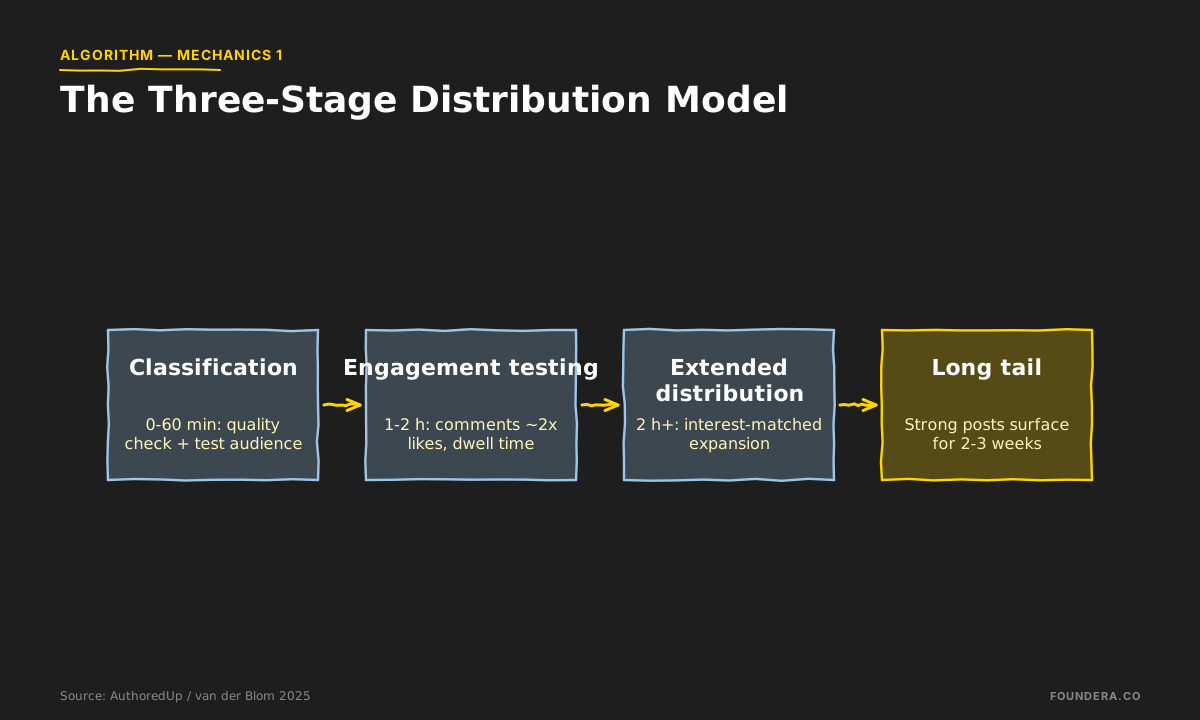
Each stage gates the next: no post reaches extended distribution without passing the test sample, and your test sample is your existing network — which is why network composition quietly caps your ceiling. We walk the full pipeline mechanically, stage by stage, including the 561% personal-vs-company-page gap and the connections-versus-followers math, in how LinkedIn reach works.
Format Performance Ranking in 2026
Format is the highest-leverage input you control at publish time. AuthoredUp's dataset of 994,894 personal-profile posts puts the reach multipliers in a clear order:
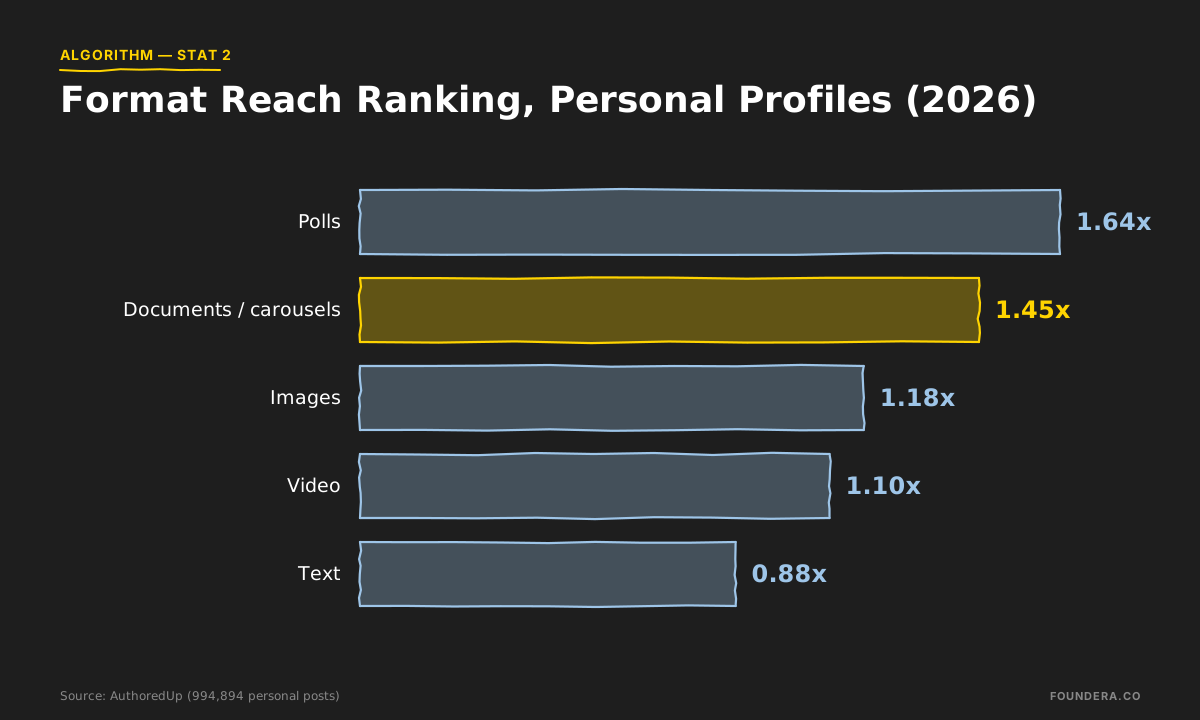
Polls lead at 1.64x — use sparingly; a feed of polls reads as reach-farming. Documents and carousels at 1.45x are the founder's workhorse. Images 1.18x, video 1.10x, and plain text trails at 0.88x.
Van der Blom's 2025 report adds the direction of travel:
| Format signal | Change | Note |
|---|---|---|
| Native video | +69% performance boost | Especially vertical, under 60 seconds |
| Images with people | Up to +50% vs no faces | Your face is a ranking asset |
| Text-only engagement | ~−18% | The floor keeps dropping |
Source: van der Blom 2025, via WrittenlyHub.
Whatever the format, the first two lines still decide whether anyone sees the rest — the mobile fold truncates around 140 characters, which is why we keep a dedicated library of LinkedIn hooks for founders.
Two format-adjacent rules from AuthoredUp's data that founders keep getting wrong:
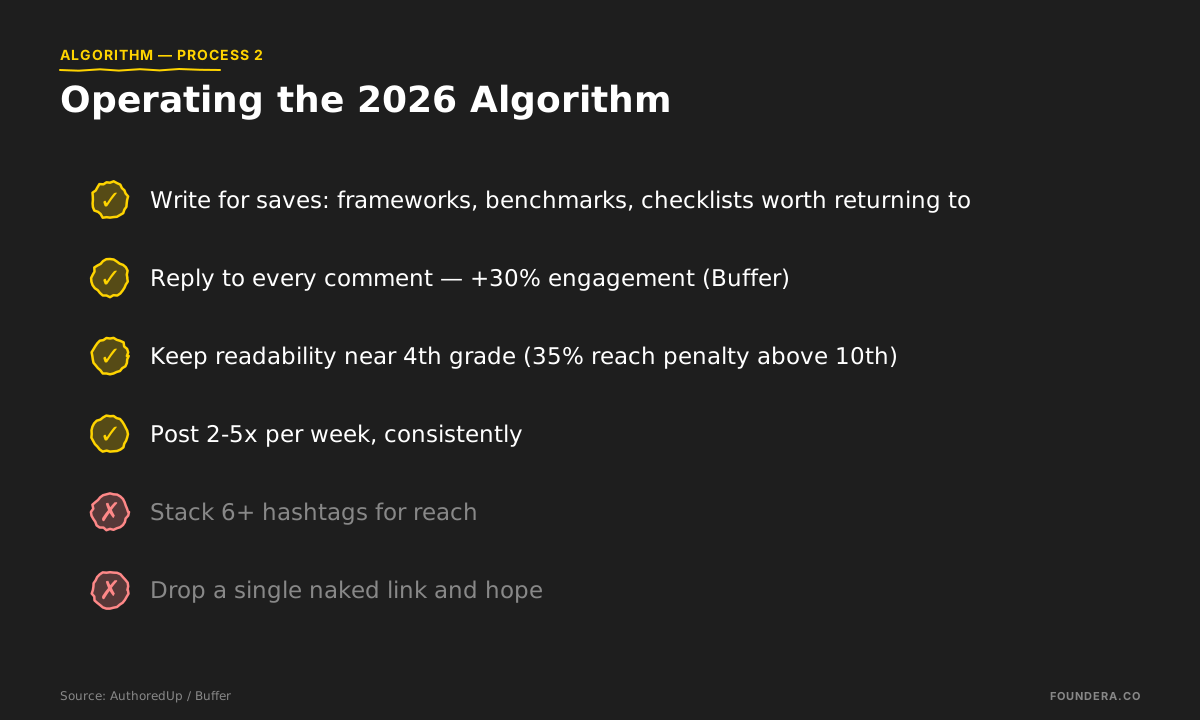
- Links: single-link posts get the lowest reach of any type, but bundling 4+ links flips the effect — 3–5x higher median reach than single-link posts. Removing the preview card also reduces the penalty.
- Hashtags: dead. No measurable impact on reach for 8+ months, hashtag pages disabled since October 2024, and 6+ hashtags actively hurts.
The Golden Hour: Truth vs Myth
The most repeated claim in LinkedIn folklore: your post's fate is sealed by engagement in the first 60 minutes — the "golden hour."
Here's the record. Buffer's 4.8M-post study states it flatly in its FAQ: "There's no official 60- or 90-minute window confirmed by LinkedIn. LinkedIn has said that early engagement signals can influence how widely content is distributed." The golden hour is creator folklore built on top of a real mechanism.
And the mechanism is real: van der Blom's data shows the first 30–60 minutes after posting are crucial, with early likes, comments, and shares lifting ultimate reach. But two things the myth gets wrong matter enormously:

First, a slow first hour is a headwind, not a death sentence — posts that spark meaningful conversation stay visible for 2–3 weeks, so the long tail can outweigh the opening. Second, the myth spawned an entire gray industry of engagement pods promising to game the window with synthetic early comments — which the algorithm now specifically discounts, since it scores comment quality and discussion depth, not arrival speed. We ran that comparison in engagement pods vs organic growth.
The founder's version of the golden hour: publish when you have 30 spare minutes afterward. Your own replies during the testing window are early engagement you fully control.
Saves, Sends, Comments: The New Hierarchy
In late 2025, LinkedIn made save and send counts visible metrics — a public tell of what the algorithm now values. Per van der Blom's report, the algorithm weights saves, sends, meaningful comments, and dwell time above likes.
AuthoredUp's data prices the hierarchy:
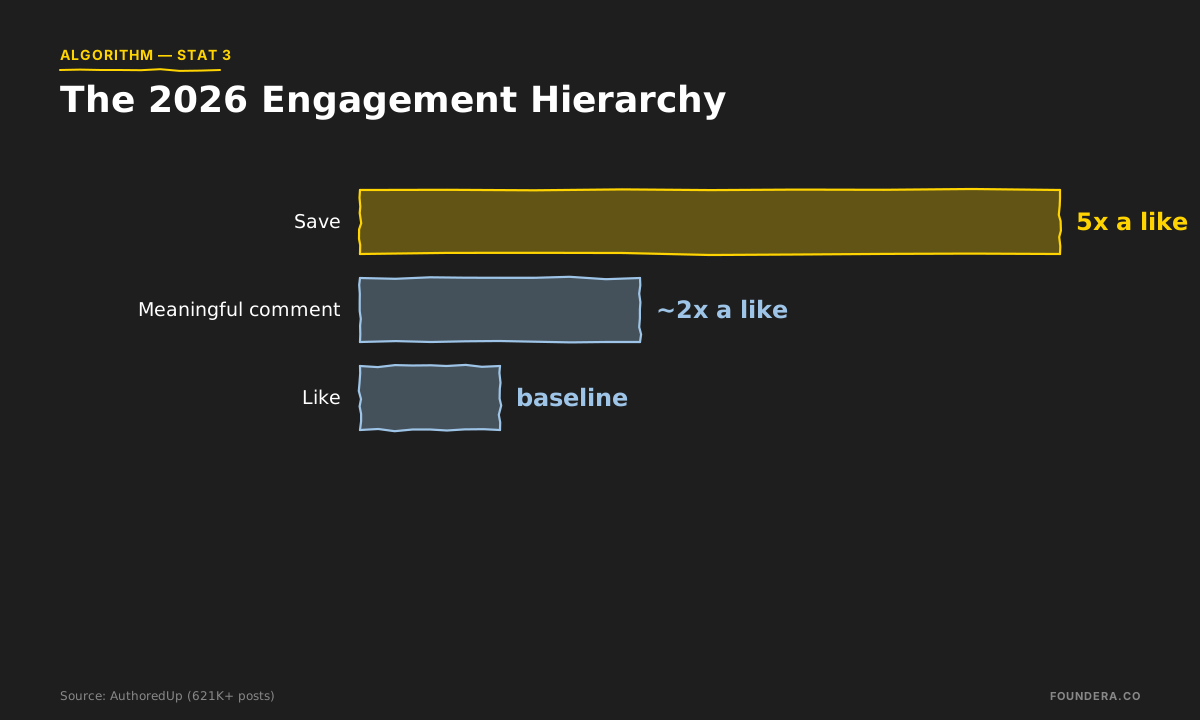
- One save = 5x the reach of one like, and roughly double the boost of a meaningful comment. A reader who saves your post is 130% more likely to follow you — the strongest follower-conversion signal in the dataset. Fewer than 3% of posts get saved, which is precisely why saves pay so well.
- Comments count ~2x likes during engagement testing, and comment threads with real back-and-forth push reach up to 2.4x.
- Your own replies compound it: replying to the comments on your posts boosts engagement by 30%, per Buffer's engagement research.
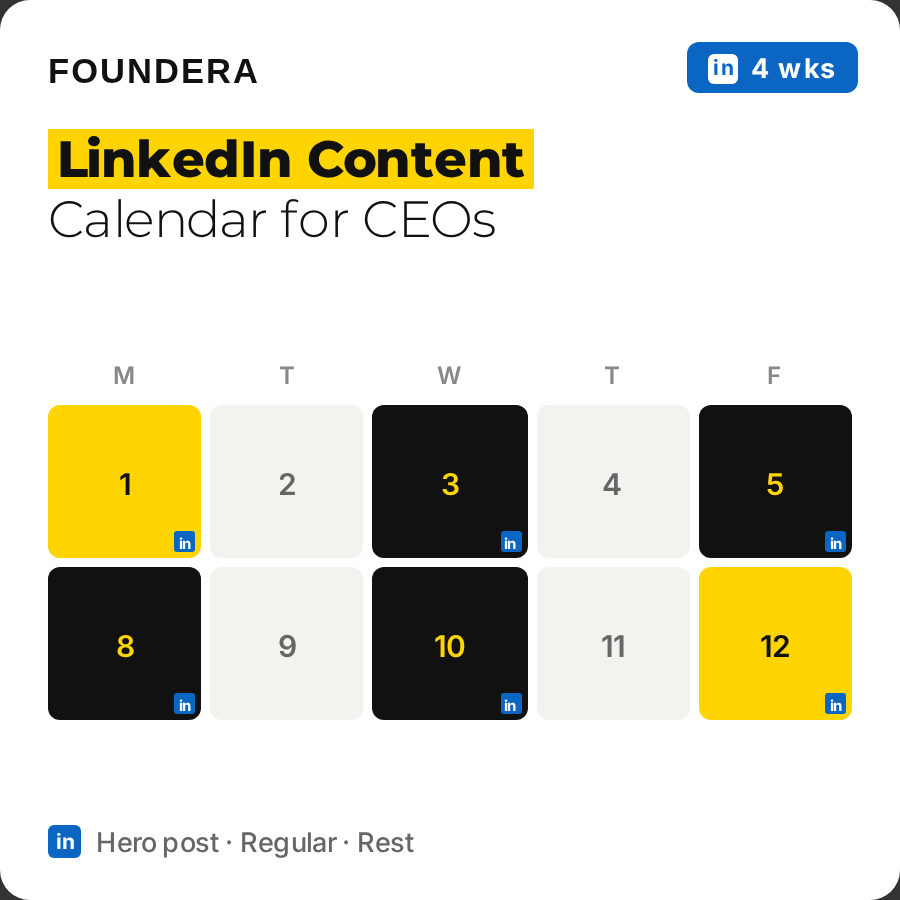
The content implication is blunt: build posts people will need again. Frameworks, benchmark tables, checklists, playbooks — reference material gets saved; opinions get liked. One reference-grade post per week beats five hot takes, and slotting that cadence into a repeatable system is exactly what a content calendar for CEOs is for.
Readability is part of the same hierarchy, because dwell time is: posts written above a 10th-grade reading level get over 35% less reach, with a 4th-grade level optimal, per AuthoredUp. Simple language isn't dumbing down — it's distribution.
What Changed From 2024 to 2026
If you last studied the LinkedIn algorithm in 2024, here's the delta:
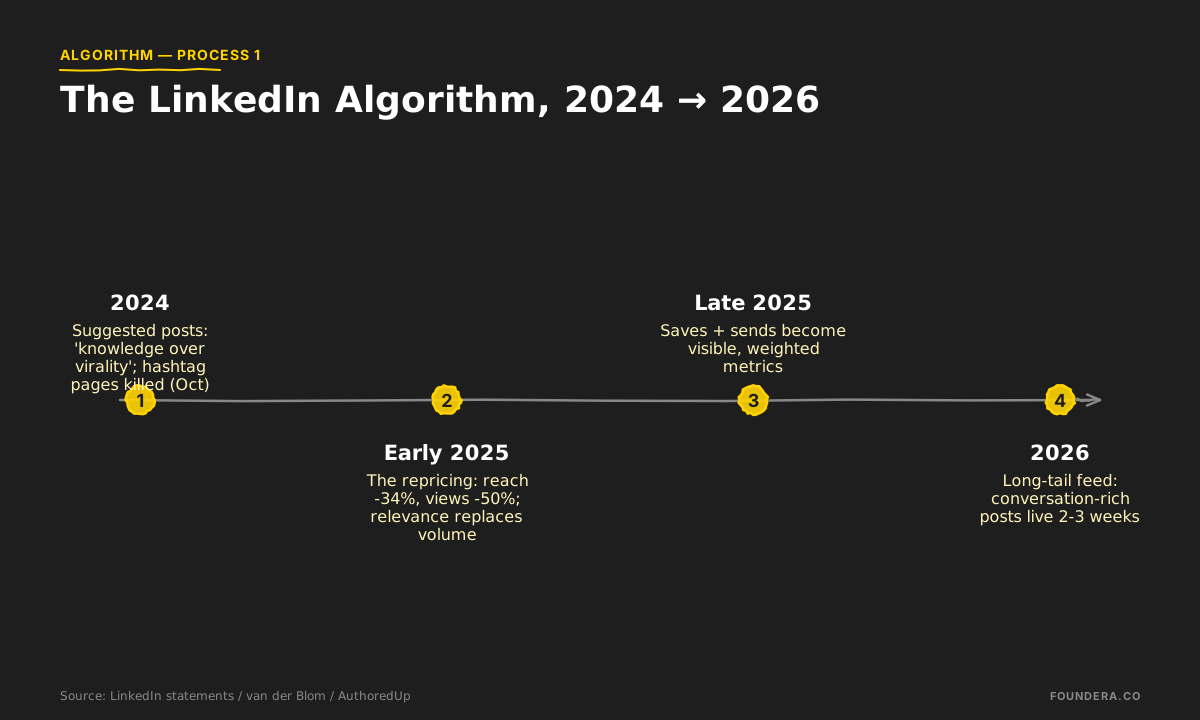
- 2024: Suggested posts arrive with the stated goal of "knowledge and advice over mere virality" (Jurka). Hashtag pages disabled in October — the beginning of the end for hashtag strategy.
- Early-to-mid 2025: The great repricing. Average reach −34%, organic views −50%, follower growth −59%. Interest-graph relevance replaces network volume as the organizing principle (Roth).
- Late 2025: Saves and sends become visible, weighted metrics. The engagement hierarchy formalizes: saves > sends > comments > likes.
- 2026: Long-tail distribution is the norm — conversation-rich posts surface for 2–3 weeks. Quality-of-engagement scoring keeps tightening, and the platform's handling of AI-generated content becomes its own ranking dimension — again, that's the territory of our AI-content algorithm guide.
What should a founder actually do under this regime? The checklist:
Frequently Asked Questions
How does the LinkedIn algorithm work in 2026?
In three stages: a 0–60 minute classification where your post is quality-checked and shown to a small test audience; a 1–2 hour engagement test where comments count roughly 2x likes and dwell time is measured; then extended distribution to interest-matched audiences, with strong posts surfacing for 2–3 weeks (AuthoredUp). Each stage gates the next — the full mechanical walkthrough is in how LinkedIn reach works.
Is the LinkedIn golden hour real?
The mechanism is real; the deadline is folklore. LinkedIn has never confirmed a 60- or 90-minute window — Buffer's FAQ states this explicitly — but it has confirmed that early engagement signals influence distribution, and van der Blom's data shows the first 30–60 minutes measurably matter. Treat the first hour as a tailwind to earn, not a countdown to fear: conversation-rich posts keep earning reach for weeks.
What content does the LinkedIn algorithm favor in 2026?
Content worth saving, formats that hold attention, and posts that create real discussion. Documents and carousels carry a 1.45x reach multiplier (polls 1.64x, text 0.88x), native video earned a +69% boost, and images with faces perform up to 50% better. Above all: one save is worth 5x a like, and threads with genuine back-and-forth reach up to 2.4x further.
Do hashtags still work on LinkedIn?
No. AuthoredUp's data shows hashtags have had no measurable impact on reach for over 8 months, LinkedIn disabled hashtag pages in October 2024, and using 6+ actively hurts reach. Spend those characters on a better hook instead.
Do external links kill LinkedIn reach?
Single-link posts do get the lowest reach of any post type — but the fix is counterintuitive. Bundling 4+ links flips performance to 3–5x higher median reach than single-link posts, and removing the auto-generated preview card reduces the penalty, per AuthoredUp. The algorithm punishes the drive-by traffic grab, not links themselves.
Does the algorithm treat AI-generated content differently?
Yes — detection and distribution of AI-generated content is now its own ranking dimension, and it deserves more than a paragraph. We covered what LinkedIn detects, how distribution changes, and what founders drafting with AI should do about it in the LinkedIn algorithm and AI content in 2026.
TL;DR
- The 2026 LinkedIn algorithm runs every post through three stages — classification (0–60 min), engagement testing (1–2 h, comments ~2x likes), extended distribution — with a 2–3 week long tail for conversation-rich posts.
- Official statements and 1.8M-post studies agree: the platform traded volume for relevance. Views −50%, reach −34%, and 98% of users down — by design (van der Blom, AuthoredUp).
- Format ranking: polls 1.64x, documents 1.45x, images 1.18x, video 1.10x, text 0.88x — plus a +69% boost for native video and +50% for faces.
- The golden hour was never confirmed by LinkedIn (Buffer), but the first 30–60 minutes do matter. Publish when you can stay and reply.
- New engagement hierarchy: saves (5x a like, +130% follow likelihood) > meaningful comments (~2x) > likes. Replying to your own comments adds 30%.
- Hashtags are dead, single naked links get punished, and the AI-content dimension has its own guide.