How to Use LinkedIn for Fundraising: The Founder's Playbook
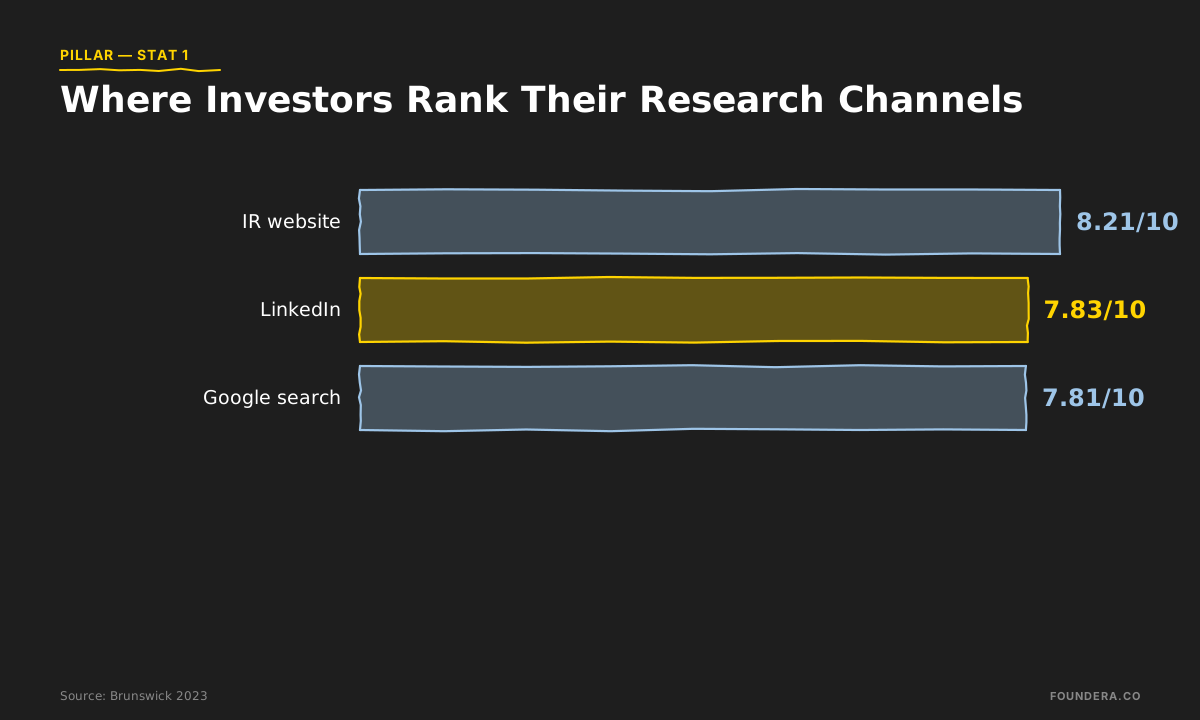
Institutional investors rate LinkedIn 7.83 out of 10 in importance for equity research — second only to a company's own investor-relations website, and ahead of Google search, according to the Brunswick Group Digital Investor Survey. The same survey found 96% of institutional investors systematically harvest data from social and digital sources.
Read that again. The people deciding whether to fund you treat LinkedIn as a primary research channel. Not a networking toy. A diligence surface.
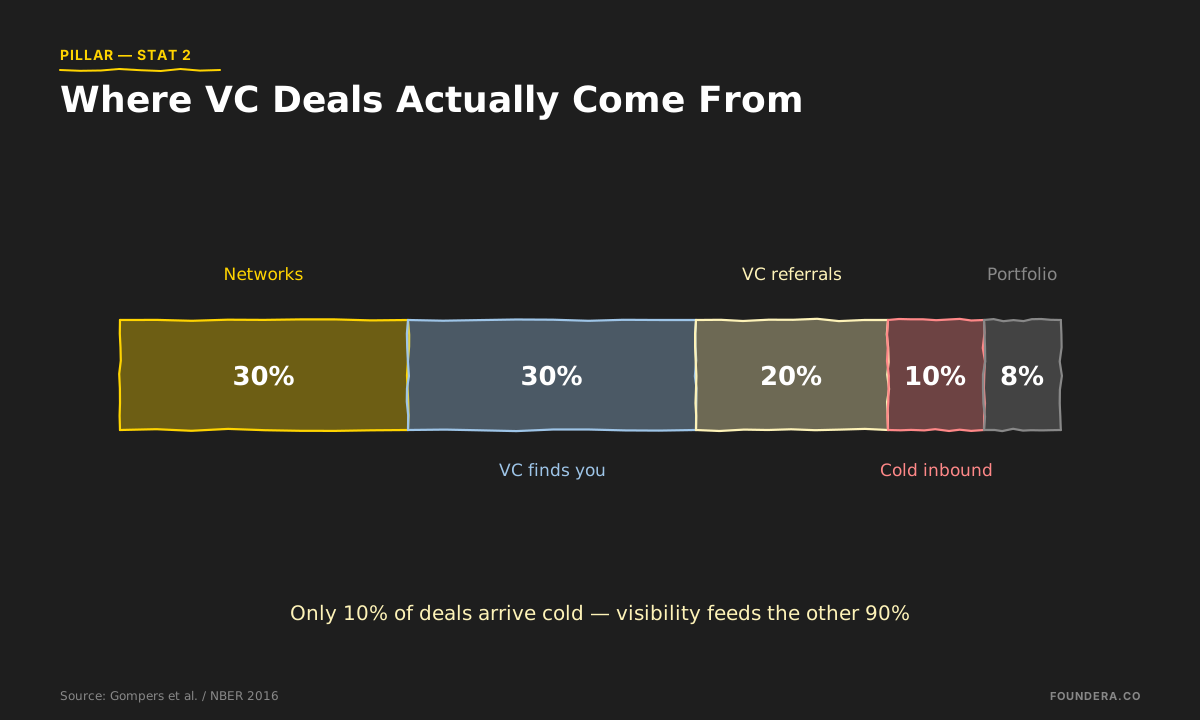
Meanwhile, only 10% of VC deals come from cold inbound. The rest flow through networks, referrals, and investors finding founders themselves. LinkedIn is where all three of those paths run.
This is the playbook for using it deliberately — before, during, and after your raise.
Table of Contents
- LinkedIn Is Now Part of Investor Diligence
- The Warm-Intro Math
- Your Profile Is a Data Room
- The Funnel: What a Seed Raise Actually Takes
- Content Strategy: Before, During, and After the Raise
- Announcing the Round
- Frequently Asked Questions
LinkedIn Is Now Part of Investor Diligence
Investors research founders on LinkedIn as a standard part of their workflow — not occasionally, but systematically. In Brunswick's survey of 257 institutional investors, digital channels ranked as the single most important input for equity research, ahead of direct engagement and traditional communications.
Here's how the channels stack up:
| Research channel | Importance score / share | What it means for you |
|---|---|---|
| Company IR website | 8.21 / 10 | Your website still matters most |
| 7.83 / 10 | Second-most-important research source | |
| Google search results | 7.81 / 10 | LinkedIn now outranks Google |
| Digital communications overall | Ranked #1 by 47% of investors | Beats direct engagement (31%) and traditional comms (22%) |
Source: Brunswick Digital Investor Survey, 2023.
And this research isn't passive browsing. Roughly 9 in 10 institutional investors report having made a recommendation or investment decision based on information from digital or social media.
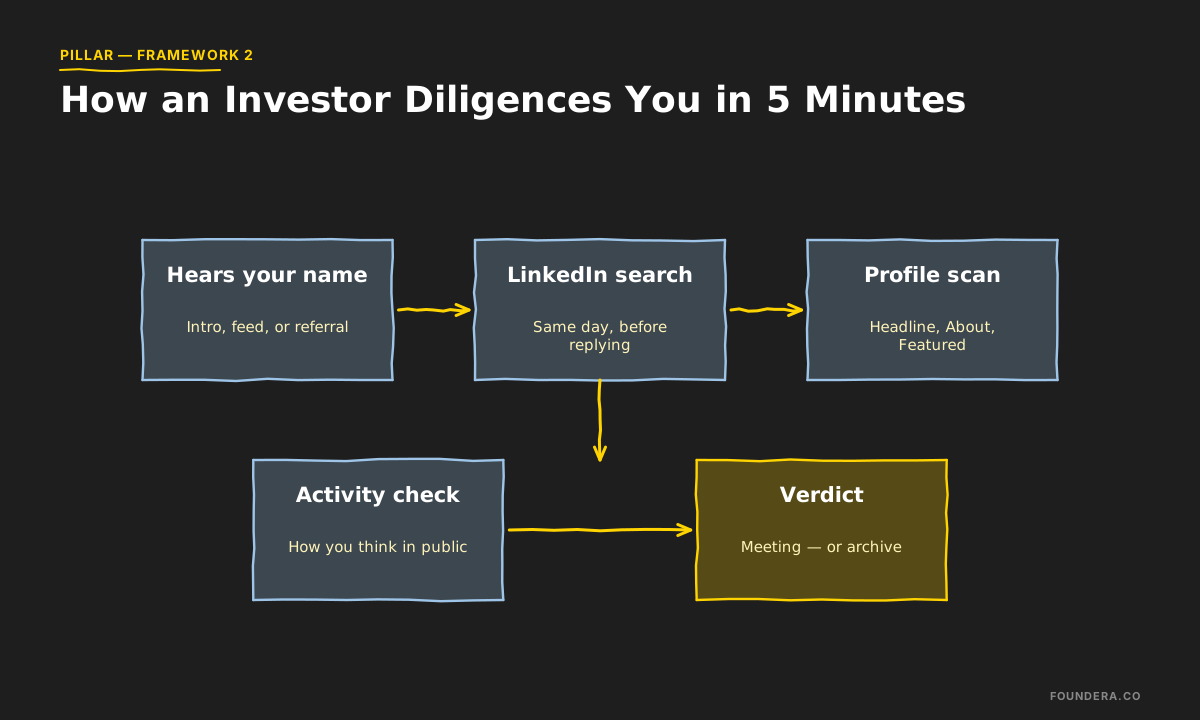
The implication is simple. By the time an investor takes your meeting, they've already formed a first impression — from your profile, your posts, and your silence. An empty LinkedIn presence isn't neutral. It's a data point.
If you're still treating your personal profile as an afterthought, start with why personal branding matters for tech entrepreneurs. Then come back. The rest of this playbook assumes you're taking the surface seriously.
The Warm-Intro Math
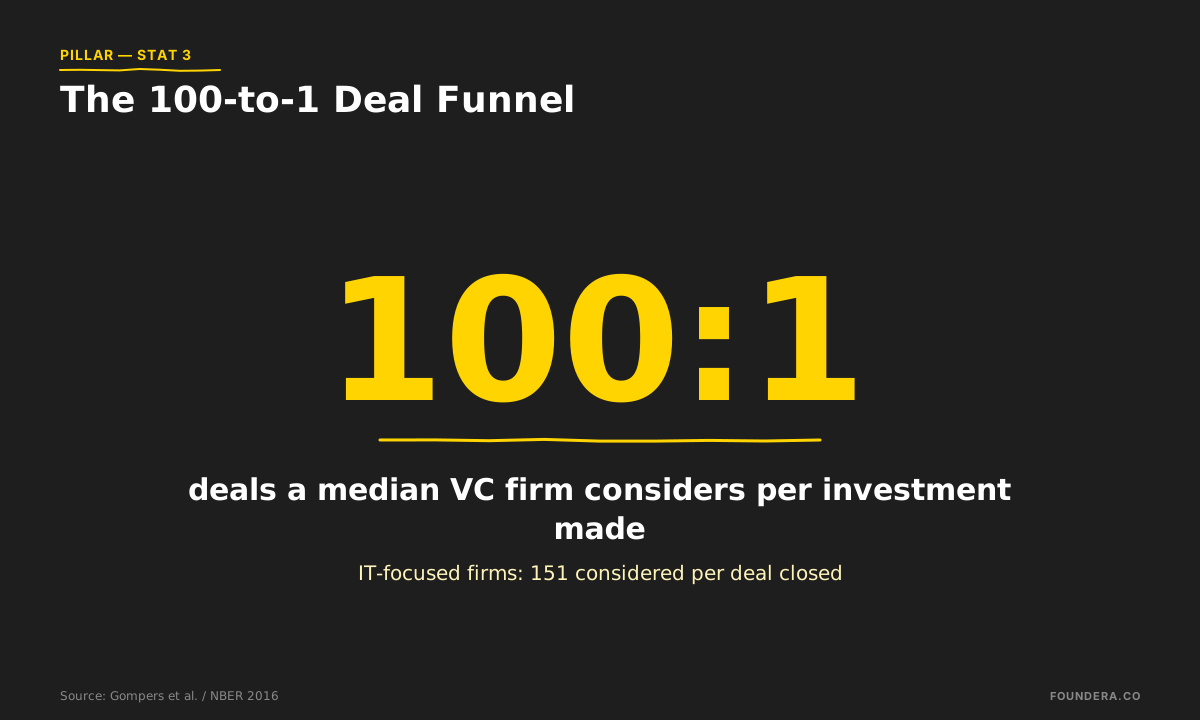
Warm paths dominate venture deal flow, and the numbers are brutal for cold outreach. In the landmark survey of 885 institutional VCs by Gompers, Gornall, Kaplan, and Strebulaev (NBER), over 30% of deals came through professional networks, 20% were referred by other investors, and 8% came from portfolio companies.
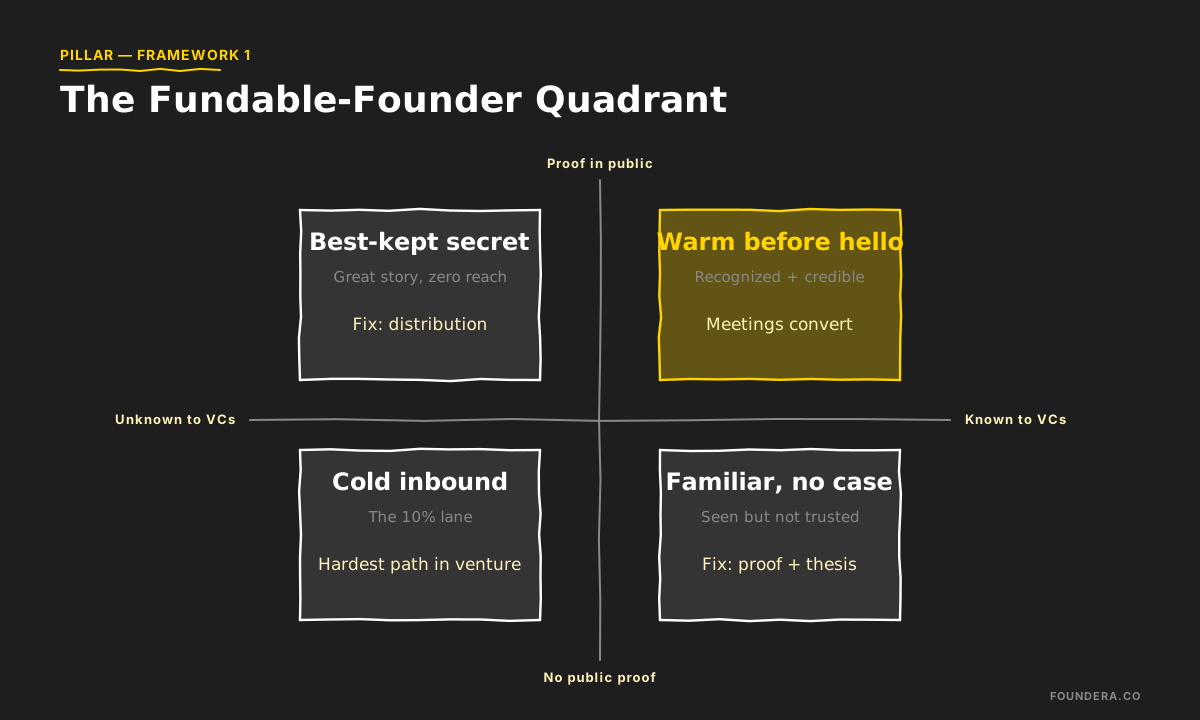
Cold inbound from management teams? 10%.
There's one more number in that study founders consistently miss: almost 30% of deals are proactively self-generated by the VC. They found the founder. That's not luck — that's visibility. You cannot get self-generated deal flow if investors can't see you.
Here's where deals actually come from:
| Deal source | Share of VC deals |
|---|---|
| Professional networks | 30%+ |
| VC self-generated (they find you) | ~30% |
| Referrals from other investors | 20% |
| Cold inbound from founders | 10% |
| Portfolio company connections | 8% |
Source: Gompers et al., NBER Digest, 2016.
LinkedIn is the machine for both of the big categories. It's where your professional network lives, where second-degree paths to partners become visible, and where a VC scrolling their feed can discover you before you ever pitch.
So the play isn't "DM 200 investors." The play is: map your second-degree connections into target funds, earn the intro through people who actually know your work, and publish consistently enough that the ~30% self-generated channel can find you. That's founder-led marketing applied to fundraising — same engine, different buyer.
Your Profile Is a Data Room
Treat your LinkedIn profile as the first document in your data room, because that's how investors use it. The same NBER survey found more than 90% of VCs consider the management team an important factor in investment success — and over 55% rank the team as the most important factor. You are the asset being diligenced. Your profile is the asset's landing page.
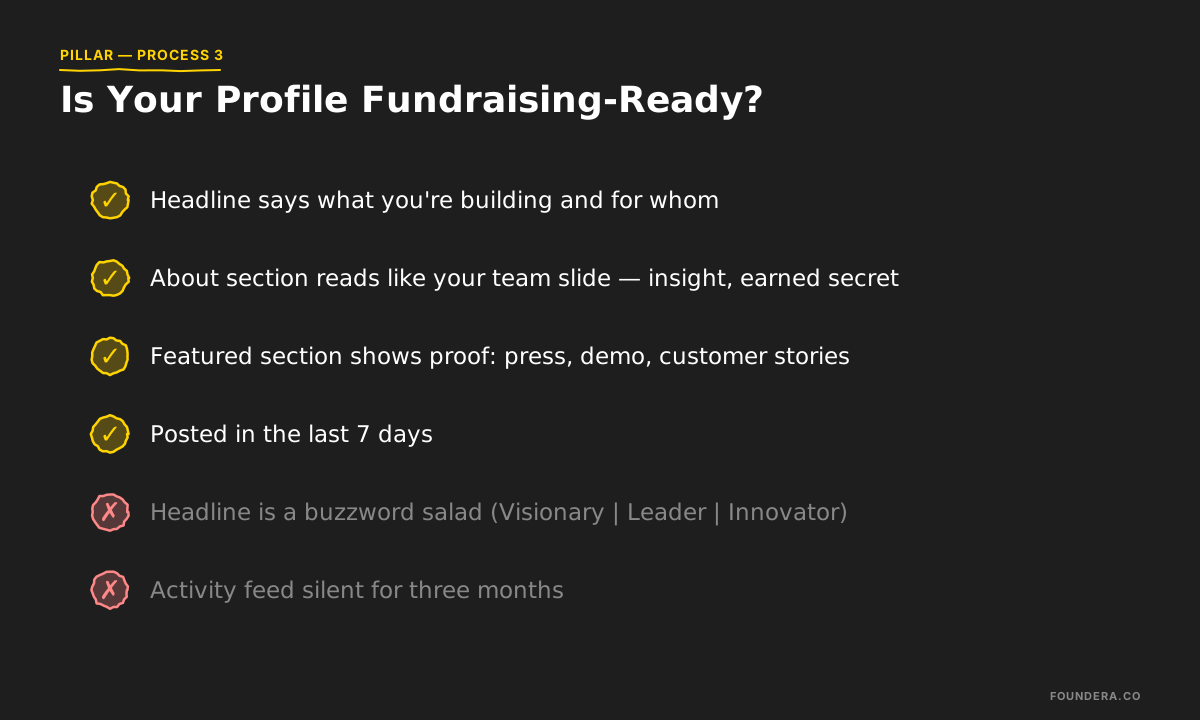
A fundraising-ready profile answers four questions in under thirty seconds:
Who are you, in one line? Your headline should state what you're building and for whom. Not a buzzword salad. "CEO @ X — helping CISOs kill shadow AI" beats "Visionary | Leader | Innovator" every single time.
Why are you the one to build this? Your About section should read like the team slide of your deck: the insight, the earned secret, the years that led here. Write it in first person. Investors are backing a human.
What's the evidence? Featured section: press, product demos, customer stories, notable posts. If you have traction you can share publicly, show it — here's how to present startup traction metrics to investors on LinkedIn without leaking what shouldn't leak.
Are you alive? An activity feed with nothing in it for three months tells its own story. Recency is a signal. Investors backing a founder want to see how that founder thinks in public.
None of this requires exaggeration. It requires curation. Assume every investor who hears your name runs a LinkedIn search the same day — because the ones who matter do.
The Funnel: What a Seed Raise Actually Takes
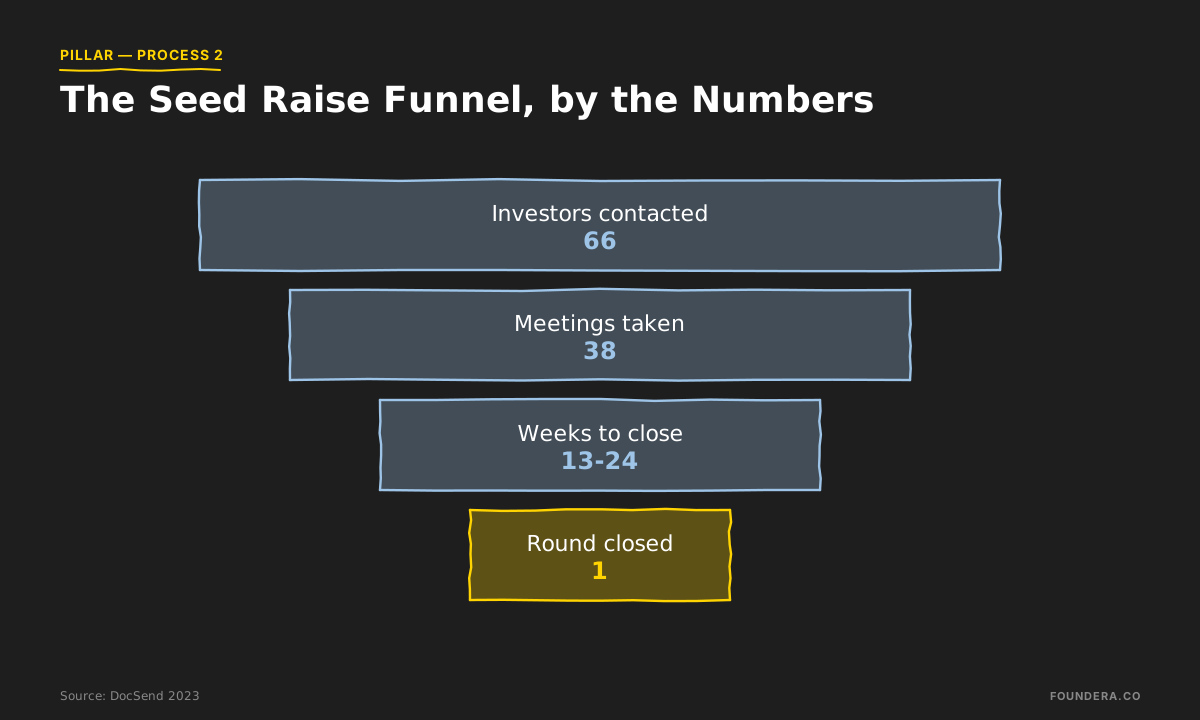
A seed raise in the current market means contacting roughly 66 investors to close one round. That's the average from DocSend's seed fundraising research — up from 48 investors the year before. And while outreach went up, meetings went down: an average of 38 investor meetings per startup, down from 56.
More outreach. Fewer meetings. Longer cycles — 50% of successful seed raises took 13 to 24 weeks.
| Seed raise benchmark | 2022 | 2023 | Direction |
|---|---|---|---|
| Investors contacted (avg) | 48 | 66 | More outreach required |
| Investor meetings (avg) | 56 | 38 | Harder to get in the room |
| Time to close | 46% closed in 1–12 weeks | 50% took 13–24 weeks | Slower rounds |
Source: DocSend seed report, 2023.
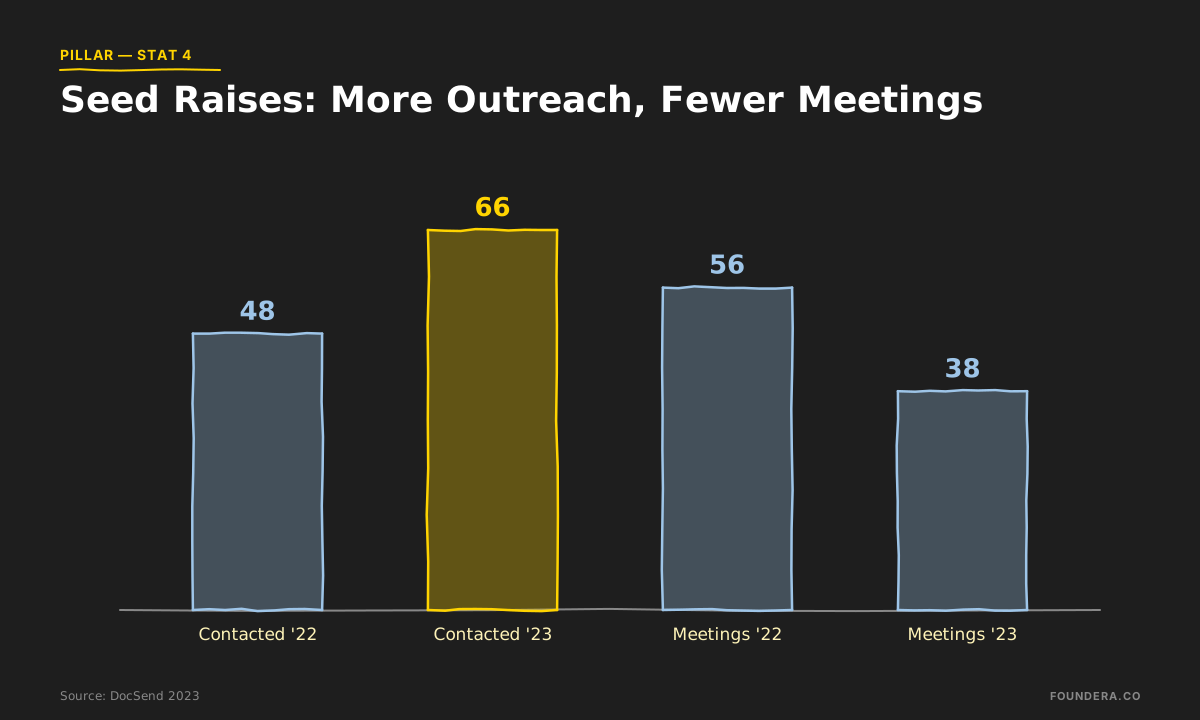
The filter between "contacted" and "meeting" is exactly where LinkedIn visibility does its work. Sixty-six touches competing for 38 seats means investors are triaging harder — and triage runs on recognition. A name they've seen in their feed, attached to sharp thinking about a market they cover, clears the bar. A stranger's deck does not.
One more DocSend finding worth tattooing somewhere: VCs spent 20% less time reviewing decks overall, but 65% more time on the "Why Now?" section and 88% more on competition. Your LinkedIn content is where you rehearse those two arguments in public, months before they're slides. Founders who've published their "why now" thesis twenty times arrive at the pitch with a sharpened story — and often with investors who've already read it.
Content Strategy: Before, During, and After the Raise
Your content job changes at each stage of the raise: build familiarity before, signal momentum during, and compound credibility after. Get the sequencing wrong — going loud only when you need money — and investors can smell it.
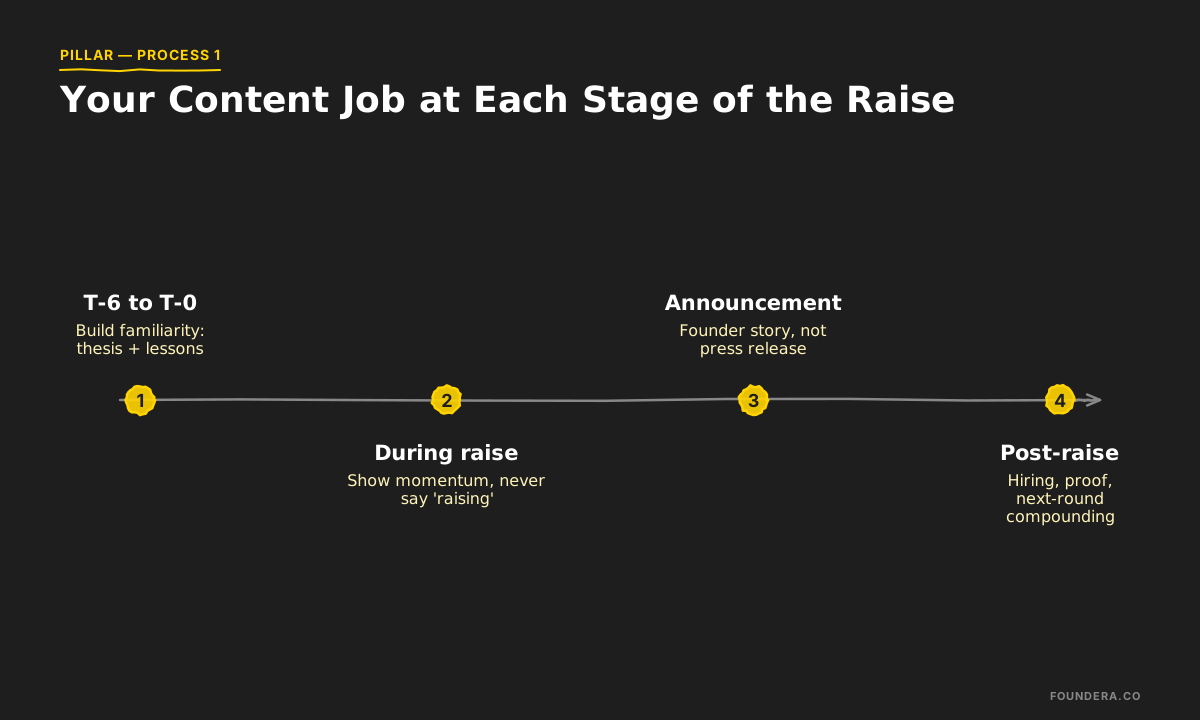
Before the raise (T-6 to T-0 months). This is where most of the value is created, and most founders skip it. Publish your market thesis, your operating lessons, your "why now" — consistently, while you're not asking for anything. Familiarity compounds. We wrote the full phase-by-phase plan here: LinkedIn visibility before fundraising.
During the raise. Do not post "we're raising" to the feed — it reads as weakness and creates timeline pressure you don't control. Instead, keep your normal cadence and tilt it toward momentum: customer wins you can share, product milestones, team growth, sharpened market takes. Investors mid-process are watching your profile. Give the watchers evidence.
After the raise. The announcement is the single highest-attention moment your company will get all year — and then it's gone. The founders who win treat the post-raise window as the start of a distribution engine, not a victory lap: hiring content, customer proof, thesis follow-ups while attention is warm. This is where thought-leadership content shifts from fundraising asset to pipeline asset — and starts working on your next round, because there is always a next round.
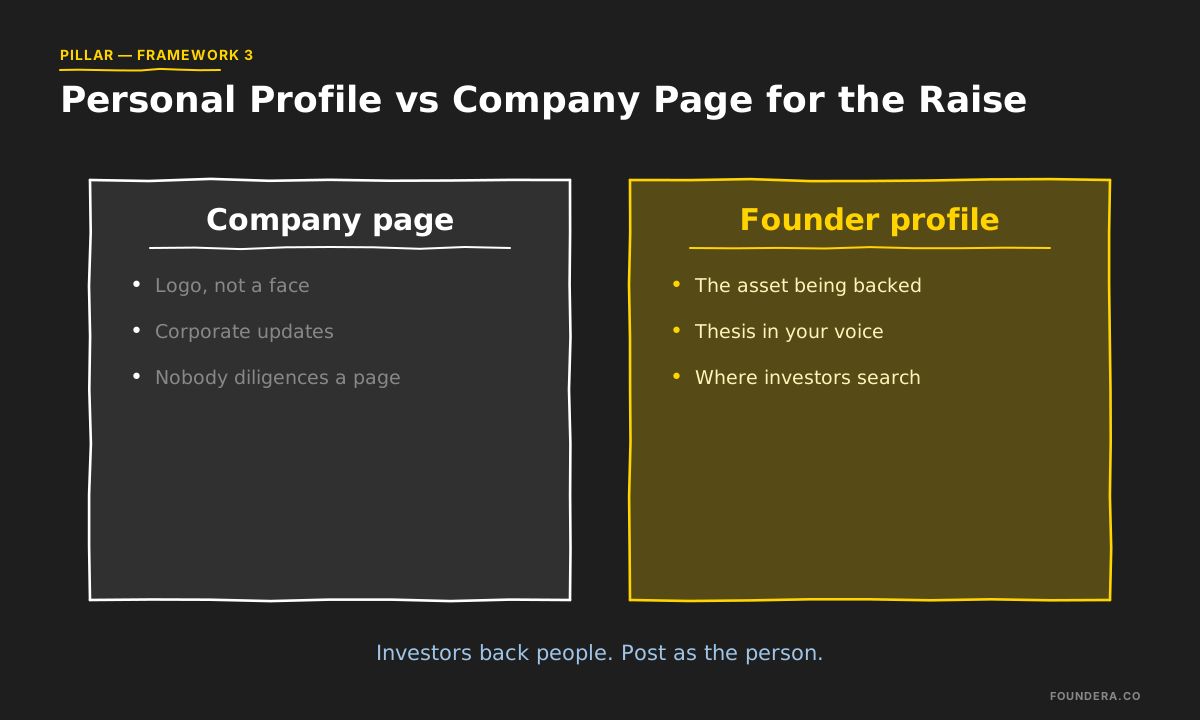
One structural note that applies to all three phases: post from your personal profile, not the company page. Investors diligence people. The engagement data across the platform backs this decisively — we've compiled the numbers in our LinkedIn thought-leadership statistics roundup.
Announcing the Round
A funding announcement should be a founder story, not a press release. The wire gets you a headline nobody reads. Your personal post gets you the feed — where your next hires, customers, and Series A leads actually live.
The anatomy of an announcement post that works:
- Lead with the mission, not the number. The raise is the proof, not the point. Open with what the money makes possible.
- Credit the journey. Early customers, first believers, the team. Specificity reads as authenticity; a wall of investor logos reads as ego.
- Give the round a face. Your face. Photo of the team beats the funding-graphic template every time.
- Mobilize the team. Have every employee share the post with their own words. Their networks are your untapped reach.
- Have a next-week plan. The announcement spike is worthless if you go silent after. Queue the follow-ups: the hiring post, the customer story, the thesis post.
And write it yourself. Your announcement is the most-read thing you'll publish this year. It should sound like you at your best — which is exactly the skill you've been building all through the pre-raise phase.
Frequently Asked Questions
Do investors actually check LinkedIn before a meeting?
Yes — systematically. Brunswick's survey of 257 institutional investors found 96% systematically harvest data from social and digital sources, and they rate LinkedIn 7.83/10 in importance for research — above Google. Assume any investor who takes your meeting has already read your profile and scanned your recent posts. The only question is what they found.
Can I raise money by cold-messaging VCs on LinkedIn?
You can try, but the math is against you. Only 10% of VC deals come from cold inbound from founders, per the NBER study of 885 VCs — while 30%+ come through professional networks and 20% through investor referrals. Use LinkedIn to find warm paths (second-degree connections into target funds) and to become findable, not to spray DMs.
Should I announce that I'm actively raising on LinkedIn?
No. Publicly posting "we're fundraising" starts a clock you don't control and signals scarcity of options. During the raise, keep your normal publishing cadence and tilt it toward momentum — wins, milestones, market takes. Run the actual raise through warm intros and direct conversations, while your feed does the credibility work in the background.
How many investors will I need to contact for a seed round?
Plan for dozens, not a handful. DocSend's seed data shows founders contacted an average of 66 investors and took 38 meetings, with half of successful raises taking 13–24 weeks. Visibility is what improves your conversion between those stages — a recognized name gets more meetings from the same outreach.
When should I start building LinkedIn visibility if I plan to raise?
Six months before the first pitch, minimum. Familiarity compounds slowly and can't be rushed the week you open the round. We've mapped the full timeline — what to publish at T-6, T-3, and T-1 — in LinkedIn visibility before fundraising.
Should the funding announcement come from me or the company page?
From you, with the company page in support. Investors, candidates, and customers follow people, not logos — and feeds are built around personal connections. Post the announcement from your personal profile, have the team amplify with their own words, and let the company page carry the formal version.
TL;DR
- LinkedIn is a diligence surface: investors rate it 7.83/10 for research — second only to your own website, ahead of Google (Brunswick).
- Warm beats cold, decisively: 30%+ of VC deals come through networks and ~30% are found by the VC — only 10% arrive cold (NBER).
- Your profile is the first data-room document. Headline, About, Featured, and recent activity should answer who you are, why you, and what's the proof.
- A seed raise now means ~66 investors contacted for ~38 meetings over 13–24 weeks (DocSend). Recognition is what converts outreach into meetings.
- Sequence your content: familiarity before the raise, momentum during, compounding after. Start six months out.
- Announce the round as a founder story from your personal profile — then keep publishing while attention is warm.