Most B2B founders waste 80% of their social time on the wrong platforms. They post screenshots to Twitter that get 12 likes from other founders. They film TikToks about their security product that get 400 views from teenagers in Manila. Six months later they wonder why pipeline didn't move.
The problem isn't social media. It's that B2B founders treat all platforms as equivalent surface area. They're not. For founders selling six and seven figure deals into security, infrastructure, dev tools, or fintech, exactly one platform pays the bills: LinkedIn. Everything else is a hobby, a brand exercise, or a tax on your week.
This article does the math, shows where the buyers actually live, and gives you a brutal allocation framework so you stop spreading thin.
What B2B founder personal branding looks like in 2026
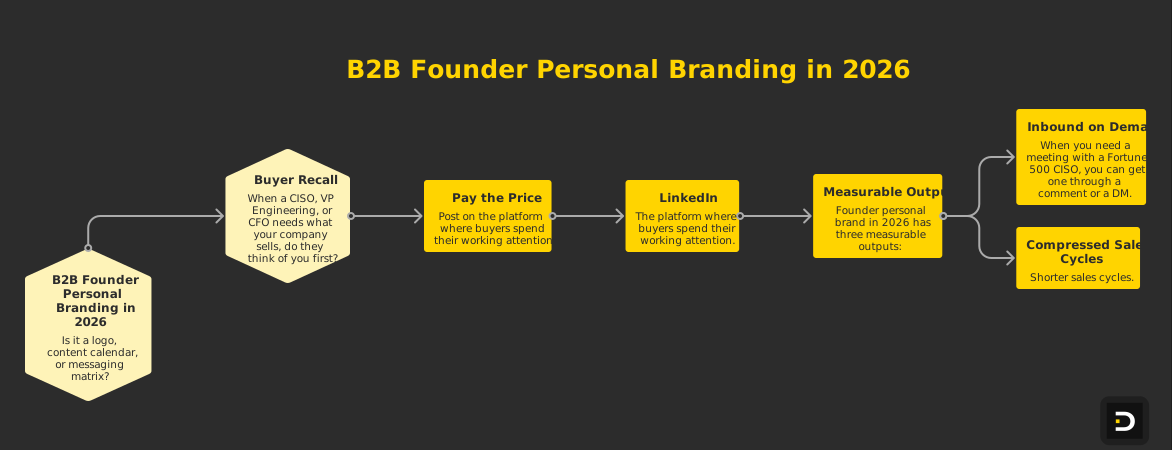
Personal branding for a B2B founder in 2026 is not a logo, not a content calendar, and not a 12-pillar messaging matrix. It's a single answer to a single question: when a CISO, VP Engineering, or CFO needs what your company sells, do they think of you first?
That recall has a price. It's paid in posts on the platform where those buyers spend their working attention. That's LinkedIn.
Founder personal brand in 2026 has three measurable outputs:
- Inbound on demand. When you need a meeting with a Fortune 500 CISO, you can get one through a comment or a DM.
- Compressed sales cycles. Buyers arrive to discovery calls already convinced. They've read 30 of your posts.
- Hiring pull. Senior engineers and GTM hires apply to you instead of being recruited.
None of those outputs come from Twitter dunks or Instagram reels. They come from sustained posting in front of decision makers. The only platform where decision makers sustain attention is LinkedIn.
Platform breakdown: LinkedIn vs Twitter/X vs Instagram vs TikTok vs Substack
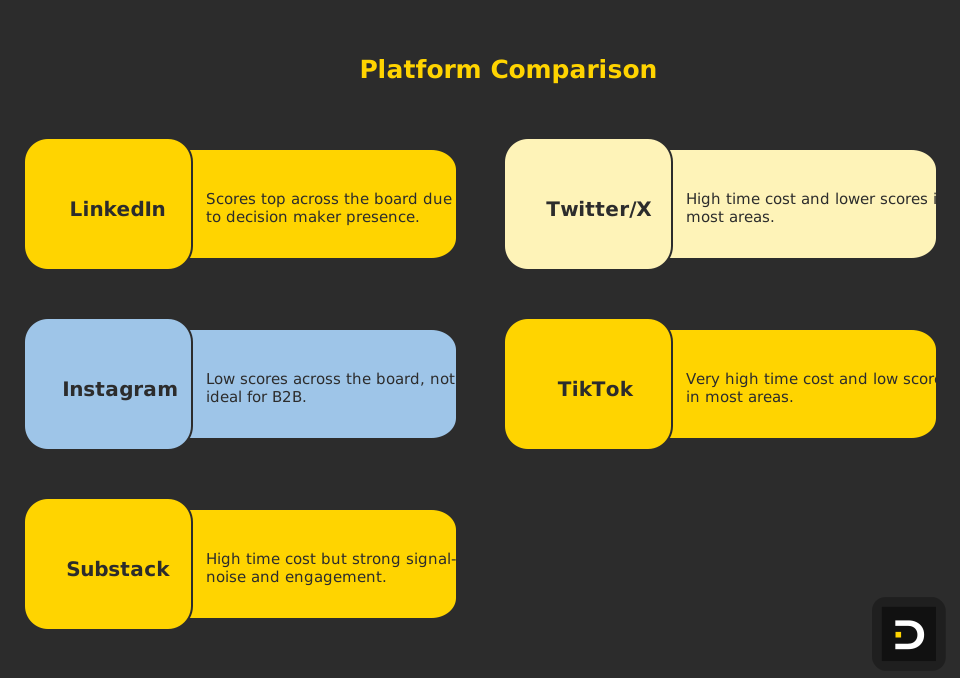
Here's the honest matrix. Five platforms, five dimensions. Score is 1 to 5, where 5 is best for a B2B deep-tech founder.
| Platform | Buyer reach | Engagement quality | Signal-to-noise | Pipeline conversion | Time cost |
|---|---|---|---|---|---|
| 5 | 5 | 4 | 5 | 2 (low) | |
| Twitter/X | 2 | 3 | 2 | 2 | 4 (high) |
| 1 | 2 | 1 | 1 | 4 (high) | |
| TikTok | 1 | 2 | 1 | 1 | 5 (very high) |
| Substack | 3 | 4 | 5 | 3 | 5 (very high) |
A quick gloss on each score.
LinkedIn scores top across the board because nearly every B2B decision maker maintains a profile and logs in weekly. Comments come from VPs and Heads, not anonymous accounts. The same person reading your post can DM you to book a discovery call inside the same minute.
Twitter/X is rated 2 across the board because the audience has bifurcated. The people who stayed are largely consumer crypto, AI hobbyists, and other founders. CISOs left. CFOs never came. The remaining tech audience is mostly people who can't buy what you sell.
Instagram and TikTok are 1s because the buyer isn't there in a buying mindset. A CISO might watch a TikTok at 11pm. She is not evaluating endpoint detection vendors while she watches.
Substack is the interesting one. Signal-to-noise is the highest of any platform because subscribers opt in deliberately. But you have to bring your own distribution. It's a closing tool, not a top-of-funnel one. For founders without an existing audience, starting on Substack is starting in a soundproof room.
Why LinkedIn dominates for B2B (the 5 reasons)
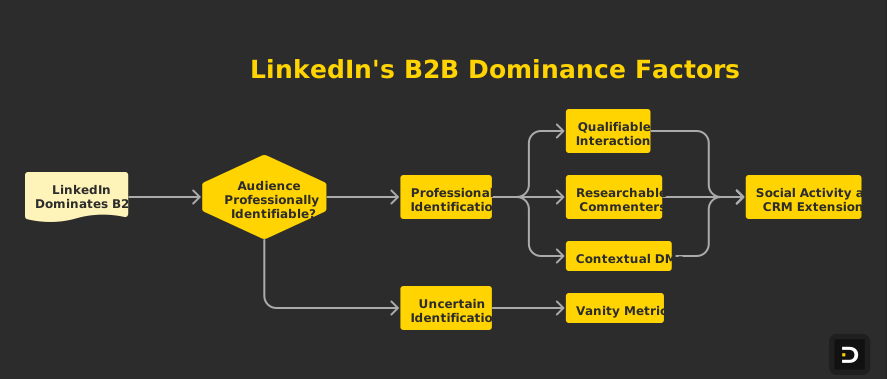
The matrix above is the conclusion. Here are the five mechanisms that produce it.
1. The audience is professionally identifiable
On LinkedIn, every account ships with a title, a company, and a tenure. When a Senior Director of Security at JPMorgan likes your post, you know exactly who liked your post. On Twitter, "CyberWolf_99" liked your post. Could be a CISO. Could be a 15 year old. You'll never find out.
This changes everything. Every interaction is qualifiable, every commenter is researchable, every DM is contextual. Your social activity becomes a CRM extension instead of a vanity stream.
2. The algorithm favors depth, not virality
LinkedIn's feed promotes content that gets sustained attention from a coherent audience. A post that gets 200 likes from 200 security leaders will outperform a post that gets 2,000 likes from a random crowd. According to the LinkedIn B2B Institute's research on long-term brand building, sustained category presence among buyers correlates strongly with purchase consideration years after first exposure.
3. Buyers research vendors on LinkedIn before discovery calls
Edelman's B2B Thought Leadership Impact Report has shown that the majority of senior decision makers consume vendor thought leadership before agreeing to a sales conversation, and the bulk of that consumption happens on LinkedIn. When a CISO accepts your discovery call, she's already read 4 to 8 of your posts. That changes the call from a cold pitch to a warm conversation.
4. Distribution is durable
A LinkedIn post lives for 3 to 7 days in the feed and indefinitely on your profile. People scroll your profile when they're evaluating you for a board seat, a partnership, or a deal. Your last 30 posts are your live resume. Compare to a tweet that's dead in 90 minutes.
5. The conversion path is one click
Reader sees post. Reader clicks profile. Reader books a meeting or sends a DM. There is no other platform where the path from impression to pipeline is this short. Hootsuite's annual Social Trends report has consistently flagged LinkedIn as the single highest-converting organic channel for B2B firms, year after year.
Where each platform actually pays off (honest matrix)
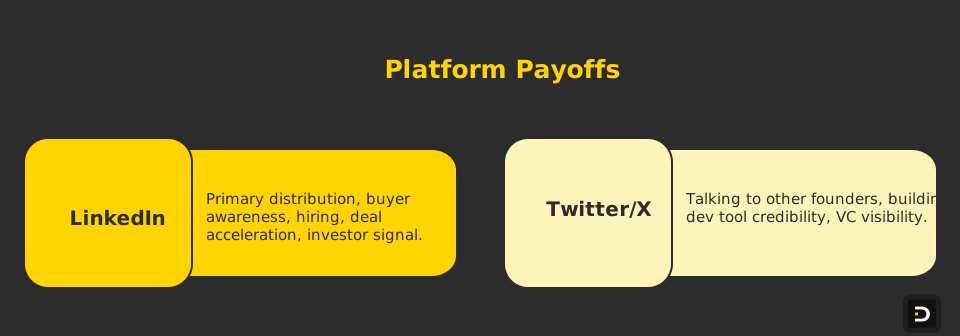
This is not "LinkedIn is good, everything else is bad." Each platform has a specific job it can do well. The mistake is using a platform for a job it can't do.
| Platform | Where it pays off | Where it doesn't |
|---|---|---|
| Primary distribution. Buyer awareness, hiring, deal acceleration, investor signal. | Consumer products. Mass-market SaaS under $50/month ACV. | |
| Twitter/X | Talking to other founders, building dev tool credibility in specific bubbles (AI infra, crypto), VC visibility. | Reaching enterprise buyers. Reaching anyone over 45. Reaching anyone outside the tech bubble. |
| Recruiting brand for younger ICs. Lifestyle/culture content for hiring. Founder-as-public-figure plays. | B2B pipeline. Period. | |
| TikTok | Consumer brand building. Recruiting for Gen Z. Personal brand if you're optimizing for celebrity, not pipeline. | B2B pipeline. Selling to anyone with budget authority over $50K. |
| Substack | Deep-dive thought leadership for an audience you already own. Building a moat around earned attention. Becoming a category analyst. | Building an audience from zero. Top-of-funnel discovery. |
LinkedIn is the only platform where "B2B pipeline" appears in the left column. Every other platform was built for a different job. Founders who treat them as substitutes are paying tax for a service they don't need.
For more on building inbound through LinkedIn, see our piece on founder-led marketing on LinkedIn, and for the platforms most often weighed against each other, our LinkedIn vs Twitter founder branding breakdown.
The 90/10 rule: how to allocate platform time
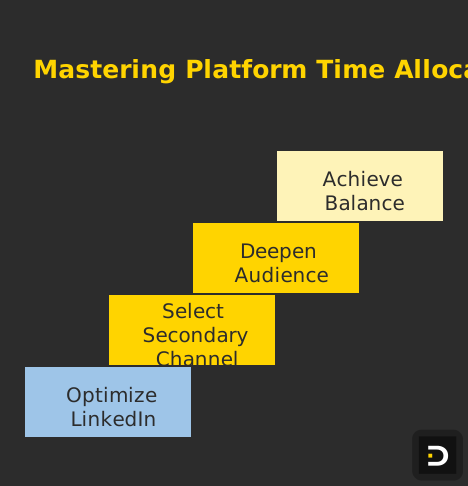
Here's the allocation we recommend to every B2B deep-tech founder Foundera works with:
- 90% on LinkedIn. This is your one primary channel. Five posts a week, deliberate commenting, profile optimized, company page active.
- 10% on one secondary channel. Pick one. The one that maps to a specific job in the right column of the matrix above. For most deep-tech founders, that's Substack as a deepening tool for the audience LinkedIn builds.
No third platform. No "let's try TikTok this quarter." The 10% goes to one secondary platform and only after the 90% is humming. If you're not posting 5x a week on LinkedIn yet, you have no 10% to spend.
Why so concentrated? B2B social ROI is not linear. Going from 0 to 3 posts a week produces almost nothing. Going from 3 to 5 unlocks the algorithm. Posts 5, 6, and 7 are profit. If you split your time across three platforms, you'll do 2 posts a week on each and produce nothing on any of them. That's the most common reason founder social media looks like it isn't working.
Cross-platform: when to repurpose, when to skip
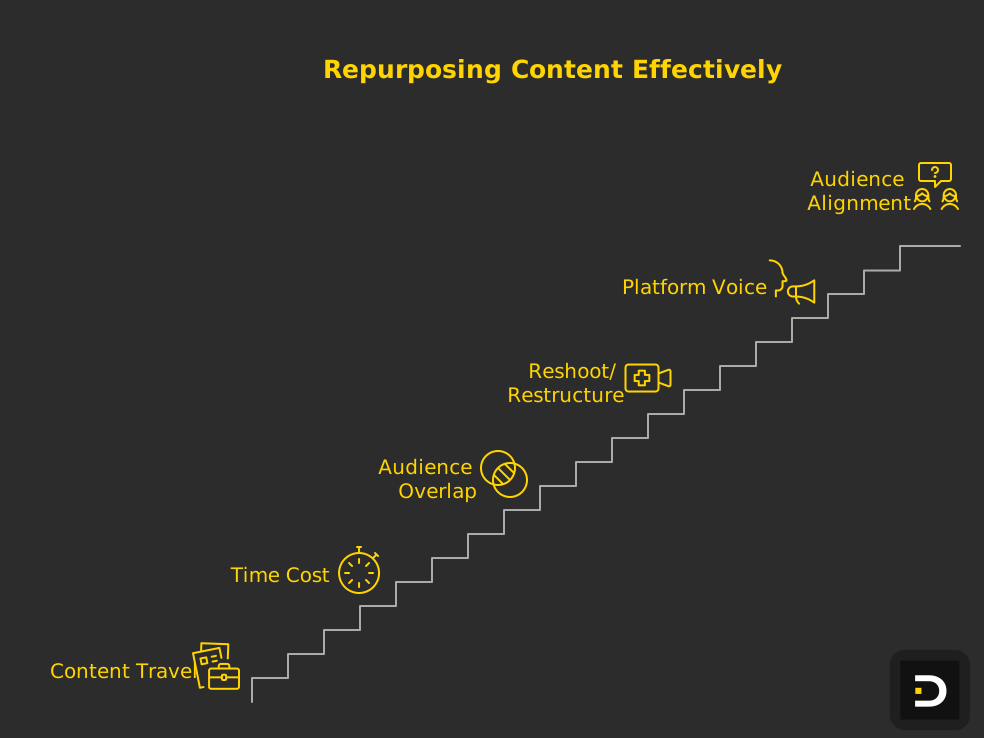
Once your LinkedIn engine is humming, you'll be tempted to repurpose every post. Here's the rule.
Repurpose when the content travels well (a LinkedIn essay to Substack needs minimal reformatting), the marginal time cost is under 15 minutes, and the audience overlaps with your buyer or hiring funnel.
Don't repurpose when you'd have to reshoot or restructure (a LinkedIn carousel becoming a TikTok is a new production, not a repurpose), the platform demands a different voice (Twitter sarcasm rarely lands on LinkedIn), or audience overlap is under 20%.
The healthiest model we see at Foundera: LinkedIn is the original, Substack is the long-form deepening (one essay a week built from the week's best LinkedIn threads), and Twitter is a graveyard with a redirect to LinkedIn in the bio. Nobody opens Instagram. Nobody opens TikTok. The founder gets her time back.
What works on LinkedIn that fails everywhere else
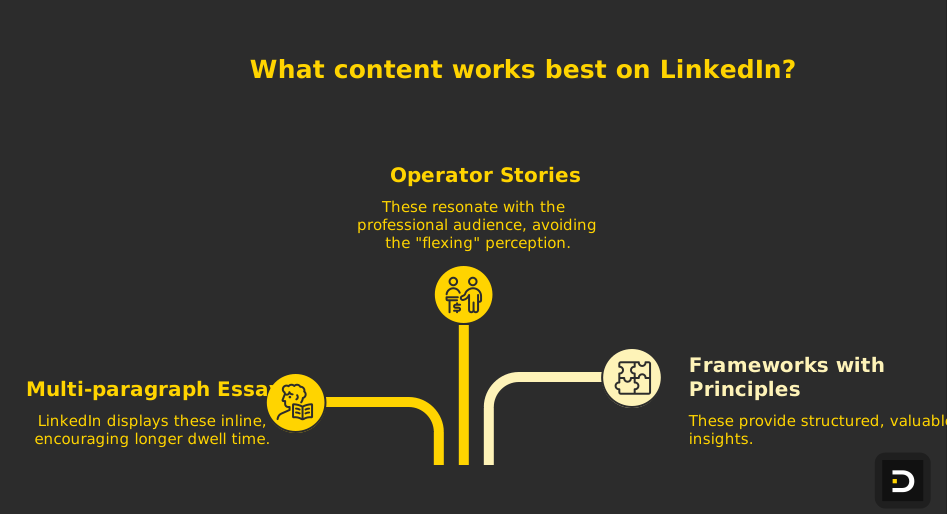
LinkedIn rewards a style of content that gets mocked elsewhere. If you came up writing for Twitter, you'll instinctively avoid it. Stop. The things you think are too earnest, too long, or too "LinkedIn cringe" are exactly what compounds.
- Multi-paragraph essays. Twitter caps at threads. Substack requires a click. LinkedIn shows 1,200 character posts inline and pays attention to dwell time.
- Operator stories from real deals. "Here's what I learned closing a $1.2M ACV deal last quarter" is gold on LinkedIn. On Twitter it sounds like flexing.
- Frameworks with named principles. "The 4 reasons Series B security companies miss their number" gets saved and reshared. On TikTok it's 4 swipes nobody finishes.
- First-person opinion with a specific enemy. "Most CISOs are wrong about EDR consolidation, here's why" works because the audience can engage as peers.
These formats work because LinkedIn's audience is reading at work, in a professional mood, looking for ideas they can use Monday morning. They have patience for paragraphs and hunger for frameworks. No other platform has that user mood at scale.
For more on the content shapes that consistently work, our executive thought leadership framework breaks down the templates we use across Foundera clients.
The 4 mistakes B2B founders make on social
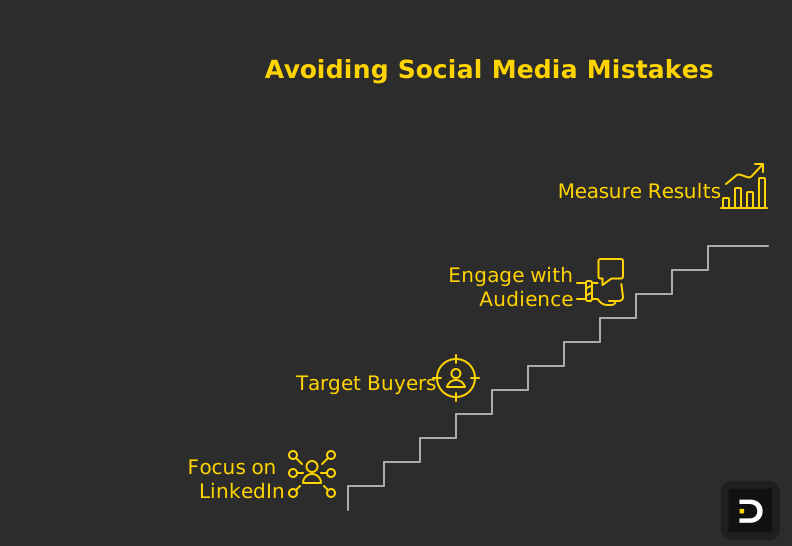
After working with deep-tech founders across security, AI infra, fintech, and dev tools, the same four mistakes recur.
Mistake 1: Treating every platform as equivalent
"I'll cross-post everywhere." This is the spread-thin trap. You'll do 2 mediocre posts a week per platform instead of 5 great ones on one platform. Pick LinkedIn. Pick a distant second. Drop the rest.
Mistake 2: Writing for other founders instead of buyers
Most founders write content that lands well with other founders, gets reshared in the founder bubble, and accomplishes nothing commercial. The signal: lots of comments from people you can't sell to. The fix: write for the title that signs your invoices. If you sell to CISOs, write for CISOs. If they're not reading, you're on a founder echo chamber that happens to be hosted on LinkedIn.
Mistake 3: Optimizing for likes instead of DMs
A post with 50 likes and 4 DMs from buyers is worth 10x a post with 800 likes and zero DMs. The like is a flicker. The DM is a sales conversation. Track inbound DMs from titles you can sell to. That's the only number that matters.
Mistake 4: Quitting at month 3
LinkedIn's compounding period is 6 to 9 months. Posts 1 through 60 get tiny reach. Post 90 starts to land. Post 180 inbound starts. Founders who quit at month 3 quit one month before it works. This is the single most common failure mode and it has nothing to do with content quality.
Real founder case: cut Twitter, doubled down on LinkedIn, 6-month results
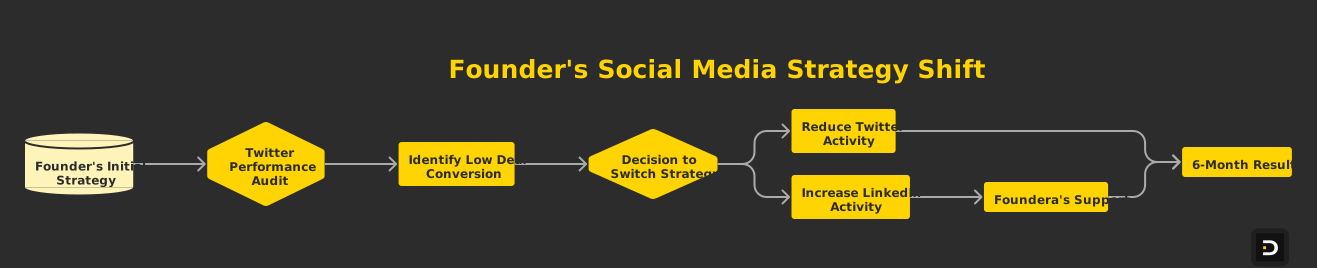
One of the founders Foundera works with came in with a Twitter following of around 11,000, built over 4 years of dev tool commentary. He posted on Twitter daily, on LinkedIn maybe once a month. His company sold security tooling at $80K to $400K ACV into enterprise.
The audit was brutal. Out of 4 years of Twitter activity, we could trace exactly 2 closed deals. Two deals in 48 months from a daily posting habit.
We made the switch. Twitter went from 7 posts a week to 1, used as a redirect. LinkedIn went from 1 post a month to 5 posts a week, hand-written by the founder, with Foundera handling structure, hooks, and editing.
Six month results:
- LinkedIn followers: 2,800 to 14,400
- Inbound DMs from buyer-titled prospects: 0 to 4 per week, sustained
- Discovery calls sourced from LinkedIn: 0 to 9 per month
- Pipeline directly attributed to LinkedIn content: $2.1M
- Closed deals in the window directly traceable to LinkedIn: 3, totaling $640K
The Twitter following did not shrink meaningfully. The opportunity cost of the previous 4 years became visible only after the switch. He had been working hard on the wrong platform for half a decade.
This pattern repeats. Every founder we onboard comes in with some version of "but I have a following on X platform." We ask them to honestly count the deals it has produced. The math usually settles the question inside one meeting.
For the strategic frame, see our personal brand approach for LinkedIn startup founders, and for tooling, the best personal branding tool comparison for founders.
Your next move
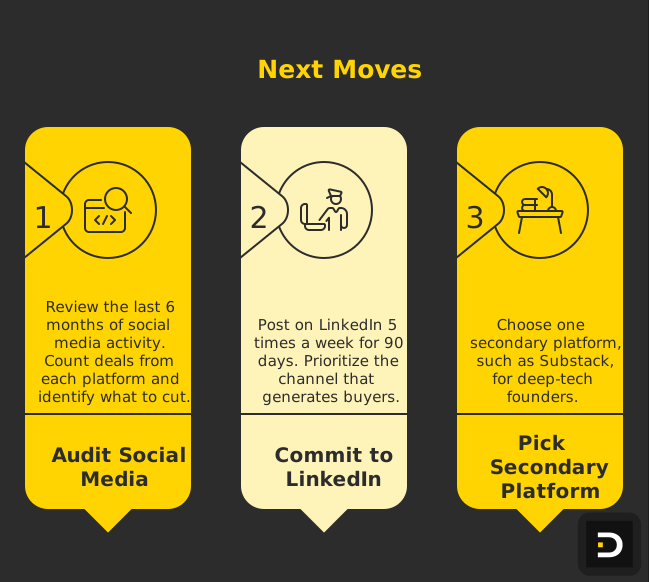
If you take one thing from this article: stop spreading thin. There is exactly one platform that pays the bills for a B2B deep-tech founder. Everything else is a hobby, a secondary channel, or a tax.
- Audit your last 6 months. Count every deal that originated from social. Tag each by platform. The math will tell you what to cut.
- Commit to 5 LinkedIn posts a week for 90 days. No exceptions. If you can't carve out 90 minutes a week for the channel that produces your buyers, you have a priorities problem.
- Pick one secondary platform. One. For most deep-tech founders that's Substack. For a few it's Twitter. For almost none is it Instagram or TikTok.
- Track DMs from buyer titles, not likes.
This is the work that produces a personal brand worth having. A specific, durable position in the mind of the buyer that converts to pipeline on demand. If you want a LinkedIn ghostwriting partner that knows deep-tech B2B, talk to Foundera. We work with founders selling into security, AI infrastructure, dev tools, and fintech. One thing, one platform, very well.
FAQ
Is LinkedIn really better than Twitter for B2B founders in 2026?
Yes, and the gap has widened. Twitter's enterprise buyer audience has eroded significantly since 2022. LinkedIn's professional audience has deepened. For founders selling deals over $50K ACV into named enterprise accounts, LinkedIn is not "better" than Twitter. It's the only one of the two that consistently produces buyer pipeline.
What if my product is for developers? Doesn't Twitter still matter?
For pure developer tool plays with bottom-up adoption and self-serve pricing, Twitter still has real value, particularly in AI infra and DevOps niches. But even there, the buyer (VP Engineering, CTO) who signs the expansion contract lives on LinkedIn. Use Twitter for community and credibility, use LinkedIn for the deal that funds the company.
How many LinkedIn posts a week do I actually need?
Five. Three is the floor where the algorithm starts paying attention. Five is where compounding kicks in. Seven is optimal but rarely sustainable. Below three you're paying for a result you'll never get.
Should I use AI to write my posts?
Use AI as scaffolding, never as the final voice. Buyers can smell generic AI prose at 30 paces and it actively damages credibility. The Foundera model is founder-voice in, structure and editing applied, founder-voice out. The post should sound like you to anyone who has met you.
How long until LinkedIn starts producing inbound?
Six to nine months of consistent posting before serious inbound. First 90 days produce almost nothing. Months 4 through 6 produce the early signal. Month 9 onward produces sustained inbound. Founders who quit before month 6 quit too early, and this is the single most common reason founder personal branding "doesn't work."
Is Substack worth starting from zero?
Not as a primary channel. Substack does not give you reach. It rewards an audience you already own. The right sequence: build a LinkedIn audience first, then use Substack as a deepening tool for the readers who want more from you. Reverse that order and you'll write essays to a near-empty room.
What about YouTube?
YouTube can work for B2B founders, but only at a production level most founders can't sustain. If you're committing to weekly long-form video with real production value, YouTube becomes a real channel. If you're filming on your phone in your kitchen once a month, you're producing content nobody finds and nobody finishes. For 95% of B2B deep-tech founders, YouTube is a distraction from the LinkedIn motion that actually moves pipeline.
The TL;DR
Quick answer
For B2B founders selling six and seven-figure deals, exactly one platform pays the bills: LinkedIn. Twitter, Instagram, TikTok, and Substack each have specific jobs they do well, but none replace LinkedIn for pipeline. The 90/10 rule: 90% on LinkedIn, 10% on one secondary channel, usually Substack as a deepening tool. No third platform.
Key takeaways
- LinkedIn scores 5/5 for B2B buyer reach, engagement quality, and pipeline conversion.
- Twitter audience bifurcated. CISOs left, CFOs never came. Mostly hobbyists and founders now.
- LinkedIn compounding period is 6-9 months. Founders who quit at month 3 quit one month early.
- Five posts a week unlocks the algorithm. Three is the floor. Below that, you produce nothing.
- Real founder case: $2.1M pipeline attributed to LinkedIn after switching from daily Twitter.