Most founders have heard about LinkedIn's Social Selling Index. A three-digit number that supposedly tells you how good you are at the platform. People screenshot it. Sales coaches sell courses around it. LinkedIn buries it inside a Sales Navigator URL most users have never visited.
Here's what almost nobody tells you: SSI is not a vanity metric, and it's also not a pipeline predictor. It sits somewhere in between. For founders running deep-tech or B2B SaaS companies, SSI is more useful as a diagnostic than as a target. It tells you which part of your LinkedIn presence is broken, not whether your business will succeed.
This guide breaks down what your SSI score means in 2026, how the four pillars work, how to find your number in under a minute, the benchmarks that matter, and the specific tactics that move each pillar.
What is LinkedIn SSI Score (Social Selling Index)?
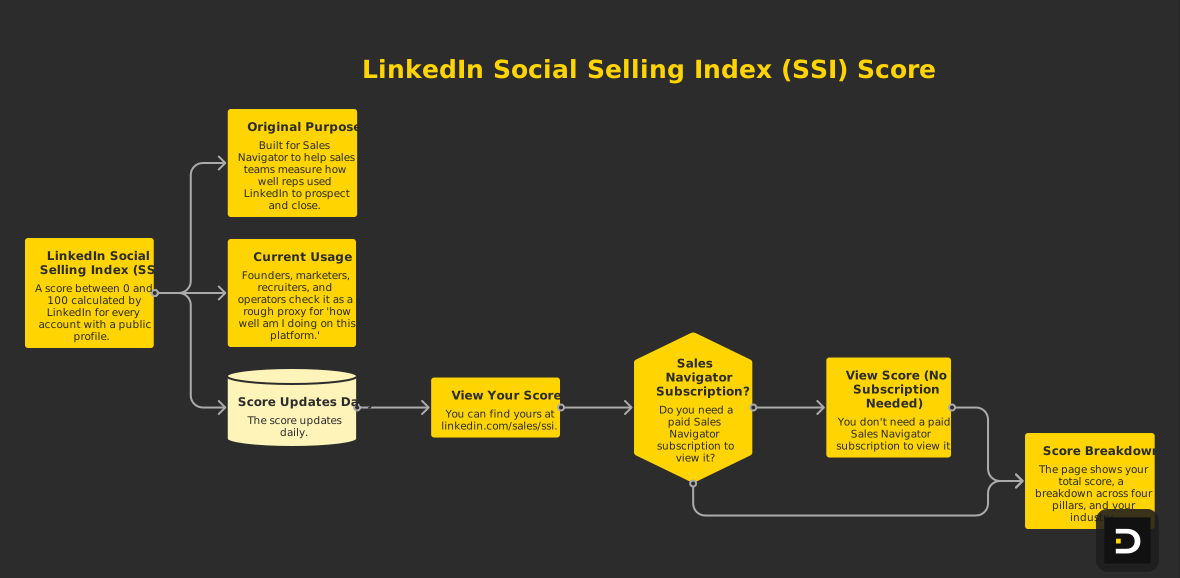
The LinkedIn Social Selling Index, or SSI, is a score between 0 and 100 that LinkedIn calculates for every account with a public profile. It was originally built for Sales Navigator to help sales teams measure how well reps used LinkedIn to prospect and close. Now founders, marketers, recruiters, and operators check it as a rough proxy for "how well am I doing on this platform."
The score updates daily. You can find yours at linkedin.com/sales/ssi. You don't need a paid Sales Navigator subscription to view it. The page shows your total score, a breakdown across four pillars, your industry rank, and your network rank.
What SSI measures is your behavior on LinkedIn relative to other users. It's not a measure of business outcomes. A founder with an SSI of 80 might be generating zero qualified meetings. A founder with an SSI of 35 might be closing seven-figure deals from inbound DMs. It's a behavior index, not a revenue index. Treat it accordingly.
How LinkedIn calculates SSI: the 4 pillars
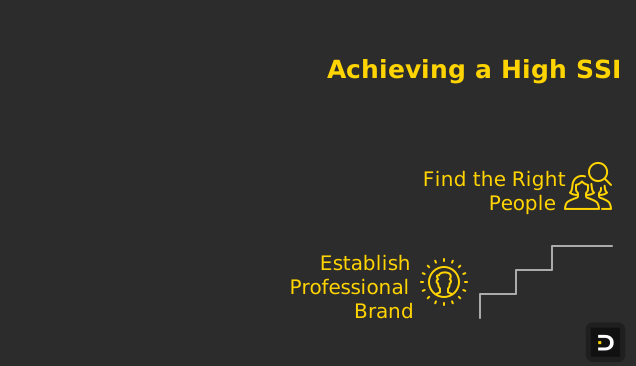
SSI is the sum of four sub-scores, each worth up to 25 points. A perfect 25 in all four would give you an SSI of 100, which essentially no one hits. The four pillars:
1. Establish your professional brand (0-25)
Rewards profile completeness, original content posting, and engagement on your posts. LinkedIn looks at whether your profile is filled out (headline, About, experience, skills, recommendations), whether you publish regularly, and whether that content earns engagement.
2. Find the right people (0-25)
Rewards prospecting behavior. Are you searching for relevant profiles? Viewing them? Using Sales Navigator filters? LinkedIn tracks how targeted your searches are and how often you view profiles that match a coherent ICP rather than scrolling randomly.
3. Engage with insights (0-25)
Measures how you interact with other people's content. Sharing posts, commenting thoughtfully, reacting, and sending messages that get replies. It's the "contributor or consumer" score. Lurkers get crushed here.
4. Build relationships (0-25)
Rewards growing your network with relevant, senior connections. LinkedIn looks at network quality (titles, seniority, industry fit) and whether your connection requests get accepted. Spam-connecting strangers hurts this score because rejected requests count against you.
The pillars compound. Most founders are unbalanced. They post regularly (high pillar 1) but never comment on others (low pillar 3), or they network aggressively (high pillar 4) but never publish (low pillar 1).
What SSI scores actually mean for founders
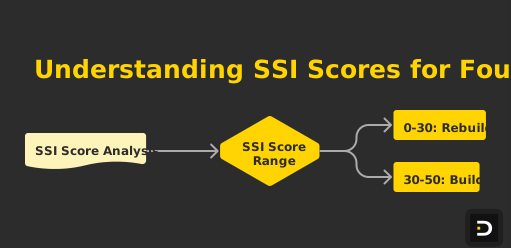
LinkedIn doesn't publish official bands, so the ranges below come from analyzing scores across thousands of founder accounts and what they correlate with in terms of inbound activity, profile views, and reply rates.
| SSI Range | Band | What It Means for Founders |
|---|---|---|
| 0-30 | Rebuild | Inactive or near-inactive profile. Profile views in single digits per week. Cold outreach reply rates under 5%. You're invisible. This is the starting point for most founders who have ignored LinkedIn for years. |
| 30-50 | Build | Some activity, basic profile completion, occasional engagement. Profile views 20-100 per week. You're on the platform but not generating consistent signal. This is where most technical founders sit when they first decide to take LinkedIn seriously. |
| 50-70 | Compound | Active poster, growing network, engaging with others. Profile views 200-1,000 per week. Inbound DMs starting to land. This is the band where LinkedIn starts producing pipeline rather than consuming time. |
| 70-90 | Authority | You're recognized in your niche. Profile views 1,000+ per week, regular inbound from investors, partners, and prospects. Posts routinely earn 50+ reactions. You've stopped chasing connections; they come to you. |
| 90+ | Top 1% | Extremely rare. Requires near-daily content, aggressive networking, and tight ICP focus. Most founders at this level are either full-time creators or have a dedicated content operation behind them. |
The honest read for most founders: aim for the 50-70 band. That's where LinkedIn produces pipeline without crowding out the work of building the company. Above 70, marginal returns drop unless content is core to your go-to-market.
How to check your SSI score in 60 seconds
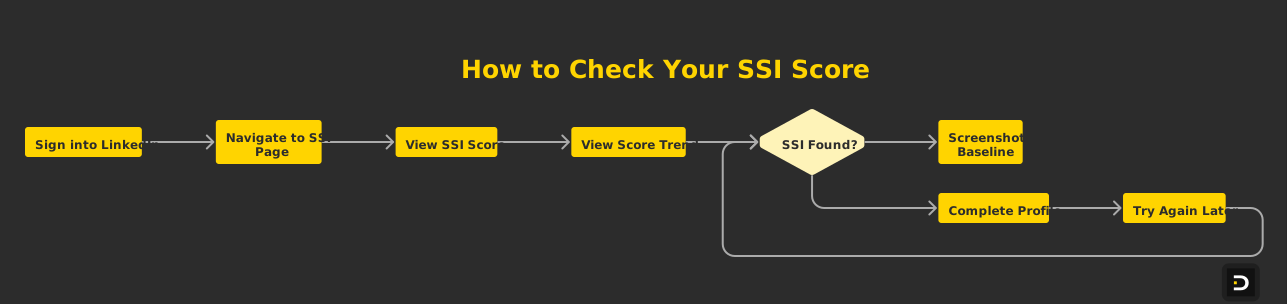
Three steps:
- Sign into LinkedIn on a desktop browser. Mobile works but the breakdown is harder to read.
- Navigate to linkedin.com/sales/ssi. Bookmark it because LinkedIn doesn't link to it from the main nav.
- You'll see your current SSI, the four pillar scores, your industry rank, and your network rank.
The page shows a graph of how your score has changed over time. Screenshot the baseline so you can measure progress. If the page returns "Sorry, we couldn't find your SSI," your account is too new or your profile too incomplete. Fill it out fully and try again in a week.
The benchmark: average SSI scores by industry and seniority
LinkedIn publishes some aggregate benchmark data inside the SSI dashboard. Two numbers matter: your industry rank and your network rank. Both tell you where you sit relative to comparable accounts.
From aggregated data across founder accounts in tech and security:
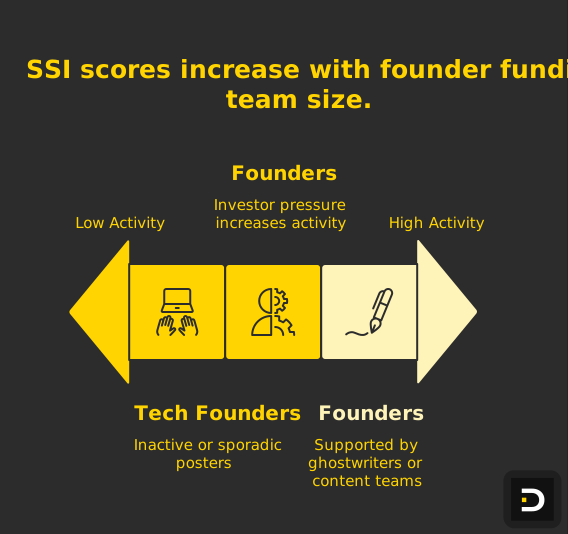
- Average SSI for tech founders (pre-Series A): 32-41. Most are inactive or sporadic posters.
- Average SSI for Series A/B founders: 41-55. Investor pressure and team scaling pushes more LinkedIn activity.
- Average SSI for Series C+ founders: 50-65. Often supported by ghostwriters or content teams.
- Average SSI for sales-led founders (vs. product-led): 8-12 points higher across stages.
- Average SSI for B2B SaaS sales reps: 55-70. Sales orgs train on SSI explicitly.
- Average SSI for security/deep-tech founders specifically: 28-38. The technical-founder discount is real.
A technical founder in the high 30s is already above the median for the peer group. The real question is whether that's enough for your stage. A pre-seed founder doesn't need an SSI of 70. A Series A founder raising or recruiting a VP probably does.
Why founders should care (and why most shouldn't obsess)
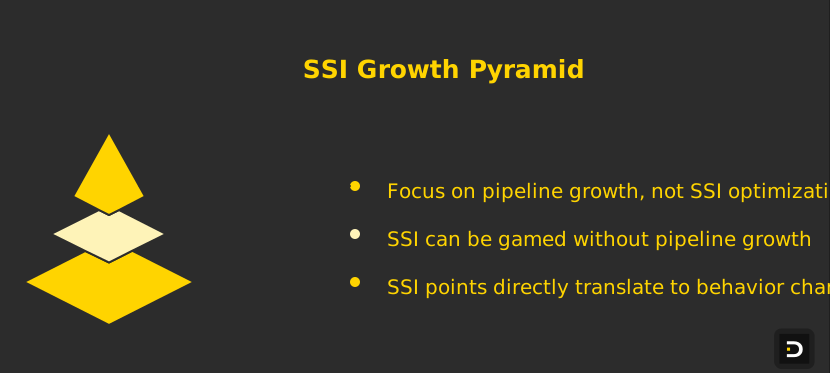
The contrarian take: SSI is most useful when rebuilding from zero. Below 30, every point you add corresponds to real behavior change that produces real outcomes. You're filling out a profile, posting your first piece of content, sending your first targeted connection request.
Above 50, the relationship between SSI and outcomes weakens. You can game the score by liking posts all day, connecting with anyone who'll accept, and posting bland content that gets reactions but doesn't move anyone to action. Your SSI goes up. Your pipeline doesn't.
The founders who win on LinkedIn don't optimize for SSI. They optimize for:
- Qualified inbound DMs per month from people who match their ICP
- Meeting bookings sourced from LinkedIn tagged in their CRM
- Reply rates on targeted outbound to specific account lists
- Repeat post engagement from the same 50-200 ICP-fit accounts
SSI is a leading indicator of these things when you're starting out. It stops being one once you're past the basics. Track it. Don't worship it.
This is the trap we help founders avoid at Foundera. We've worked with deep-tech founders who went from SSI 22 to SSI 65 in four months while booking real meetings, and we've seen founders push their SSI to 80 with zero pipeline impact because they chased the wrong signal.
How to improve each of the 4 SSI pillars
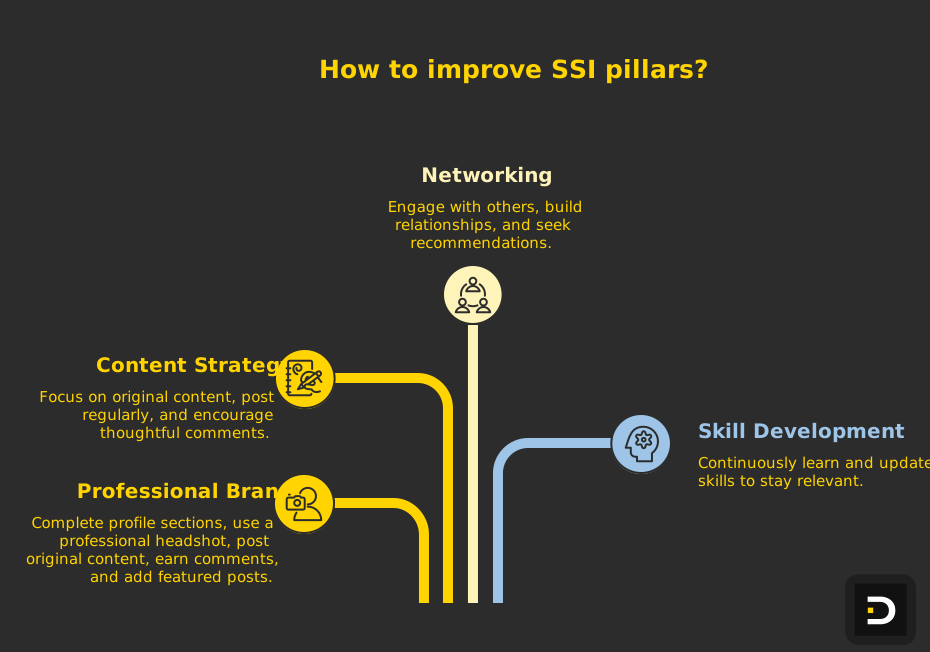
Each pillar responds to different actions. The mistake most founders make is grinding on one pillar (usually content) and ignoring the other three.
Improve "Establish your professional brand"
- Complete every section of your profile. Headline, About, Featured, Experience, Skills, Recommendations.
- Use a professional headshot. The algorithm appears to weight this.
- Post original content at least twice per week. Original means written by you, not a reshared link.
- Earn comments. A post that gets 30 thoughtful comments scores higher than one with 200 emoji reactions.
- Add Featured posts so visitors see your best work first.
For the deeper strategic playbook on positioning your profile and content for inbound, see our breakdown of the best personal branding tool for founders.
Improve "Find the right people"
- Search with intent. Define an ICP, then search for titles, companies, and industries that match.
- View 20-30 ICP-fit profiles per day.
- Use Sales Navigator filters if you have access. The score rewards advanced search behavior.
- Save lead lists in Sales Navigator to signal structured prospecting habits.
Improve "Engage with insights"
- Comment on 5-10 posts per day from people in your network or ICP. Substantive comments, not "great post."
- Share posts with your own added context, not bare reshares.
- Send messages that get replies. Reply rates feed back into your score.
- React thoughtfully. Reactions count, but commenting counts more.
Improve "Build relationships"
- Send 10-15 personalized connection requests per day. A one-sentence note that references something specific about them.
- Connect with senior, relevant decision-makers in your ICP.
- Avoid mass-connecting strangers. Rejected requests hurt this score.
- Nurture existing connections. Replies from your network feed back into the relationship pillar.
For founders systematizing this across all four pillars, our executive thought leadership framework walks through how to sequence the work.
From SSI 30 to SSI 75: a real founder case study with monthly milestones
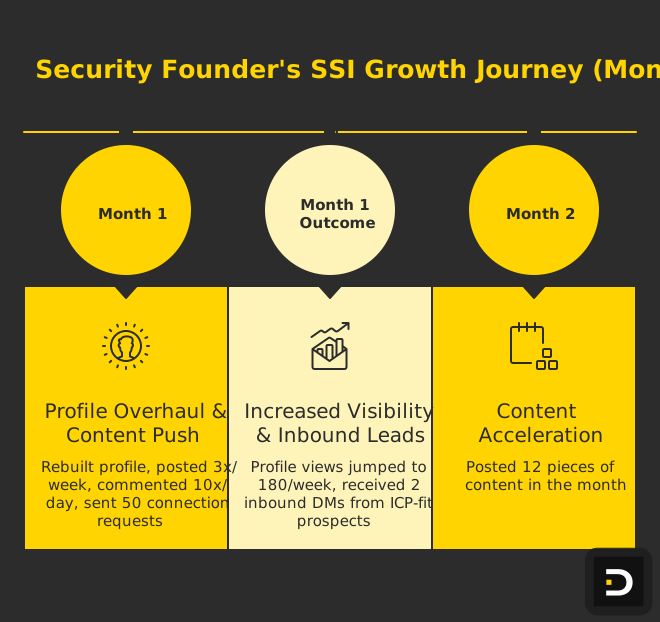
A composite case study based on a security founder we worked with. Names changed, numbers real. Starting point: SSI 31, 12 profile views per week, zero inbound DMs from ICP, two pieces of content posted in the previous 18 months.
Month 1: SSI 31 to SSI 42
- Rebuilt profile (headline, About, Featured)
- Established posting cadence: 3 posts per week
- Started commenting 10 times per day on ICP posts
- Sent 50 personalized connection requests, 38 accepted
- Outcome: Profile views jumped to 180 per week. Two inbound DMs from ICP-fit prospects.
Month 2: SSI 42 to SSI 54
- Posted 12 pieces of original content total (3 per week)
- Began publishing one longer-form post per week with a strong POV
- Used Sales Navigator to build structured lead lists
- Continued daily commenting habit
- Outcome: First post crossed 50,000 impressions. Five inbound DMs, one resulting in a discovery call.
Month 3: SSI 54 to SSI 63
- Refined ICP based on which posts drew the right audience
- Started a recurring weekly series (a single recognizable hook)
- Replied to every comment within 4 hours
- Network grew by 400 ICP-fit connections
- Outcome: Two qualified meetings booked directly from LinkedIn. One investor reached out for a coffee.
Month 4: SSI 63 to SSI 71
- Doubled down on the formats that worked (case studies, contrarian POVs)
- Layered targeted outbound to people who engaged with posts
- Started saving high-engagement post structures for repeated use
- Outcome: Six qualified meetings, three of which entered active sales conversations.
Month 5-6: SSI 71 to SSI 75
- Score growth slowed; pipeline growth accelerated
- Stopped chasing the number, started measuring meetings sourced
- Outcome: Twelve qualified inbound conversations across two months, one closed deal sourced entirely through LinkedIn.
The lesson: SSI gains slowed dramatically once basic behaviors were in place, but business outcomes kept compounding. Use SSI to diagnose what to fix, then start watching meetings.
What SSI doesn't measure (the limits)
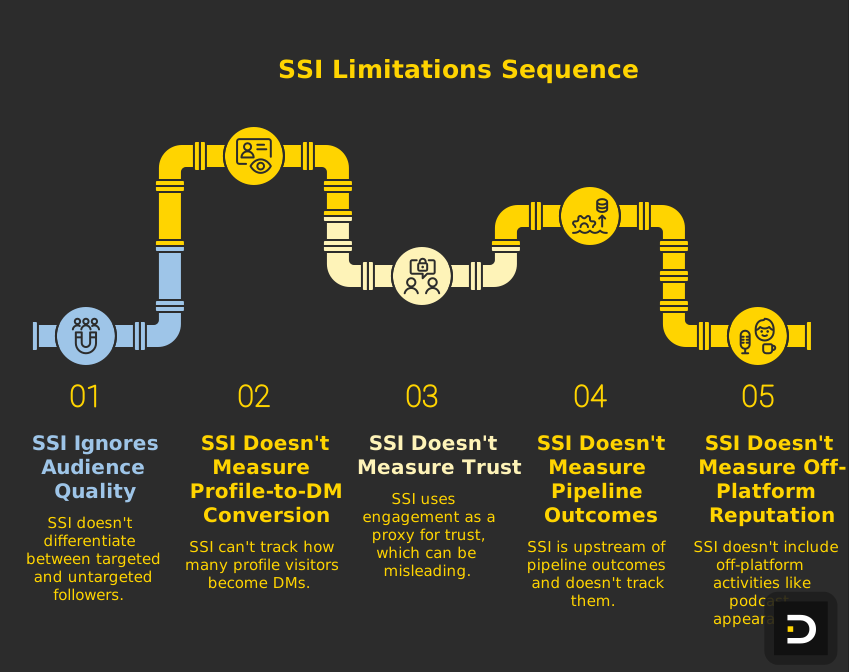
Things SSI ignores entirely:
- Audience quality. 10,000 followers who aren't your ICP can produce a higher SSI than 500 targeted ones, even though the smaller audience is more valuable.
- Profile-to-DM conversion. SSI doesn't know whether your profile turns visitors into DMs.
- Trust. Engagement is a poor proxy for trust. A controversial post spikes engagement without building authority.
- Pipeline outcomes. SSI is upstream of pipeline, not pipeline itself.
- Off-platform reputation. Podcast appearances, conference talks, and press don't show up in SSI.
Here's how SSI stacks up against the metrics that actually drive founder pipeline:
| Metric | What It Measures | Useful For |
|---|---|---|
| SSI Score | Behavior on platform vs. peers | Diagnosing weak pillars when starting out |
| Profile views per week | Top-of-funnel reach | Tracking visibility growth |
| Inbound DMs from ICP per month | Demand signal | Tracking pipeline health |
| Meetings booked from LinkedIn | Conversion | Measuring revenue impact |
| Reply rate on outbound | Targeting quality | Measuring ICP precision |
| Follower growth (ICP-fit only) | Audience quality | Building compounding distribution |
Rows 3-6 are what actually predict revenue. SSI is a useful diagnostic, but if you're choosing between optimizing SSI and tracking inbound DMs, track the DMs.
For how these metrics tie back to founder-led sales, our piece on sales methodology for founders on LinkedIn connects SSI behaviors to deal cycle stages. For the systems view, see founder-led marketing on LinkedIn.
Your next move
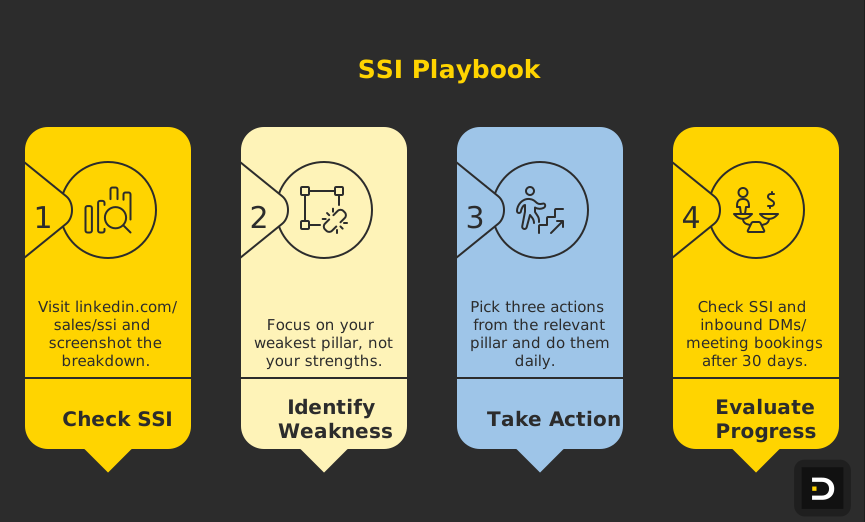
Here's the playbook in four lines:
- Check your SSI today. Visit linkedin.com/sales/ssi and screenshot the breakdown.
- Identify your weakest pillar. That's where you start, not where you're already strong.
- Pick three actions from the relevant pillar section above. Do them every day for 30 days.
- At day 30, check your SSI again, but more importantly, check your inbound DMs and meeting bookings. If those are growing, keep going. If only your SSI is growing, change tactics.
SSI is a starting line, not a finish line. Glance at it every few weeks to make sure your behavior is heading in the right direction. Don't obsess. It pulls you toward activity instead of outcomes.
The founders who win on LinkedIn treat SSI like a fuel gauge. Make sure you're not empty. Then keep driving toward the destination, which is qualified pipeline.
If you want help building the content and outbound system behind a rising SSI score, that's what we do at Foundera. We ghostwrite LinkedIn for deep-tech founders so the score climbs as a byproduct of pipeline. For more on how content fits the picture, see our LinkedIn content strategy for B2B lead generation.
Frequently asked questions
What is a good SSI score?
A good SSI score for a founder is 50-70. Below 30 means you're invisible on LinkedIn. Above 70 produces diminishing returns unless content is central to your go-to-market. For technical founders, hitting 50 is a strong milestone.
How do I improve my SSI score quickly?
The fastest gains come from fixing your weakest pillar. If you don't post, start posting twice a week. If you don't comment, start commenting on 10 posts per day. If your profile is incomplete, finish it today. Most founders move their SSI 8-12 points in the first month with deliberate effort across all four pillars.
Does SSI actually matter for founders?
It matters as a diagnostic, not a goal. SSI is useful for identifying what's broken. It's less useful as a revenue predictor. Founders who closed real deals from LinkedIn track meetings booked and reply rates, not SSI.
What's the average SSI score?
Across all LinkedIn users, the average sits around 30. For tech founders, the average is 32-41 depending on stage. Sales professionals average 55-70 because they use the platform daily for prospecting. Technical founders typically score 8-15 points below sales-led founders at the same stage.
How often does SSI update?
Daily. The dashboard reflects activity from the previous 24 hours, though larger trends are smoother over weeks. A single post won't move your score dramatically, but a sustained two-week change in behavior usually shows up as a 4-8 point shift.
Can I see someone else's SSI score?
No. SSI is private to each account. Some tools claim to estimate other people's SSI based on public signals, but those are guesses. LinkedIn doesn't expose other users' scores through any official API.
Do I need Sales Navigator to see my SSI?
No. The page is free to any LinkedIn user. Sales Navigator helps you score higher on the "Find the right people" pillar because it tracks advanced search behavior, but it's not required to view the score itself. For framework guides, see LinkedIn Marketing Solutions; for cross-industry benchmarks, HubSpot's annual sales reports contextualize where your score sits.
How long does it take to go from SSI 30 to SSI 70?
With consistent daily effort across all four pillars, four to six months. The first 20 points come quickly (profile completion, habit formation). The next 20 come from sustained content and networking. Past 70, gains slow and the time invested rarely pays off in proportional pipeline.
The TL;DR
Quick answer
Your LinkedIn Social Selling Index is a 0-100 score across four pillars: brand, prospecting, engagement, relationships. For founders, aim for the 50-70 band where LinkedIn produces pipeline without crowding out building the company. Above 70 marginal returns drop. SSI is a useful diagnostic for what's broken, not a revenue predictor.
Key takeaways
- SSI is a behavior index, not a revenue index. A founder with SSI 80 can have zero pipeline.
- Four pillars worth 25 each: brand, find people, engage with insights, build relationships.
- Tech founders average SSI 32-41 pre-Series A; sales reps average 55-70.
- Below 30, every point added produces real outcomes. Above 50, the link to pipeline weakens.
- Check at linkedin.com/sales/ssi. Updates daily. No Sales Navigator subscription required.