Every founder gets handed the same advice when they start selling: build a target list, write cold emails, follow up six times, book demos. It worked in 2018. It worked, with effort, in 2022. By 2026, the math has collapsed. Cold reply rates are under 2%, qualified meeting conversion is under 1%, and the brand damage from blasting CISOs and VPs is real.
There's a sales methodology that's quietly outperforming cold outreach for B2B founders since 2024. It's founder-led inbound, powered by LinkedIn. The founders running it are closing larger deals faster while spending less time on outreach. This is the framework.
Why traditional sales methodologies break for founder-led B2B
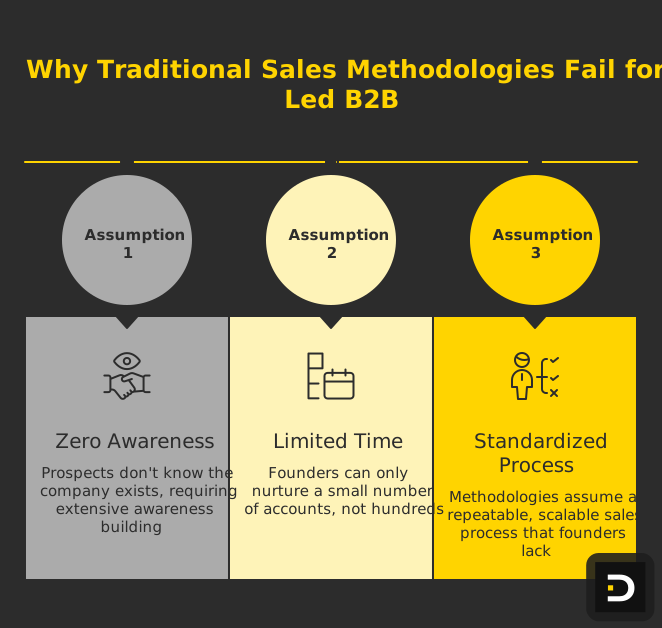
The standard playbook (MEDDIC, SPICED, BANT, Challenger) was built for sales teams selling on behalf of established companies. Three assumptions baked into those methodologies stop working for early-stage founders:
Assumption 1: The prospect knows your company exists. Cold outreach starts from zero awareness, which means the methodology spends most of its energy on the awareness step before any qualification can happen.
Assumption 2: Your AE has time to nurture 200 accounts. Founders don't. A founder has time for 30 high-quality conversations a quarter, not 300.
Assumption 3: A standardized message can work for a varied buyer set. Modern B2B buyers (especially CISOs, VPs of engineering, heads of data) are pattern-matchers who detect templated outreach in two seconds.
The methodologies aren't wrong. They're built for the wrong stage and the wrong seller.
The founder-led inbound sales methodology defined
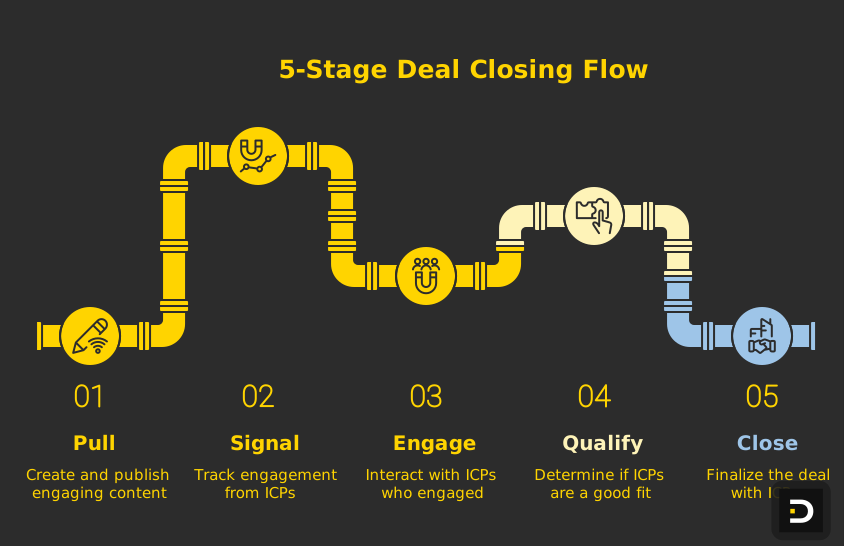
Founder-led inbound is a five-stage approach where the founder's public POV pulls qualified buyers into a conversation, and the conversation converts at 5-10x the rate of cold outreach.
The five stages:
- Pull - The founder publishes a consistent POV on LinkedIn that ICP buyers recognize as relevant.
- Signal - Buyers engage (like, comment, save, visit profile) without ever being messaged first.
- Conversation - The founder responds to engagement with a high-context, low-pressure DM.
- Discovery - The first call is shorter and warmer because the buyer already knows what the company stands for.
- Close - The buyer is largely pre-sold; the cycle compresses 30-60%.
The methodology shifts the locus of effort from outreach (cold) to publishing (one-to-many) plus selective response (warm).
The 5-stage flow: content to closed deal
Here's how it actually runs week by week for a founder closing $50-200K ARR deals.
Stage 1: Pull (weekly content)
Two posts per week minimum, on a tight POV. Each post takes a position your ICP has an opinion about. Generic content doesn't pull. Specific positions do.
Example for a cybersecurity founder: "Most agent security tools still rely on rule-based detection. Here's the architecture decision that changes once you've seen LLM-based agents in production for 90 days."
Stage 2: Signal (track engagement)
Every week, identify who from your ICP engaged with your content. A like from a CISO at a target account is signal. A comment from one is bigger signal. A profile view after a specific post is the biggest signal.
Build a list of 20-40 warm signals per month. These are your pipeline.
Stage 3: Conversation (warm DM)
DM the engaged ICP buyer within 48 hours of their engagement. Tone: peer-to-peer, not pitchy.
Template: "Hey [first name], saw you engaged with my post on [specific topic]. Curious what's prompting the interest on your end - happy to share more if useful or just keep it to a connection."
That's the entire message. No demo ask. No PDF. The DM is a door, not a transaction.
Stage 4: Discovery (the first call)
When the DM converts to a call, the discovery is shorter because the buyer already knows what you stand for. You spend less time qualifying (they self-qualified by engaging) and more time on the specifics of their situation.
Real discovery questions for founder-led inbound:
- "You engaged with my post on X. What's happening in your environment that made it land?"
- "What have you tried so far to solve this?"
- "If we solved this for you in [timeframe], what would change?"
Stage 5: Close (shorter cycle)
The close-stage compression is the methodology's biggest payoff. Founders running this model report enterprise sales cycles shrinking from 9 months to 5, sometimes less. The buyer is largely pre-sold on the founder's POV; the close conversation is about specifics, not category education.
Scripts and message templates
Three scripts that work in 2026:
Script 1: The post-engagement DM
"Hi [first name], thanks for the engagement on my recent post about [specific topic]. Curious what made it land - happy to share more if useful."
That's it. No CTA. No demo offer. The reply rate runs 30-50% when it follows real engagement on a specific post.
Script 2: The mutual-connection intro request
When a target account doesn't have a warm engagement signal but you have a mutual connection: "Hi [first name], I noticed you and [mutual connection] worked together at [company]. I work on [specific problem] and I'd love to be introduced if you think it might be useful. Happy to give them a one-paragraph context to make the intro easy."
Script 3: The "I've been following your work" opener
For buyers you've identified but haven't engaged with you: "Hi [first name], I've been following your posts on [specific topic - must be real]. Your point about [specific thing] resonated because [specific reason from your work]. Open to comparing notes?"
The pattern across all three: specific, peer-to-peer, no transaction ask.
How to measure pipeline from LinkedIn content
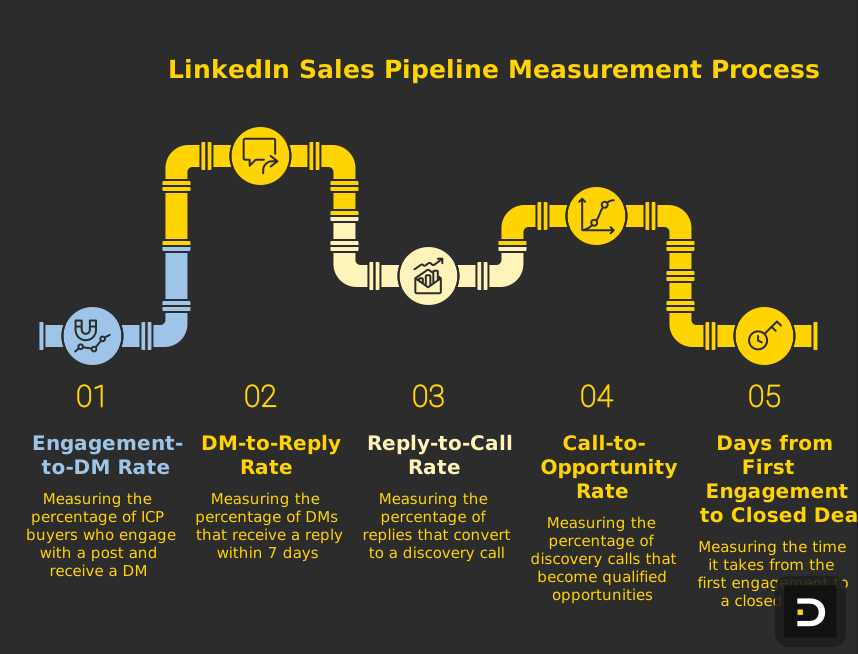
Standard sales tools weren't built for this. Track these manually until your CRM is configured:
- Engagement-to-DM rate - what percent of ICP buyers who engage with a post receive a DM
- DM-to-reply rate - what percent of DMs get a reply within 7 days
- Reply-to-call rate - what percent of replies convert to a discovery call
- Call-to-opportunity rate - what percent of discovery calls become qualified opportunities
- Days from first engagement to closed deal - measures cycle compression
The numbers for a healthy founder-led inbound motion: 60-80% engagement→DM (you DM most engaged ICP), 35-50% DM→reply, 50-70% reply→call, 25-40% call→opportunity. Compare those to cold outreach's typical 2-5% across the entire funnel.
Comparison: cold outreach vs. founder-led inbound
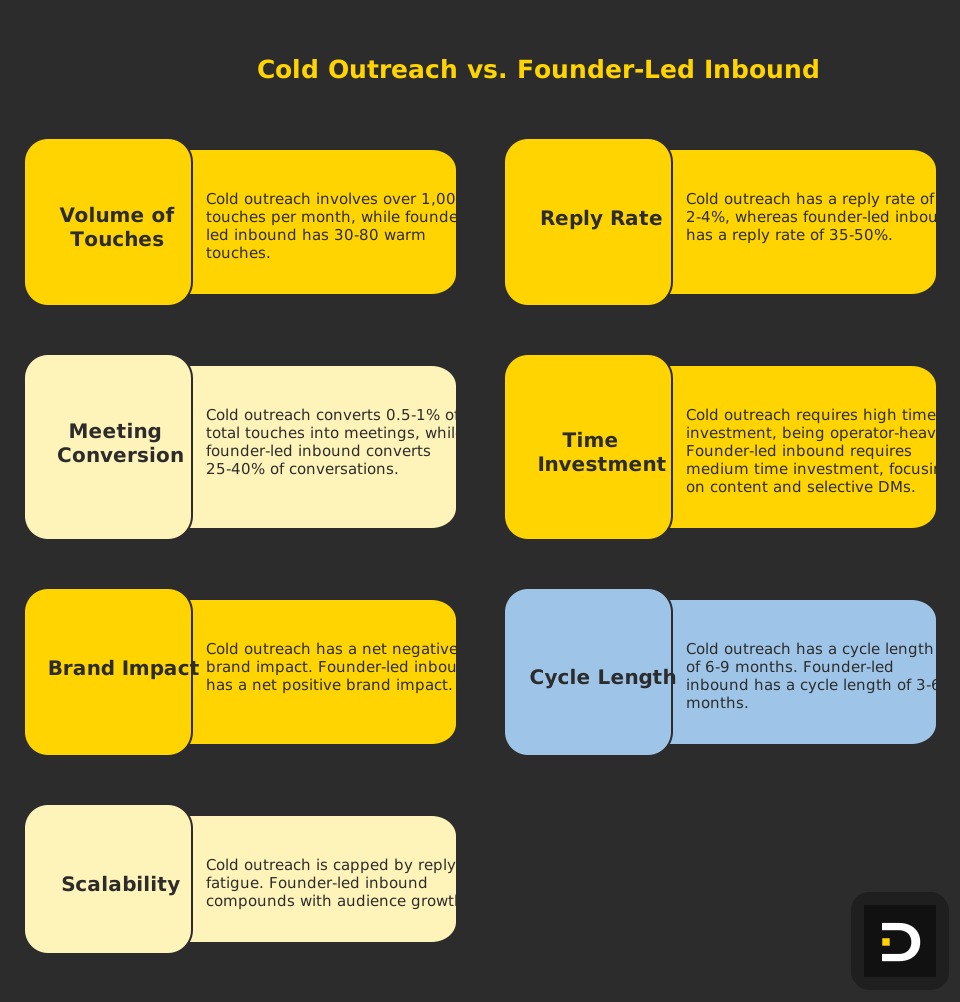
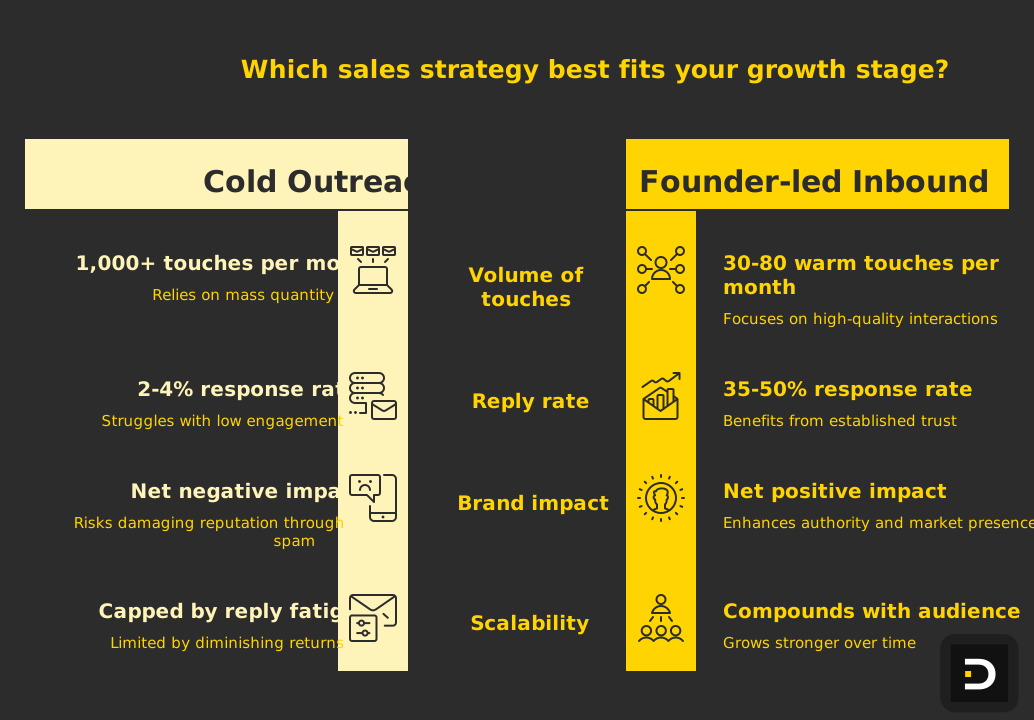
Honest side-by-side for a founder selling $80K ARR contracts:
| Factor | Cold outreach | Founder-led inbound |
|---|---|---|
| Volume of touches | 1,000+/month | 30-80/month (warm) |
| Reply rate | 2-4% | 35-50% |
| Meeting conversion | 0.5-1% of total touches | 25-40% of conversations |
| Time investment | High (operator-heavy) | Medium (content + selective DMs) |
| Brand impact | Net negative | Net positive |
| Cycle length | 6-9 months | 3-6 months |
| Scalability | Capped by reply fatigue | Compounds with audience |
Cold outreach optimizes for volume. Founder-led inbound optimizes for conversion. At any meaningful ACV, conversion wins.
Real numbers from founders who switched
Aggregate patterns from founders we've worked with at Foundera who moved from cold to inbound:
- Time spent on direct outreach dropped 60-80%
- Inbound qualified meetings per month rose from 1-2 to 6-12 within 6 months
- Average enterprise sales cycle compressed by 30-45%
- Founder-level pitch meetings increased (because investors and large customers found them through content)
Not every founder gets the same results. The pattern is consistent across categories.
Frequently asked questions
What is a founder-led sales methodology?
Founder-led sales methodology is an approach where the founder builds qualified pipeline through their public POV on LinkedIn instead of through cold outreach. The founder's content pulls buyers into conversations that convert at higher rates and shorter cycles than traditional outbound.
Does founder-led inbound replace traditional sales methodology?
For early-stage B2B founders, mostly yes. As the company scales and hires AEs, traditional methodologies (MEDDIC, SPICED) get layered back in for the team. But the top of funnel is increasingly founder-driven inbound, not cold outreach.
How long until founder-led inbound shows pipeline results?
First inbound DMs from ICP within 60-90 days of consistent publishing. First closed deal sourced from LinkedIn content typically 6-9 months in. The slope compounds; year two is dramatically better than year one.
Can a non-technical founder do founder-led inbound?
Yes, but the content has to reflect actual operational depth. Marketing-flavored content doesn't pull buyers. Specific, opinionated, experience-backed content does.
What if my ICP isn't on LinkedIn?
For most B2B categories in 2026 (cybersecurity, AI, DevOps, fintech, B2B SaaS) the ICP is on LinkedIn. For consumer or extreme niches (industrial manufacturing, government), it may not be. Check by searching your target buyers' titles and verifying they have active accounts.
How much time should a founder spend on founder-led inbound per week?
20-40 minutes contributing ideas and approving drafts (if working with a ghostwriter or agency), plus 30-60 minutes responding to engagement and DMs. Less than 2 hours per week total for the founder.
What does this cost compared to a sales team or cold outreach service?
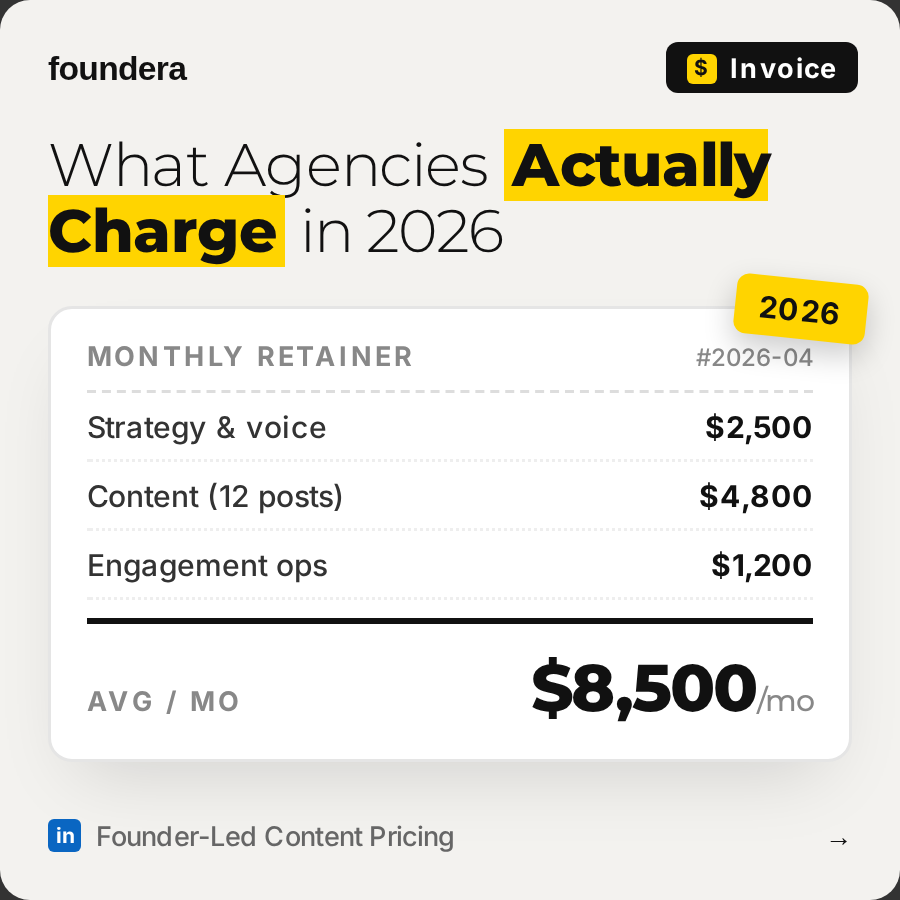
Done in-house with a ghostwriter, $4-8K/month all-in. Cold outreach services start at $1,500-3,000/month but require additional sales rep time and have lower conversion. The total cost of pipeline through founder-led inbound usually lower per qualified opportunity.
Your next move
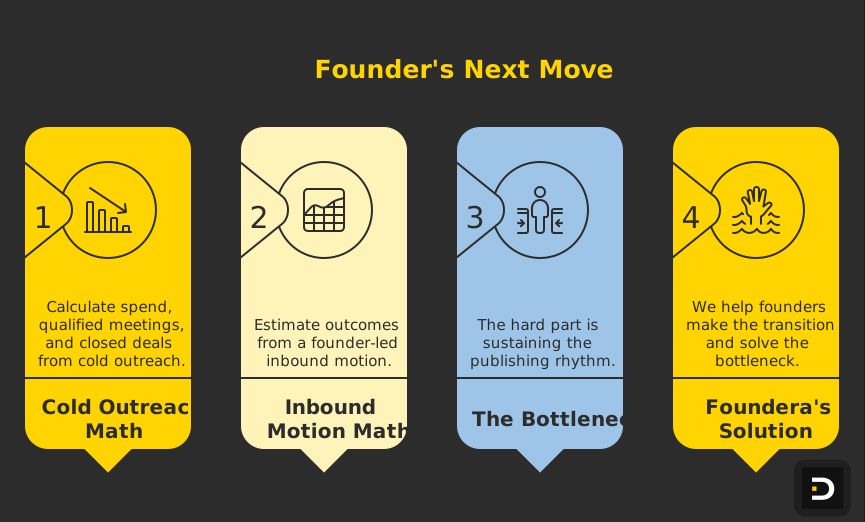
If you're a founder still running cold outreach in 2026, run the math on your last 6 months: total spend, total qualified meetings, total closed deals. Then estimate the same outcomes from a founder-led inbound motion. Most founders find the math obvious once it's on paper.
We help founders make exactly this transition at Foundera. The hard part isn't the methodology. The hard part is sustaining the publishing rhythm. That's the bottleneck we solve.
Three founder-led sales mistakes that kill the methodology
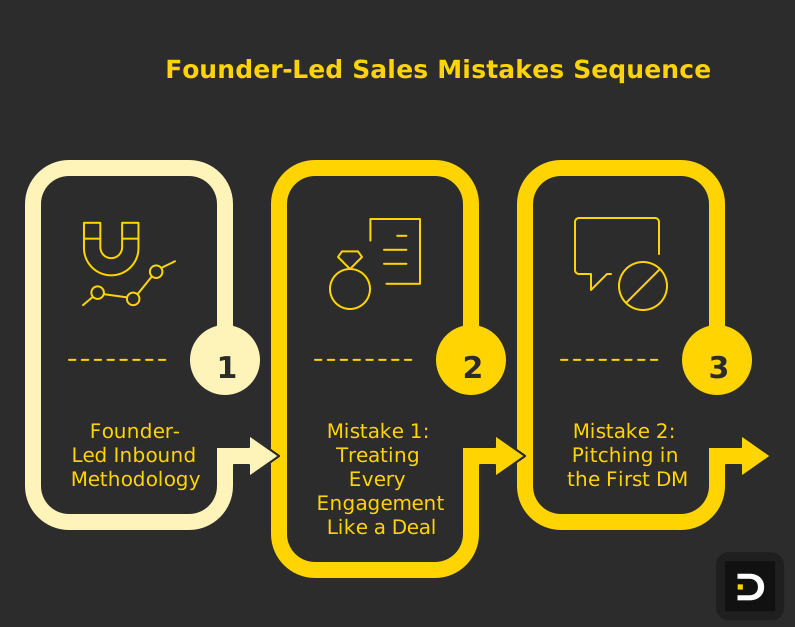
The founder-led inbound methodology works when run cleanly. Three common ways founders break it:
Mistake 1: Treating every engaged prospect like a deal. Not every like is a buying signal. A like from a CISO at a target account is signal. A like from a journalist or peer founder is something else. Sort engagement by signal quality before you DM, or you'll burn warm pipeline on irrelevant conversations.
Mistake 2: Pitching in the first DM. The DM is a door. Founders who lead with a Calendly link in message one kill 80% of their reply rate. The first DM is curiosity-driven and pressure-free. The pitch comes later, after the prospect has self-qualified through conversation.
Mistake 3: Skipping the publishing rhythm. Founders who post twice in week one, three times in week two, then disappear for a month break the methodology completely. The methodology requires consistent publishing because the pull function only works when there's recent content for the algorithm to surface. The cadence is the methodology - not a nice-to-have.
How this methodology scales as you hire
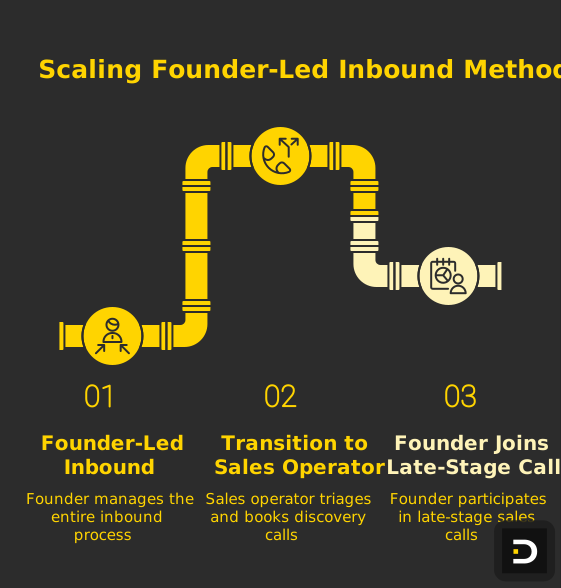
Founder-led inbound is the right top-of-funnel for early-stage B2B. As you scale and hire AEs, the methodology doesn't disappear - it changes shape. Three transition patterns:
Seed to Series A. The founder runs the entire flow solo or with a content lead. AEs don't exist yet. Inbound DMs go directly to the founder, who closes them.
Series A to Series B. The founder still publishes but no longer runs the entire conversation. Inbound DMs route through a sales operator who triages and books the discovery calls. The founder joins late-stage calls only. Traditional methodologies (MEDDIC, SPICED) start to layer in for the team.
Series B and beyond. The founder publishes for category authority and brand. The AE team runs the sales motion using a hybrid of inbound and ABM. Founder content still drives a measurable percentage of pipeline, but it's no longer the only top-of-funnel.
The mistake is treating these transitions as switches. They're overlapping phases - at every stage, founder publishing keeps pulling, just with a different role in the conversion flow.
Quarterly review cadence: what to check every 90 days
Founder-led inbound is a long-running motion. Without quarterly checkpoints, the system drifts. Run this review every 90 days:
Question 1: Is the cadence holding? Did you publish on schedule this quarter? Missed days are early warning signs that the system is fragile.
Question 2: Is the POV tightening or drifting? Pull your 24 posts from the quarter. Do they cluster around 3-4 themes, or did you scatter across 10? Tight clusters compound. Scatter doesn't.
Question 3: What did your ICP buyers engage with? Filter engagement by your target accounts and titles. The patterns will tell you which content pillars work. Double down on what worked.
Question 4: What's the inbound DM trend? Count qualified DMs by month for the last quarter. Trending up means the system is healthy. Flat means optimize. Down means investigate (algorithm change, voice drift, or category fatigue).
Question 5: What's the closed-loop attribution? Cross-reference closed deals against content engagement. The deals you can trace back to content tell you where to invest more.
Quarters that pass all five questions are quarters where the system is running. Quarters that fail one or two questions need a specific intervention - not a complete reset.
How to recruit your first amplification network

A founder-led inbound motion without distribution is just publishing into a void. The amplification network solves it.
Recruit 10-20 people in your category who will engage your posts in the first hour. Not pods (LinkedIn penalizes those), not bots (visible to anyone paying attention). Real operators with real opinions.
How to start:
Step 1: Identify 30 people in your category whose engagement would signal value to the algorithm. Other founders, technical leaders at peer companies, journalists who cover your space.
Step 2: Engage their content first for 30 days. Real comments, no pitch, no agenda. Build the relationship before asking for anything.
Step 3: After 30 days, send a specific ask to the 10 who engaged back with you most. Something like: "I'm building a small group of people in [category] who engage each other's posts in the first hour. Want in?" Frame it as mutual.
Step 4: Maintain the network. Engage their posts in their first hour as much as they engage yours. Asymmetric networks die. Symmetric networks compound.
The 10 who say yes become your distribution engine. The ones who don't aren't enemies - just not the right fit for this specific motion.
What the methodology looks like at scale
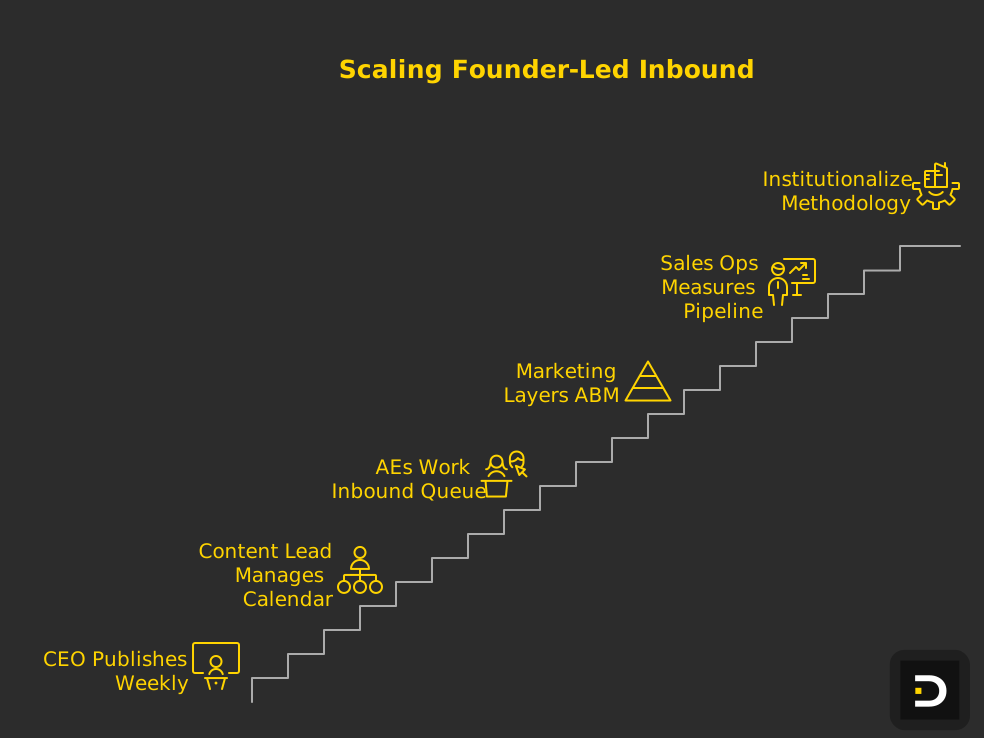
Series C+ companies running founder-led inbound have a recognizable shape. The CEO publishes weekly. A content lead manages the editorial calendar and the amplification network. AEs work the inbound queue with full CRM tagging. Marketing layers on ABM against named accounts that haven't engaged with content yet. Sales operations measures content-sourced pipeline as a tracked category alongside outbound and referral.
The methodology doesn't go away as you scale - it gets institutionalized. Founders who skip institutionalization see their content channel collapse the moment they get pulled into fundraising or M&A. Founders who institutionalize keep the channel running even when their personal attention drops.
A closing pattern observation
The B2B founders who win in 2026-2028 will not be the ones with the best products. There are too many decent products in every category. The winners will be the ones whose buyers heard their POV first, recognized it, and chose them before the procurement conversation even started. Founder-led inbound is how that happens.
The TL;DR
Quick answer
The sales methodology beating cold outreach for B2B founders in 2026 is founder-led inbound on LinkedIn. Five stages: pull (consistent content), signal (track ICP engagement), conversation (warm DM within 48h), discovery (shorter calls because buyer self-qualified), close (cycle compressed 30-60%). Conversion runs 5-10x cold outreach.
Key takeaways
- Standard methodologies (MEDDIC, SPICED, BANT) assume the prospect knows you exist. Founder-led inbound starts where awareness already happened.
- The DM is a door, not a transaction. No Calendly link in message one - that kills 80% of reply rates.
- Reply rates: cold outreach 2-4%. Founder-led inbound 35-50%. The math forces inbound at any meaningful ACV.
- ABM + content hybrid generates 3-5x qualified meetings per dollar versus either run in isolation.
- Three failure modes: treating every engager as a deal, pitching in DM #1, breaking publishing cadence.