11 LinkedIn Fundraising Mistakes Founders Keep Making (And What to Do Instead)
96% of institutional investors say they systematically harvest data from social and digital sources. The median VC firm considers 100 deals for every single one it backs. And only 10% of deals come from founders who showed up cold. Read those three numbers together and the conclusion is blunt: your LinkedIn is part of your raise — whether you manage it or not.
Most founders know this in theory. Then the raise starts, the calendar fills with partner meetings, and the same eleven mistakes show up on the same feeds. Some are sins of silence. Some are sins of desperation. All of them are avoidable.
This is the mistake list to read before you open a data room. It ties together our whole fundraising series — starting with how to use LinkedIn for fundraising end to end.
Table of Contents
- Mistake #1: Going quiet during the raise
- Mistake #2: Announcing that you're raising
- Mistake #3: Cold-pitching partners in the DMs
- Mistake #4: Metric-dumping instead of telling the story
- Mistake #5: Treating your profile as an afterthought
- Mistake #6: Ignoring the diligence sweep
- Mistake #7: Starting visibility the week the raise starts
- Mistake #8: Posting from the company page instead of your own
- Mistake #9: Skipping employee amplification on announcement day
- Mistake #10: Buying engagement pods
- Mistake #11: Selling in every post
- The cheat sheet
- Frequently Asked Questions
- TL;DR
- Related Reading
Mistake #1: Going quiet during the raise
Going quiet during your raise is the single most common LinkedIn fundraising mistake — and the most self-defeating. Founders disappear from the feed exactly when investors are looking hardest, because "I'm too busy raising to post." The result: every partner who checks you mid-process finds a feed that stopped six weeks ago.
Think about the timing. Almost 80% of institutional investors use social media as part of their regular workflow, and roughly 30% say information they found there has directly influenced an investment decision (Coalition Greenwich). The weeks between first meeting and term sheet are peak-attention weeks. A dead feed reads as a stalled company.
You don't need more content during a raise. You need continuity. Two posts a week — a customer win, a market take, a build update — is enough to signal motion without signaling effort.
Do instead: pre-write a raise-season content queue before your first partner meeting. Never let the feed flatline mid-process.
Mistake #2: Announcing that you're raising
Posting "We're raising our Series A — DM me!" is the second-fastest way to weaken your round. Announcing intent to raise starts a public clock, signals that you don't have warm paths to the investors you want, and invites every investor to simply wait and watch your desperation compound.
Fundraising runs on scarcity and momentum. The moment your raise is public, the scarcity is gone. Investors who might have leaned in now know they can lean back — if the round were competitive, you wouldn't be broadcasting for participants.
There's a difference between being visible and being available. Visible means shipping proof, sharing conviction, and letting investors discover a company in motion. Available means holding a sign. One creates pull. The other creates pity.
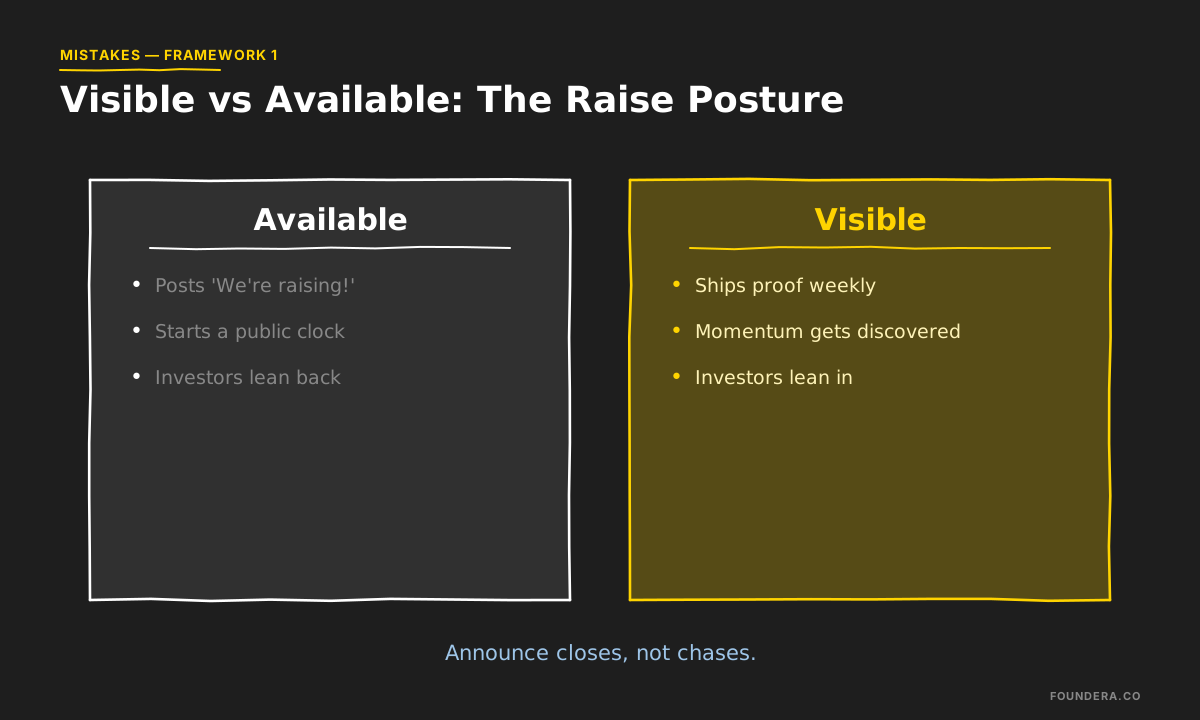
Do instead: announce closes, not chases. During the raise itself, post momentum — customers, product, team — and let the round stay private until it's signed.
Mistake #3: Cold-pitching partners in the DMs
Mass-DMing VC partners with your deck is statistically close to pointless, and the numbers are brutal. The NBER survey of 885 institutional VCs mapped where deals actually come from:
| Deal source | Share of VC deals |
|---|---|
| Professional networks | Over 30% |
| Proactively sourced by the VC | Almost 30% |
| Referrals from other investors | 20% |
| Cold inbound from management teams | 10% |
| Referrals from portfolio companies | 8% |
Only 10% of deals arrive cold — and that's against a funnel where the median firm considers 100 deals for every one it funds (151 for IT-focused firms). Qubit Capital's analysis puts founder-to-VC cold pitches at a 1-2% response rate, versus roughly 10% for general B2B outreach.
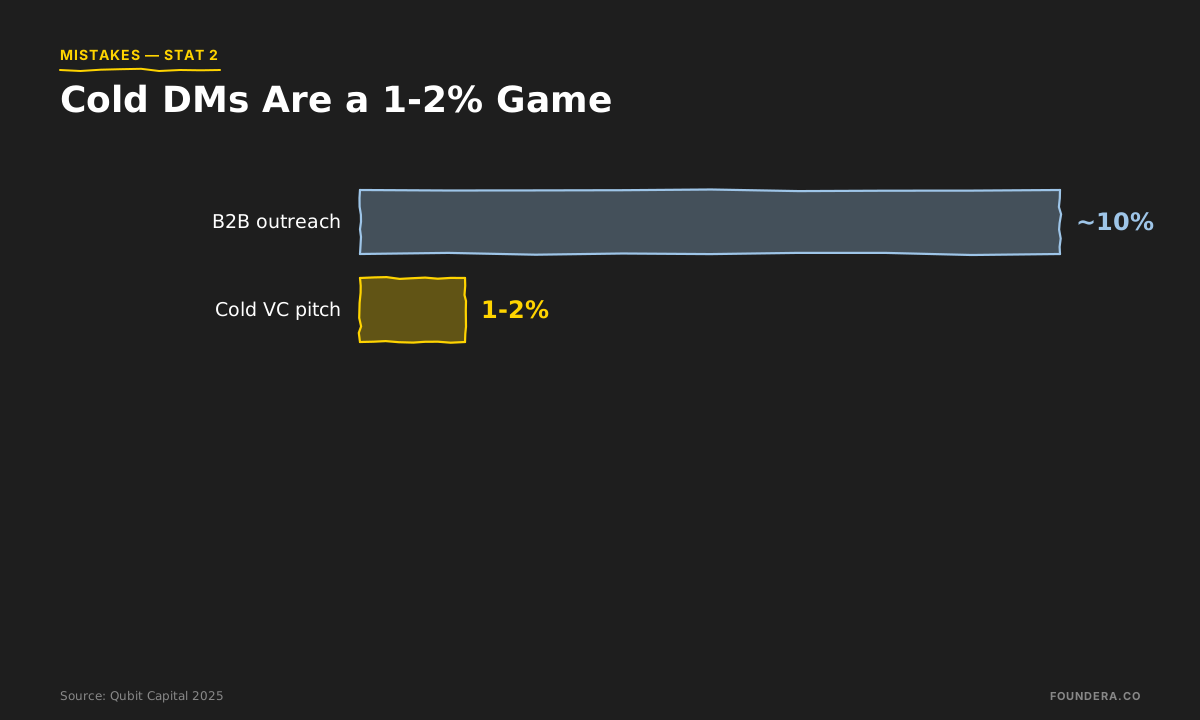
Notice what the table rewards: networks, referrals, and VCs finding you themselves. Your feed is how they find you. Your relationships are how you're referred.
Do instead: run warm-path outreach with content as air cover — the full system is in our guide to investor outreach on LinkedIn.
Mistake #4: Metric-dumping instead of telling the story
Posting a wall of KPIs is not traction communication — it's a dashboard screenshot with no thesis. Investors don't fund spreadsheets. They fund a story the spreadsheet happens to confirm.
The evidence sits in how investors actually read. Dropbox DocSend's 2023 seed report found VCs spent 20% less time reviewing pitch decks overall — but 65% more time on the "Why Now?" section and 88% more time on the competition section of successful decks. Attention is shifting from raw numbers to narrative logic. And the same NBER survey found more than 90% of VCs call the management team an important factor in investment outcomes, with over 55% ranking the team the single most important thing.
Your LinkedIn should mirror that: one metric per post, wrapped in why-now, framed against the market. We break down exactly which numbers to share publicly in startup traction metrics investors actually notice on LinkedIn.
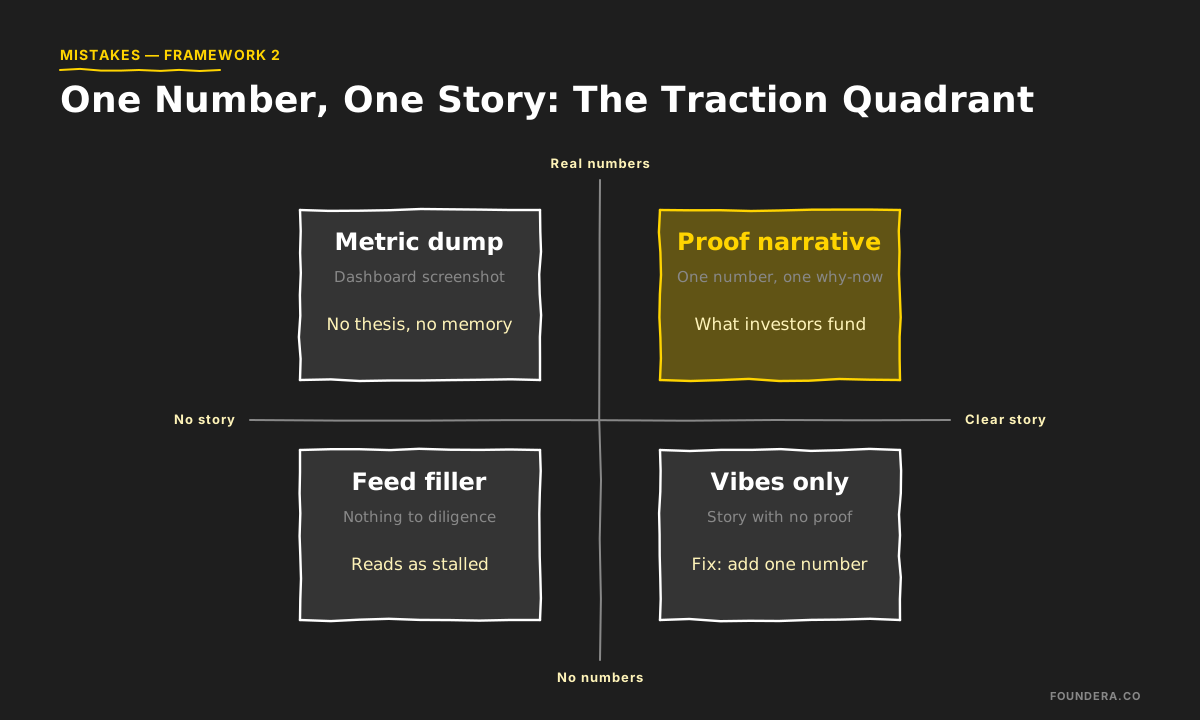
Do instead: lead with the story, support with one number, close with what it proves.
Mistake #5: Treating your profile as an afterthought
An outdated profile is a diligence own-goal. Before most first calls, investors have already looked — research cited by Visible.vc found the majority of early-stage investors run informal research on a founder within 24 hours of a warm introduction. If your headline still says the 2023 positioning and your About section is two sentences, that's the first impression.
Investors themselves rank the channel this high:
| Research channel | Importance score (out of 10) |
|---|---|
| Company IR website | 8.21 |
| 7.83 | |
| Google search results | 7.81 |
That's Brunswick's institutional investor survey: LinkedIn is the #2 research channel — ahead of Google. Your profile is not a résumé. It's the landing page of your raise.
Do instead: rewrite your headline around the company thesis, rebuild the About section as a founder narrative, and pin your three strongest proof posts. Full breakdown in what investors look for on a founder's LinkedIn.
Mistake #6: Ignoring the diligence sweep
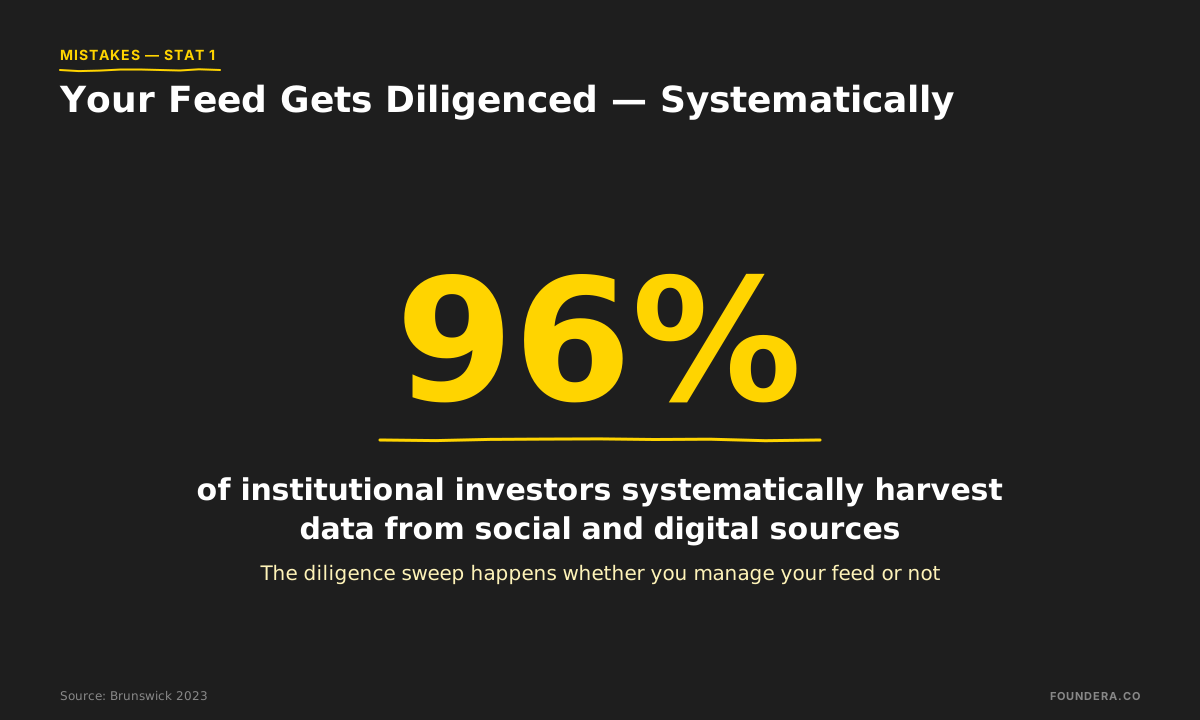
Assuming investors only read your deck is the quietest mistake on this list — and the Brunswick Digital Investor Survey kills the assumption outright: 96% of institutional investors say they systematically harvest data from social and digital sources. Not skim. Harvest — systematically.
The same survey found 47% of investors rank digital communications the most important input for their research, ahead of direct engagement (31%) and traditional communications (22%). And roughly nine in ten report having made a recommendation or investment decision based on information from digital or social sources.
So the question is never whether your digital footprint gets diligenced. It's what the sweep finds: a founder with a clear thesis and visible momentum — or three months of silence, a stale profile, and one reposted press release.
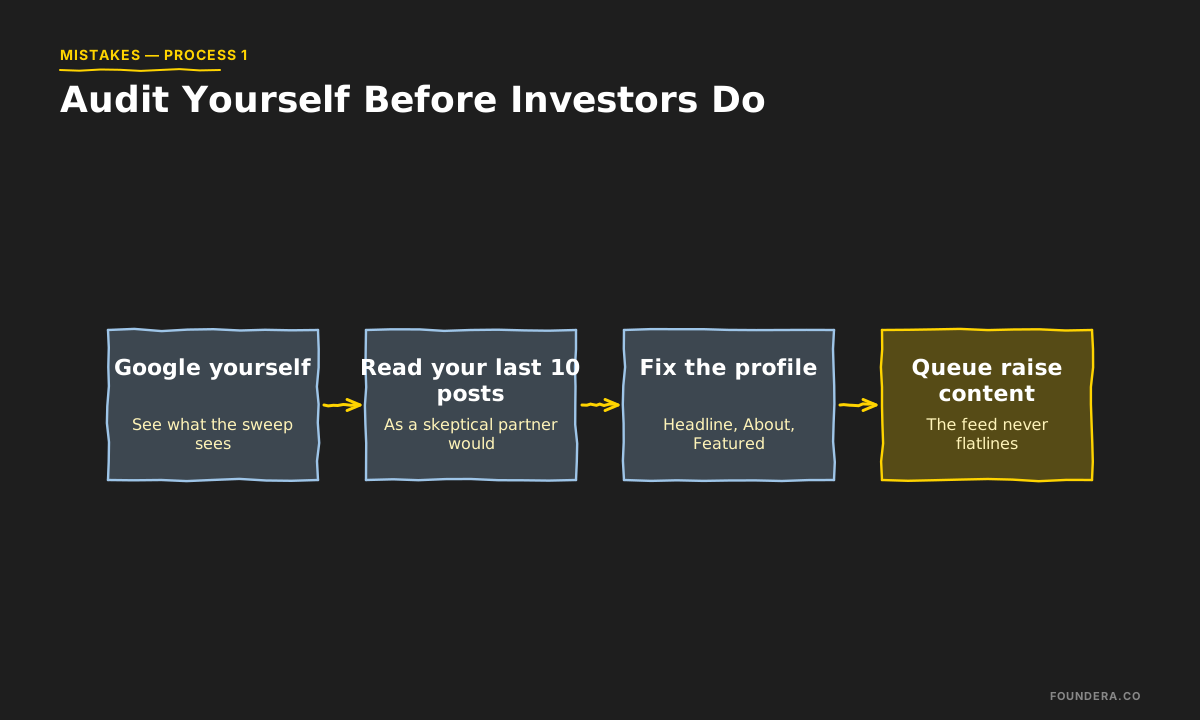
Do instead: audit yourself before they do. Google your name, read your last ten posts as a skeptical partner would, and fix what the sweep will find.
This is, for the record, exactly the work Foundera does for founders mid-raise — you take the meetings, we keep the footprint sharp.
Mistake #7: Starting visibility the week the raise starts
Starting to post the same week you start pitching is too late — the math of a modern raise says so. Per Dropbox DocSend's 2023 seed data, founders contacted an average of 66 investors (up from 48 the year before), got only 38 meetings (down from 56), and 50% of successful seed raises took 13 to 24 weeks. That's more outreach, fewer meetings, and a two-quarter grind.
An audience built the same month carries no weight in that grind. Credibility on LinkedIn compounds like revenue: slowly, then meaningfully. A founder with six months of consistent thinking in public walks into the raise with a warm surface area — investors who already follow, operators who already vouch.
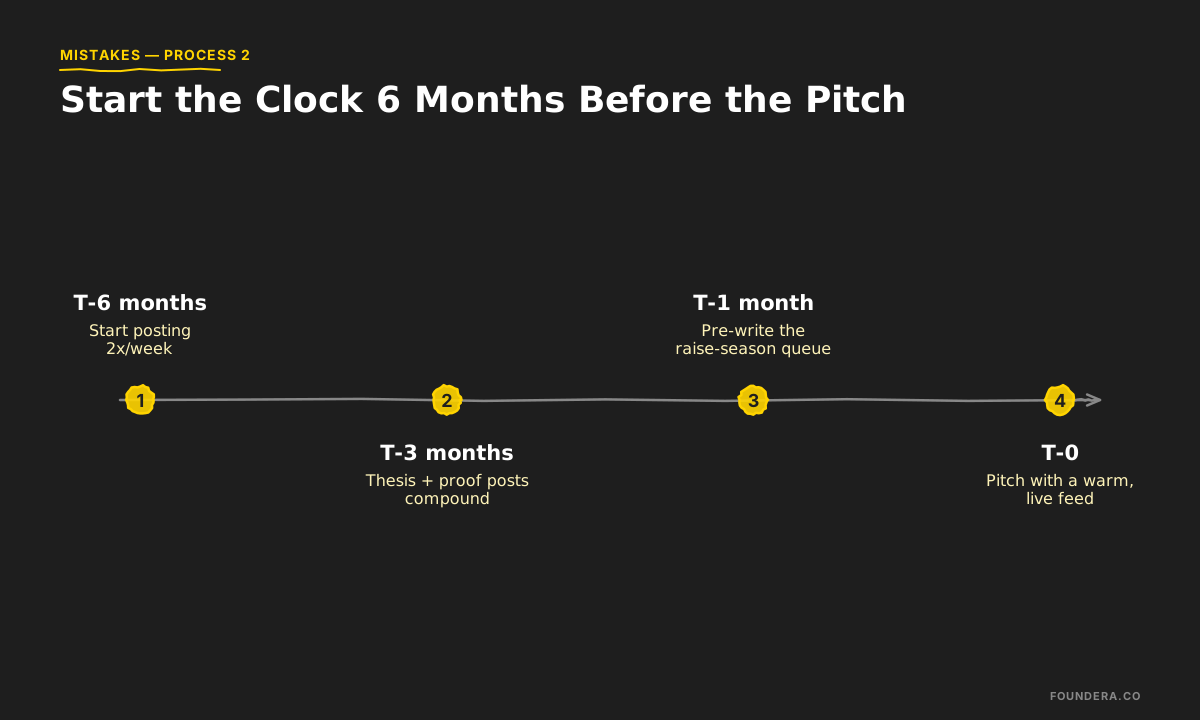
Do instead: treat visibility as pre-raise infrastructure. The 3-6 month runway plan is in LinkedIn visibility before fundraising.
Mistake #8: Posting from the company page instead of your own
Routing your raise-season content through the company page is broadcasting into a void. DSMN8's feed analysis found only 5.4% of LinkedIn feed posts come from company pages, while 42.4% come from first-degree connections — and not one organic company-page post appeared without individuals in the network engaging it first.
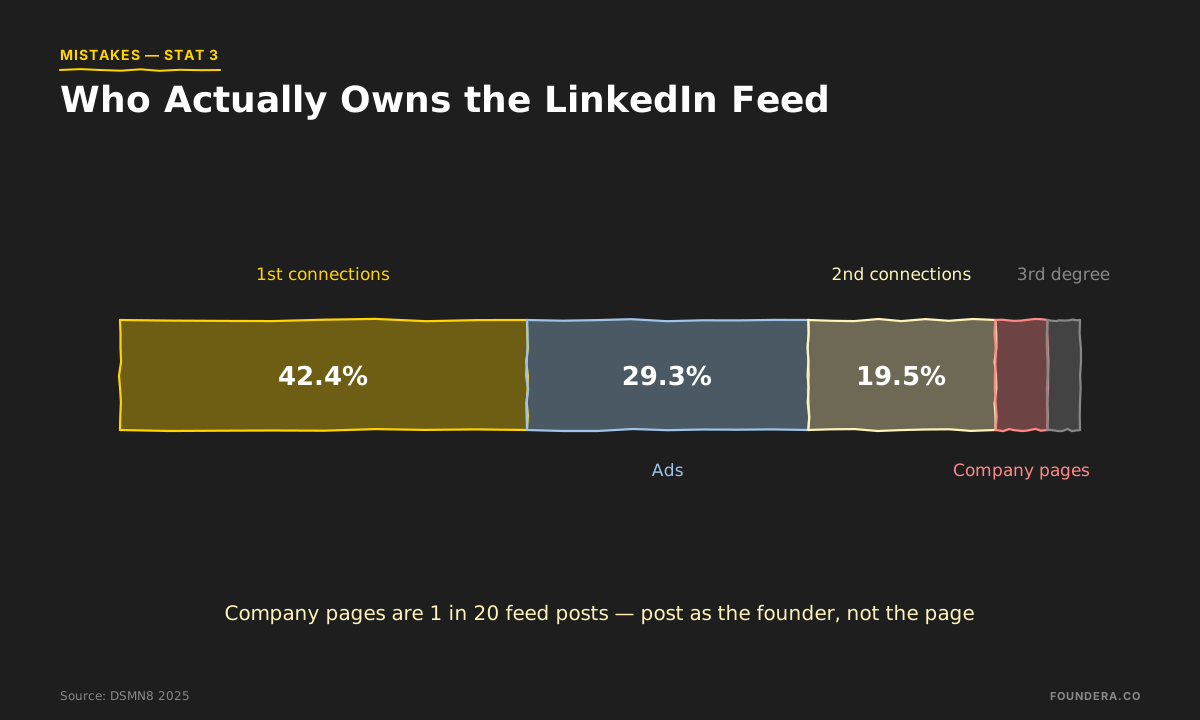
The same analysis of 11,107 employee posts found a CEO could generate the same engagement as the company page with 98% fewer followers. People follow people. Investors, especially, follow founders — the NBER data already told you they're betting on the team more than anything else.
Do instead: make your personal profile the primary channel and the company page the echo. Founder posts first; page reshares second.
Mistake #9: Skipping employee amplification on announcement day
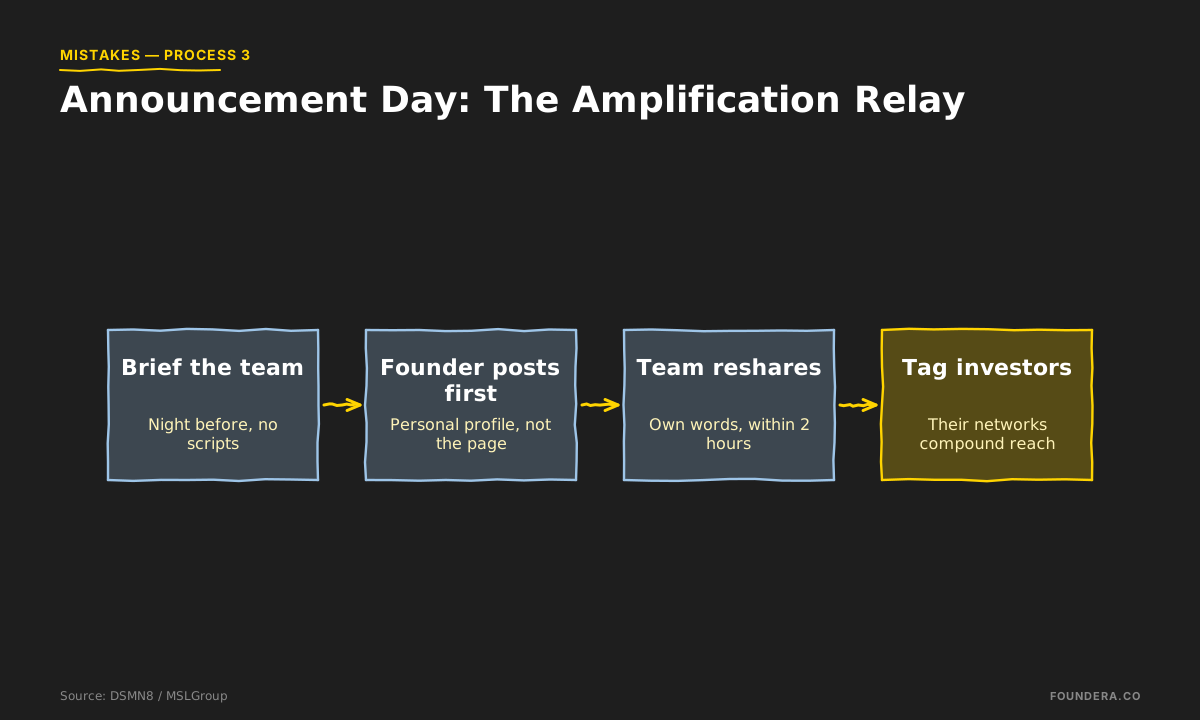
Publishing your funding announcement without mobilizing your team wastes the single biggest reach event your company will have this year. The math is lopsided: MSLGroup research popularized by DSMN8 found a post shared by an employee generates up to 561% more reach — and 8x more engagement — than the same post shared by the brand page.
Announcement day is when that multiplier matters most. Ten teammates resharing with their own words puts your news into ten separate first-degree networks — the exact slice of the feed (see Mistake #8) the algorithm actually serves.
Do instead: brief the team the night before. Founder posts first from the personal profile; everyone reshares with a personal line within two hours; investors get tagged so their networks join in. The full announcement-day sequence is in the funding announcement post playbook.
Mistake #10: Buying engagement pods
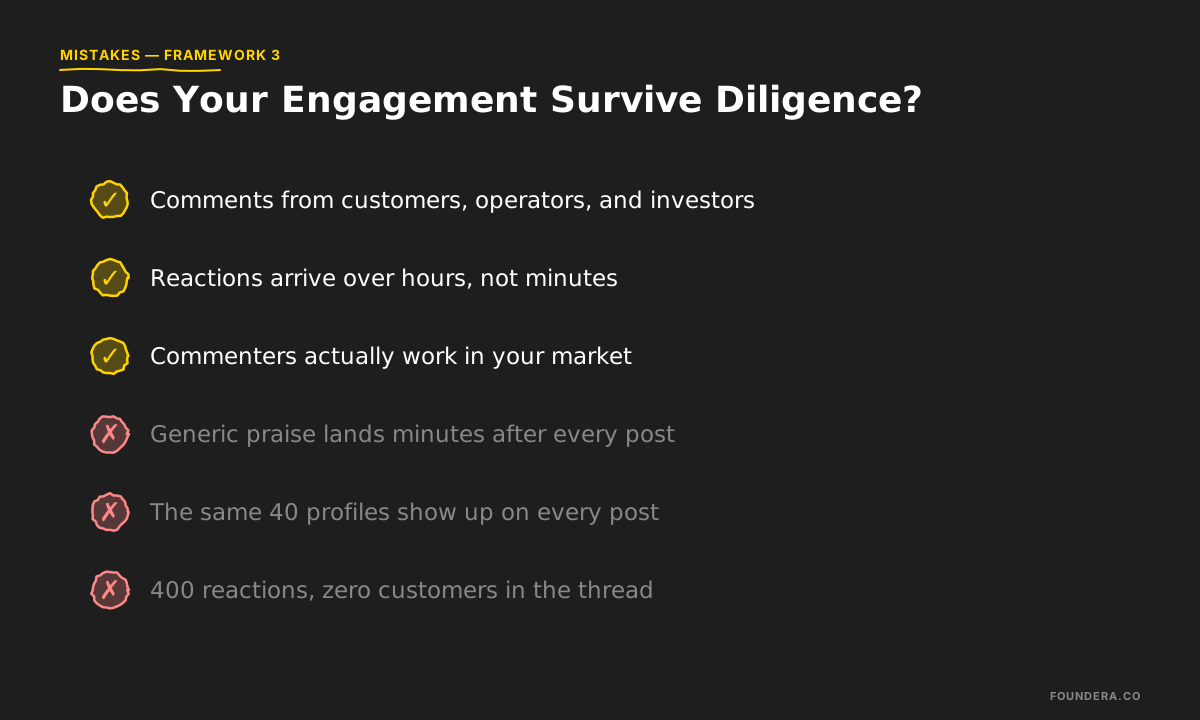
Engagement pods are borrowed credibility with a diligence-shaped hole in it. A pod inflates your like count with people who have no relationship to your market — and the comment section gives it away instantly: generic praise, from irrelevant profiles, minutes after posting, on every single post.
Remember who's reading. The same investors who systematically harvest your digital footprint (Mistake #6) know what organic traction looks like. When a partner sees 400 reactions and zero customers, operators, or credible peers in the comments, the signal flips from "momentum" to "manufactured" — and now everything else on your feed is suspect too.
Fake engagement doesn't just fail to help your raise. It actively contaminates the real proof sitting next to it.
Do instead: earn engagement from people who matter — customers, teammates, investors, operators. Twenty real comments from your market beat 400 from a pod, every time.
Mistake #11: Selling in every post
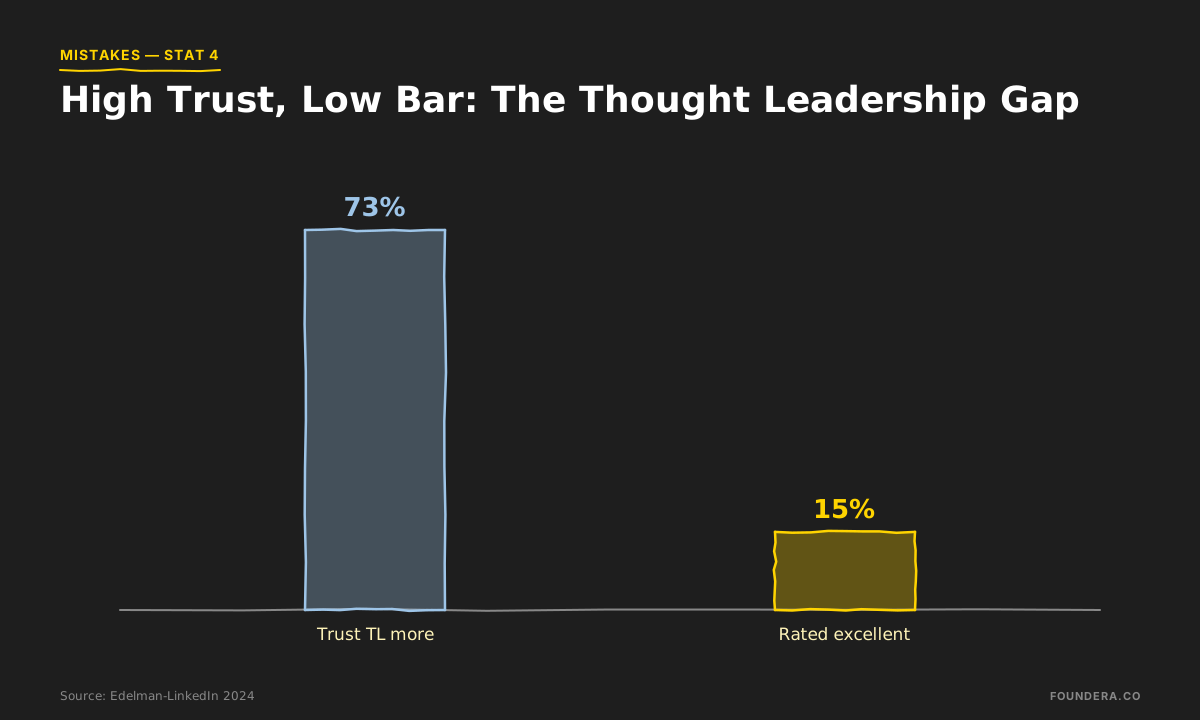
Turning your feed into a product brochure is the final mistake — because investors and buyers alike explicitly trust thought leadership over marketing. In the 2024 Edelman-LinkedIn B2B Thought Leadership Impact Report, 73% of decision-makers said an organization's thought leadership is a more trustworthy basis for assessing its capabilities than its marketing materials and product sheets.
And here's the opportunity hiding inside that stat: only 15% of decision-makers rate the thought leadership they actually read as very good or excellent. The bar is embarrassingly low. A founder with a real point of view clears it in a month.
Product posts have a place — roughly one in four or five. The rest should be perspective: what you're seeing in the market, what you got wrong, where the category goes next.
Do instead: lead with ideas, sell occasionally, and run it on a system. The full cadence lives in the Series A founder LinkedIn playbook.
The cheat sheet
Every mistake and its fix, in one table. Screenshot it before your raise.
| # | Mistake | The fix |
|---|---|---|
| 1 | Going quiet during the raise | Pre-write a raise-season queue; 2 posts/week minimum |
| 2 | Announcing that you're raising | Announce closes, not chases |
| 3 | Cold-pitching partners in DMs | Warm paths + content as air cover |
| 4 | Metric-dumping | One number, one story, one "why now" per post |
| 5 | Profile as afterthought | Rebuild headline, About, and featured posts pre-raise |
| 6 | Ignoring the diligence sweep | Audit your footprint before investors do |
| 7 | Starting visibility with the raise | Begin posting 3-6 months before you pitch |
| 8 | Posting from the company page | Founder profile first; page reshares |
| 9 | No team amplification on announcement day | Brief the team; reshares within 2 hours |
| 10 | Buying engagement pods | Earn 20 real comments from your market |
| 11 | Selling in every post | 4:1 perspective-to-product ratio |
Frequently Asked Questions
What is the biggest LinkedIn mistake founders make while fundraising?
Going quiet. Founders stop posting when the raise starts because meetings eat the calendar — but that's exactly when investor attention peaks. With 96% of institutional investors systematically harvesting digital data (Brunswick), a feed that flatlines mid-raise reads as a company that flatlined. Keep a light, pre-written cadence running through the entire process.
Should I announce on LinkedIn that I'm raising?
No. Announcing intent to raise starts a public clock, removes scarcity, and tells investors they can wait you out. Stay visible with momentum — customers, product, team — and keep the round private until it's signed. Then announce the close loudly and put the team behind it.
Does cold-DMing VCs on LinkedIn ever work?
Rarely. Only 10% of VC deals come inbound from management teams (NBER survey of 885 VCs), and Qubit Capital's analysis puts cold founder-to-VC pitches at a 1-2% response rate. Over 30% of deals flow through professional networks and 20% through investor referrals — so spend the effort on warm paths, and let your content do the cold work for you.
When should I start posting on LinkedIn before a raise?
Three to six months before your first pitch, minimum. DocSend's 2023 data shows 50% of successful seed raises took 13-24 weeks, with founders contacting an average of 66 investors to get 38 meetings. Visibility built before that grind compounds through it; visibility started during it arrives too late to matter.
Do investors actually check a founder's LinkedIn during diligence?
Yes — systematically. Brunswick found 96% of institutional investors harvest data from social and digital sources, and they rate LinkedIn 7.83/10 as a research channel, second only to a company's own IR website and ahead of Google. Research cited by Visible.vc found most early-stage investors check a founder within 24 hours of a warm intro, before the first call.
Are engagement pods worth it during a fundraise?
No — they're a liability. Pods produce generic comments from profiles with no connection to your market, and investors doing a diligence sweep can spot the pattern in seconds. Inflated engagement doesn't just fail to impress; it makes your genuine traction look suspect. Earn fewer, real interactions from customers, operators, and investors instead.
TL;DR
- Your LinkedIn is part of your raise: 96% of institutional investors systematically harvest digital data, and LinkedIn is their #2 research channel (Brunswick).
- Never go quiet mid-raise, and never announce that you're raising — announce closes.
- Cold DMs are a 1-2% game; over 30% of deals flow through networks and just 10% arrive cold (NBER). Build warm paths with content as air cover.
- Tell stories, don't dump metrics: VCs spend 65% more time on "Why Now?" and 88% more on competition sections (DocSend).
- Fix your profile before investors find it — most check within 24 hours of an intro.
- Post as the founder, not the page; on announcement day, employee shares drive up to 561% more reach (MSLGroup via DSMN8).
- Skip the pods. Lead with ideas — 73% of decision-makers trust thought leadership over marketing materials (Edelman).
Want the whole system — profile, cadence, announcement, amplification — run for you while you run the raise? That's what Foundera does. Let's talk.
Related Reading
- How to Use LinkedIn for Fundraising — the end-to-end system this checklist plugs into
- LinkedIn Visibility Before Fundraising — the 3-6 month pre-raise runway plan
- What Investors Look For on a Founder's LinkedIn — the diligence sweep, from the investor's side
- Investor Outreach on LinkedIn — warm paths, sequencing, and what to say
- The Funding Announcement Post — announcement-day mechanics, hour by hour
- The Series A Founder LinkedIn Playbook — the full cadence for the raise and beyond