Something quietly broke for tech founders between 2024 and 2026. The math that used to work, build a solid product, raise on the numbers, hire on the equity, sell on the demo, stopped working. Founders without a personal brand started losing deals to founders with worse products but louder voices. They started paying more for the same engineers, raising at lower valuations from the same VCs, and discounting on price because nobody knew who they were before the sales call started.
This isn't a soft argument about authenticity or "showing up online." It's a hard argument about distribution, trust collapse, and the cost of being invisible in a market where the old gatekeepers, journalists, analysts, intermediaries, have lost most of their reach. When the old channels broke, the founder's voice became the new channel. Founders who built one early got compounding returns. Founders who didn't are now competing on price for everything: talent, capital, customers, exits.
If you're tired of recycled "be authentic, post consistently" advice, this is the honest version. Five places it pays off, with numbers. Why the shift happened. Four myths that keep technical founders silent. And a 90-day test you can run before committing serious time.
What "personal branding" actually means for tech entrepreneurs in 2026
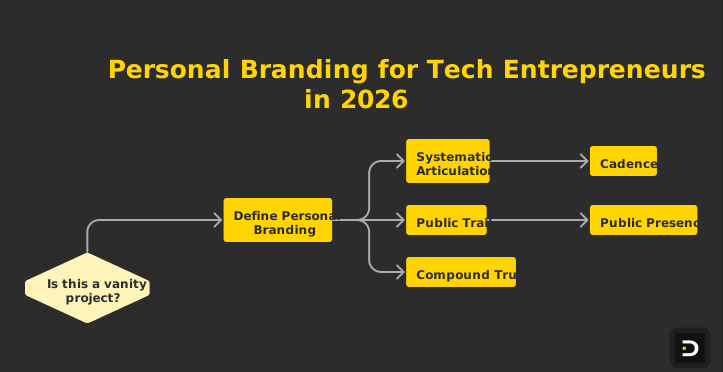
Most articles treat personal branding like a vanity project. Headshots, taglines, a clever bio. That definition is useless. For a tech founder, personal branding in 2026 is specific and operational: the systematic, public articulation of how you think, what you're building, and why it matters, in a way that compounds trust before any commercial conversation starts.
Three things sit inside that definition. First, it's systematic, meaning it shows up on a cadence, not when you feel inspired. Second, it's public, leaving a searchable trail someone can find when they Google your name at 11pm before a meeting. Third, and this is the part everyone misses, it compounds before the conversation. By the time a candidate, investor, or buyer talks to you, they've already absorbed dozens of micro-impressions of how you think. The conversation isn't a first meeting. It's a check-in.
The opposite of this isn't "private." It's "discoverable but generic." A LinkedIn profile with a job title, a company logo, and zero point of view. That founder is technically online but commercially invisible. The founders who win in 2026 have an edge legible in 30 seconds of scrolling. Read three posts and you know what they believe, what they're against, and what kind of operator they are. That legibility is the asset.
The 5 places personal brand pays off for founders (with real numbers)
Most articles skip this section because it requires specificity. Here are the five places a tech founder's personal brand creates measurable economic value, with the rough numbers we see across our client base.
Pay-off areaMeasurable outcomeTypical lift for branded foundersSales cycle compressionDays from first call to signed contract30 to 45 percent shorterHire quality and costInbound applications, time-to-fill, comp premium3 to 5x inbound, 20 to 30 percent comp savingsFundraise termsValuation, dilution, time-to-close15 to 25 percent better terms, half the meetingsPartnership inboundInbound BD conversations per quarterFrom 0 to 1 to 8 to 12 per quarterExit narrative and valuationStrategic premium at acquisition1.2 to 1.5x multiple uplift on "category leader" framing
Sales cycle compression. Enterprise buyers do their homework. By the time they take a meeting, they've read your LinkedIn and your team's profiles. If they've already absorbed your worldview, the first call isn't a pitch. It's a confirmation. We've watched founders cut 90-day cycles to 50.
Hire quality and cost. Senior engineers don't apply to job posts. They apply to founders. A technical lead with a public point of view attracts inbound from people who would never respond to a recruiter. We've seen inbound shift from 1 to 2 applications per month to 8 to 12, with quality skewing higher because applicants self-select.
Fundraise terms. VCs invest in lines, not dots. A founder with 18 months of public thinking is a line. A founder with a deck and a referral is a dot. Partners are explicit: they spend less time diligencing founders they've already been tracking through content, because the content is the diligence. That asymmetry shows up in valuation, time-to-close, and meeting count. The Harvard Business Review's work on CEO branding documents this gap.
Partnership inbound. Most BD partnerships come from outbound or warm intros. Founders with strong personal brands flip this. Channel partners, integration partners, and category-adjacent companies reach out because they've been reading. Hard to fake, hard to manufacture, but once it starts, it's the highest-yield inbound channel a tech company has.
Exit narrative and valuation. Strategic acquirers don't just buy revenue and product. They buy category position. A founder who has spent three years publicly defining the category anchors the acquirer's valuation in a different multiple. We've seen founders convert "interesting acquisition target" into "category leader we have to own" purely through narrative built over years.
Why this matters MORE for tech entrepreneurs than other founders
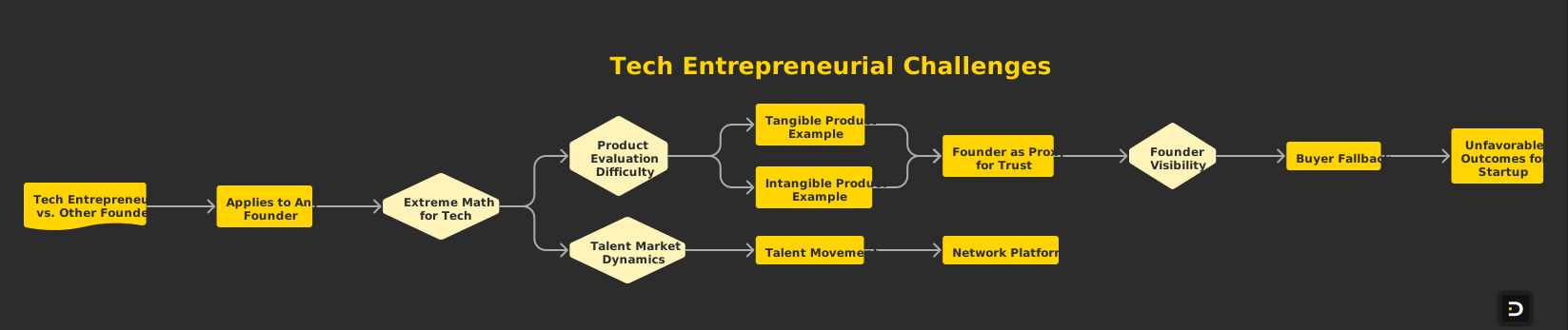
This applies to any founder, so why single out tech entrepreneurs? Because the math is more extreme for three specific reasons.
First, technical products are harder to evaluate. A buyer can taste a coffee. They can't taste a vector database. When the product is opaque, the founder becomes the proxy for trust. If the founder is invisible, buyers fall back to brand, price, and committee politics. None of those favor a startup.
Second, technical talent is a self-organizing market. Senior engineers, designers, and PMs move through networks, not job boards. Those networks live on LinkedIn, in Slack communities, in podcast comments. A founder with no presence in those networks is invisible to the people they most need to hire.
Third, deep-tech categories often don't exist yet. If you're building in AI security or agentic infrastructure, no analyst report has named your category. No buyer has a budget line. The founder has to do the category creation work, and that's essentially a content and narrative function. It has to come from a person with a thesis. If you sell coffee, you can hide behind the brand. If you sell a new kind of AI agent platform to skeptical CISOs, you cannot.
The hidden cost of having no personal brand: a real case study
One of our clients, a Series A founder in security, came to us after losing three enterprise deals to a competitor with a less mature product. He couldn't figure out why. We pulled the buyers' LinkedIn profiles, traced the competitor's founder, and the picture was obvious within an hour.
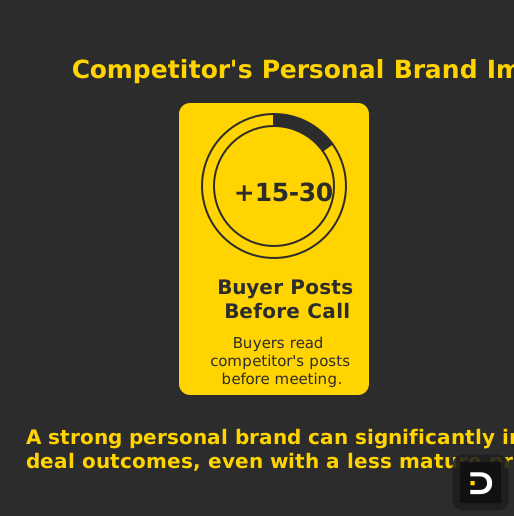
The competing founder had posted twice a week for two years. Sharp opinions, war stories from deployments, public arguments with analysts. Every buyer who took a meeting had read 15 to 30 of his posts before the call. They walked in already believing his framing. Our client walked in with a better product and an empty profile. The deals weren't decided in the room. They were decided weeks earlier in the feed.
This is the hidden cost. It doesn't show up as a P&L line item called "no personal brand." It shows up as longer sales cycles, lost deals, higher recruiting costs, lower term sheets, and a sense you're working twice as hard for half the result. The Edelman Trust Barometer's 2024 and 2025 data is unambiguous: the personal voice carries weight the corporate voice has lost. If you're not using yours, a competitor is picking it up.
What changed in 2024-2026 (and why it accelerated)
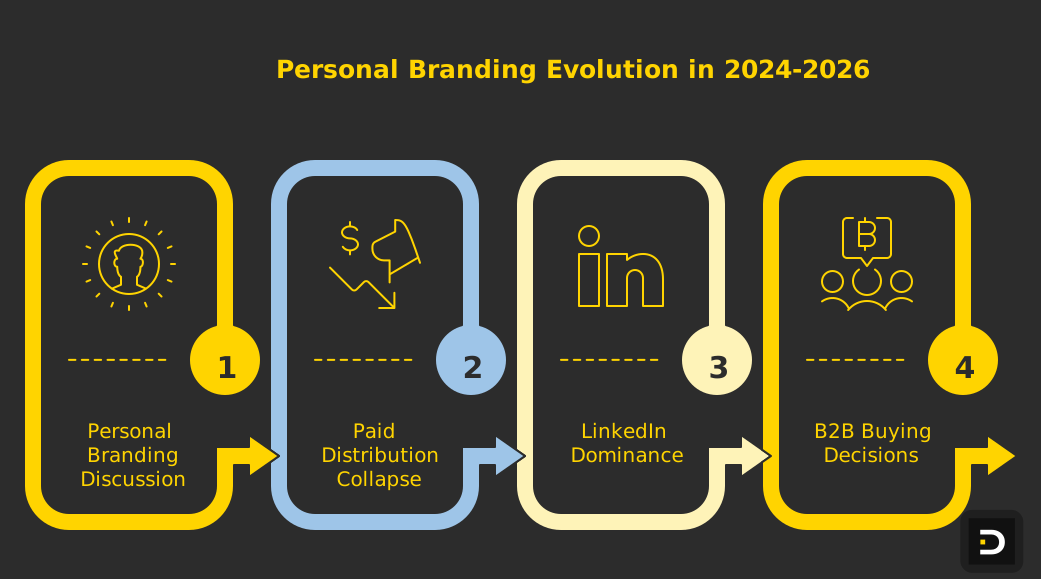
Personal branding has been discussed for a decade. So why is it suddenly more important now? Four shifts compounded in the last 24 months.
One, the collapse of paid distribution. CAC went up across every paid channel, organic search got hammered by AI summaries, and outbound email response rates fell off a cliff. The remaining channel that still compounds is owned media on platforms where founders have personal accounts.
Two, LinkedIn became the dominant B2B platform. LinkedIn's B2B Institute research has been clear that B2B buying decisions are made over months of brand exposure, not in the moment of the demo. What changed is that LinkedIn's algorithm finally rewarded individual voices over corporate pages, making it economically rational for founders to invest there.
Three, AI content saturation. Everyone can now generate plausible-sounding content. The result: generic content has zero signal value. The only content that breaks through has a clear point of view from a specific human. Generic thought leadership is dead. Specific founder thought leadership is the only thing that works.
Four, buyer behavior shifted. Buyers, candidates, and investors all start with a search. What they find in the first 30 seconds shapes the entire downstream interaction. Founders with a controlled, intentional first 30 seconds have a structural advantage that didn't exist when buyers relied on analyst reports. These four shifts flipped personal branding from "nice to have" to default operating cost of being a founder.
The 4 myths that hold founders back
If this is so clearly a winning move, why do most tech founders still avoid it? Four myths do most of the damage.
MythReality"I'm too technical, nobody wants to hear me"Technical depth is the rarest signal. Buyers, candidates, and investors are starved for founders who actually know what they're talking about."I don't have time"3 to 5 hours a month produces measurable lift. The cost of not doing it is 20 to 40 hours of extra sales calls and recruiting."I'm not a salesperson, this feels gross"Personal branding done right is teaching, not selling. If you're teaching from real experience, it doesn't feel like sales because it isn't."It's not authentic, I'd be performing"Authenticity is a constraint, not a feature. You write what you actually think. The performance is in the discipline of writing it down.
"I'm too technical." The most common myth and the most wrong. Technical founders underestimate how rare deep technical voices are on LinkedIn. A founder who explains why their architecture decision matters in plain language is doing what nobody else can do.
"I don't have time." Partially true, mostly a framing problem. With help, the time investment is 30 to 60 minutes per week of recorded thinking. A well-structured 30-minute conversation produces a month of content. The objection assumes the founder is doing all the writing. They shouldn't be.
"I'm not a salesperson." Good. The best founder content isn't selling. It's processing what you're learning out loud. Writing about a hard customer problem you solved last week isn't pitching. It's teaching.
"It's not authentic." The most pernicious one because it sounds principled. "Authenticity" gets confused with "spontaneity." You can think hard, refine, and publish what you actually believe. That's not performance. That's craft.
How much time it actually takes (honest answer)
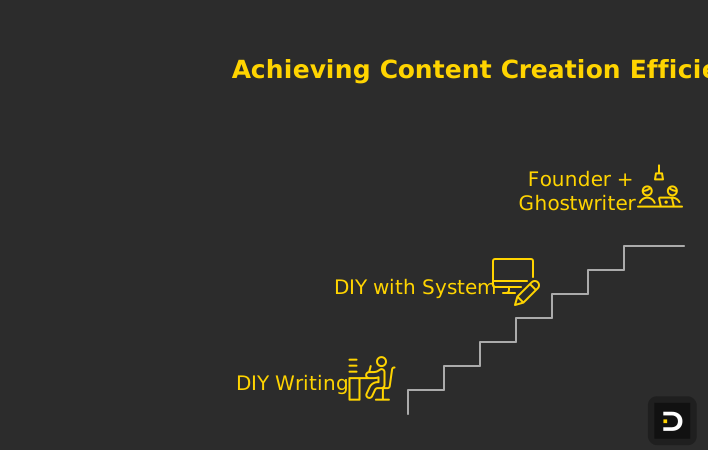
Depends on how you do it. Three modes.
DIY, founder writes everything. 8 to 12 hours per month. Works for founders who genuinely enjoy writing. Most don't, and the cadence breaks within 60 days.
DIY with a system. 4 to 6 hours per month. Founder records voice notes, dumps thoughts into a doc, shapes them into posts. Works for disciplined founders with content ops experience.
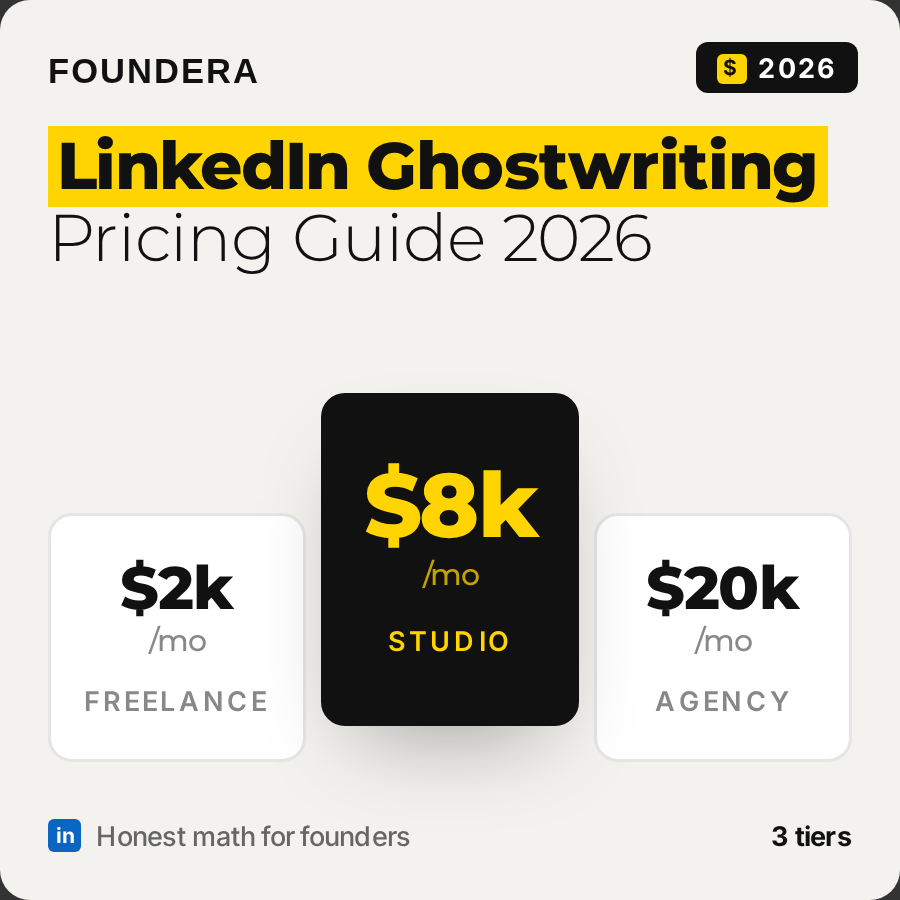
Founder plus ghostwriting partner. 1 to 2 hours per month of founder time. The founder talks, the partner extracts and shapes. This is the model we run at Foundera for deep-tech founders who want the output without the operational overhead.
The question isn't whether personal branding is worth your time. It's which mode fits your operating style. A founder spending 12 hours a month writing posts is overpaying. A founder spending 1 hour and getting nothing is underpaying. The middle path is where the ROI lives.
Personal brand vs company brand: where to invest first
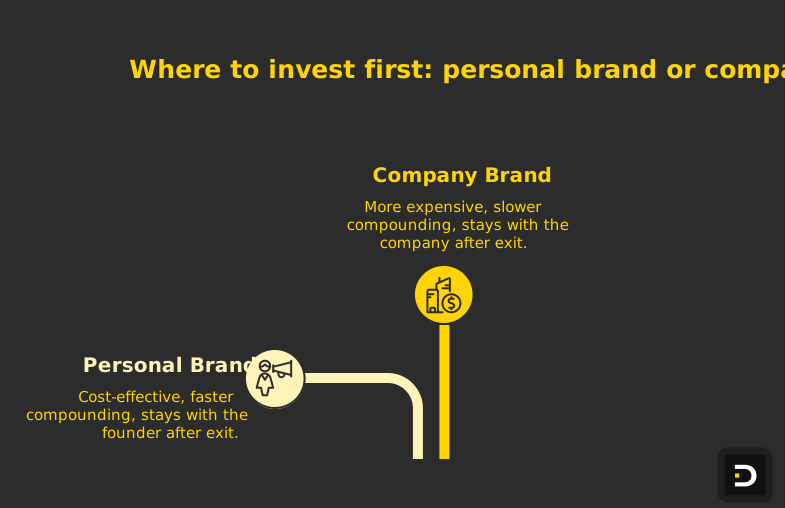
For tech entrepreneurs at seed through Series B, build the personal brand first. Company brands cost more, take longer to compound, and don't transfer. If you exit, the company brand stays with the company. The personal brand stays with you. We've watched founders with 5,000 personal followers outperform their own company page of 30,000 followers by 10x on engagement and inbound.
Past Series B with a defined category and a real team, building a company brand alongside the founder's voice starts to make sense. Until then, every dollar spent on company brand would have produced more inbound through the founder's voice. Our take on founder-led marketing on LinkedIn walks through the specific economics.
The 90-day proof point: what signal you should see by month 3
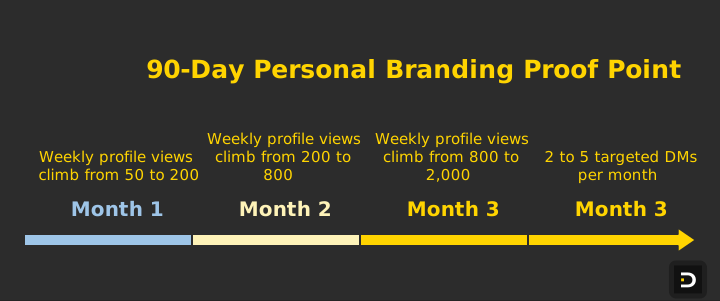
Personal branding compounds, but it shouldn't feel like a black box. By month 3 of consistent, intentional posting, you should see specific signals. If you don't, the strategy, cadence, or content is wrong.
Hit these signals, double down. Miss them, change the input but don't quit. Most founders quit at month 2 and never see the month 4 hockey stick. For a structured way to evaluate the inputs themselves, our executive thought leadership framework walks through the post-level diagnostic.
How tech entrepreneurs at 3 stages should approach this differently
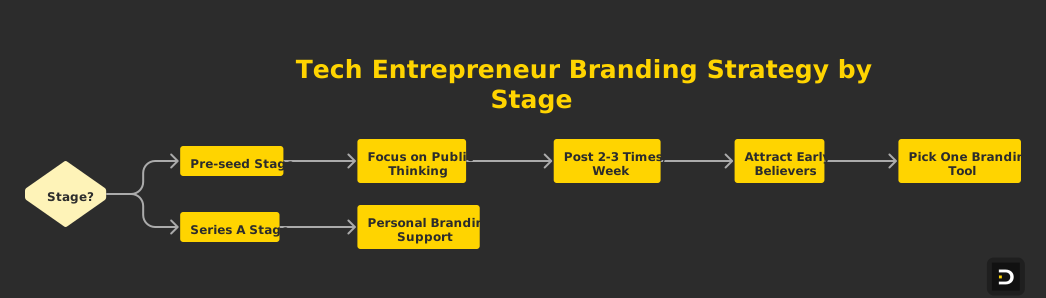
Pre-seed. Your personal brand is the product. You don't have revenue or a team. You have your thinking. Public thinking compounds fastest here because everything else is being built from zero. Post 2 to 3 times a week. Be specific about what you're building and why. By the time you raise, you've already attracted the early believers who become your first customers, hires, and angels. Pick one tool and stick with it. We've written about the best personal branding tools for founders if you want a comparison.
Series A. You have a product, a small team, and first customers. The personal brand strategy shifts from "I'm building this" to "Here's what we're learning." Stories from real deployments, technical trade-offs, hires you've made and why. This is the stage where the personal brand starts driving inbound that hits the P&L. Cadence: 2 posts a week, at least one substantive enough to share internally.
Series B and beyond. You're now a category figure. The work shifts to category-shaping. Speaking, podcasts, longer essays, and selective press compound on top of the LinkedIn foundation. A clear leadership brand statement becomes critical because everyone in your orbit needs the same shorthand for who you are. For founders selling enterprise, our sales methodology for founders on LinkedIn connects this back to revenue.
Your next move
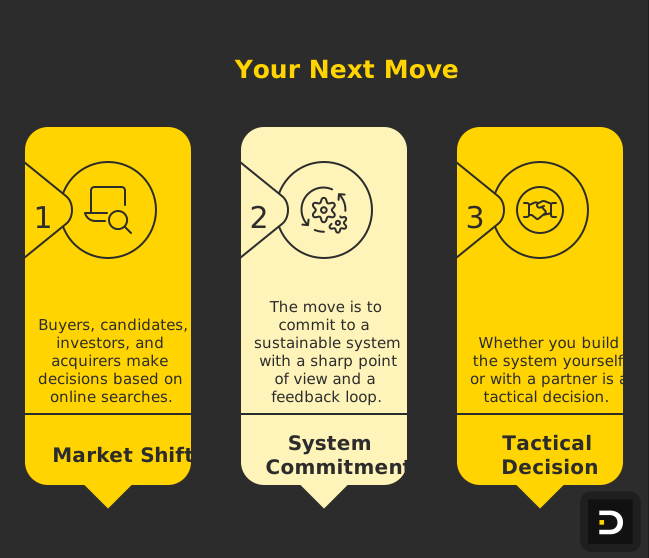
The market has moved. Buyers, candidates, investors, and acquirers now make decisions based on what they find about you in 30 seconds of searching. Find nothing or find something generic, and you're competing on price for everything that matters.
The move isn't to "start posting." That produces 30 days of effort and zero compounding. The move is to commit to a system: a cadence you can sustain, a point of view sharp enough to be remembered, and a feedback loop that tells you whether it's working. Whether you build the system yourself or with a partner is a tactical decision. Whether you build it at all is the strategic one, and the answer in 2026 is obvious.
If you want help building it, this is what Foundera does. We ghostwrite LinkedIn content for deep-tech founders who don't have time to do it themselves but can't afford not to. Our model captures your thinking efficiently and shapes it into a public asset that compounds. If that's useful, talk to us. If not, build it yourself. Just don't keep ignoring it.
FAQ
Why is personal branding important for entrepreneurs in 2026?
Because paid distribution got more expensive, organic search got disrupted by AI, and buyers now do their homework on the founder before the first call. Personal branding compresses sales cycles, attracts better hires, improves fundraise terms, and creates partnership inbound. Without one, tech founders compete on price for everything.
How is personal branding different for tech entrepreneurs vs other founders?
Technical products are harder for buyers to evaluate, so the founder becomes the proxy for trust. Technical talent moves through networks, not job boards. And deep-tech categories often don't exist yet, requiring category creation work that can only come from a person with a thesis.
How much time does personal branding actually take?
Writing everything yourself, 8 to 12 hours per month. With a structured voice-notes system, 4 to 6 hours. With a ghostwriting partner, 1 to 2 hours of founder time. The right mode depends on your operating style.
What's the difference between personal brand and company brand?
Personal brand follows you across companies. Company brand stays with the company. Pre-Series B, personal brand compounds faster, costs less, and outperforms company brand on LinkedIn by a wide margin. Past Series B, both start to make sense in parallel.
Is LinkedIn really the right platform for tech founders?
For B2B tech founders, yes. The algorithm rewards individual voices over corporate pages, and the platform has become the default research surface for high-trust B2B decisions. Other platforms can complement, but LinkedIn is the foundation.
How do I know if my personal branding is working?
By month 3, look for climbing profile views, targeted inbound DMs from buyers or candidates, "I read your post" moments in real conversations, and at least one inbound opportunity that wouldn't have existed otherwise.
What if I'm too technical to do this well?
Technical depth is the rarest signal on LinkedIn. The platform is flooded with operators recycling generic frameworks. A founder who explains the why behind their architecture in plain language has the biggest possible edge. Technical isn't a disadvantage. It's the differentiator.
Should I hire a ghostwriter or do it myself?
Depends on whether you enjoy writing and have time. Founders who like writing and can protect 4 to 6 hours a month should do it themselves with a system. Founders who can't should work with a partner. The wrong mode is "do it yourself badly."
The TL;DR
Quick answer
Between 2024 and 2026 the math broke for invisible tech founders. Personal brand drives measurable lift in five places: sales cycles 30-45% shorter, hire inbound 3-5x, fundraise terms 15-25% better, partnership inbound from 0-1 to 8-12 per quarter, and 1.2-1.5x exit multiples. The cost of no brand shows up as longer cycles and lost deals, not as a P&L line item.
Key takeaways
- Personal branding is systematic, public articulation of how you think and why it matters.
- Five payoff areas with real numbers: sales, hiring, fundraising, partnerships, exit valuation.
- Technical depth is the rarest signal. Buyers and investors are starved for it.
- Pre-Series B, personal brand outperforms company brand on LinkedIn by 10x.
- Three modes: DIY 8-12 hrs/month, DIY with system 4-6, ghostwriter partner 1-2.