Most founders who set out to "become a LinkedIn influencer" end up sounding like every other LinkedIn influencer. The hooks get crispier, the carousels get prettier, the advice gets more generic. The founder, who actually built something interesting, disappears behind a costume of swipe-file phrases and motivational closers.
This is the trap. "Influencer" pulls founders toward a playbook built on attention arbitrage. Founders don't need that. They need to become the obvious answer when their buyer thinks about the problem they solve.
If you're a deep-tech founder asking how to become an influencer on LinkedIn, the honest answer: you probably shouldn't try, in the conventional sense. You should become the category authority. The distinction sounds small. It changes everything about what you post, how often, and what success looks like.
Here's the 90-day system we run with founders at Foundera, the traps to avoid, and what real progress looks like when you stop chasing virality.
What "LinkedIn influencer" actually means in 2026 (and why founders should reframe it)
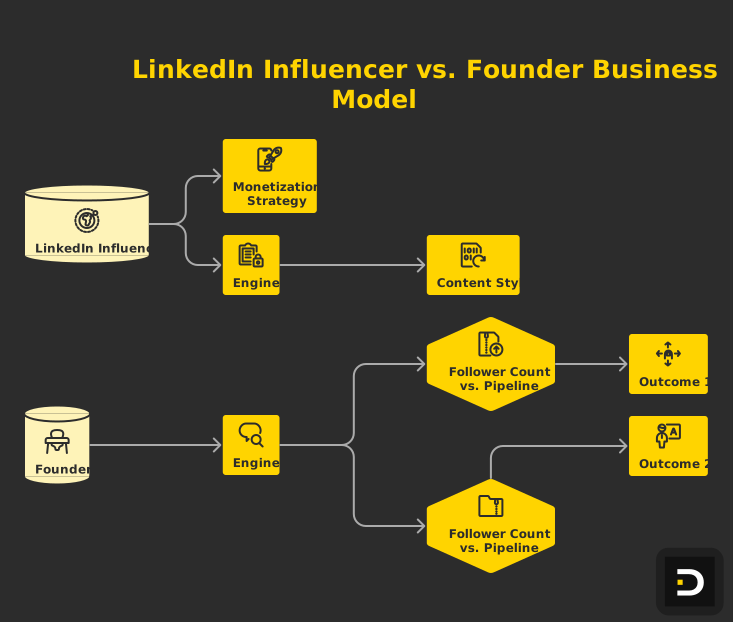
The "LinkedIn influencer" label got built for a creator whose primary product is their audience. They sell courses, coaching, and sponsored posts back to that audience. Their engine is reach. That's why their content looks the way it does: pattern-interrupt hooks, one-sentence-per-line formatting, daily posting that treats LinkedIn like a slot machine.
Founders don't have that business model. A founder's engine is buyers, not followers. You can have 800 followers and a $40M pipeline if they're the right 800 people. You can have 80,000 followers and a $400K pipeline if they're mostly creators trading engagement.
The 2026 LinkedIn algorithm makes this sharper. LinkedIn has spent two years rebalancing toward "knowledge-led" content from specific operators inside specific industries. The Marketing Solutions creator program favors operator-creators over generalist motivators. The platform's Top Voices criteria now weights subject-matter depth above raw follower count.
Reframe the goal. You're not becoming an influencer. You're becoming the person your category cites.
Influencer vs category authority: the difference that matters
Influencer and category authority sound adjacent. They're built on opposite principles.
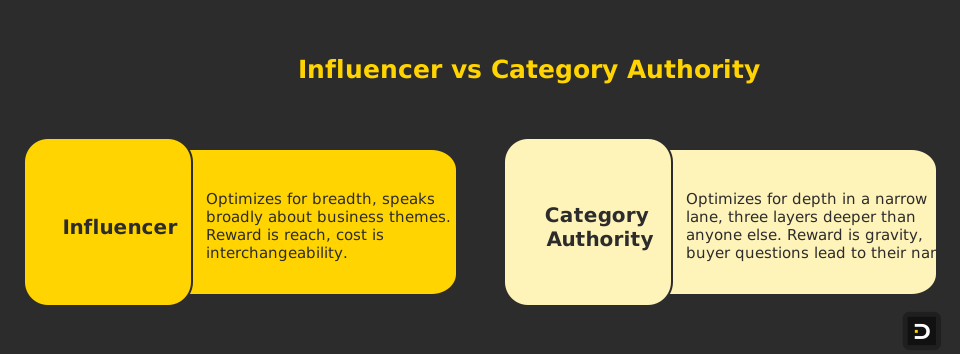
An influencer optimizes for breadth. They speak broadly about themes anyone in business could nod along with: hiring, productivity, leadership, mindset. The reward is reach. The cost is interchangeability. Any one of them could be swapped out for any other, and nobody would notice.
A category authority optimizes for depth in a narrow lane. Three layers deeper than anyone else, one specific topic, one specific audience. The reward is gravity. When a buyer in that category has a question, your name comes up unprompted. The cost is patience. You'll never get the viral spike. You'll get something better: pipeline that arrives pre-qualified.
The clearest test: read a founder's last ten posts and ask, "Could a competitor post any of these word for word?" If yes, influencer. If no, authority. Authority compounds. Influence rents attention.
For more, our breakdown of the executive thought leadership framework walks through the four pillars.
The 90-day system: weeks 1-12 broken down

Most founder LinkedIn programs die in week three because there was no system, only ambition. A 90-day system gives you runway to find your voice, lock cadence, and see inbound signal before deciding if it's working. The timeline:
PhaseWeeksGoalOutputFoundation1-2Voice profile and content pillars lockedOne voice doc, three pillars, ten draft postsCadence3-6Consistent publishing, internal feedback loop2-3 posts per week, 12+ posts shippedAmplification7-12Distribution, repurposing, network compoundingExternal pickups, DMs, first inbound leads
Notice what's missing: no "go viral in week 8" milestone, no follower target. The system ships consistent, specific content and watches inbound signal. Followers are a byproduct, not the goal. Three months is the floor. Founders who treat 90 days as the start, not the experiment, still have a working engine a year later.
Week 1-2: voice profile and content pillars
The first two weeks aren't for posting. They're for building the asset everything else depends on.
A voice profile is a three- to six-page document capturing how you actually talk. Not press-release tone. Your real cadence, actual phrases, the opinions you hold that others in your category won't say out loud. At Foundera, we record three to five hours of unstructured conversation, then mine the transcript for vocabulary, structural tics, and load-bearing opinions. The output is the source of truth for every post written in your name for the next year. Without it, content sounds vaguely like a founder, vaguely like LinkedIn, and exactly like nobody.
Content pillars are the second deliverable. Three is right. More dilutes; fewer runs out of angles in a month. A pillar isn't a topic. "AI security" is a topic. "Most AI security tools are solving the wrong layer of the stack" is a pillar.
By the end of week two, you should have your voice doc, three pillars, and at least ten drafted posts in a backlog. For a deeper walkthrough, our piece on thought leadership content for founders covers the framework.

Week 3-6: cadence lock-in
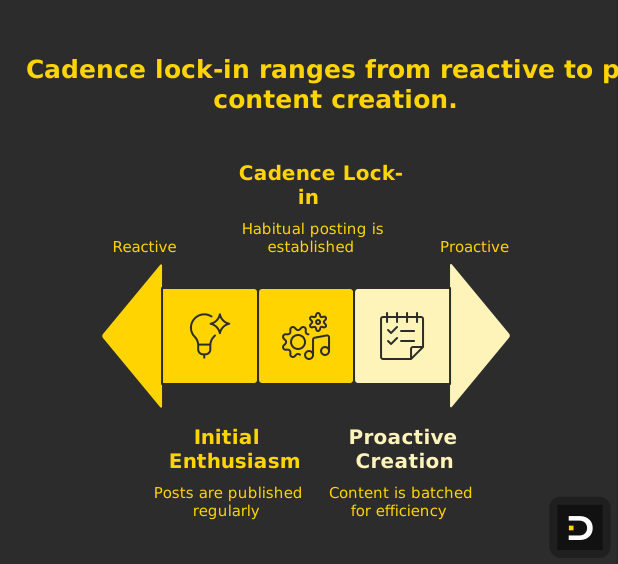
Weeks three through six are about turning the system into a habit. Two to three posts per week, every week, no skips.
This is where most founder programs die. The first two weeks felt productive. Then you have to ship a post on a Tuesday morning when your Series B is closing, the post doesn't ship, cadence breaks, and within a month the experiment is dead.
The fix is to detach writing from posting. If you write your own content, batch four posts on a Sunday. If you work with a ghostwriter, review four drafts a week instead of writing from scratch. The bottleneck in week three should be approval, not creation.
The other discipline is engagement. Founders treat their own comments section like an afterthought. Don't. Every reply in the first 60 minutes after posting is a second post in the algorithm's eyes. Reply substantively. Disagree where you actually disagree. Use comments to extend the argument, not to say thanks.
By week six, you should have shipped at least twelve posts and seen your second-degree network start to engage. You won't yet have inbound that converts. That's normal. The point is to prove you can run the system.
Week 7-12: amplification and distribution
Weeks seven through twelve are when you stop optimizing posts and start optimizing distribution.
Three things matter. First, repurposing. Your best posts from weeks one through six are raw material. The top two or three get expanded into longer formats: a newsletter, a Substack post, or a deeper piece on your company blog. Same idea, expanded, reaches a different reader.
Second, network compounding. By week eight, you should have fifteen to twenty people in your category whose work you respect, and be in their orbit. Not in an engagement-pod way. Actually engaging. Quoting them when relevant. DMing when you have a real reason. Authority is partly who else in your category recognizes you as a peer.
Third, surface area. By week ten, you should have done at least one podcast, guest piece, or external newsletter feature. LinkedIn is the engine. External surface area turns it into a moving vehicle.
By week twelve, the signal isn't follower count. It's three things: inbound DMs from people in your category who you didn't know but who know you, mentions of your name in conversations you weren't part of, and at least one inbound converting to a real business outcome.
The 5 founder content formats that actually compound
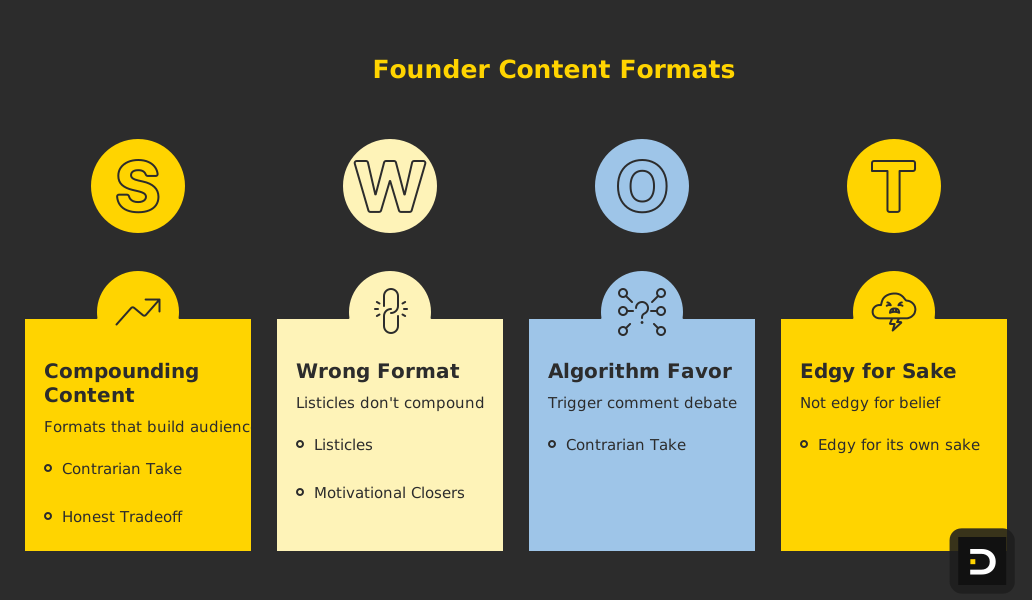
Most founder content fails because the format is wrong, not the writing. Listicles and motivational closers don't compound. These five do.
1. The Contrarian Take. One specific belief you hold that most of your category does not. Backed by a reason. Not edgy for its own sake, edgy because you actually believe it. These trigger comment debate, which is the algorithm's favorite signal, and cement you as someone with a point of view.
2. The Honest Tradeoff. Almost every founder post sells the win. The Honest Tradeoff sells the cost. "We chose X over Y. Here's what we gave up." Buyers trust founders who name the tradeoff. Founders who pretend there's none sound like marketing.
3. The Buyer Tell. A specific moment from a customer conversation that revealed something about the category. Not the logo. The pattern. "A CISO told me last week they evaluate vendors in this order, which is the opposite of how vendors expect to be evaluated." Unfakeable. Nobody writes these except people who actually talk to buyers.
4. The Wrong-When-We-Started. One thing you believed when you founded the company that you've since changed your mind on, and what changed it. The highest-trust format on LinkedIn. It signals intellectual honesty, which is the rarest commodity in founder content.
5. The Category Reframe. A short post that takes a common term in your category and reframes it. "Everyone says X. Here's what X actually looks like in practice." These get screenshotted into DMs, which is the strongest distribution signal LinkedIn doesn't measure.
None of these need a hook template or a one-line-per-paragraph aesthetic. They work because the underlying observation is sharp.
How to measure progress (real metrics, not vanity)
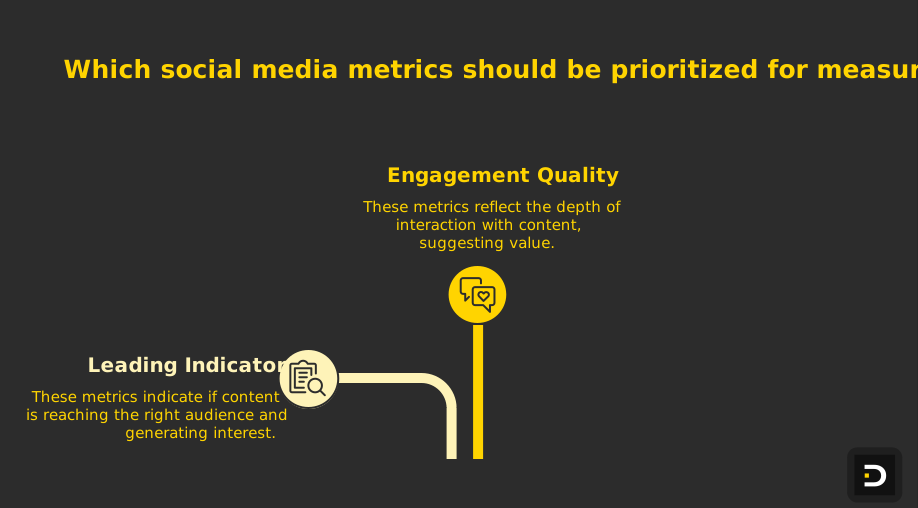
Followers and likes are noise. They feel like progress and rarely correlate with business outcomes. The metrics that matter fall into three tiers.
Tier 1: leading indicators. Profile views from your buyer's company list. Connection requests from job titles that match your ICP. Comments from people not already in your network. These tell you the content is reaching the right rooms.
Tier 2: engagement quality. Saves, DMs, substantive comments. A post with 50 likes and 12 substantive comments is a stronger signal than a post with 800 likes and 4 emoji replies. The algorithm weights these too.
Tier 3: business outcomes. Inbound demo requests citing your content. Investor DMs. Recruiting conversations that started from a post. Press inquiries. Lagging indicators, showing up around month four or five.
Track only tier 1 and you'll get impatient. Track only tier 3 and you'll panic in month two. Watch all three. Our breakdown of the sales methodology for founders on LinkedIn covers how to convert tier 1 signals into tier 3 outcomes without breaking voice.
The 4 traps founders fall into trying to become influencers
The patterns that kill founder content programs are predictable. Four come up most.
Trap 1: chasing trends. An AI announcement drops, every creator posts a hot take, the founder feels behind. Don't post. The trend cycle is forty-eight hours. By the time you have a take, the moment is gone and your post sounds like every other post. Your real trend window is your customer conversations from last week.
Trap 2: hook templates. "Here's the framework I used to..." "What nobody tells you..." These get impressions and make every founder sound the same. The hook is the part buyers ignore. Lead with the observation.
Trap 3: daily posting. Founders who post every day usually post badly five days a week to post well once. Two great posts a week beat five mediocre ones. The algorithm punishes accounts that train it to suppress them.
Trap 4: follower obsession. Watching follower count daily is the LinkedIn equivalent of watching a stock portfolio in a downturn. The founders who break through stopped checking after week three and started checking inbound DMs instead.
For more on how founders express position without falling into these traps, our gallery of personal leadership brand statement examples for founders has worked examples.
Real founder case study: from 800 to 12,000 followers in 9 months without going viral
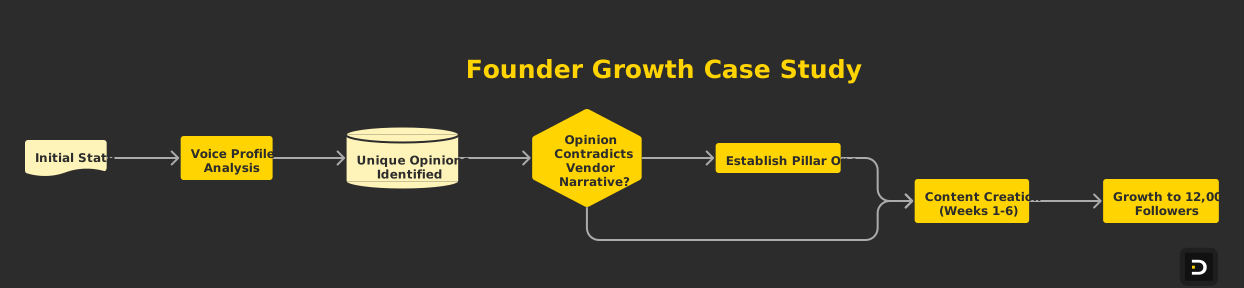
One of our founders, a CEO in infrastructure security, came to us with 812 followers, two abandoned drafts, and a strong opinion that "creator stuff isn't for me." His category was crowded. Big incumbents had been writing about it for a decade. He felt he had nothing new to say.
We started with the voice profile. Four hours of recorded conversation surfaced three load-bearing opinions nobody in his category was saying publicly. One contradicted the conventional vendor narrative directly. That became pillar one.
Weeks one through six were unglamorous. Two posts a week, most performing between 1,000 and 4,000 impressions. No viral spike. He almost quit in week four.
The first signal arrived in week seven. A CISO at a Fortune 500 mentioned his name in an unrelated comment thread. By week ten, he had three inbound DMs from buyers in his target ICP. By month four, he was getting invited to closed-door industry roundtables.
Nine months in, he had 12,400 followers, none gained from a viral hit. His biggest post got 23,000 impressions: good, not "viral." The compounding came from consistency, specificity, and the voice profile holding up across hundreds of posts. His inbound pipeline at month nine was six times month zero. All of it came from posts specific enough that the right reader couldn't ignore them.
Tools matter less than voice and system, but for a survey see our writeup on the best personal branding tool for founders.
Your next move
You're probably one of two founders. The first has been posting inconsistently for a year, watching follower count crawl, suspecting the playbook everyone sells doesn't work. The second hasn't started and is wondering whether it's worth the time.
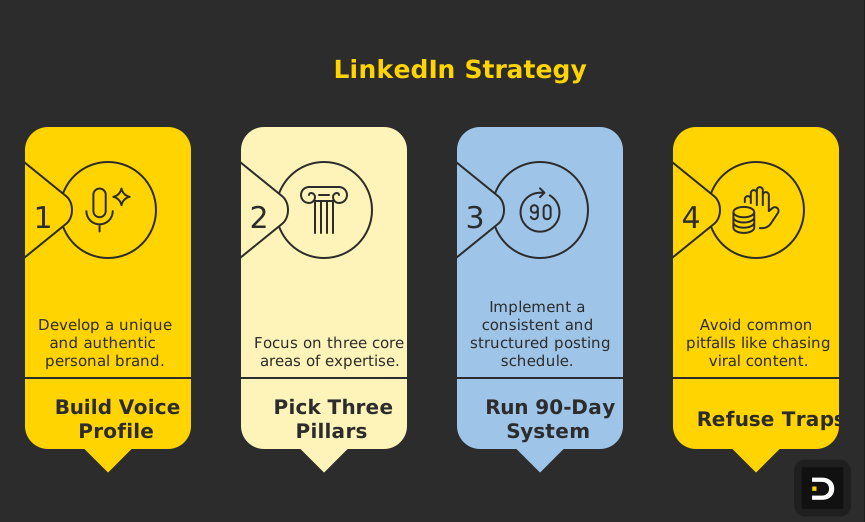
For both, the answer is the same. Stop trying to become an influencer. Build the voice profile. Pick three pillars. Run the 90-day system. Refuse the traps.
Founders who treat LinkedIn as a category authority play own the inbound conversation three years out. The ones chasing viral hooks have a follower count and a calendar full of people who can't buy anything.
If you'd rather not run this yourself, that's what we do. Foundera works with deep-tech founders to build the voice profile, run the cadence, and turn LinkedIn into a real authority engine. No hook templates. No daily posting. No caricature.
FAQ
How many followers do you need to be considered a LinkedIn influencer as a founder?
For founders, the threshold isn't a number. It's whether your target buyer recognizes your name. A founder with 2,000 of the right followers is more "influential" in their category than one with 50,000 generalist followers. If your inbound pipeline is growing and your category is citing you, you're already where you need to be.
How long does it take to become a LinkedIn influencer as a founder?
The 90-day system is the minimum to know whether your content engine works. Real category authority compounds over twelve to eighteen months. Anyone promising influencer status in 30 days is selling you a follower count.
Should I post every day on LinkedIn?
No. Two to three high-quality posts per week outperform daily posting for founders. The algorithm punishes accounts that train it to suppress them. Frequency only helps if every post is worth shipping.
Do I need a ghostwriter to become a LinkedIn influencer as a founder?
You need a system. A ghostwriter is one way to get one. The right one captures your voice and runs the cadence. The wrong one makes you sound like every other founder. Test voice match before signing anything longer than a month.
What's the biggest mistake founders make when starting on LinkedIn?
Copying creator-economy playbooks. Hook templates, motivational closers, and viral chasing are optimized for people whose business is their audience. Founders' business is their buyer. The playbooks don't transfer.
How do I measure ROI from LinkedIn content as a founder?
Track three tiers: leading indicators (right-ICP profile views), engagement quality (saves, DMs, substantive comments), and business outcomes (inbound demos, investor DMs). Outcomes show up in month four or five. Anyone measuring ROI in month one is measuring the wrong thing.
The TL;DR
Quick answer
Founders shouldn't try to become LinkedIn influencers in the conventional sense. They should become category authority. Influencers optimize for breadth and rent attention; category authorities optimize for depth and compound it. The 90-day system: weeks 1-2 voice profile and pillars, weeks 3-6 cadence lock, weeks 7-12 amplification. Skip viral chasing and hook templates.
Key takeaways
- Reframe the goal: don't become an influencer, become the person your category cites.
- Two to three posts per week beat daily posting. The algorithm punishes accounts it suppresses.
- Five formats compound: contrarian take, honest tradeoff, buyer tell, wrong-when-we-started, category reframe.
- Real signal arrives in week 7, not week 2. Most founders quit in week 4.
- Track inbound DMs from ICP, not follower count. Followers are a byproduct.