Most founders have the same problem with LinkedIn. They sit down to write, stare at the blank composer, and either ship something generic ("excited to announce...") or close the tab. The blank page is the bottleneck. Not the ideas, not the writing skill, not the audience.
This is the post template library we've built after ghostwriting hundreds of posts for 50+ deep-tech CEOs. Twelve formats that drive inbound, replies from actual buyers, and pipeline conversations. Each comes with the exact structure, when to use it, and a real example pattern you can adapt in fifteen minutes.
If you want the strategic case for why founders should be posting at all, see our piece on founder-led marketing on LinkedIn.
Why templates beat "just be authentic"

The standard advice is "write authentically, be yourself." Technically correct, operationally useless. Founders don't fail at LinkedIn because they aren't authentic enough. They fail because they don't have a repeatable system for turning a thought into a post in under thirty minutes.
Templates remove the wrong decisions. What matters is what you say. What doesn't is whether to open with a question or a statement, put the hook on line one or three, close with a question or a CTA. Templates handle structure so you focus on substance.
The 12 formats below cover situations a founder actually faces: disagreeing with consensus, sharing a build decision, reporting a metric, admitting a mistake.
Template 1: The Contrarian Take
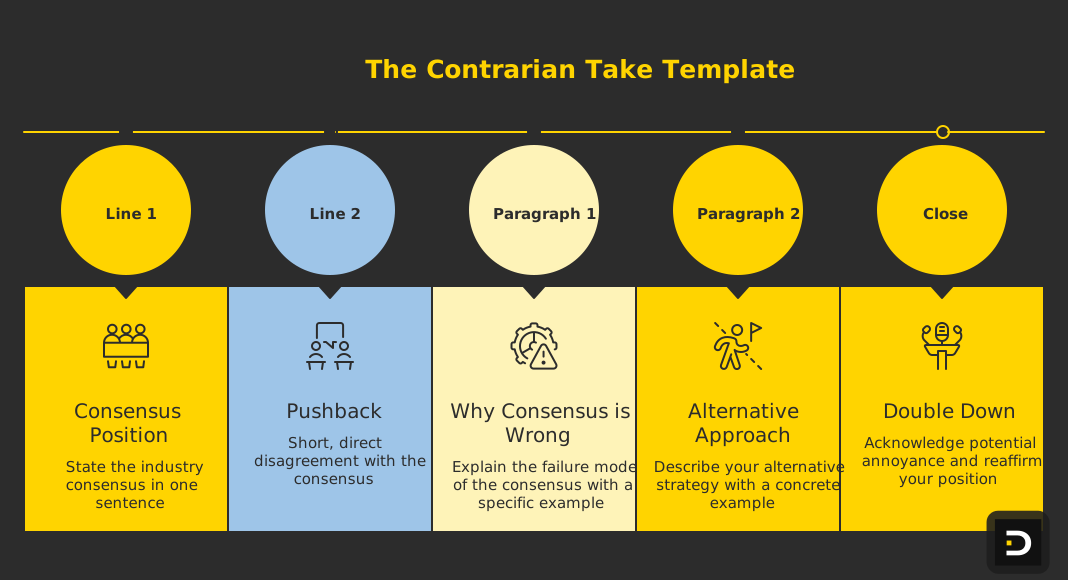
When to use it: You hold a strong opinion that conflicts with industry consensus, earned through scar tissue not theory.
Structure:
- Line 1: State the consensus position in one sentence.
- Line 2: Short pushback ("Wrong." or "I disagree.")
- Paragraph 1: Why the consensus is wrong, with a specific failure mode.
- Paragraph 2: What you do instead, with a concrete example.
- Close: Acknowledge the people you'll annoy, then double down.
Real example pattern: "Everyone says hire a VP of Sales before $1M ARR. We didn't. Here's what happened when we waited until $4M..." Walk through what broke, what worked, then close with "Your sales motion is a product. Don't outsource the design of it."
Contrarian takes drive the highest reply rates of any format we use, but only if the position is defensible. If you can't survive a tough comment, don't post it.
Template 2: The Honest Tradeoff
When to use it: You made a decision with real costs. You want to attract buyers who think rigorously about tradeoffs.
Structure:
- Hook: "We chose X over Y. Here's what it cost us."
- Context: 2-3 sentences on the decision and alternatives.
- The wins: 2-3 bullets on what the choice unlocked.
- The losses: 2-3 bullets on what it cost.
- Verdict: "Would I do it again? Yes, but only because X."
Real example pattern: "We picked Postgres over a vector database for our RAG system. Cost us 30% on retrieval latency. Here's why we'd do it again..." Honesty about the cost is what makes it credible. Founders who only post wins look like marketers. Founders who post tradeoffs look like operators.
Template 3: The Behind-The-Scenes Build
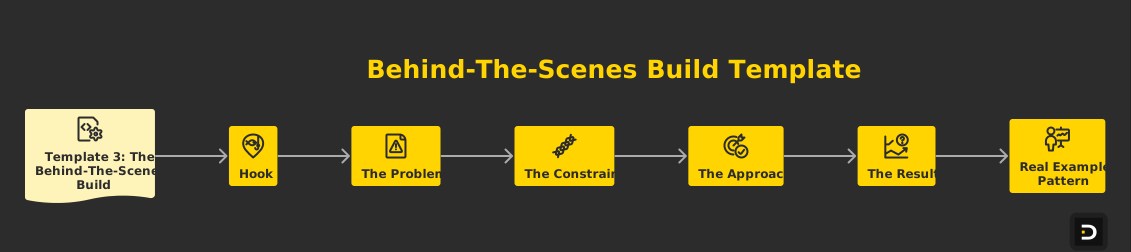
When to use it: You're shipping something interesting and want to share the engineering reasoning, not just the announcement.
Structure:
- Hook: "Here's how we built [feature] in [timeframe]."
- The problem: what wasn't working.
- The constraint: what you couldn't change.
- The approach: 3-5 bullets on the actual decisions.
- The result: what changed in numbers, plus what surprised you.
Real example pattern: A CTO posting about replatforming their inference stack. Walk through constraints (no downtime, no new headcount), three options considered, why you picked one, what broke. End with cost savings and what you'd do differently.
This format attracts technical buyers, hires, and partners. Anyone can write "5 tips for AI infra." Only you can write your build story.
Template 4: The Pattern Observation
When to use it: You've talked to enough customers to spot a pattern your audience hasn't named.
Structure:
- Hook: "I've talked to [number] [type of person] in the last [timeframe]. Here's the pattern."
- The pattern in one clear sentence.
- 3-5 specific manifestations (anonymized).
- Your theory of why it's happening.
- What it means for your audience.
Real example pattern: "I've had 40 conversations with security CISOs this quarter. Nobody is asking about features anymore. They're asking 'how do I prove this to my board.' That's a different sale. Here's how it changes the roadmap..."
Pattern posts reframe what your audience is seeing. They feel like insider information. Specificity ("40 conversations" not "lots of conversations") is what makes them believable.
Template 5: The Customer Conversation
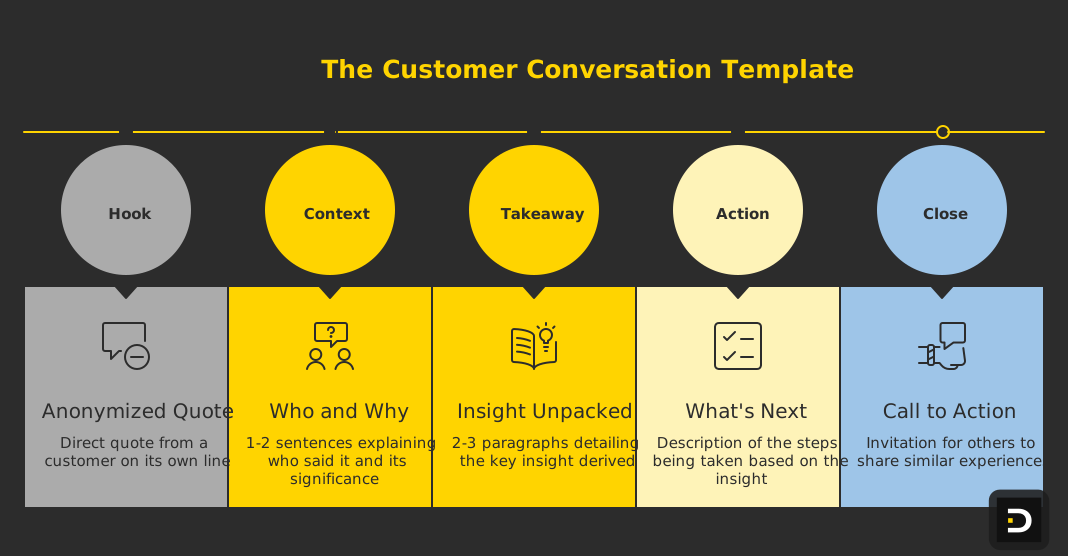
When to use it: A single customer conversation crystallized something important. You want to share the moment without breaching confidence.
Structure:
- Hook: A direct quote (anonymized) on its own line.
- 1-2 sentences of context: who said it and why it matters.
- What you took away: 2-3 paragraphs unpacking the insight.
- What you're doing about it.
- Close: "If you're seeing the same, would love to hear about it."
Real example pattern: "'We don't need better dashboards. We need fewer.' - A CISO last week. Most security tools assume more visibility = more value. Here's why that's backwards..."
Quote-led posts have the highest stop-scroll rate of any format we test. The quote feels like overheard truth. The rest is your synthesis of why it matters.
Template 6: The Metric Story
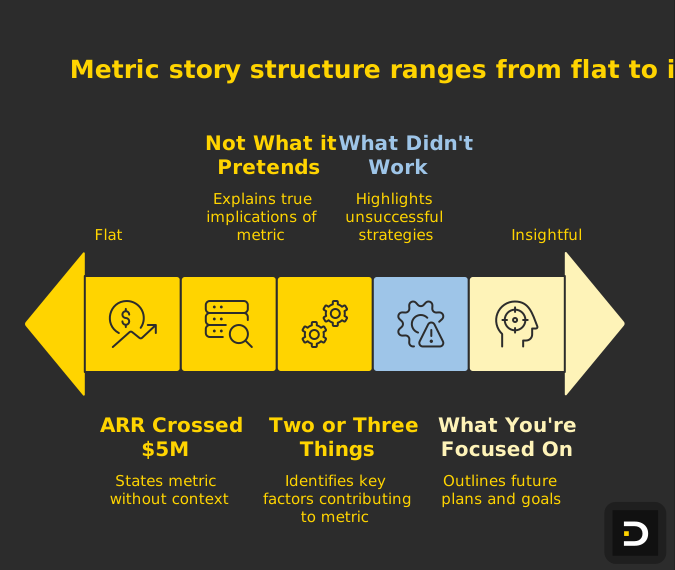
When to use it: You have a number worth reporting and don't want it to feel like a humble-brag.
Structure:
- Hook: The metric, said flatly. "ARR crossed $5M last month."
- What it actually means (not what it pretends to mean).
- The two or three things that drove it.
- What you tried that didn't work.
- What you're focused on next.
Real example pattern: "We hit 10,000 active users this week. What drove it: one channel we didn't expect, one investment that took 14 months to pay off, and one experiment that failed completely. The failure matters more..."
Immediately deflate the milestone. Founders who treat numbers as endpoints sound naive. Founders who treat them as checkpoints sound serious. For more, see our executive thought leadership framework.
Template 7: The Honest Miss
When to use it: You said or believed something publicly that turned out to be wrong, and want to update without performative humility.
Structure:
- Hook: "[X months] ago I said [claim]. I was wrong."
- What you believed and why it was reasonable.
- What changed your mind, with specifics.
- What you believe now.
- What you're doing differently.
Real example pattern: "Six months ago I told my team that selling to enterprise security required a sales-led motion. We're now closing $200K deals through product-led trials. Here's what I missed..."
This format is asymmetric: it costs almost nothing in credibility and gains a lot. Buyers trust founders who update their priors more than founders who never change their minds. One caveat: don't fake the miss. Audiences can tell when a reversal is staged.
Template 8: The Hot Take Roundup
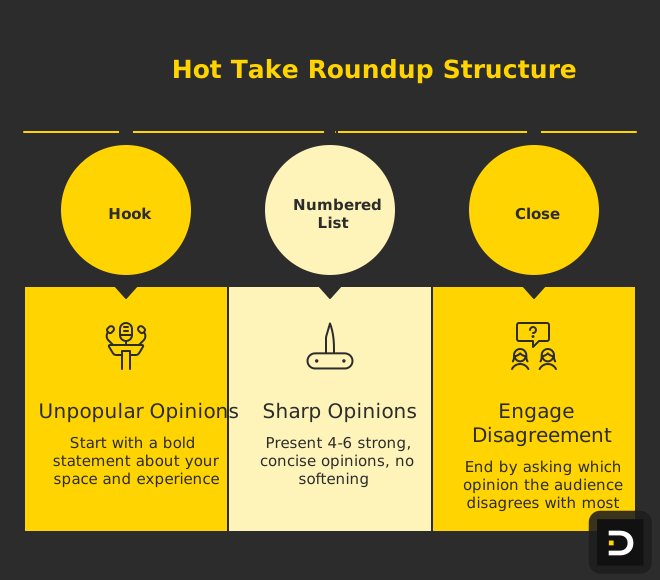
When to use it: You have 4-6 strong opinions that aren't big enough for individual posts but are interesting together.
Structure:
- Hook: "Six unpopular opinions about [your space], from someone who's spent [time] in it."
- Numbered list. Each opinion 1-2 sentences. No softening.
- Close: "Which one do you disagree with most?"
Real example pattern: A CRO posting "Five things I believe about B2B SaaS sales that I'd get pushback on at most companies." Each point sharp, specific, and ideally one that annoys at least one tribe. Examples: "Most pipeline reviews are theater." "Win rate matters more than ACV."
Roundup posts work because they're scannable and reply-able. Readers don't have to engage with everything, just the one point they want to argue. This format consistently drives the highest comment counts in our portfolio.
Template 9: The Process Reveal
When to use it: You have an internal process that works, and sharing it doesn't compromise your moat.
Structure:
- Hook: "Here's the [process] we use to [outcome]."
- The trigger: when it kicks in.
- 4-7 numbered steps, one sentence each.
- What you stopped doing to make it work.
- Result over a specific time period.
Real example pattern: "The 4-step process we use to decide if a feature ships or gets killed. Step 1: write the LinkedIn post about it before we build it. If we can't write a good post, we don't build the feature..."
Process reveals work because they're useful. Readers save them. Other founders share them with their teams. For how process reveals fit into a broader engine, see our piece on LinkedIn content strategy for B2B lead generation.
Template 10: The "What I Believed Then vs Now"
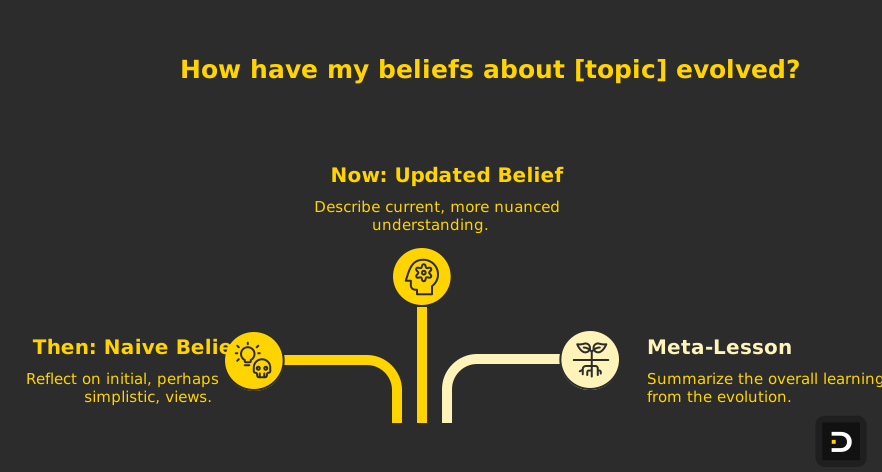
When to use it: Your views have evolved over time and you want to show the evolution.
Structure:
- Hook: "What I believed about [topic] as a first-time founder vs. now."
- "Then: [naive belief]. Now: [updated belief]." Repeat 4-6 times.
- Close: the meta-lesson about how your thinking changed.
Real example pattern: "What I thought about PMF at company #1 vs #3. Then: PMF is a moment. Now: PMF is a fight you keep winning. Then: Customer love means PMF. Now: Customer love at $200K ARR means almost nothing about $20M..."
Excellent for second-time founders. Signals scar tissue. First-timers should be careful, because the "then" needs to feel genuinely naive.
Template 11: The Strong Opinion Loosely Held
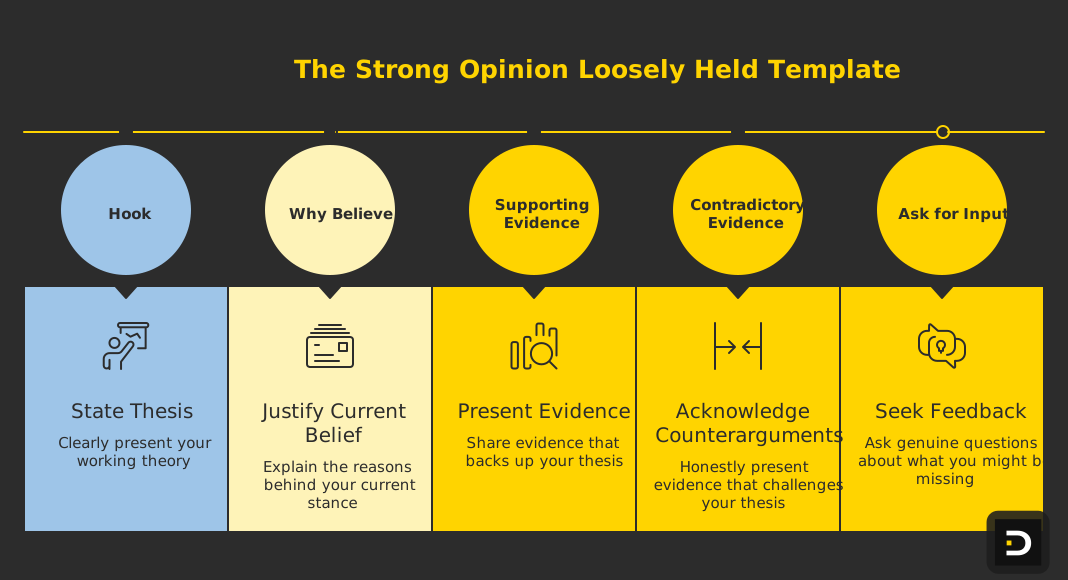
When to use it: You have a thesis that's still forming and want to refine it in public.
Structure:
- Hook: "Working theory: [thesis], stated plainly."
- Why you currently believe it.
- Evidence that supports it.
- Evidence that contradicts it (be honest).
- "What am I missing?" - genuine ask.
Real example pattern: "Working theory: SOC analyst tooling is going to consolidate into 2-3 platforms in the next 18 months. Here's why I think so, and here's the evidence I'm wrong..."
This format drives extraordinary engagement from senior people in your space. They love sharpening a thesis. The ask for pushback has to be real. If you're not open to changing your view, it reads as performative.
Template 12: The Quote-Bait Open Loop
When to use it: You want to test interest in an idea before writing the long piece, or drive comments as a precursor to a longer artifact.
Structure:
- Hook: A short, evocative statement on a single line.
- One sentence of context.
- "Writing a longer piece. Three questions I want sharper answers to:"
- 3 sharp questions.
- Close: "Drop your take, I'll cite the best ones."
Real example pattern: "'AI doesn't replace SOC analysts. It replaces the analyst's manager.' Writing a longer piece. Three questions I want sharper answers to: 1) What does the analyst's job look like 18 months from now? 2) Who buys the tooling, the analyst, the CISO, or the CFO? 3) Where does cost optimization go once headcount stops being the line item? Drop your take."
This is the highest-yield format we use for founders building authority. It drives engagement, sources external thinking, and builds anticipation for the long-form piece you publish next.
How to use this library
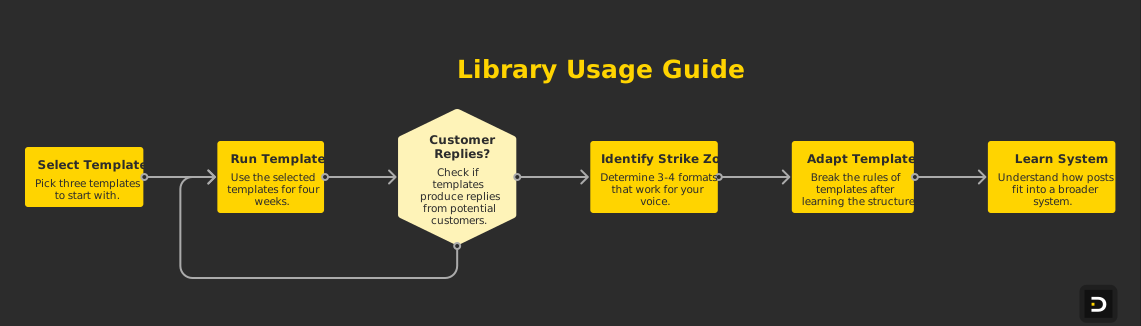
Don't try all 12 templates in your first month. Pick three. Run them for four weeks. See which formats produce replies from people who could become customers, not just likes.
The pattern at Foundera across our 50+ founder clients: each founder has a strike zone of 3-4 formats that work for their voice. The other 8 are situational. Templates are scaffolding, not handcuffs. Once you've shipped a template 5-6 times, you'll start breaking the rules. The point is to learn the structure well enough to know when to break it.
For the deeper system around how posts fit into a founder's broader brand, see our piece on building a personal brand on LinkedIn as a startup founder. For sales founders, see sales methodology for founders on LinkedIn.
What the research says about format
External research backs the underlying mechanics. According to LinkedIn's marketing research, posts with strong opening hooks see significantly higher dwell time. HubSpot's analysis shows posts that trigger comments outperform posts that only drive reactions, because LinkedIn's algorithm prioritizes "meaningful conversation" signals. Every template above is engineered to drive comments, not just impressions.
FAQ
How often should founders post on LinkedIn?
Three to five posts per week is the sweet spot. Less than three and you don't build compounding presence. More than five and quality drops unless you have a writing partner.
Should I write my own posts or hire a ghostwriter?
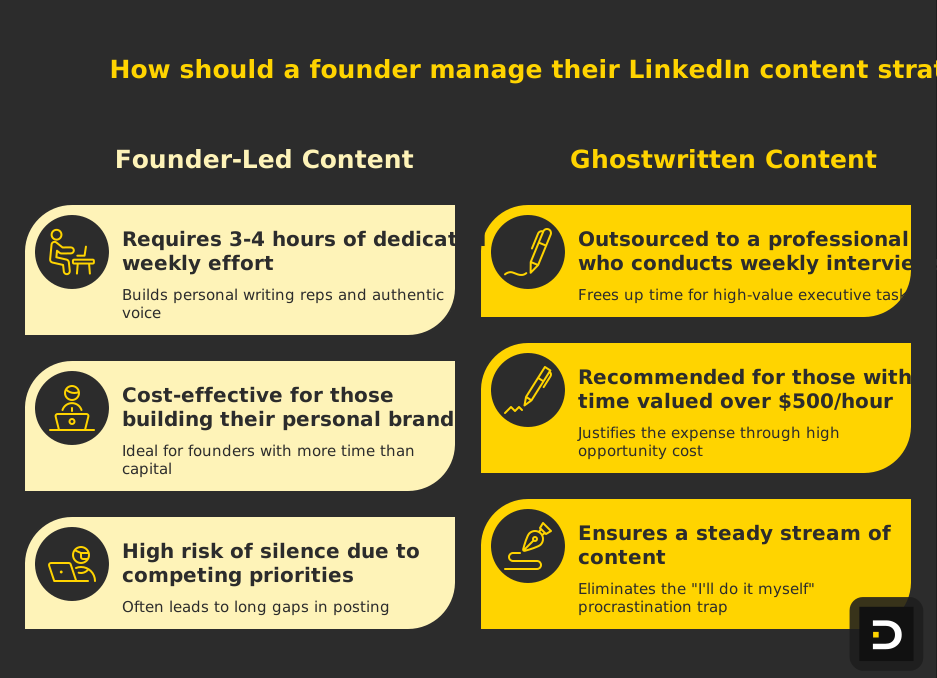
If you can carve out 3-4 hours per week and want the writing reps, write your own. If your time is worth more than $500/hour and you don't enjoy writing, get a ghostwriter who interviews you weekly. The bad option is "I'll write them myself" followed by silence for six weeks. That's where most founders end up.
How long should a LinkedIn post be?
Most of our highest-performing posts land between 150 and 350 words. Posts under 100 words rarely drive comments. Posts over 500 need to be very good to hold attention.
What's the best time to post?
For B2B founders, Tuesday through Thursday between 8 and 11 AM in your audience's timezone is the default. Test it. Some founders see better performance on Sunday evenings because there's less competition.
Should I use hashtags?
One or two relevant hashtags at most, at the end of the post. More than three signals "marketer" rather than "operator," the opposite of what most founders want.
How do I know if a post is working?
Don't measure likes. Measure two things: replies from people who fit your ICP, and DMs in the 48 hours after the post. A post with 30 likes and 4 ICP replies is more valuable than one with 300 likes and zero replies. For a deeper framework, see our guide to thought leadership content for founders.
Can I reuse the same template multiple times?
Yes. Reusing templates is the point. Your audience doesn't notice the structure, they notice the substance. We have founders who've posted 20+ Contrarian Takes. The template is invisible. The opinion underneath is what changes.
Your next move
Pick three templates. Schedule four posts per week for the next month using only those three formats. Track replies, not likes. After 30 days, you'll know which formats fit your voice and which to drop.
If you'd rather have a team handle the system, that's what we do at Foundera. We run weekly interviews with founders, draft posts in their voice, and ship 3-5 posts per week. Most clients go from posting twice a month to driving inbound pipeline within 90 days.
The bottleneck on LinkedIn isn't the algorithm, the platform, or your audience. It's the blank page. These 12 templates solve that. The rest is shipping.
The TL;DR
Quick answer
Twelve LinkedIn post templates built from ghostwriting hundreds of posts for 50+ deep-tech CEOs. Each format has a clear structure, a use case, and a real example. The contrarian take, honest tradeoff, behind-the-scenes build, pattern observation, and quote-bait open loop drive the highest reply rates from actual buyers.
Key takeaways
- The blank page is the bottleneck for founders, not ideas or audience.
- Pick three templates and run them for four weeks. Don't try all 12.
- Contrarian Take and Hot Take Roundup drive the highest reply rates.
- Measure replies from ICP, not likes. A 30-like post can beat a 300-like post.
- Most high-performing posts land between 150 and 350 words.