Most stealth startup founders treat LinkedIn like a graveyard. They stop posting. They lock down their profile. They figure they will emerge in 12 months with a polished launch and an audience will magically appear. Then launch day arrives, they post a carefully crafted announcement, and 47 people see it. Nine of those are their cofounders, lawyers, and mom.
This is the most expensive mistake stealth founders make. Going dark on LinkedIn during stealth does not protect your idea. It means you are launching to nobody. The founders who launch loud are the ones who built quietly in public for the entire stealth period, accumulating relevant followers month over month, so that on launch day they already have 8,000 people who care.
You can do this without leaking a single feature, without breaking investor confidentiality, without your competitors learning a thing they did not already know. What follows is the playbook for building founder presence during stealth, refined from how Foundera ghostwrites LinkedIn content for deep-tech founders in cyber, AI infrastructure, and security tooling.
Why stealth startup founders should still post on LinkedIn
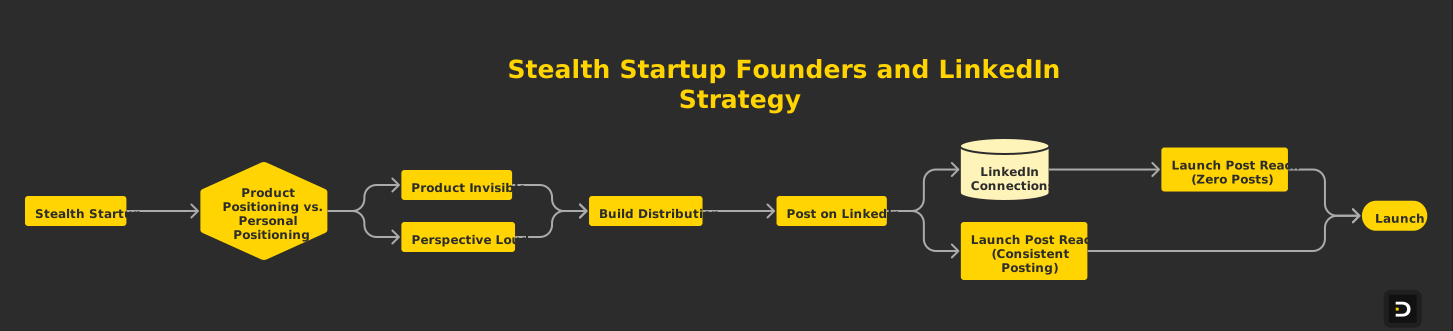
Stealth is a product positioning choice, not a personal positioning choice. Your product can be invisible while your perspective is loud. The two are separate decisions, and conflating them costs you the most valuable asset a pre-launch founder can build: distribution.
Distribution is not free at launch. If you have 800 LinkedIn connections from your last job and post zero times during stealth, your launch post will reach roughly 200 people on day one. If you post twice a week during a 12-month stealth period with genuine insight, you can compound that to 12,000 to 30,000 engaged followers who care about your problem space. That is the difference between a launch that gets buried and a launch that gets quoted.
There is also a recruiting cost. Senior engineers and go-to-market hires look at your LinkedIn before they take a call. A stealth founder with an empty feed signals one of three things: not serious about marketing, not serious about hiring, or does not have anything interesting to say. None of those help you close talent.
And there is the fundraising signal. Pre-seed and seed investors use LinkedIn as a discovery channel. They see a founder posting sharp insights, they reach out. That inbound is worth more than 200 cold emails. Going silent removes you from that game entirely.
The 4 things you CAN share while in stealth (and the 4 you CAN'T)
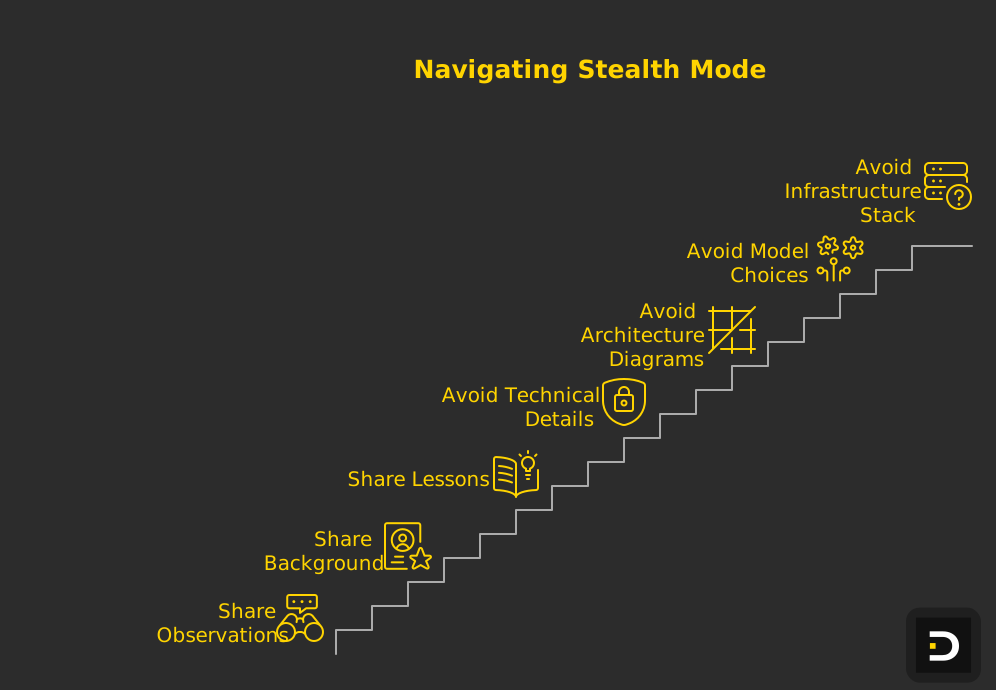
Most founders go quiet because they do not know where the line is. They assume any post is a leak. It is not. There is a clear boundary between sharing your perspective and revealing your product.
Share freelyDo not shareObservations about the problem space (industry trends, broken workflows you keep seeing)Your specific technical approach to solving the problemYour professional background and what brought you to this problemArchitecture diagrams, model choices, infrastructure stack detailsLessons from previous roles or companies (with permission where relevant)Customer names, pilot results, or named design partnersFrameworks and mental models for thinking about the industryPricing strategy, GTM motion, or category positioning before launch
The pattern: you can share how you think indefinitely. You cannot share what you have built until launch. This distinction is what allows founders to build serious audiences before their public launch.
One useful test: imagine the post being read by your closest competitor. If they could screenshot it to accelerate their roadmap, do not post it. If they would read it and think "interesting perspective, no new information," post it.
Stealth content formats library
Within the four-pillar structure, these seven specific post formats do the heavy lifting. Rotate across them so your feed feels varied without you reinventing structure each time.
A 12-month posting plan can be built almost entirely from these seven formats. The constraint is useful: it removes the "what do I post" question that kills consistency.
The 'pattern observation' format: post insights without revealing the product

The most effective stealth posting format is the pattern observation. You spot a recurring problem in your industry, name it, and explain why it matters, without mentioning your solution. Done well, the industry recognizes the pattern and waits for someone to fix it. When you launch, they understand instantly why your product exists.
The structure is simple:
Notice what is missing: your product, your company, your solution. You are doing the diagnostic work in public. The cure is private. This builds credibility because your audience is watching you understand the problem at a depth competitors clearly do not. By launch, you are positioned as the person who gets it.
For a security founder, this might be why SOC analysts keep building shadow tooling to make up for EDR gaps. For an AI infrastructure founder, why every team rebuilds the same eval harness from scratch. The pattern is the post. The product stays out of frame.
Content pillars that work in stealth (3 founder examples)
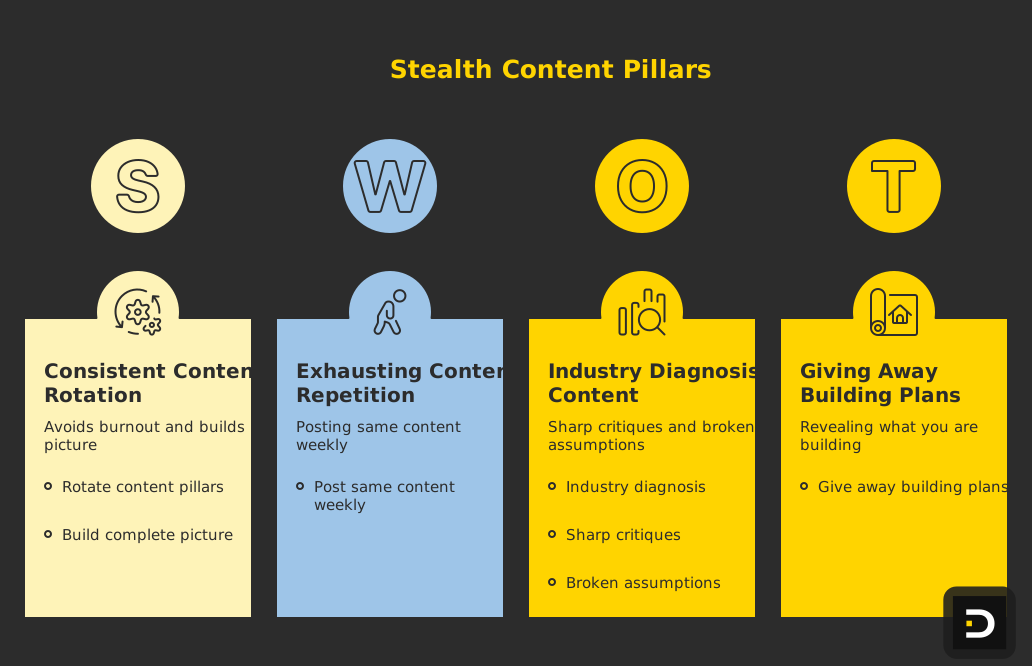
You cannot post the same kind of content every week or you will exhaust yourself. Stealth founders who post consistently rotate across three to four content pillars. Together they build a complete picture of who you are without giving away what you are building.
Pillar 1: Industry diagnosis. Pattern observations, sharp critiques of how things currently work, broken assumptions in your space. The meat of your content. About 50 percent of your output should land here. A cyber founder might write about the gap between how vendors describe detection efficacy and how it performs in production.
Pillar 2: Founder origin and perspective. Your professional story, what shaped how you see this problem, the formative moments that pointed you here. This pillar humanizes you and pre-builds the founder-market fit narrative every investor asks about. Aim for 20 to 25 percent.
Pillar 3: Frameworks and mental models. How you think about the industry. Decision trees, taxonomies, two-by-two matrices, useful metaphors. These posts get saved and shared. They make you the person whose thinking other operators borrow. Aim for 15 to 20 percent.
Pillar 4 (optional): Building in public, carefully. Lessons from building, without revealing what you are building. Hiring stories, fundraising lessons, running a small team. This pillar earns trust from other founders. Keep to 10 percent or less.
Three founder examples worth studying: a stealth security founder who posted weekly about the architectural gap between traditional CASB tools and how data moves in modern AI workflows, accumulating 11,000 followers before launch. A stealth AI infrastructure founder who posted about GPU scheduling pain and built 7,400 followers in eight months. A stealth devtools founder who wrote weekly about why developer experience metrics are mostly nonsense, hitting 19,000 followers before announcing. None revealed product details. All launched into pre-warmed audiences.
How to talk about 'what you're working on' without saying it
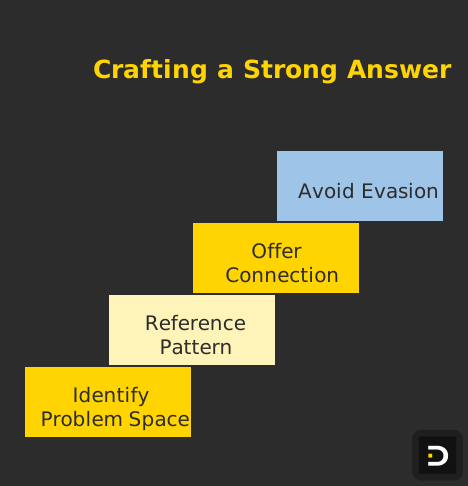
People will ask. In comments, DMs, at conferences. "What are you building?" You need a default answer that closes the conversation without sounding evasive.
The strong version: "Working on the [problem space] gap that [specific pattern you keep pointing to]. Quiet for now, but happy to talk about the broader space anytime." This works because it locates you in a problem space, references your most-shared pattern observation, and offers a genuine point of connection without leaking the product.
Avoid the weak versions. "Building something exciting in AI" tells people nothing. "Solving [enormous problem]" reads as hubris. "Cannot say yet, NDA stuff" reads as paranoid. The strong version respects your audience by giving them something real while protecting what needs to stay private.
For your LinkedIn headline during stealth: "Building in [space] | Previously [credible context] | Writing about [your pillar focus]." This frames you as a serious operator, not a stealth-mystery-tease.
Building an audience that converts at launch
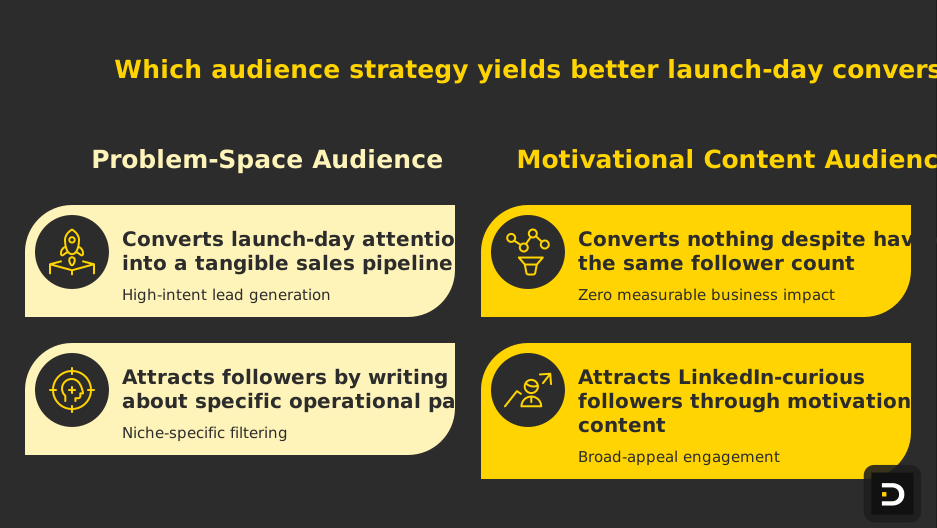
Not every follower is equal. A stealth founder with 8,000 followers from their problem space converts launch-day attention into pipeline. A stealth founder with 8,000 random LinkedIn-curious followers from motivational content converts nothing. Audience quality beats audience size, and the only way to build a high-quality audience is to post content that filters for the right people.
This is why the industry diagnosis pillar matters. When you write about a specific operational pain in your space, the people who feel that pain follow you. The people who do not scroll past. Over 12 months, you accumulate an audience dense with your future buyers, hires, and design partners.
Practical test: open your LinkedIn followers list. If your top 50 followers do not match your buyer persona, your content is filtering wrong. Adjust by going more specific, not less. Specific posts attract specific people.
The other piece of audience-building stealth founders neglect: engaging with other people's posts. Two thoughtful comments per day on posts in your problem space will compound your reach more than one weekly post of your own. Comments put you in front of audiences you did not have to build, and they signal to the algorithm that you are worth surfacing.
One more audience lever: warm-up your weakest connections. Founders typically have 800 to 2,000 LinkedIn connections accumulated across previous roles. Most are dormant. Send 10 personalized notes a week to people in your problem space who you have not spoken to in three or more years. Not pitches. Just reconnects. A meaningful percentage will start engaging with your content, which expands your reach into their networks.
If you want help executing this without spending six hours a week on it, Foundera ghostwrites LinkedIn content for deep-tech founders during stealth.
The 90-day pre-launch posting plan

If you have 90 days before launch, here is exactly how to use them. This is a tested cadence that builds momentum into launch week rather than blowing your load on day one.
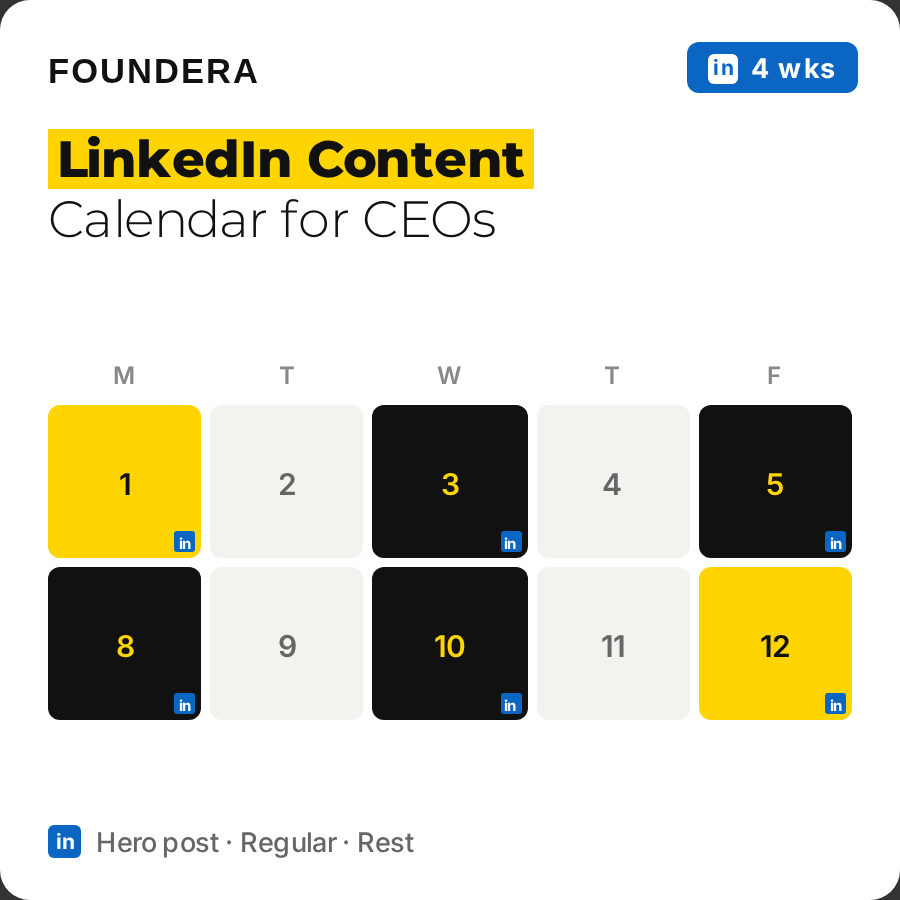
WeekPosting cadenceContent focusGoal1-22 posts/weekIndustry diagnosis (pattern observations)Establish authority signal, find your voice3-42 posts/weekIndustry diagnosis + 1 origin story postBegin humanizing the founder5-63 posts/weekAdd framework/mental model pillarIncrease save rate, signal depth7-83 posts/weekMix of pillars, start engaging on others' posts dailyExpand reach via comments9-103-4 posts/weekLean into your sharpest pattern observationBuild narrative anchor for launch113 posts/weekTease the broader problem you have been writing aboutPre-frame launch context124 posts/weekLaunch week - see belowConvert audience into pipeline
The cadence ramps deliberately. You do not start at four posts a week or you will burn out by week three. Build the habit slowly, find what works, then scale into launch week with momentum. If you can only commit to two posts a week throughout, do that. Consistency beats volume.
When to drop the stealth label (the readiness signals)
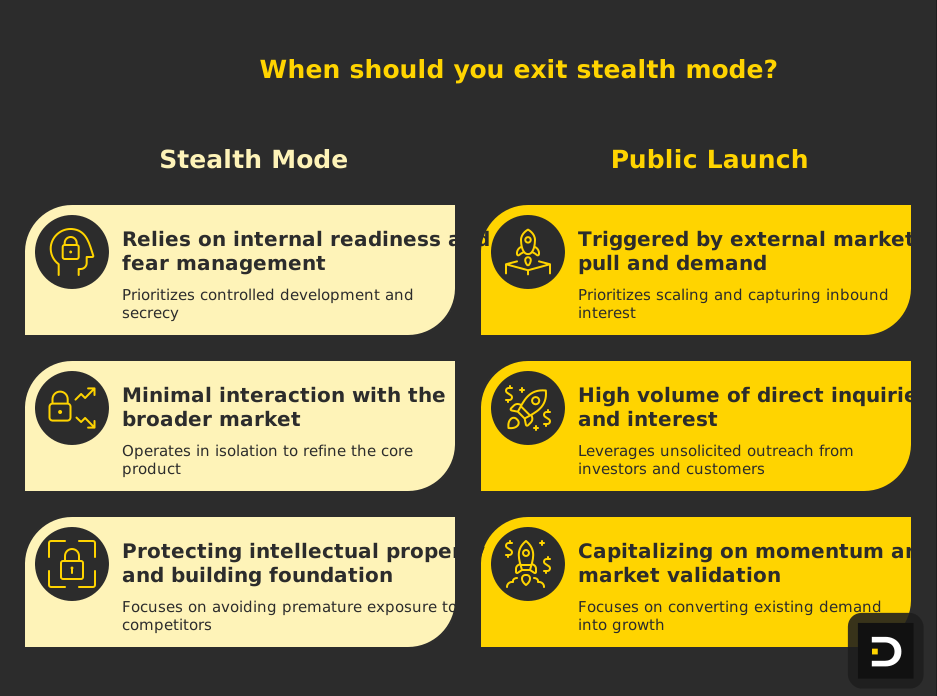
Stealth is not permanent. Most founders stay in stealth too long because launch feels scary. Watch for these readiness signals.
Signal 1: Your audience is asking direct questions in DMs. When relevant operators start guessing what you are building, your content has done its job. They are ready to receive the answer.
Signal 2: Inbound from investors, journalists, or potential customers. When people you did not pitch are reaching out, you have launch fuel.
Signal 3: Your design partners are pulling you toward launch. If two or three early customers are asking when they can talk publicly about it, lean in. Their public endorsement is more valuable than any launch post you could write.
Signal 4: Your product can survive 50 new users in a week. The unsexy infrastructure check. If launch worked beyond expectations, can you handle it?
If you have three of these four signals, drop the stealth label. Do not wait for perfect. Perfect costs you the audience momentum you built.
Launch-week content strategy that uses the runway you built
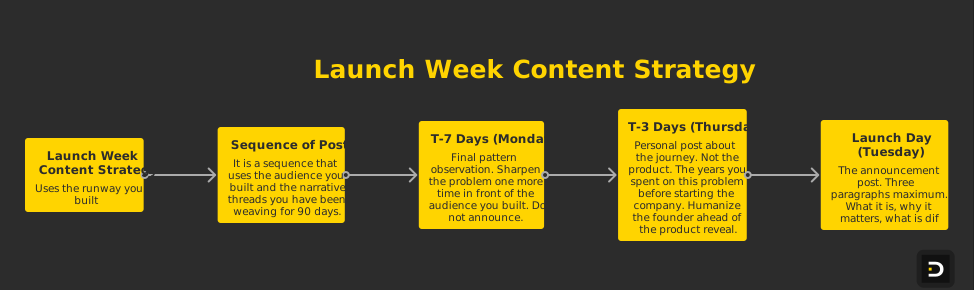
Launch week is not a single post. It is a sequence that uses the audience you built and the narrative threads you have been weaving for 90 days.
T-7 days (Monday): Final pattern observation. Sharpen the problem one more time in front of the audience you built. Do not announce.
T-3 days (Thursday): Personal post about the journey. Not the product. The years you spent on this problem before starting the company. Humanize the founder ahead of the product reveal.
Launch day (Tuesday is optimal): The announcement post. Three paragraphs maximum. What it is, why it matters, what is different. End with a clear next step.
Launch day +1 (Wednesday): Behind-the-scenes post. How you decided on the category positioning. A lesson from building. Give launch-week visitors a reason to follow you for the long haul.
Launch day +3 (Friday): First customer story. If you have a named design partner, bring them in. If not, write about a category of customer you are seeing pull.
Launch week +1: The deep technical or strategic post. The one that gives the serious leads from launch week a reason to share you internally. This is where the 90 days of pattern observations pay off.
The sequence works because it does not treat launch as a single event. It treats launch as a peak in a continuous narrative. Your audience does not feel marketed to. They feel like a story they have been following is finally hitting its inflection point.
Common mistakes stealth founders make (and the cost)

After ghostwriting for dozens of stealth founders, the same five mistakes show up. Each has a quantifiable cost.
Mistake 1: Going dark for 12 months. Cost: roughly 4,000 to 12,000 followers you should have had at launch. This compounds because each missing follower also means missing reach for every post you eventually publish.
Mistake 2: Posting only when you have an announcement. Cost: every announcement post is a launch into a cold audience. Your engagement rate stays at 0.3 percent because LinkedIn's algorithm does not know your account is alive.
Mistake 3: Hiding what you previously did. Cost: your past credibility was the launchpad. Founders who scrub previous roles out of paranoia lose the strongest signal they have.
Mistake 4: Cryptic "something big is coming" posts. Cost: credibility. These read as desperate. Nobody is excited for a vague tease from someone they do not yet trust.
Mistake 5: Treating LinkedIn like a personal essay platform. Cost: audience-buyer mismatch. If your content is all reflections on leadership, you build a following of LinkedIn lurkers rather than your actual buyer.
The pattern: founders default to either hiding or oversharing. The sweet spot, sharp industry insight without product detail, requires intentionality.
Your next move
If you are in stealth, your next move is not to post tomorrow. Decide your three content pillars, write 10 pattern observations in a doc, and commit to a posting cadence you can sustain. Two posts a week is enough if you do it for 12 months.
The founders who launch into real audiences are not lucky. They started 12 months earlier. They posted sharp insights about their problem space when nobody was looking. On launch day they were not introducing themselves to strangers. They were answering a question their audience had been waiting to hear.
If you want to compound founder presence during stealth without it eating your week, this is what Foundera does. We ghostwrite LinkedIn content for deep-tech founders in cyber, AI, and infrastructure during stealth and through launch.
For related strategy, see our pieces on the executive thought leadership framework, thought leadership content for founders, and personal leadership brand statement examples. For the strategic frame, see founder-led marketing on LinkedIn and our breakdown of the best personal branding tool for founders.
For external perspective: the Y Combinator library on stealth-mode tradeoffs, First Round Review on when stealth helps and hurts, and LinkedIn Marketing Solutions on what content performs.
Frequently Asked Questions
Q: Will posting on LinkedIn during stealth alert my competitors?
Almost never. Your competitors already know you exist if you have raised, hired, or filed paperwork. They do not know your specific product, and that is what the framework above protects. Pattern observations about your industry give competitors nothing they could not get from any analyst report.
Q: How do I handle investor confidentiality clauses?
Investor NDAs typically restrict disclosing financial terms, business model specifics, and named investors, not your personal posting about your industry. Read your agreements, ask counsel if uncertain, but most pre-seed and seed agreements give founders wide latitude to build personal brand.
Q: What if I am a technical founder and writing feels unnatural?
Two options. Treat posting as a thinking exercise rather than a writing exercise. Voice memos transcribed and lightly edited work fine. Or work with a ghostwriter who can interview you weekly and turn your thinking into posts.
Q: How long does it take to build a meaningful audience during stealth?
If you post twice a week with genuine insight in a defined problem space, expect 1,000 to 3,000 relevant followers in the first six months and 5,000 to 12,000 by month 12. Months 1 through 4 feel slow. Months 5 through 12 accelerate sharply as your content starts to surface in second-degree feeds.
Q: Should I post on Twitter or LinkedIn or both?
For B2B deep-tech founders, LinkedIn outperforms Twitter on every metric that matters for launch: buyer-density, recruiter-density, investor-density, content longevity. Default to LinkedIn first. Doing both poorly is worse than doing one well.
Q: What if I do not have a strong opinion about my industry yet?
You probably do, you just have not articulated it. Write down every time you have said "the problem with [X] is..." or "everyone thinks [Y] but actually..." in the last six months. Those sentences are the seeds of pattern observations.
Q: How do I measure if this is working before launch?
Three metrics. First, the quality of your follower list - check monthly that your top 100 followers match your buyer persona. Second, inbound conversations that mention your content. Third, engagement on posts where you do not know the engagers personally. That third metric signals your reach is expanding beyond your network.
The TL;DR
Quick answer
Going dark on LinkedIn during stealth doesn't protect your idea, it means launching to nobody. Share how you think, not what you've built. The pattern observation format lets you do diagnostic work in public while the cure stays private. A 12-month stealth period can compound 800 connections into 8,000-30,000 engaged followers ready for launch day.
Key takeaways
- Stealth is a product positioning choice, not a personal positioning choice.
- Share freely: industry observations, background, frameworks. Never: technical approach, customer names, GTM motion.
- Pattern observation format does the diagnostic work in public, cure stays private.
- Four pillars: industry diagnosis (50%), origin (20-25%), frameworks (15-20%), building (under 10%).
- Going dark for 12 months costs 4,000-12,000 followers you should have had at launch.