The Series A Founder LinkedIn Playbook: Seed to Signal in 616 Days
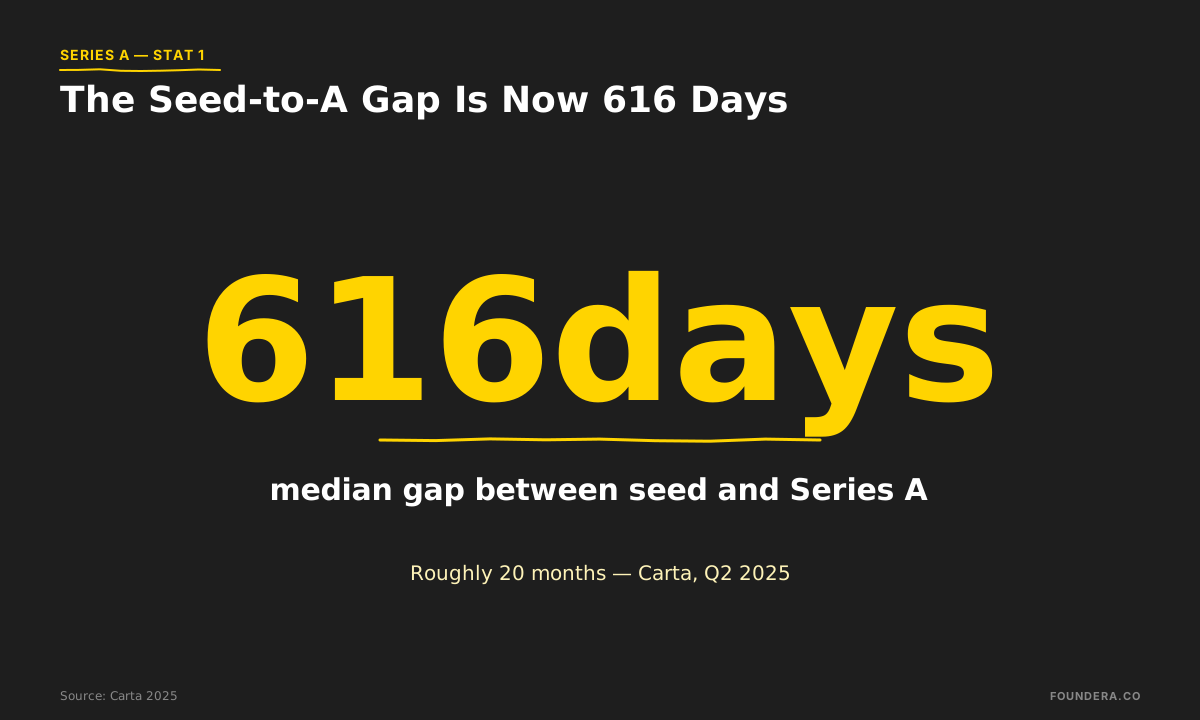
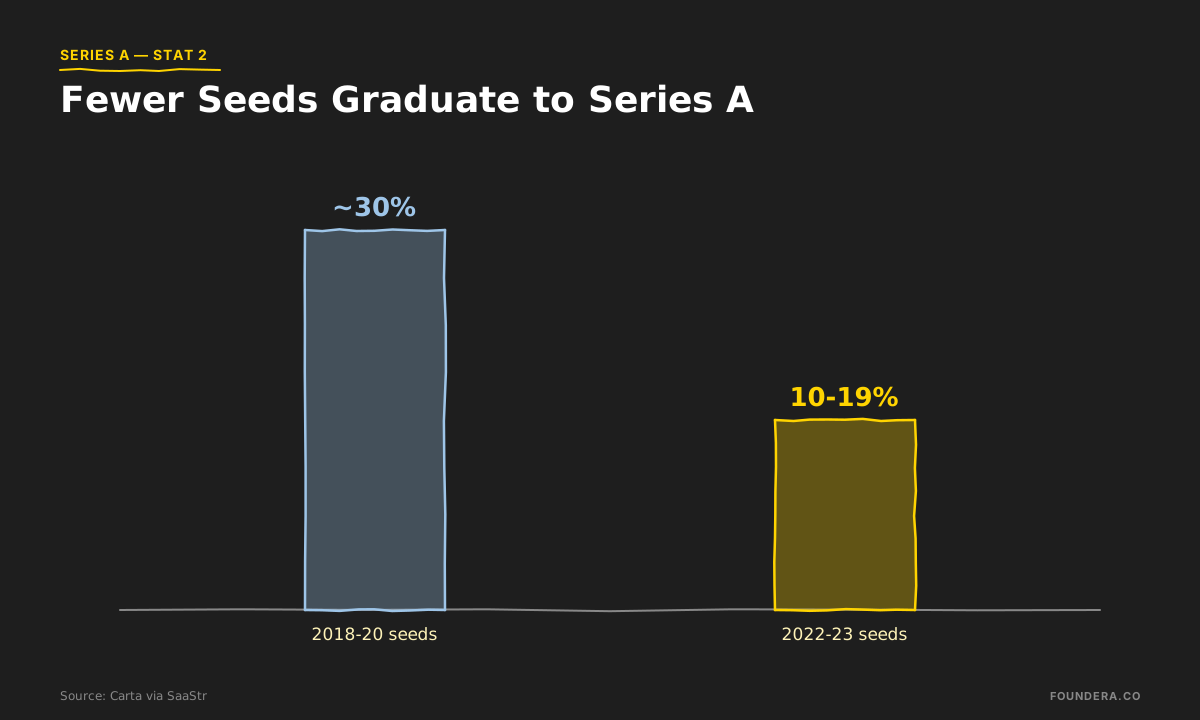
The gap between seed and Series A has stretched to a median of 616 days — more than 20 months. And fewer companies survive the crossing: only around 15% of seed-funded startups reach Series A within 24 months, roughly half the graduation rate of the 2018-2020 cohorts.
Translation: the Series A bar got higher, and the runway to clear it got longer. Every month of that 616-day gap, investors are forming an opinion about your company — mostly without talking to you.
LinkedIn is where that opinion gets formed. At seed, your LinkedIn job was to prove you exist. At Series A, the job changes completely. This playbook covers what it changes into.
Table of Contents
- Why Series A Is a Different LinkedIn Game
- Seed vs Series A: How the LinkedIn Job Changes
- The Metrics Narrative: Traction in Public
- Category Leadership: Own the Problem
- The Hiring Signal
- Investor-Update Cadence
- The 616-Day Content Plan
- Frequently Asked Questions
- TL;DR
Why Series A Is a Different LinkedIn Game
Series A diligence is heavier, slower, and more team-focused than seed — and much of it happens before the first meeting. The Carta data puts the median seed-to-A interval at 616 days; graduation rates for recent cohorts run 10-19% within 24 months, versus ~30% for 2018-2020 seeds.
Two consequences follow.
First, scarcity flips the dynamic. When only one in six or seven seed companies graduates on time, Series A investors aren't screening for potential — they're screening for evidence. Your public narrative either carries that evidence or it doesn't.
Second, the long gap is an asset if you use it. 616 days is roughly 88 weeks. A founder posting even once a week builds an 80-post public record of momentum by the time the raise starts. That record is exactly what an investor finds when your name comes up — and they will look, as we detail in what investors look for on a founder's LinkedIn.
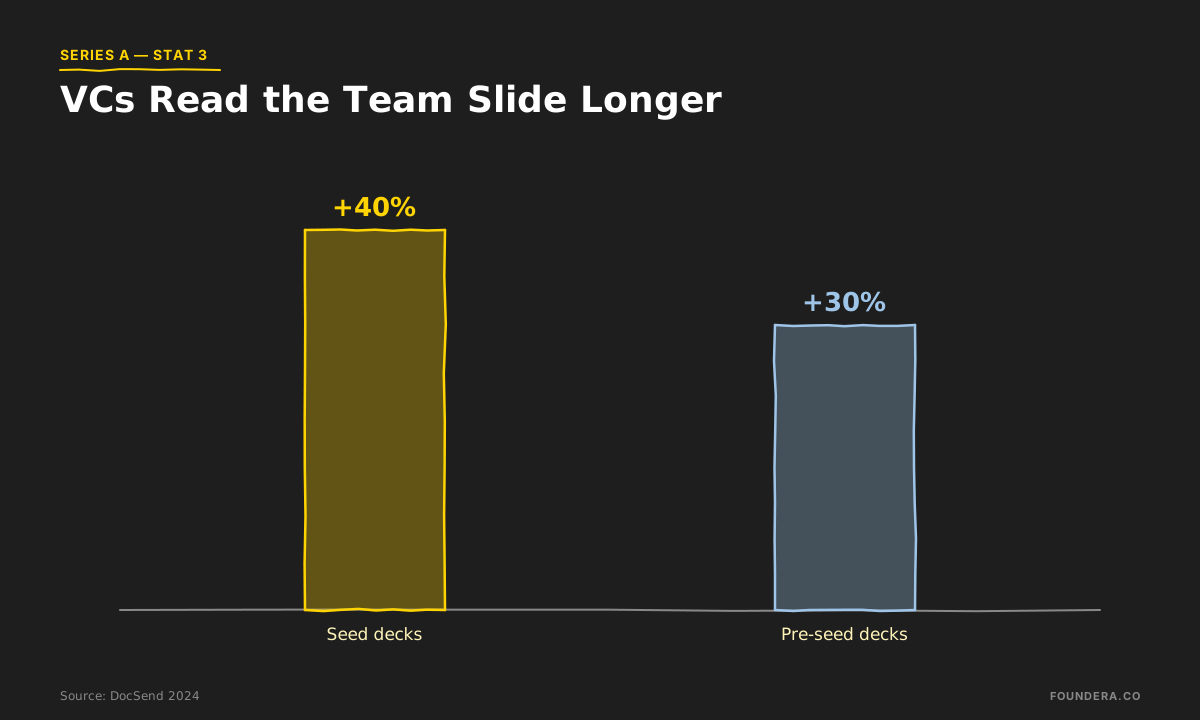
And where they look is shifting toward you specifically. DocSend's 2024 research found investors spent 40% more time on seed-stage Team slides year over year (and 30% more at pre-seed). Diligence is moving toward the people. Your LinkedIn presence is the public version of your Team slide.
Seed vs Series A: How the LinkedIn Job Changes
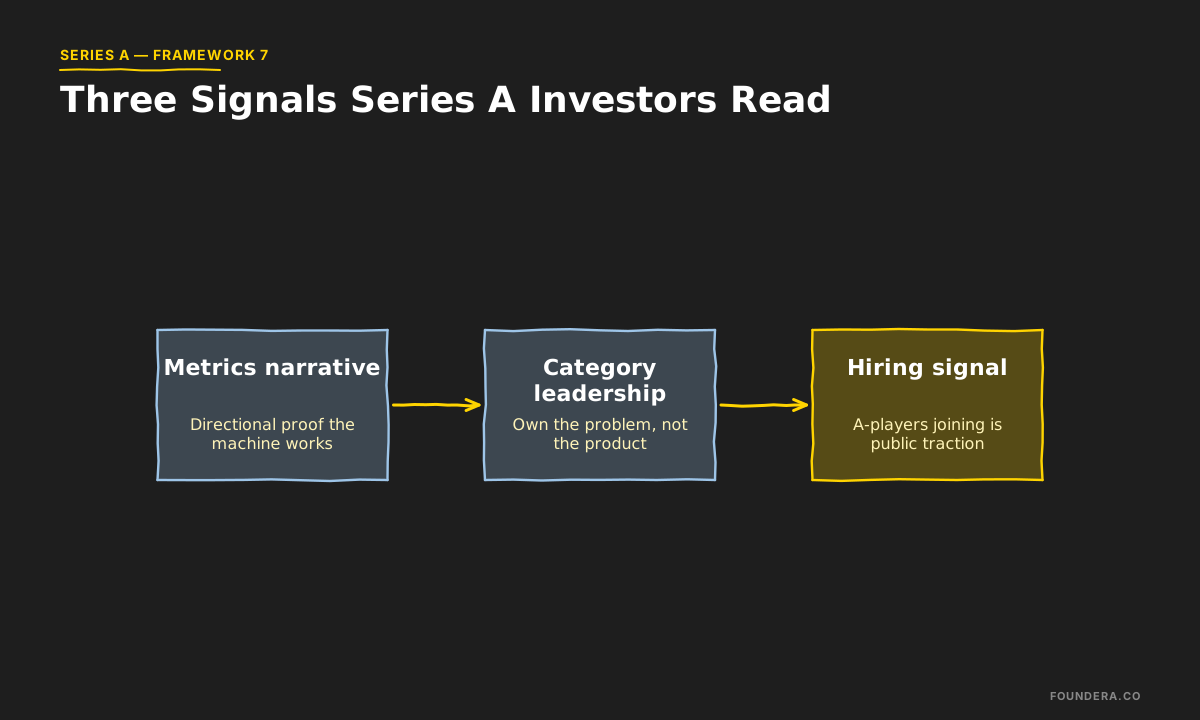
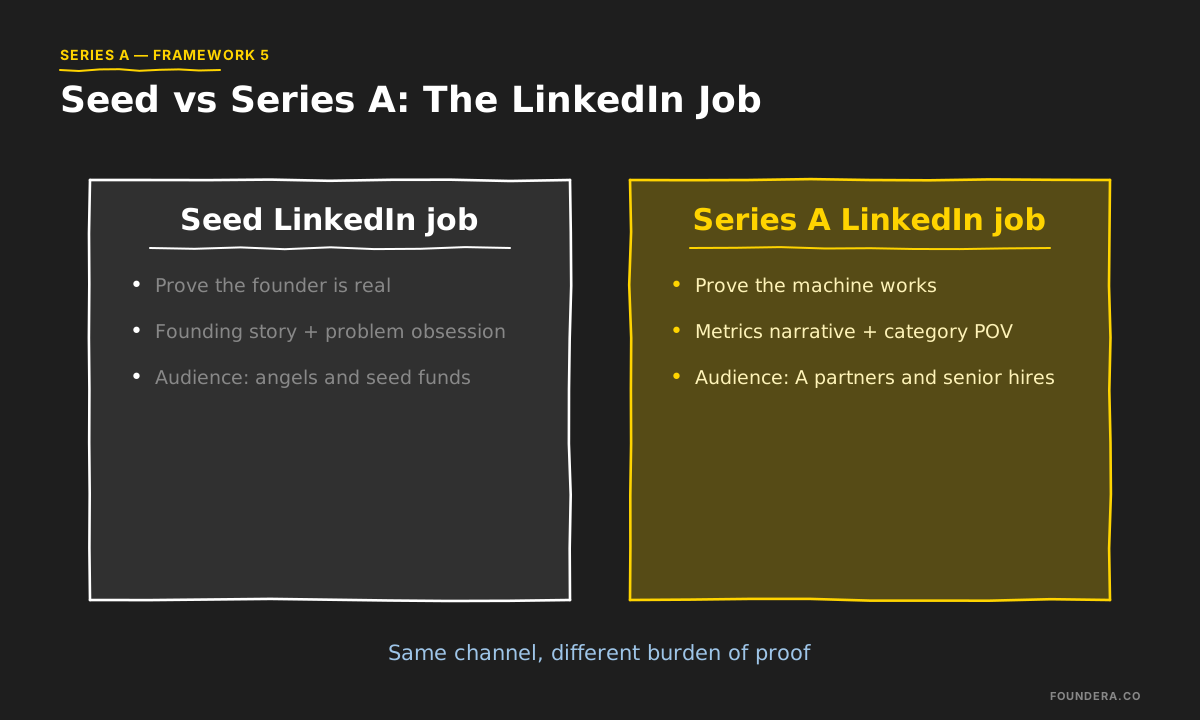
At seed, LinkedIn proves you exist and that you fit the problem. At Series A, LinkedIn has three new jobs: prove the machine works (metrics narrative), prove you define the space (category leadership), and prove A-players want in (hiring signal). Same channel, different burden of proof.
| Dimension | Seed-stage LinkedIn | Series A LinkedIn |
|---|---|---|
| Core question | "Is this founder real?" | "Is this machine working?" |
| Content spine | Founding story, problem obsession | Metrics narrative, category POV |
| Proof type | Insight and energy | Evidence and trajectory |
| Audience | Angels, pre-seed/seed funds | Series A partners, senior hires |
| Team story | "Why I started this" | "Why the best people are joining" |
| Frequency bar | Show up at all | Show up consistently |
The mistake most seed founders make: they keep running the seed playbook — inspiration posts, founding-story reruns, launch hype — deep into the Series A window. It's not that those posts are bad. It's that they answer a question investors have stopped asking.
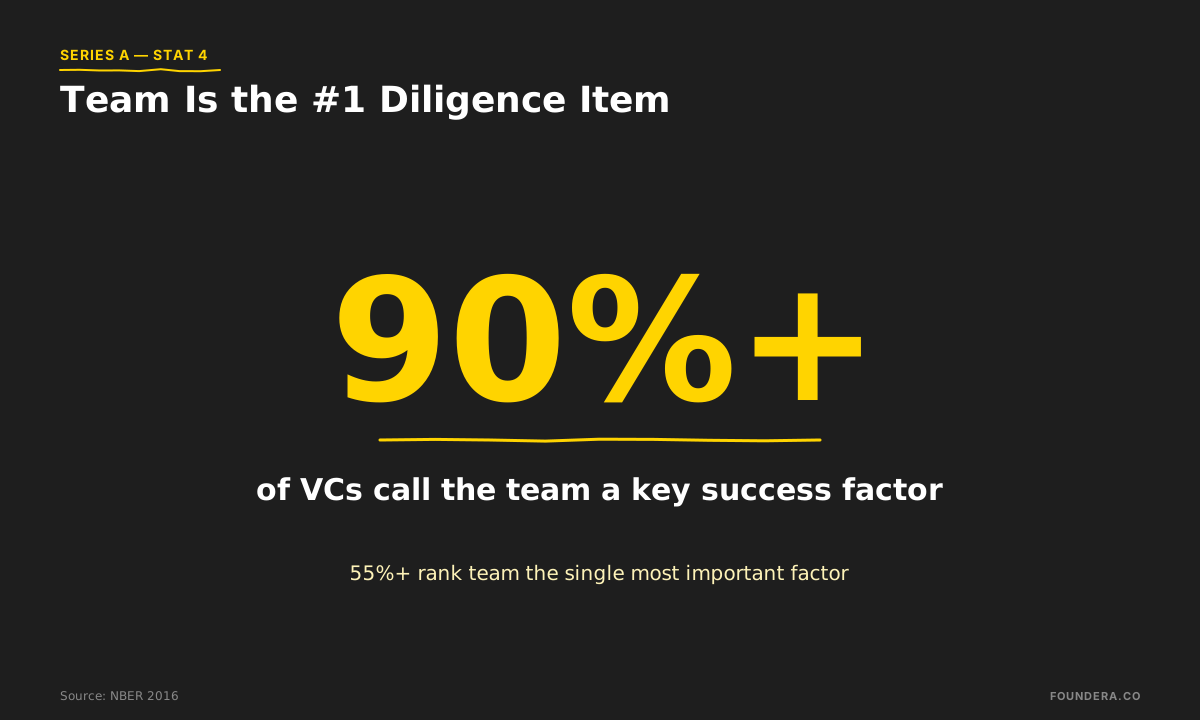
The NBER survey of 885 VCs found more than 90% consider the management team an important factor in outcomes, and over 55% rank it as the most important factor. At Series A, your LinkedIn isn't content. It's the team diligence they run before diligence.
The Metrics Narrative: Traction in Public
The metrics narrative is a public, running story of directional progress — told in trends and milestones, not raw dashboards. You don't need to publish your ARR. You need to make it impossible to follow you for three months and not conclude the machine is working.
What belongs in public, and what doesn't — our recommended split:
| Share publicly | Keep for the data room |
|---|---|
| Directional growth ("3x'd our pilot cohort") | Exact ARR and MRR figures |
| Milestones (customer count, launches, expansions) | Full unit economics |
| Named customer wins (with permission) | Pipeline details |
| Lessons from what didn't work | Churn specifics |
| Category and market data | Board-level strategy |
The narrative compounds when it's honest. A post about the experiment that failed — and what it taught you about the metric that now drives the business — signals operating maturity better than any victory lap. Investors read dozens of highlight reels a week. They remember the founder who showed their work.
Structure matters too: a metric without a story is a brag, and a story without a metric is a blog. The unit that works is metric + why it moved + what's next. We go deep on which numbers investors actually notice in startup traction metrics investors watch on LinkedIn.
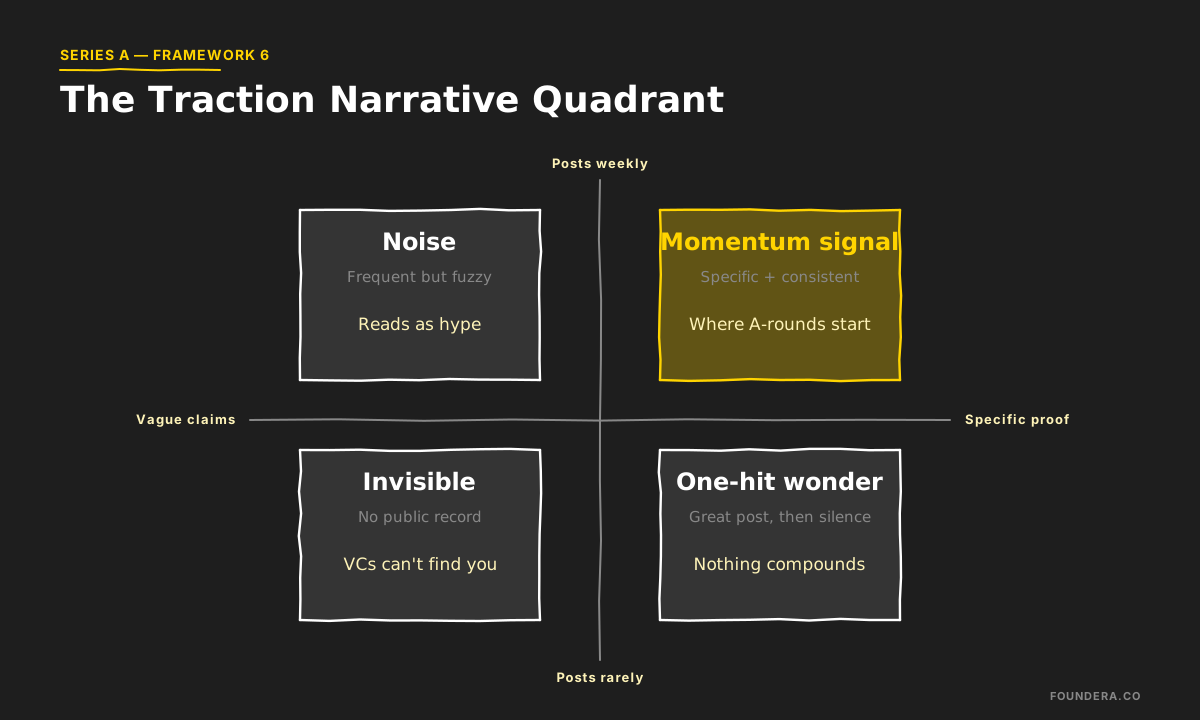
One warning, grounded in the anti-hype shift: with graduation rates at ~15%, investors have gotten very good at discounting vague momentum language. "Growing fast" is noise. "Doubled activation after killing our onboarding flow" is signal.
Category Leadership: Own the Problem
Category leadership on LinkedIn means becoming the person the ecosystem associates with the problem — not the loudest promoter of your product. At Series A, investors are underwriting a category bet. The founder who visibly frames how the category should be understood is offering evidence the company can lead it.
Practically, category leadership content has three layers:
- The thesis. Your contrarian, defensible view of where the market is going and why the incumbent approach fails. This is one flagship idea you return to relentlessly, not a new hot take each week.
- The map. Posts that organize the space for everyone else — how to evaluate solutions, what the real trade-offs are, where the market's mental model is wrong. Founders who write the map get treated as the territory's authority.
- The receipts. Your traction narrative (above) recast as proof of the thesis: "we bet on X eighteen months ago; here's what the numbers say now."
This is the stage where founder brand and company value stop being separate things. A Series A partner defending your deal in a Monday meeting is retelling your narrative — you want them retelling a sharp one. The full method for building this kind of authority is in our executive thought leadership framework.
A note on tone: category leadership is earned by specificity, not volume. One genuinely useful market map outworks ten "the future of X is here" posts.
The Hiring Signal
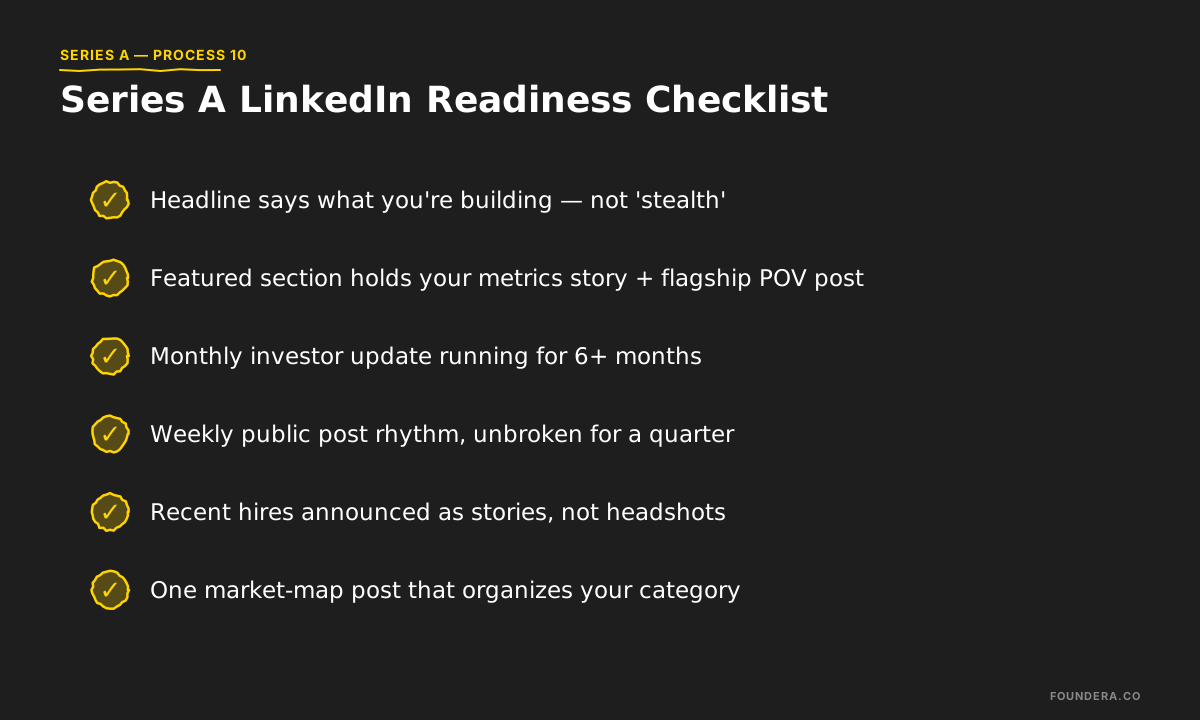
The hiring signal is the most underrated Series A asset on LinkedIn: public evidence that excellent people are choosing your company. Investors read senior hires as third-party diligence — every A-player who joined took a personal look at your trajectory and bet their career on it.
Remember where investor attention is going: 40% more time on Team slides year over year. The hiring signal is the Team slide, updating in real time.
How to build it without turning your feed into an HR bulletin:
- Announce hires as stories, not headshots. Why this person, why this role, why now. "Our new head of engineering ran infra for X — here's the problem she couldn't resist" beats "Welcome aboard!"
- Let the team post, and amplify them. A feed where employees visibly think in public says more about culture than any careers-page value list.
- Post the why behind open roles. "We're opening our first enterprise AE role — here's what changed in our pipeline to justify it" is simultaneously a hiring post and a traction post.
- Show retention, not just recruitment. Work anniversaries with a line about what that person built land harder than launch-day welcomes.
The compounding effect: hiring posts attract candidates, candidate quality impresses investors, and investor interest attracts candidates. It's the one flywheel on this list that recruits and raises at the same time.
Investor-Update Cadence
The cadence that works is a layered rhythm: weekly public presence, monthly private investor updates, quarterly public recaps. Each layer feeds the next — and by the time you raise, both your existing investors and your future ones have months of compounding context.
| Layer | Frequency | Channel | Content |
|---|---|---|---|
| Public presence | Weekly | LinkedIn post | POV, progress, lessons — the narrative spine |
| Investor update | Monthly | Email to current investors | Metrics, asks, wins, misses |
| Public recap | Quarterly | LinkedIn post | Zoomed-out milestone story |
| Milestone posts | As earned | LinkedIn post | Launches, hires, customer wins |

Why the private monthly update matters for the public game: your seed investors are your highest-probability bridge to Series A leads — the NBER data shows 20% of VC deals come referred by other investors. A seed investor forwarding your update to a Series A partner is the single warmest intro that exists. Updates keep that channel loaded; the public quarterly recap gives the partner something to verify when they go looking.
Consistency is the whole trick. A monthly update that arrives every month for eighteen months says "this founder runs a tight ship" louder than any individual metric in it. Skipped months say something too — the wrong something. And when the round closes, the announcement itself is a craft of its own — we cover it in how to write a LinkedIn funding announcement.
The 616-Day Content Plan
Work backwards from the raise. If the median seed-to-A gap is 616 days, you have roughly 20 months to build the public record that makes the raise easier — and the plan splits cleanly into four phases.
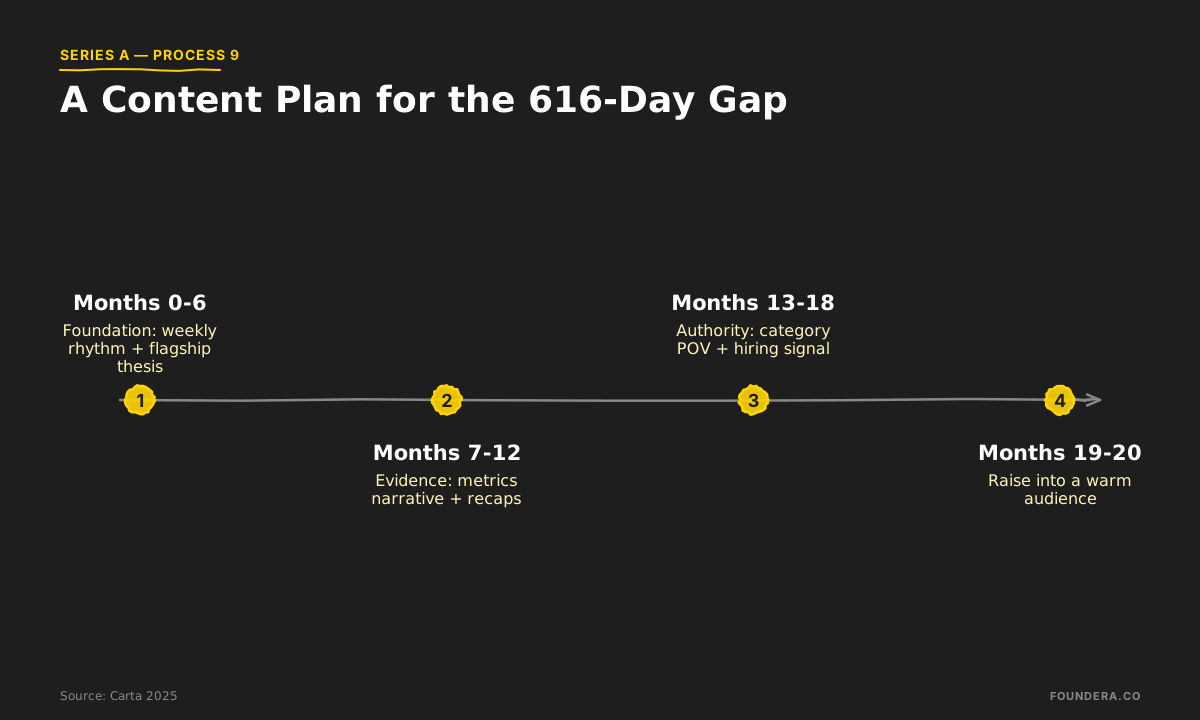
Months 0-6 — Foundation. Announce the seed properly, then get boring in the best way: establish the weekly posting rhythm, start the monthly investor update, define the flagship thesis you'll own. The goal is habit, not virality. (If your visibility is starting from zero, begin with LinkedIn visibility before fundraising.)
Months 7-12 — Evidence. Shift the content mix toward the metrics narrative. First quarterly recap posts. First named customer stories. The thesis starts collecting receipts.
Months 13-18 — Authority. Category leadership content peaks: the market map, the contrarian thesis with eighteen months of proof, conference talks clipped into posts. Hiring signal ramps as the team grows. This is when Series A partners should start appearing in your engagement.
Months 19-20 — The raise. By now the raise is a warm-audience event, not a cold campaign. Your outreach list overlaps heavily with people already consuming your narrative. The public record does the pre-diligence; you run the process — the tactical layer is in how to use LinkedIn for fundraising.
Founders who start this plan in month 15 can't compress it. The record is the asset, and records take time. That's the real reason to start now, regardless of where you are in the gap.
Frequently Asked Questions
How should a founder's LinkedIn change after raising a seed round?
Shift the burden of proof. Pre-seed and seed content proves the founder is real: founding story, problem obsession, early insight. Post-seed content must prove the machine works: directional metrics, milestone stories, category point of view, and visible team growth. Keep the founder voice — change what it's evidencing. The audience also changes: you're now writing for Series A partners and senior candidates, not just angels.
Should I share revenue numbers on LinkedIn before Series A?
Share direction, not dollars. Public posts should carry trends and milestones — "3x'd pilot cohort," "crossed 50 customers" — while exact ARR, unit economics, and churn stay in the data room and your monthly investor updates. Directional storytelling gives investors evidence without giving competitors a dashboard. The exception: if radical transparency is your brand strategy, commit fully — half-transparency reads worst of all.
How long before a Series A should I start building LinkedIn presence?
From the day your seed closes. The median seed-to-Series A gap is 616 days, and the public record you build across it — roughly 80 weekly posts — is what Series A partners find when they look you up. A presence started three months before the raise reads as fundraising theater; one started twenty months before reads as evidence.
Do Series A investors actually look at a founder's LinkedIn?
Assume yes, and assume it's weighted. More than 90% of VCs call the team an important factor in outcomes, and over 55% rank it the single most important, per the NBER survey of 885 VCs. DocSend's 2024 research adds that investors spent 40% more time on Team slides year over year. Your LinkedIn is the always-on version of that slide — it gets read before you know the diligence started.
What's the right investor update cadence between seed and Series A?
Monthly, without exception — plus a weekly public LinkedIn rhythm and a quarterly public recap. Monthly private updates keep your seed investors informed and forwarding-ready; 20% of VC deals come referred by other investors, and your seed investors are the likeliest source of that referral. The consistency itself is signal: eighteen unbroken monthly updates demonstrate operating discipline no single metric can.
What should I post if my metrics aren't impressive yet?
Post the thinking, not the bragging. Lessons from failed experiments, your category thesis, market maps, honest build-in-public updates, and the why behind team moves all build authority without inflated numbers. Vague momentum language ("growing fast!") is the only real mistake — investors discount it instantly. Specific honesty about a hard problem consistently outperforms fuzzy hype, and it compounds into exactly the operating-maturity signal Series A partners screen for.
TL;DR
- The seed-to-Series A gap is a median 616 days, and only ~15% graduate within 24 months — the bar is higher and the runway longer.
- The LinkedIn job changes at Series A: from "is this founder real?" to "is this machine working?" Three signals carry it — metrics narrative, category leadership, hiring signal.
- Diligence is shifting to people: investors spent 40% more time on Team slides in 2024, and 90%+ of VCs call team a key factor. Your LinkedIn is the public Team slide.
- Tell traction in trends and milestones, not dashboards: metric + why it moved + what's next. Keep exact figures for the data room.
- Run the layered cadence: weekly public post, monthly investor update, quarterly public recap. Investor referrals drive 20% of deals — updates keep that bridge loaded.
- Use the whole 616 days: foundation (0-6 mo), evidence (7-12), authority (13-18), raise (19-20). The record is the asset.
- Want this narrative engine built and run for you while you build the company? That's Foundera. Let's talk.
Related Reading
- What Investors Look For on a Founder's LinkedIn — the pre-diligence checklist, from the investor's side of the table
- Startup Traction Metrics Investors Watch on LinkedIn — which numbers to narrate and how
- LinkedIn Funding Announcement Posts for Founders — closing the loop when the round lands
- Executive Thought Leadership Framework — the category-authority system in full