
Most personal-brand-from-zero advice gives vague platitudes. "Be authentic." "Share your journey." "Post consistently." That's not a plan. That's a fortune cookie. If you're a technical founder staring at an empty LinkedIn profile wondering how to go from invisible to recognized in your category, you need a timeline with milestones, not a vibe. Here's the month-by-month roadmap that has taken 50+ deep-tech CEOs from zero to category authority inside 12 months.
This roadmap assumes you're a Series A through Series C deep-tech founder selling to enterprise buyers. The frameworks transfer to other categories, but the cadence here is tuned for B2B founders selling six and seven-figure deals where buyer trust is the bottleneck.
What "personal brand" really means for a tech founder (not what most articles say)
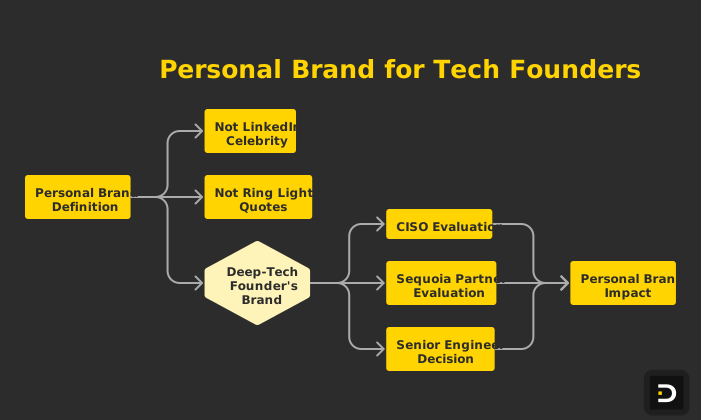
Personal brand creation isn't about becoming a LinkedIn celebrity. It isn't about ring lights or motivational quotes overlaid on sunset photos. For a deep-tech founder, personal brand is the compressed answer to the question "what does this person know that nobody else does, and why should I trust them on it?"
When a CISO at a Fortune 500 evaluates your category, they Google your name. When a Sequoia partner gets your warm intro deck, they check your LinkedIn. When a senior engineer is deciding whether to leave Stripe for your seed-stage company, they read your posts. Your personal brand is the answer to a specific question the other person already has.
This is closer to positioning than branding. You're building a reputation that does work when you're not in the room. Every enterprise deal, every hire, every fundraising round gets shorter when the person on the other side already knows what you stand for. A founder with 4,000 followers who are category-relevant buyers has built more brand equity than one with 40,000 followers cheering each other on.
The compounding math: why year 2 dwarfs year 1
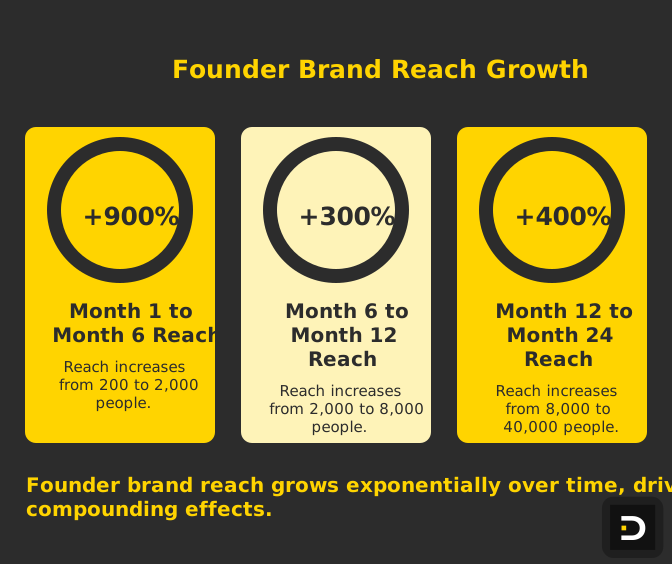
Founder brands compound non-linearly. In month 1, a post might reach 200 people, half of whom are friends. In month 6, the same post reaches 2,000. In month 12, 8,000. In month 24, 40,000, with the composition shifted to buyers, partners, journalists, and investors you've never met.
The mechanism: every post that performs exposes you to new readers. A fraction follow. A smaller fraction engage with future posts, signaling to the algorithm that those readers find you valuable, which expands reach to their networks. The flywheel turns slowly for six months and then accelerates.
The work in months 1 through 6 will feel disproportionate to visible results. You'll write 30 posts and feel like nothing is happening. You're building substrate. It shows up in month 9 when a post you didn't think was special gets 500,000 impressions and a Series B investor slides into your DMs. Founders who quit before month 9 never see this. The asymmetry of year 2 over year 1 is why a 12-month roadmap exists.
Pre-month-zero: the 4 inputs you need before posting
Before you write a single post, you need four inputs. Skipping this prep is the most common reason founder brands stall in month 3.
Input 1: A category claim. One sentence naming the specific corner of the world you intend to be known for. Not "AI security" but "preventing AI agents from leaking customer data in regulated enterprises." The narrower, the better.
Input 2: A point of view. A non-obvious belief about your category that some smart people will disagree with. If everyone agrees with your take, it isn't a point of view, it's a description.
Input 3: A war chest of stories. Twenty to thirty specific moments from your career, founding journey, or customer interactions that you can pull from. Stories are the load-bearing material of founder content. Without a stockpile, you'll run out by month 2.
Input 4: A voice document. A short written record of how you actually sound. Phrases you use. Phrases you'd never use. Sentence rhythm. If you don't write this down, your posts will drift into LinkedIn-default voice within three weeks. For a deeper breakdown, see our framework on executive thought leadership.
These inputs take a weekend. They prevent the most expensive mistake: building an audience for the wrong version of yourself and having to rebuild.
Month 1: Voice and pillars
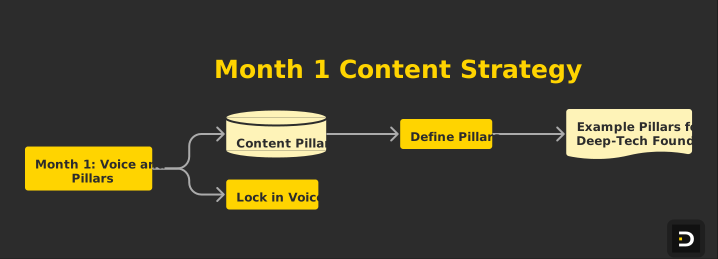
Month 1 is not about going viral. It's about establishing the four to six content pillars you'll rotate through for the rest of the year and locking in a voice that sounds like you on your sharpest day.
A content pillar is a recurring theme you have something specific and credible to say about. For a deep-tech founder, typical pillars: a technical contrarian take in your category, founder lessons from your specific stage, a recurring customer-pain pattern you see, a critique of how your category is misunderstood, behind-the-scenes on how you build, and an industry-trend interpretation tied to your worldview.
Pick four you can sustain for 12 months. Post two to three times per week. Aim for 8 to 12 posts total in month 1. The goal isn't engagement. It's calibration. Track three numbers: average impressions per post, engagement rate, and number of comments from people who are not your friends. Comments from strangers in month 1 are early evidence that you've hit something real.
Month 2: First 20 posts
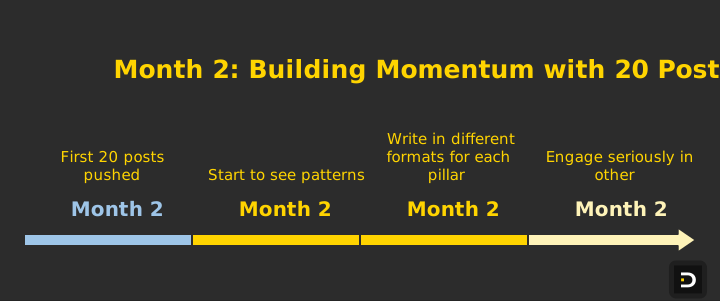
Month 2 is when you push to 20 cumulative posts and start to see patterns. The mistake most founders make is hedging. One post doesn't perform, they conclude that pillar doesn't work. Twenty posts isn't enough data. Variance in early LinkedIn reach is enormous.
What to do instead: write in different formats for each pillar. A pillar isn't a single template. It's a topic area you address through stories, frameworks, hot takes, lists, and case studies. By writing four to five posts per pillar across formats, you see which combinations land.
This is also the month to engage seriously in other people's comments. Not friends. Real category figures: customers, analysts, journalists, founders in adjacent spaces. Twenty thoughtful comments per week builds more category awareness than five extra posts of your own.
Month 3: First inbound signal
Month 3 is when the first inbound signal usually arrives. Note "signal" rather than "lead." A customer complimenting a post. A journalist asking if you'd be willing to be quoted. A potential hire mentioning your content in their cover letter. These are early indicators your brand is starting to register outside your immediate network. Most founders dismiss them as flukes. They aren't.
Follow up with real conversations, not conversion attempts. A founder I worked with got a DM in month 3 from a CISO at a healthcare company saying "your post on consent boundaries for AI agents was the clearest explanation I've read." Instead of pitching, he asked three questions about how her team thinks about the problem. Six months later, she introduced him to a counterpart at a much larger health system, who became a six-figure customer.
Track these signals in a log. Note source, topic, and your response. By month 6, the log tells you which pillars generate real business outcomes versus impressions.
Months 4-6: Cadence lock-in and amplification
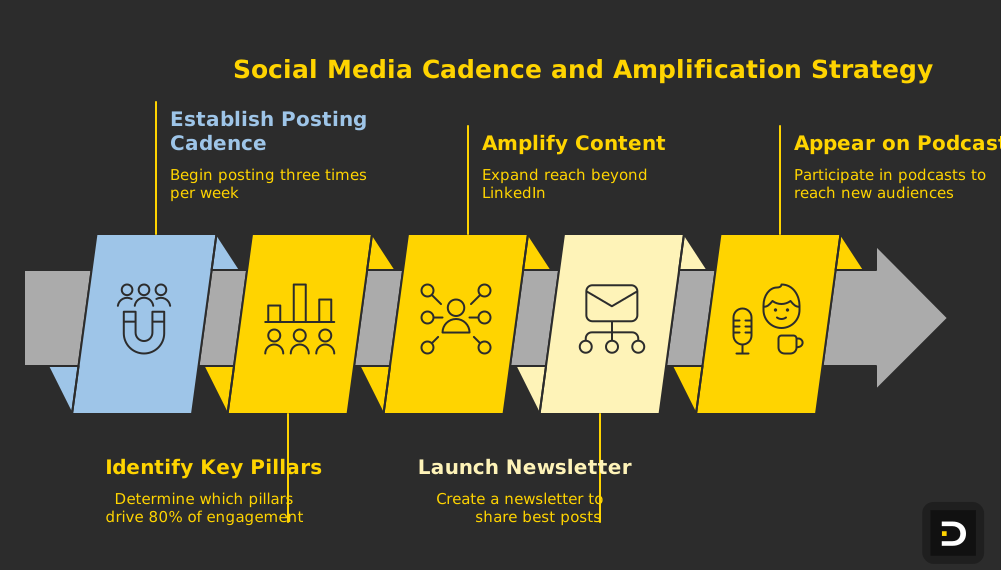
Months 4 through 6 are operational consolidation. By month 4, you should be posting three times per week. By month 5, you should know which two or three pillars are doing 80% of the work. By month 6, you should be amplifying beyond LinkedIn.
Cadence matters more than people admit. The founders who break through show up reliably enough that the algorithm and the audience start to expect them. Three posts per week for 12 weeks straight beats one brilliant post a month.
Amplification looks like four things: a newsletter or Substack capturing your best posts in long-form, podcast appearances in your category (two to four), conference talks if you can swing them, and syndication on your company blog. If you're choosing tools, our breakdown of the best personal branding tool for founders lays out the options. Fewer tools used with discipline beat more tools used haphazardly.
Months 7-9: The plateau (and why most founders quit here)
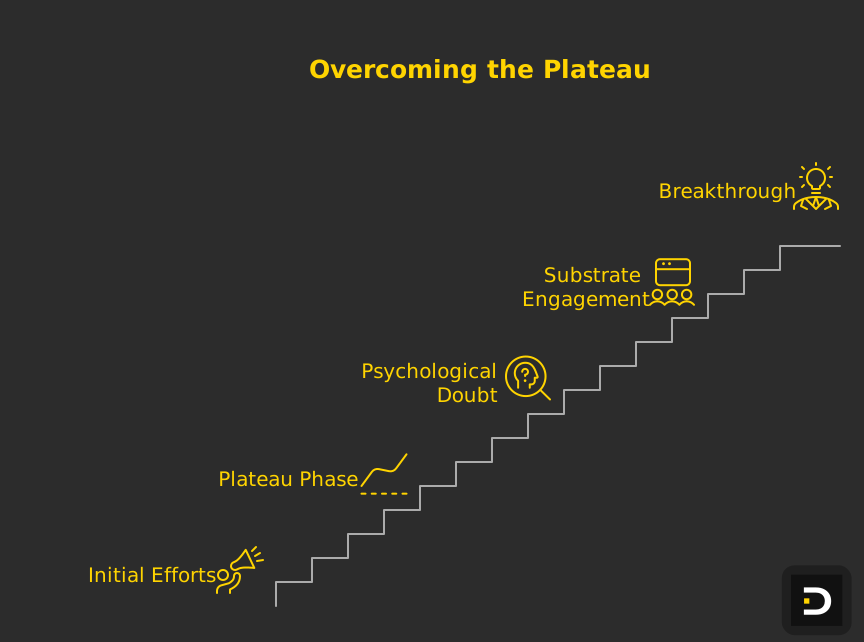
Months 7 through 9 are the danger zone. This is where 80% of founder brand attempts die. The reason is psychological. You've been posting for six months. You've seen some inbound signals. But you haven't had the breakthrough. Posts are getting 3,000 to 8,000 impressions, not 50,000. Follower count is low four digits. The voice in your head says quit and hire a marketing person.
The voice is wrong. The plateau isn't a sign the strategy isn't working. It's the strategy working. You're in the substrate phase, being read by people who haven't yet engaged, saved and shared in DMs you can't see. Visible numbers undercount real reach by three to five times.
Change nothing about cadence or pillars. Resist pivoting. Resist chasing virality outside your category. The breakthrough comes from the same posts you've been writing, hitting at the right moment, against an audience that has been quietly accumulating.
This is also the month to revisit your point of view. Six months of category engagement will have refined your beliefs. Update your voice document. Sharpen your category claim. The version of you in month 9 should be more precise and more contrarian than month 1.
Months 10-12: Category authority emerges
The breakthrough usually happens between month 9 and 13. One post lands in a way previous posts didn't. It travels through people you don't know. Strangers quote it. Your follower count jumps. Inbound increases. Two weeks later, it happens again. The flywheel has spun up.
By month 12, you should be recognizable inside your category. Not famous. When a customer, partner, journalist, or investor hears your name, they have an immediate impression of what you stand for. They can complete the sentence "[Your name] is the founder who is right about [your claim]."
Typical month-12 deliverables: 4,000 to 12,000 LinkedIn followers, 5 to 10 inbound conversations per month with real buyers, 2 to 4 inbound podcast or speaking opportunities, regular comments from category-relevant figures, and your name showing up in industry conversations you weren't part of starting. A useful read at this stage is our piece on personal leadership brand statements.
Month-by-month milestone table
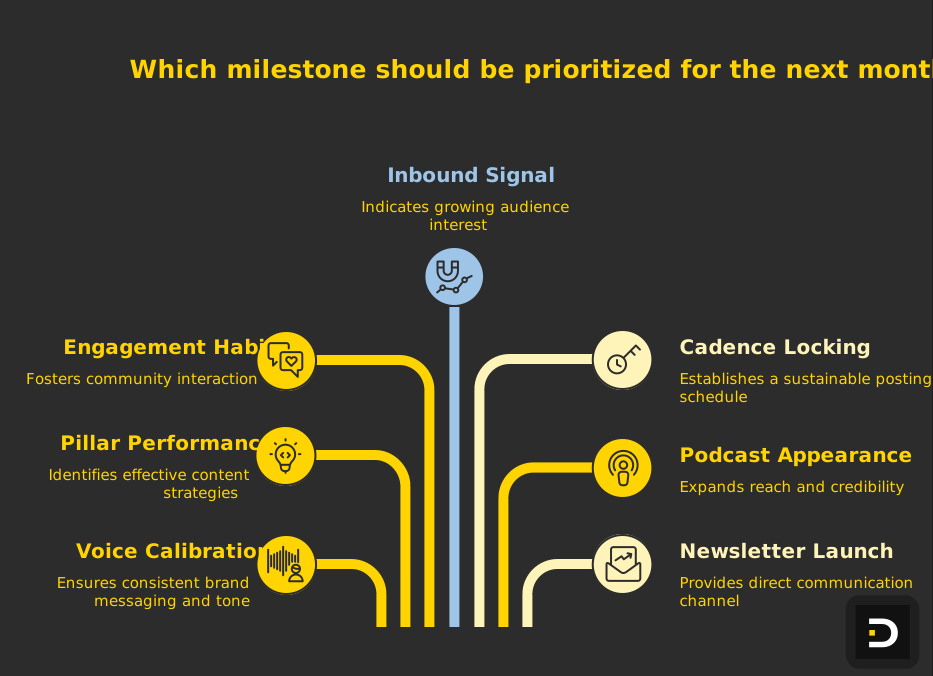
| Month | Primary milestone | Posts cumulative | Followers target |
|---|---|---|---|
| Pre-zero | 4 inputs locked: category claim, point of view, story stockpile, voice doc | 0 | baseline |
| 1 | Voice calibrated, 4 pillars identified, 10 posts shipped | 10 | +200 |
| 2 | Pillar performance patterns visible, comment-engagement habit formed | 22 | +500 |
| 3 | First meaningful inbound signal arrives | 35 | +850 |
| 4 | 3x/week cadence locked, weakest pillar retired or refactored | 50 | +1,300 |
| 5 | First podcast appearance, top 2 pillars driving 80% of engagement | 65 | +1,800 |
| 6 | Newsletter launched, second podcast, first speaking invite | 80 | +2,400 |
| 7 | Plateau begins, urge to quit appears, ignore it | 95 | +2,800 |
| 8 | Voice document revised, point of view sharpened | 110 | +3,200 |
| 9 | Final substrate buildup, breakthrough imminent | 125 | +3,700 |
| 10 | First breakthrough post, follower jump, inbound spike | 140 | +5,000 |
| 11 | Second breakthrough, category recognition visible in DMs | 155 | +7,500 |
| 12 | Category authority recognized, flywheel established | 170+ | +10,000 |
These numbers are medians from the deep-tech founders we've worked with. Faster categories run 30-50% above. Slower categories run 20-40% below. The shape is the same regardless. The plateau is universal.
What to expect in year 2 (the asymmetric upside)
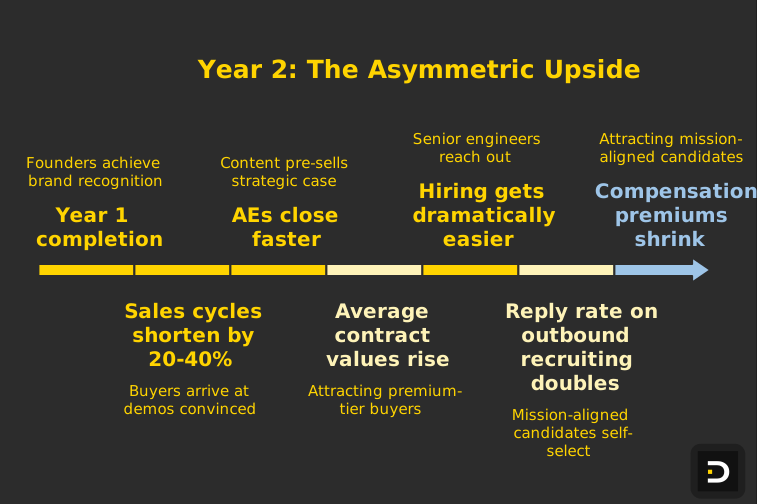
Year 2 is when the brand pays for itself in compounding ways. What happens to founders who completed year 1:
Sales cycles shorten by 20 to 40%. Buyers arrive at demos already convinced of your worldview. AEs close faster because content has pre-sold the strategic case. Average contract values rise because you're attracting premium-tier buyers.
Hiring gets dramatically easier. Senior engineers reach out about roles before you've posted them. Reply rate on outbound recruiting doubles. Compensation premiums shrink because mission-aligned candidates self-select in.
Fundraising terms improve. Partners at funds you'd cold-emailed in year 1 now reach out before you raise. Diligence calls take half as long. Term sheets arrive with better preferences. Partnerships open up: CEOs of adjacent companies see your post quoted by their head of strategy and ask for intros. Analysts include you in reports without being briefed.
The compounding rate from month 12 is roughly 4-6x in year 2, settling into 2-3x annual growth from year 3. A founder who quits at month 8 captures 5% of lifetime value. A founder who pushes to month 12 captures 80% or more.
How to know it's working at each stage
Metrics shift across the 12 months. Months 1-3: leading indicators. Months 4-6: consistency and pillar signal. Months 7-9: quality of inbound. Months 10-12: category-relevant recognition.
Metrics by month
| Phase | Watch this | Ignore this | Threshold for "on track" |
|---|---|---|---|
| Months 1-3 | Comments from strangers, save rate, profile views | Follower count, impressions | 2+ stranger comments per post by month 3 |
| Months 4-6 | Pillar consistency, repeat readers in comments, inbound DM rate | Viral spikes, vanity engagement | 1+ qualified inbound conversation per week |
| Months 7-9 | Quality of follower composition, depth of comments | Plateau in raw numbers | 50%+ of new followers in target buyer/operator roles |
| Months 10-12 | Unprompted mentions, partnership inbound, speaking invites | Day-to-day post variance | 1+ unprompted category mention per month |
Most founders watch follower count and impressions daily. That's exactly the wrong set for the first six months. Those numbers are too noisy and too lagging. Leading indicators (stranger comments, save rate, inbound DM quality) tell you whether substrate is forming.
For deeper measurement frameworks, our piece on thought leadership content for founders goes into this. Harvard Business Review's coverage of personal brand reinvention and McKinsey's research on leadership presence both reinforce the same finding: durable executive reputations are built on consistency and specificity, not volume.
The 5 traps that kill 80% of founder personal brands
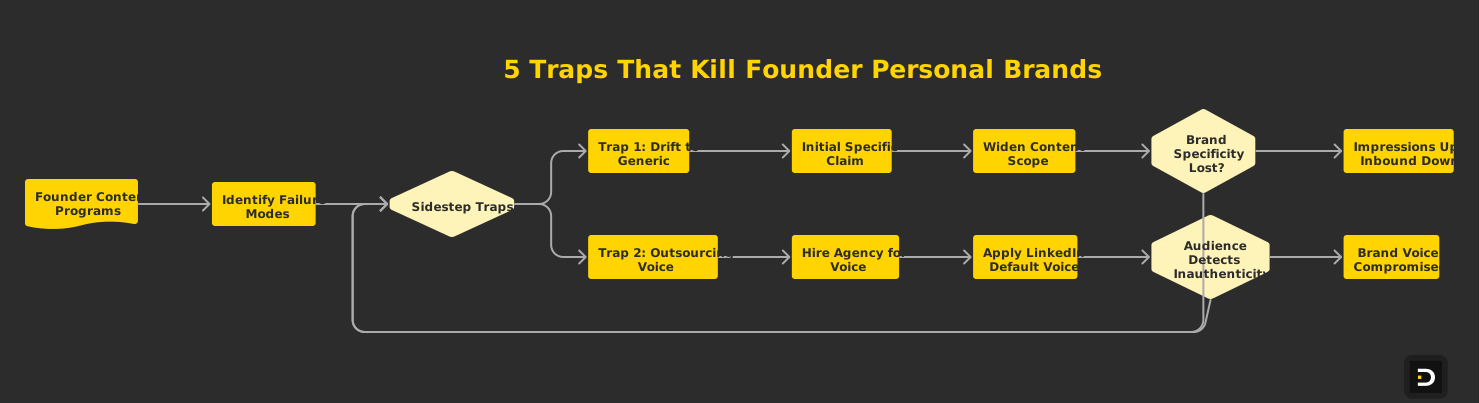
Across hundreds of founder content programs, the same five failure modes appear repeatedly. Knowing them lets you sidestep them.
Trap 1: Drift to generic. Founder starts with a sharp category claim, gets engagement, widens to capture more impressions. By month 4, they're writing about "AI" instead of "AI in regulated healthcare." Impressions up. Inbound down. The brand has stopped being legibly about anything specific.
Trap 2: Outsourcing voice. Founder hires an agency that "writes in their voice," which means LinkedIn-default voice with the founder's name on top. Audience sniffs it out within six weeks. Engagement craters. Founder concludes content doesn't work for them. The actual problem was outsourcing the wrong layer.
Trap 3: Chasing virality. Founder sees a hot take in an adjacent category go viral. Writes their own. It performs well. Writes three more. Their original audience drifts away because they came for the precise category point of view. Viral spikes don't compound because they're not connected to the substrate.
Trap 4: Quitting at the plateau. Most founder brands die at month 7-9 because visible metrics haven't caught up to substrate. The cost of quitting at this exact moment is the loss of 95% of the lifetime value of the work already done.
Trap 5: Confusing reach with reputation. A founder hits 30,000 followers and concludes they have a personal brand. They don't, if those 30,000 are mostly other founders and creators. Reach without category-relevant composition is a metric that looks like an asset but isn't one.
The common theme is impatience. Personal brand creation rewards founders who hold their position for 12 months without flinching. Every trap is a version of flinching. For practical LinkedIn tactics, see our writeup on founder-led marketing on LinkedIn. The LinkedIn B2B Institute publishes solid research on long-horizon B2B brand dynamics that reinforces these patterns.
Done-for-you vs DIY at this 12-month horizon
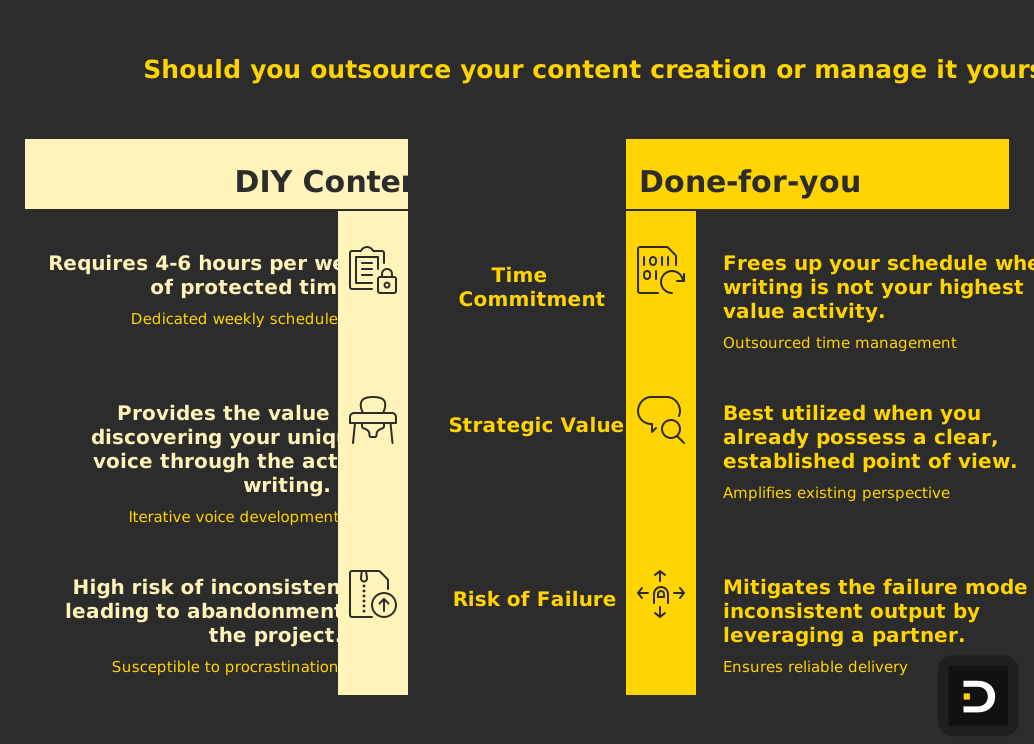
The honest answer depends on three things: how much of your week you can protect for content, how high the opportunity cost is, and whether you have a working draft of voice that a partner could amplify rather than replace.
DIY makes sense when you enjoy writing, have 4-6 hours per week to protect, and are early enough that figuring out voice through doing is part of the value. The downside is consistency. "I'll get back to it next month" is the failure mode that kills 80% of attempts.
Done-for-you makes sense when you have a clear point of view already, writing isn't where your time should go, and you need an operating partner who can execute cadence even when you're deep in product or fundraising. Never hire a partner who writes "in your voice" without you. The right model: a partner who interviews you, extracts the rough material, and crafts it into posts you sign off on before they ship.
Foundera built our model around this division of labor for deep-tech founders. We don't write generic content. We sit with you, extract the specifics only you know, and shape them into posts that compound. For founders thinking about how content connects to broader go-to-market, our piece on sales methodology for founders on LinkedIn covers the adjacent terrain.
Your next move
You have two real options. Option one: close the tab, save the URL, and tell yourself you'll come back when things calm down at the company. Things won't calm down. The founders who built brands while running companies didn't wait for calm. They started inside the chaos.
Option two: this weekend, do the four pre-zero inputs. Write your category claim. Write your point of view. List your 20 stories. Draft your voice document. Don't write a post yet. Just produce the substrate. Then on Monday, write your first post and commit to two more that week.
If you'd rather have a partner walk you through this end to end, talk to Foundera. We've taken 50+ deep-tech founders through this exact roadmap and we know where the plateaus are, which pillars compound for your category, and how to keep cadence steady through fundraising and product launches. Personal brand creation isn't fast. It isn't optional. And it isn't something you have to do alone.
Frequently asked questions
How many hours per week does personal brand creation realistically take for a founder?
Realistic minimum is 3-4 hours per week: writing (2 hours), engagement on other people's content (1 hour), inbound conversations (1 hour). Founders trying to do this in less than 3 hours per week consistently stall around month 4. Founders putting in 6-8 hours per week compress the 12-month timeline to 8-9 months. There's a ceiling on how much hands-on time helps because substrate-building is paced by external readers' behavior, not by your effort.
Should I post in long-form or short-form on LinkedIn?
For deep-tech founders, the format that compounds best is medium-form: 600-1,200 character posts that make one specific argument well. Long-form (2,000+ characters) is useful for set-piece posts you want cited later. Short-form rarely compounds for B2B founders because there's not enough substance to be quotable. The mix that works: 70% medium-form, 20% long-form, 10% short-form.
What if I'm in a category nobody has heard of?
Best position to start from. If your category doesn't have established thought leaders, the door is wide open for you to define it. The roadmap works the same. Your category claim becomes "the founder defining what [your category] actually is." Founders defining new categories often hit the breakthrough earlier (month 8-10) because there's less competition for attention.
How do I balance personal brand with company brand?
For Series A through Series C deep-tech, founder brand should lead and company brand should follow. Buyers at your stage are buying trust in you and your judgment, which the company brand can't carry yet. As you scale toward Series D and beyond, the balance shifts toward company brand. In year 1, expect personal brand to outpace company brand significantly. That's the right ratio.
Is it too late to start if I'm already 5 years into the company?
No. Founders who start late have richer story stockpiles, which often accelerates the early months. The downside is you've left value on the table for those 5 years. The right move is to start now and accept that the asymmetric returns of year 2 are still in front of you. The brand you'd have had if you'd started 5 years ago is a sunk cost.
What if I genuinely don't enjoy writing?
Two options. First, switch the medium. Some founders who hate writing love talking. A 20-minute weekly call with a content partner who extracts your thinking and shapes it into posts solves the writing problem. Second, accept that the cadence requirement won't go away regardless of medium. Personal brand creation requires showing up consistently in some format.
When should I expect to see revenue impact directly traceable to personal brand?
Directly attributable revenue is hard to measure because the brand affects deal velocity and win rates across the whole funnel rather than generating clean attributable leads. The clearest signal is shortened sales cycles, which most founders see by month 9-12. Inbound deal flow with clean attribution to a specific post is less common and usually starts in year 2. The direct revenue cases come in year 2 and beyond, and they tend to be large.
The TL;DR
Quick answer
Twelve months from invisible to category authority for deep-tech founders. Pre-month-zero locks four inputs: category claim, point of view, story stockpile, voice document. Months 1-3 establish voice. Months 4-6 lock cadence. Months 7-9 are the plateau where 80% quit. Months 10-12 the flywheel spins up. Year 2 compounds 4-6x over year 1.
Key takeaways
- Four pre-zero inputs prevent the most expensive mistake: building for the wrong version of you.
- Month 3 milestone: first inbound signal arrives. Most founders dismiss it as a fluke.
- Months 7-9 are the plateau where 80% quit. Visible metrics lag substrate by 3-5x.
- Year 2 is asymmetric: sales cycles shorten 20-40%, hiring eases, fundraising improves.
- Quitting at month 8 captures 5% of lifetime value. Pushing to month 12 captures 80%+.