The LinkedIn Funding Announcement Post: A Founder Playbook for 2026
You raised the round. Now comes the part most founders fumble: telling the world.
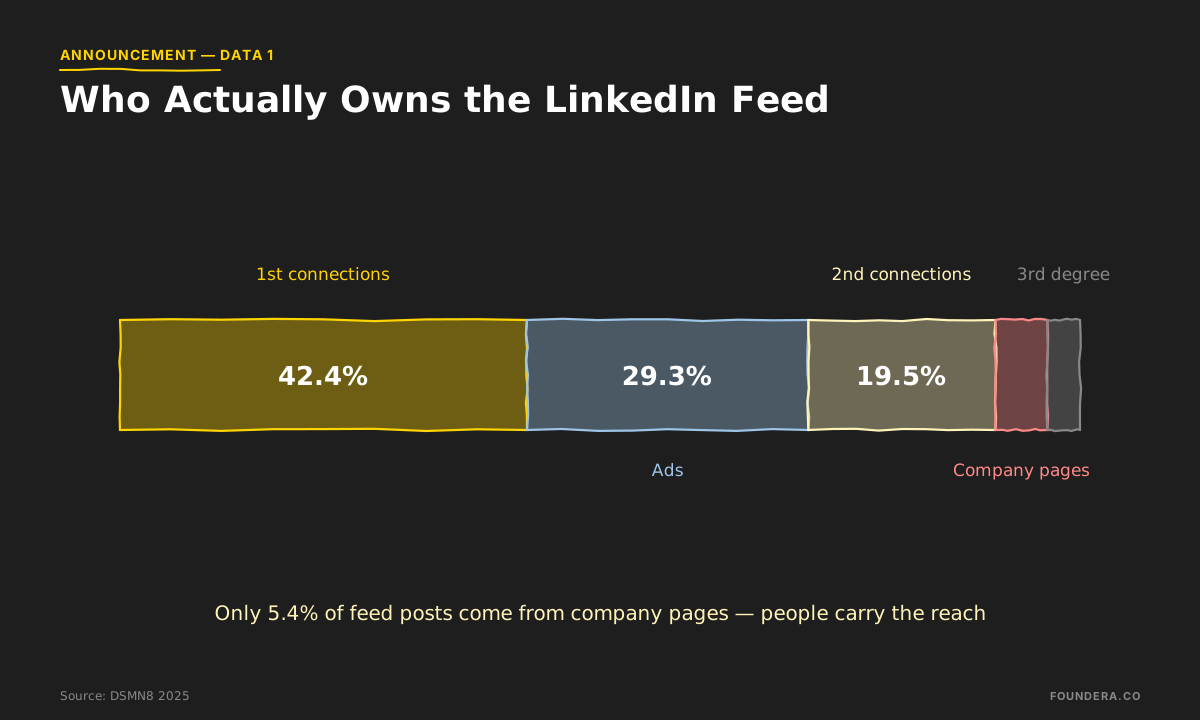
Here's the number that should shape your whole announcement plan. In DSMN8's 2025 feed investigation, only 5.37% of the posts appearing in a LinkedIn feed came from company pages. 42.44% came from 1st-degree connections — people. And not a single organic company-page post made it into the feed without individuals in the viewer's network engaging with it first.
Translation: your funding announcement doesn't belong to your logo. It belongs to you and your team. The rounds that dominate the feed for 48 hours aren't luckier — they're staged. Personal post first. Team amplification ready. Company page in a supporting role.
One honest note before we start: no rigorous public dataset isolates how funding-announcement posts perform versus other posts. Anyone selling you "funding posts get X% more engagement" is making it up. What we do have is verified data on how LinkedIn distributes content — reach, formats, employee sharing. This playbook is built on those proxies, cited inline, plus what we've learned running announcements for founder clients.
Table of Contents
- Why Your Profile, Not Your Company Page, Carries the Announcement
- Anatomy of a Great Funding Announcement Post
- Pick the Right Format
- What to Prepare Before Announcement Day
- The Timing Sequence: Founder First, Page Second
- Common Mistakes That Bury Announcements
- The 48 Hours After You Post
- Frequently Asked Questions
- TL;DR
Why Your Profile, Not Your Company Page, Carries the Announcement
Announce your round from your personal profile because LinkedIn's feed is built around people, not brands. In DSMN8's feed analysis, company pages accounted for just 5.37% of feed posts while 1st-degree connections accounted for 42.44% — an 8-to-1 gap in favor of humans.
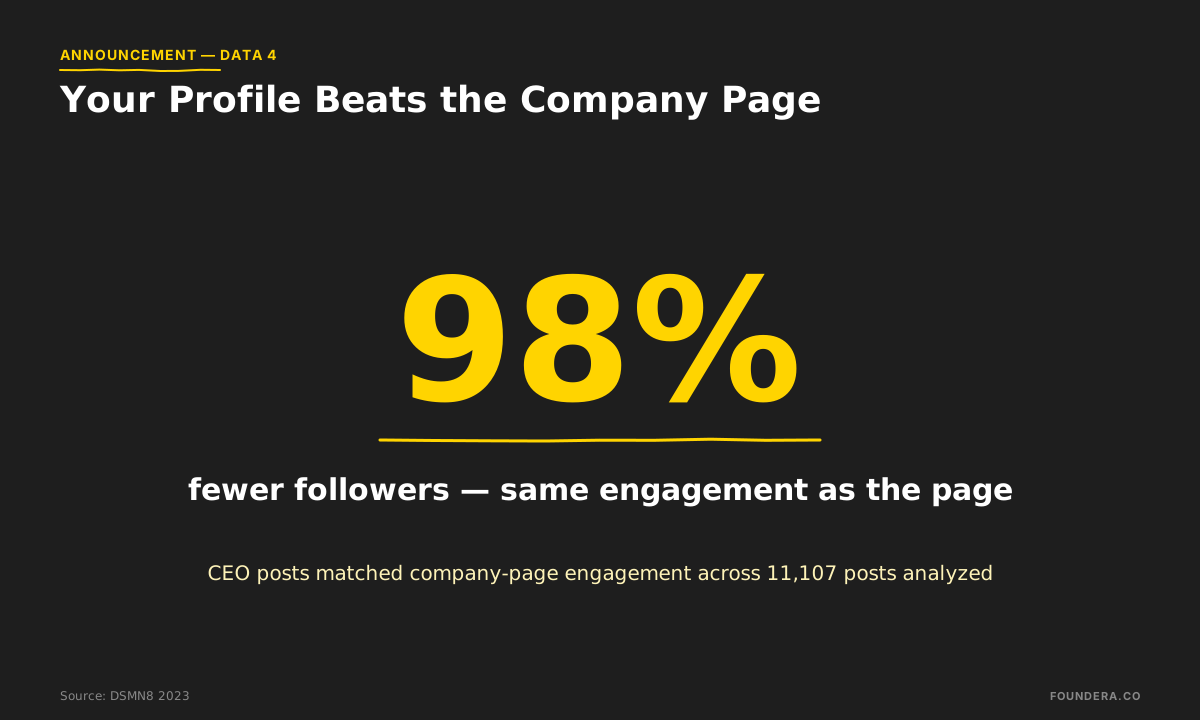
The same investigation, analyzing 11,107 employee LinkedIn posts, found that a CEO could generate the same level of content engagement as the company page despite having 98% fewer followers. Read that again. Your profile, at a fraction of the audience, matches the page. On announcement day — the one day everyone actually wants to hear from you — that asymmetry is your biggest asset.
This matters beyond vanity metrics. A funding announcement is the highest-attention moment your company gets all year. Next-round investors, future hires, and hesitant customers are all watching at once. Ship it as a sterile company-page press release and you've spent your one guaranteed spotlight on LinkedIn's weakest distribution channel.
If you've been building visibility in the months before the raise — the subject of our guide on LinkedIn visibility before fundraising — announcement day is where that compounding pays off.
Anatomy of a Great Funding Announcement Post
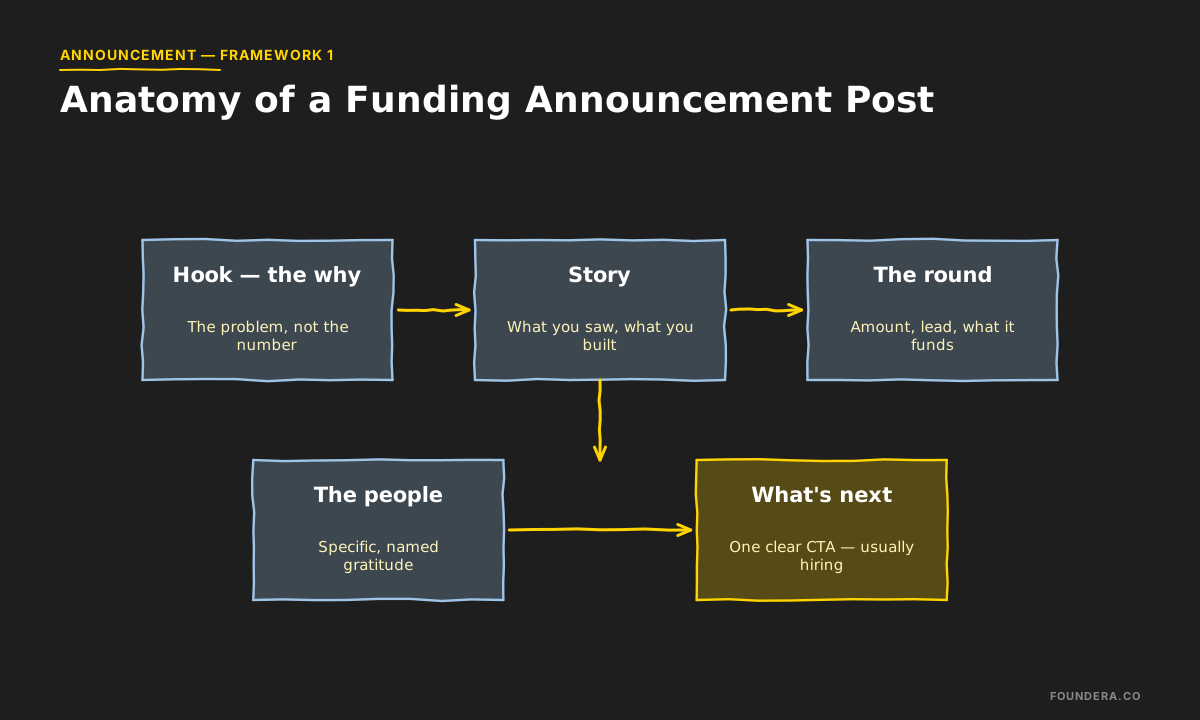
A great funding announcement post has five blocks, in order: a hook about why, a founding story, the round facts, the people, and what's next. The money is the least interesting part — it's proof, not plot. Structure the post so a reader who never reaches the dollar amount still understands why your company matters.
This structure is our editorial framework, not a lab result. The logic: the number is news for one day; the problem is why anyone should care on day two.
| Block | The job it does | The mistake to avoid |
|---|---|---|
| 1. Hook — the why | Stops the scroll with the problem or conviction behind the company | Opening with "We're thrilled to announce…" |
| 2. Story | 3-5 short lines: what you saw, what you built, what happened | A company history lesson nobody asked for |
| 3. The round | Amount, lead investor, notable participants, what it funds | Burying the facts so deep press can't quote them |
| 4. The people | Team, early customers, investors — specific, named gratitude | The Oscar speech: thanking twenty people generically |
| 5. What's next + CTA | Hiring, product, one clear invitation to act | Ending with "exciting times ahead!" and no ask |
Two craft notes. First, write the hook like you talk. "We're announcing our $12M Series A" is a press release. "Three years ago, every CISO we met told us the same lie" is a founder post. Second, make the CTA singular. "We're hiring senior engineers — DM me" beats a link salad of careers page, press coverage, and product tour. One announcement, one ask.
Pick the Right Format
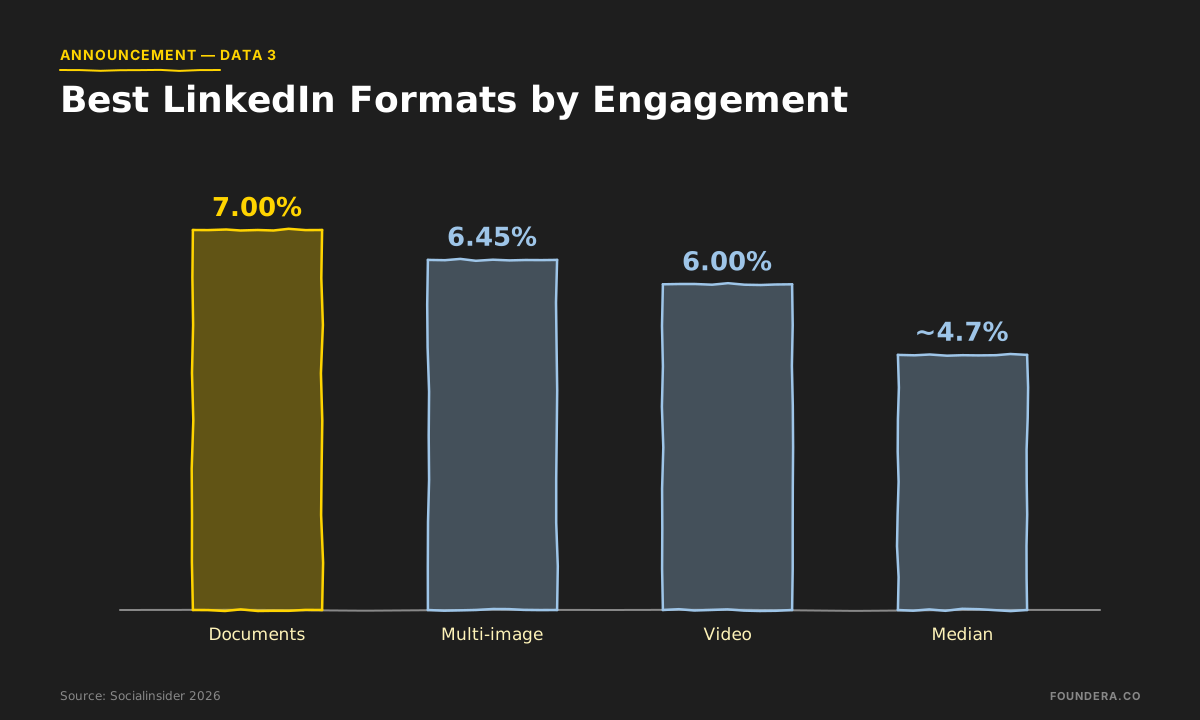
Choose a format built around images of real people — a multi-image post with your team, or a document carousel that tells the round's story. In Socialinsider's benchmark of 1.3M LinkedIn posts, native document posts earn the highest average engagement rate at 7.00% (up 14% year over year), followed by multi-image posts at 6.45% and video at 6.00%.
For context, the same benchmark puts LinkedIn's median engagement rate at roughly 4.7% across business pages — so the top formats aren't marginal wins, they're meaningfully above the platform norm.
| Format | Avg. engagement rate | Best announcement use |
|---|---|---|
| Native document (carousel) | 7.00% | The round as a story: problem → traction → round → what's next |
| Multi-image | 6.45% | Team photo + product shot + investor logos |
| Video | 6.00% | You, on camera, saying why — only if it's genuinely you |
| Platform median (reference) | ~4.7% | — |
Source: Socialinsider LinkedIn benchmarks, 1.3M posts, Jan 2024–Dec 2025. These are platform-wide format benchmarks, not funding-post data — treat them as directional proxies.
Our recommendation for most founders: multi-image with a real team photo as image one. It's the fastest to produce well, it puts faces on the milestone, and faces are what people congratulate. Use a document carousel when the round has a genuine narrative arc worth six slides. Use video only if talking to camera is already your medium — announcement day is not the day to debut a format you're uncomfortable in.
What to Prepare Before Announcement Day
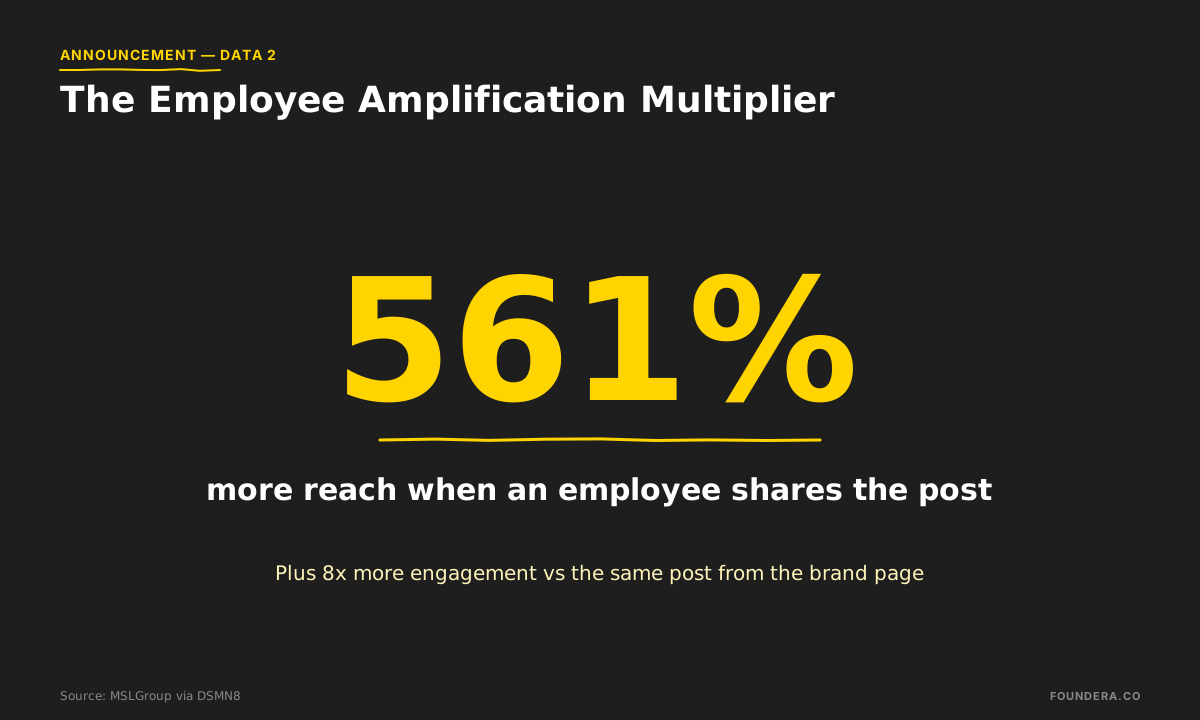
Prepare five things before the day: the founder post, a team share-kit, a comment bench, aligned press timing, and your follow-up list. The reason is arithmetic: widely cited MSLGroup research via DSMN8 found a post shared by an employee generates up to 561% more reach and 8x more engagement than the same post shared by the brand's page.
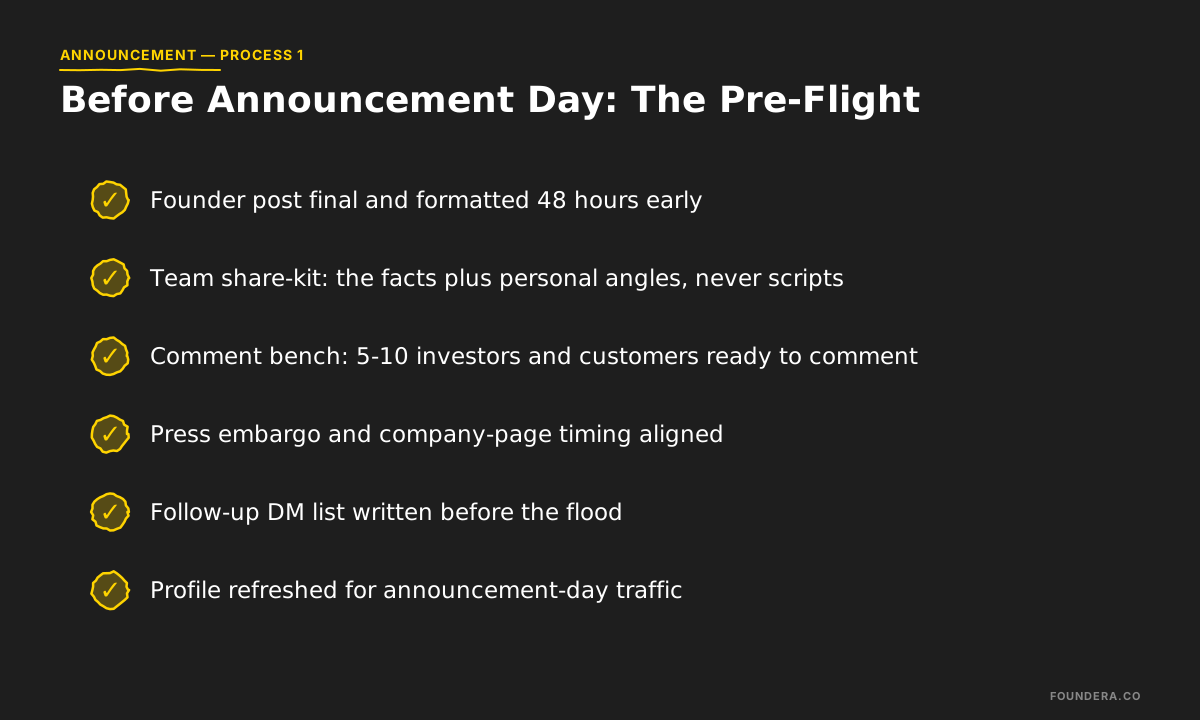
Your team is the distribution engine. But amplification that works doesn't look like amplification. Here's the pre-flight list:
- The founder post, final, 48 hours early. Written, formatted, images attached. Announcement morning is for shipping, not writing.
- A team share-kit — angles, not scripts. Give each teammate the facts plus a personal prompt: "why I joined," "what this lets my team build," "what our customers told us." Fifteen identical reposts read as astroturf. Fifteen personal takes read as momentum.
- A comment bench. Ask 5-10 investors, customers, and advisors to comment (not just react) in the first hours. Early comments from real names are the social proof that makes strangers stop scrolling.
- Press and company-page timing aligned. If there's an exclusive or embargo, your personal post and the company page must be sequenced with it, not fighting it.
- Your follow-up list, written in advance. The investors, candidates, and customers you'll DM when they engage. Decide this before the flood, not during it.
This is also the moment to be honest about whether your profile is ready to receive the traffic. Thousands of people will click your name that day. If your profile reads like a resume instead of a story, fix it the week before — our guide to the personal brand LinkedIn setup for startup founders covers exactly that.
The Timing Sequence: Founder First, Page Second
Run the day in this order: founder post in the morning, team amplification within the first three hours, company page after the personal post has momentum, investor posts same day. This sequence exists because of the feed math above — pages hold 5.37% of the feed, people hold the rest.
| When | Who | What |
|---|---|---|
| Day 0, morning | Founder | The announcement post, from your personal profile |
| Day 0, +0–3h | Team | Personal shares from the share-kit; comment bench activates |
| Day 0, +3–4h | Company page | Native page post (not a bare reshare) linking the milestone |
| Day 0, same day | Investors | Lead investor's post, which you comment on and reshare |
| Day 1 | Founder | Engage every comment; share press coverage as a comment or follow-up |
| Day 2 | Founder | Follow-up post: one lesson from the raise, not a victory lap |
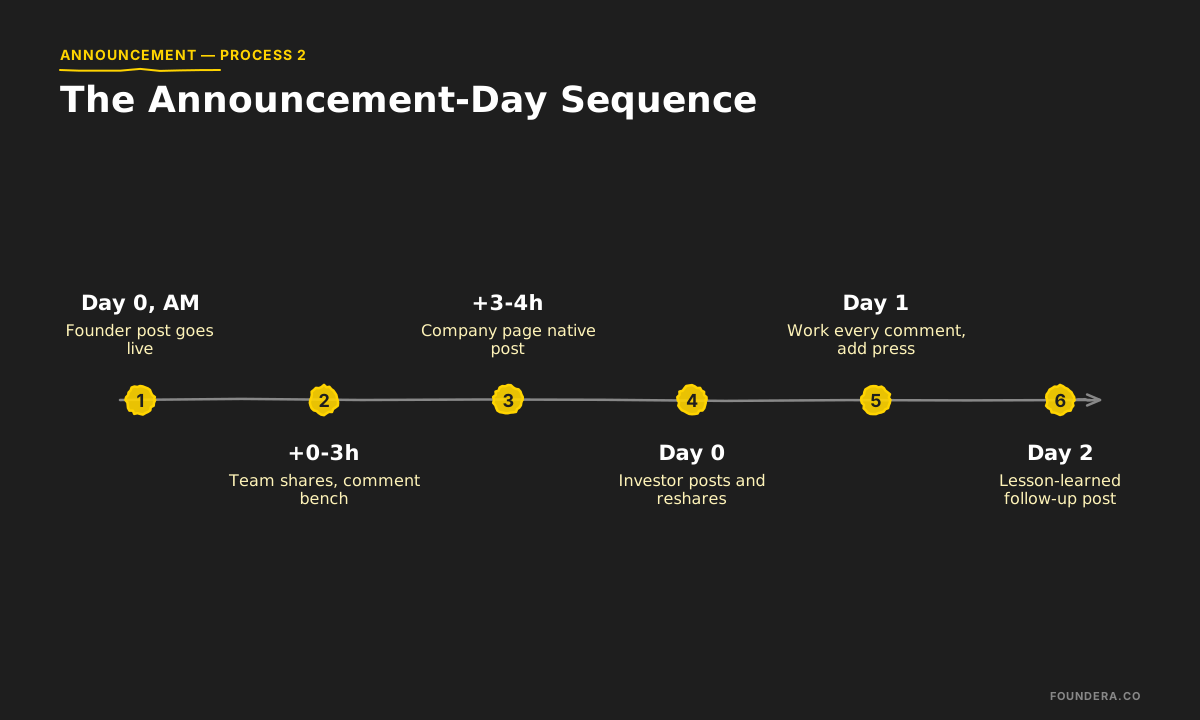
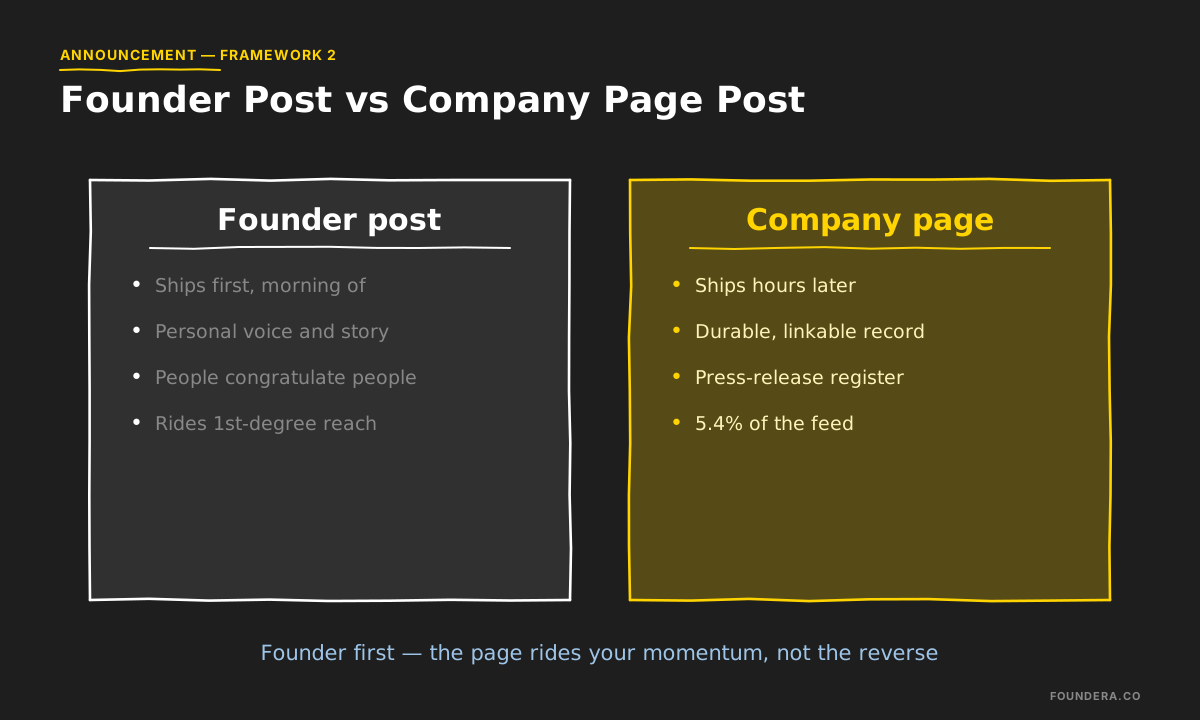
The exact hours are our playbook, not physics — but the order is the point. The personal post goes first because it's the strongest distribution asset you own. The company page goes later, as the durable, linkable record for press and prospects who look you up. And note the DSMN8 finding one more time: organic page posts surfaced in feeds only when individuals engaged with them first. Your page post rides your team's engagement, not the other way around.
Timing the announcement is also a strategic choice inside the broader raise cycle. If you're planning the round itself, start with our guide on how to use LinkedIn for fundraising — the announcement is the last move of this raise and the first move of the next one.
Common Mistakes That Bury Announcements
The most common failure is treating the announcement as a formality instead of a campaign: press-release voice, page-first publishing, zero preparation, and silence afterward. Each mistake is survivable alone. Together they turn your biggest moment of the year into a post nobody remembers by Friday.
The recurring offenders:
- Press-release voice. "We are pleased to announce…" — nobody talks like this, and the feed punishes content that reads like it came from a wire service.
- Leading with the number. The amount is proof, not plot. Lead with the problem you're solving.
- Company page first. You've read the feed data. Don't hand your best moment to your weakest channel.
- The Oscar speech. Generic gratitude to twenty stakeholders. Thank fewer people, more specifically.
- One-and-done. Posting once and going silent. The announcement is a 48-hour campaign minimum, and ideally the start of a cadence.
- No ask. Attention without direction is wasted. Hiring? Say so. Opening a waitlist? Say so.
- Announcing with a dead profile. A big post from an account that hasn't said anything in eight months raises more questions than it answers. Consistent founder-led marketing on LinkedIn before the round is what makes the announcement land as a chapter, not a stunt.
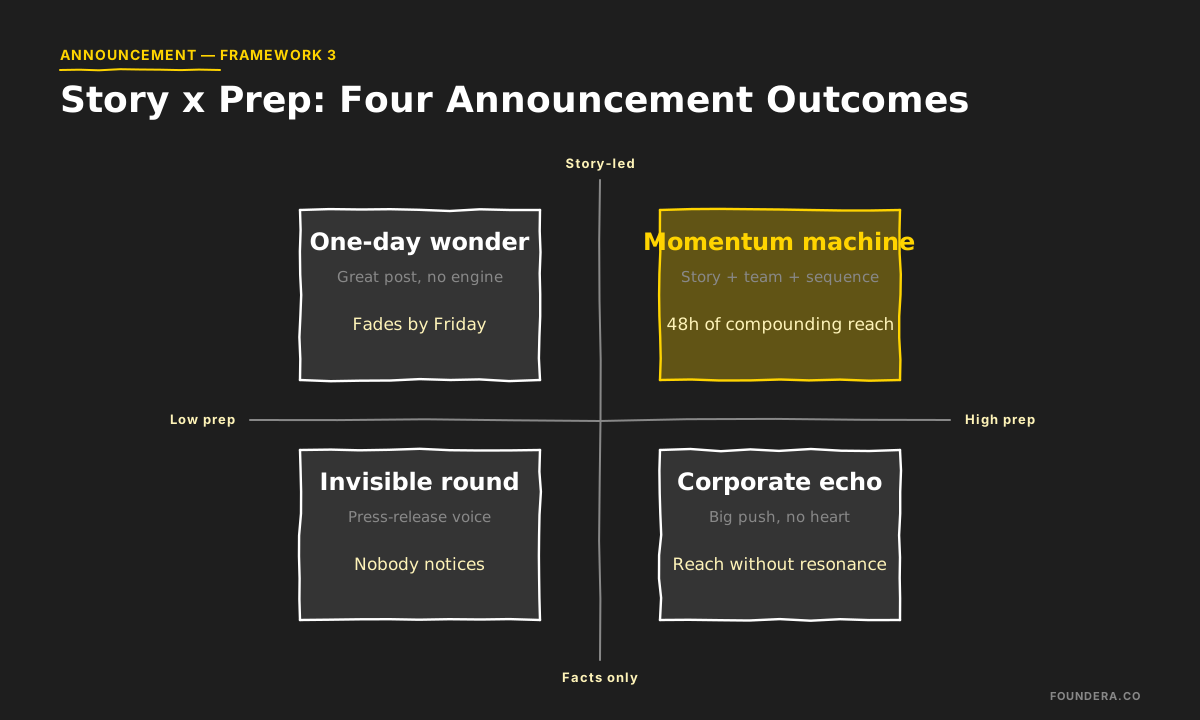
Think of it as a two-axis game: how story-led the post is, and how much distribution prep you did. Facts-only with no prep is an invisible round. Story with no prep is a one-day wonder. Facts with heavy prep is a corporate echo. Story plus prep is the momentum machine — and it's the only quadrant worth aiming for.
The 48 Hours After You Post
The 48 hours after publishing decide whether the announcement converts attention into pipeline, hires, and future investors. The work: reply to every comment, DM the high-value engagers, feed the algorithm a follow-up, and log everyone who showed up. The post is the flare; the follow-through is the harvest.
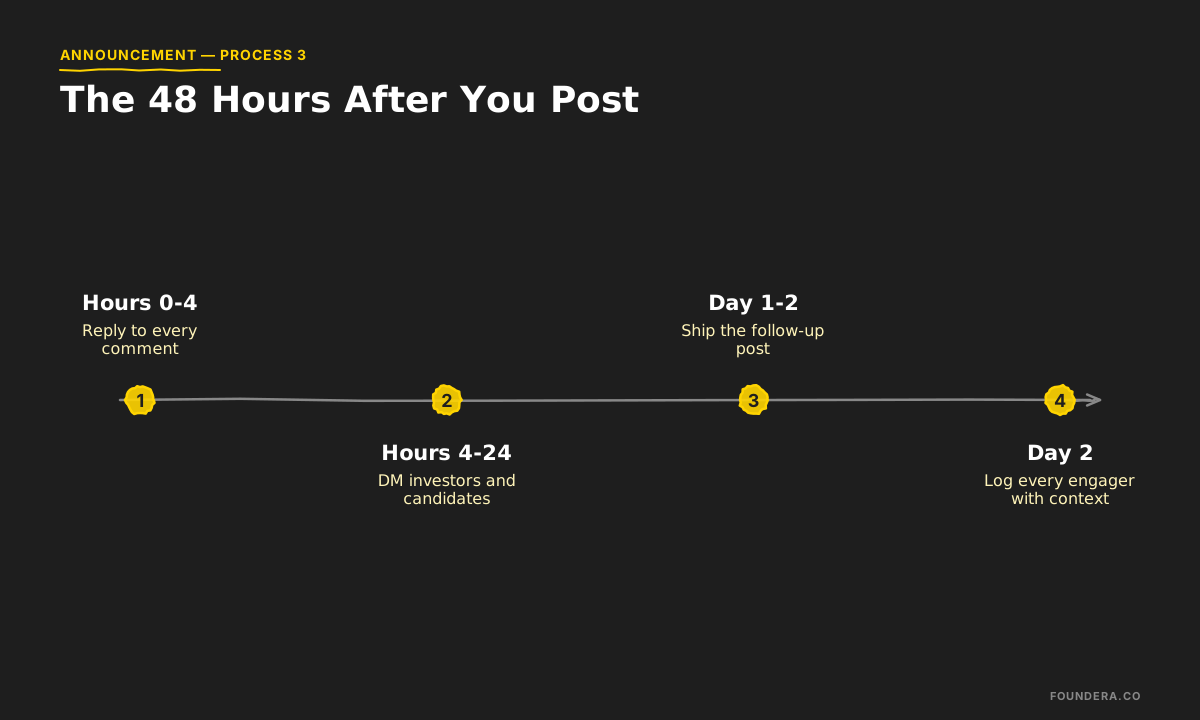
Hours 0–4: work the comments. Reply to every single one, fast and personally. Replies are engagement, engagement is reach, and the people commenting on a funding post are disproportionately the people you want to know.
Hours 4–24: mine the engagers. Investors who liked but didn't comment. Candidates who followed you. Prospects who viewed your profile. Each gets a short, personal DM — not a pitch, a door-opener. Remember why this matters: today's congratulations list is the top of your next round's pipeline, and the metrics investors will want next time are covered in our guide to startup traction metrics investors look for on LinkedIn.
Day 1–2: ship the follow-up post. One honest lesson from the raise — what surprised you, what you'd tell a founder starting theirs. It catches the audience the announcement brought in and tells them what following you is actually like.
Day 2: log everything. Every investor, journalist, candidate, and prospect who engaged goes into your CRM or a simple sheet, with context. In six months, "you congratulated us on the seed round" is a warm opener. Attention decays in 48 hours; a list doesn't.
If you'd rather have a team run this entire sequence — post, share-kit, timing, follow-through — while you run the company, that's literally what we do. Talk to Foundera.
Frequently Asked Questions
Should I announce funding on my personal profile or the company page first?
Personal profile first. DSMN8's feed analysis found company pages account for only 5.37% of feed posts versus 42.44% for 1st-degree connections, and a CEO matched the company page's engagement with 98% fewer followers. Post from your profile in the morning, activate team shares, then publish a native company-page post a few hours later as the durable record for press and prospects.
What should a LinkedIn funding announcement post include?
Five blocks: a hook built on the why (not the amount), a short founding story, the round facts (amount, lead investor, what it funds), specific thanks to the people who mattered, and one clear call to action — usually hiring. Keep the whole post scannable: short lines, one idea per line, images of real people attached.
What's the best format for a funding announcement post?
Formats built on real images. Across Socialinsider's 1.3M-post benchmark, native documents average 7.00% engagement, multi-image posts 6.45%, and video 6.00% — all well above the ~4.7% platform median. For most founders, multi-image with a genuine team photo is the highest-impact, lowest-risk choice. Note these are platform-wide format benchmarks, not funding-post-specific data.
How do I get my team to amplify the announcement without it looking scripted?
Give angles, not scripts. Each teammate gets the round facts plus a personal prompt — why they joined, what the round lets their team build, what a customer told them. Employee sharing is worth the effort: MSLGroup research via DSMN8 found employee-shared posts generate up to 561% more reach and 8x more engagement than the same content from the brand page.
When is the best day and time to announce a round?
There's no verified public dataset proving an optimal funding-announcement slot, so distrust anyone quoting one. The practical logic: pick a weekday morning in your audience's core timezone, avoid days when major industry news will drown you out, and align with any press embargo. Sequencing (founder → team → page → investors) matters far more than the hour you pick.
What should I do in the 48 hours after the announcement?
Reply to every comment, DM high-value engagers (investors, candidates, prospects) with short personal notes, publish a follow-up post with one honest lesson from the raise, and log every meaningful engager with context for later outreach. The announcement creates attention; the 48-hour follow-through converts it.
TL;DR
- Announce from your personal profile first — company pages are just 5.37% of the LinkedIn feed; 1st-degree connections are 42.44% (DSMN8).
- A CEO can match the company page's engagement with 98% fewer followers — announcement day is when that asymmetry pays most.
- Structure the post in five blocks: hook (the why) → story → round facts → people → what's next + one CTA. The number is proof, not plot.
- Pick image-led formats: documents average 7.00% engagement, multi-image 6.45%, video 6.00% (Socialinsider) — proxies, since no public dataset isolates funding posts.
- Prepare a team share-kit — employee shares drive up to 561% more reach and 8x engagement than brand-page posts (MSLGroup via DSMN8).
- Sequence the day: founder post → team shares (+0-3h) → company page (+3-4h) → investor posts → day-2 follow-up.
- Work the 48 hours after: reply to everything, DM engagers, ship a lesson-learned post, log every name for the next raise.
Related Reading
- How to Use LinkedIn for Fundraising — the full raise playbook this announcement caps off
- LinkedIn Visibility Before Fundraising — the groundwork that makes announcement day compound
- Startup Traction Metrics Investors Look For on LinkedIn — what to show the investors your announcement attracts
- Founder-Led Marketing on LinkedIn — turning one big moment into an always-on channel
- Personal Brand LinkedIn Setup for Startup Founders — get your profile ready for announcement-day traffic