Founder LinkedIn After Funding: The 90-Day Momentum Playbook
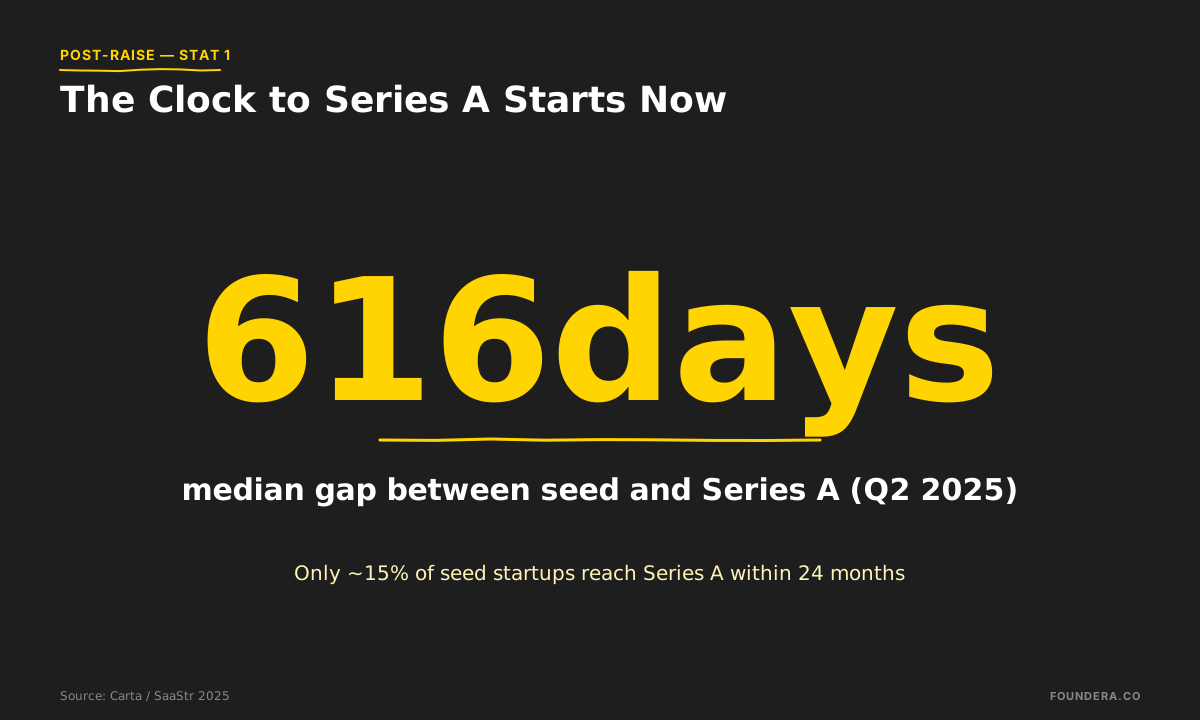
The median gap between seed and Series A hit 616 days in Q2 2025 — more than 20 months (Carta). Only around 15% of seed-funded startups reach Series A within 24 months at all. And by the 95:5 rule, roughly 95% of the buyers who saw your funding announcement aren't in-market to buy anything right now.
Read those numbers together and the announcement post looks different. It wasn't the finish line of your raise. It was the largest single-day attention event your company will have this year — pointed mostly at people who can't act on it yet.
What you post in the 90 days after determines whether that attention converts into pipeline, hires, and a warmer next round — or evaporates by Friday. The announcement itself has its own playbook. This is the playbook for the quarter that follows.
Table of Contents
- The Announcement Is a Spike, Not a Strategy
- Who's Watching in the 90 Days After
- Hiring: Turn Your Feed Into the Employer Brand
- Pipeline: Capture the Buyers Who Aren't Buying Yet
- Investor Updates: Public Rhythm vs Private Rhythm
- The Quarter-After Cadence Plan
- Three Ways Founders Waste the Spike
- Frequently Asked Questions
- TL;DR
- Related Reading
The Announcement Is a Spike, Not a Strategy
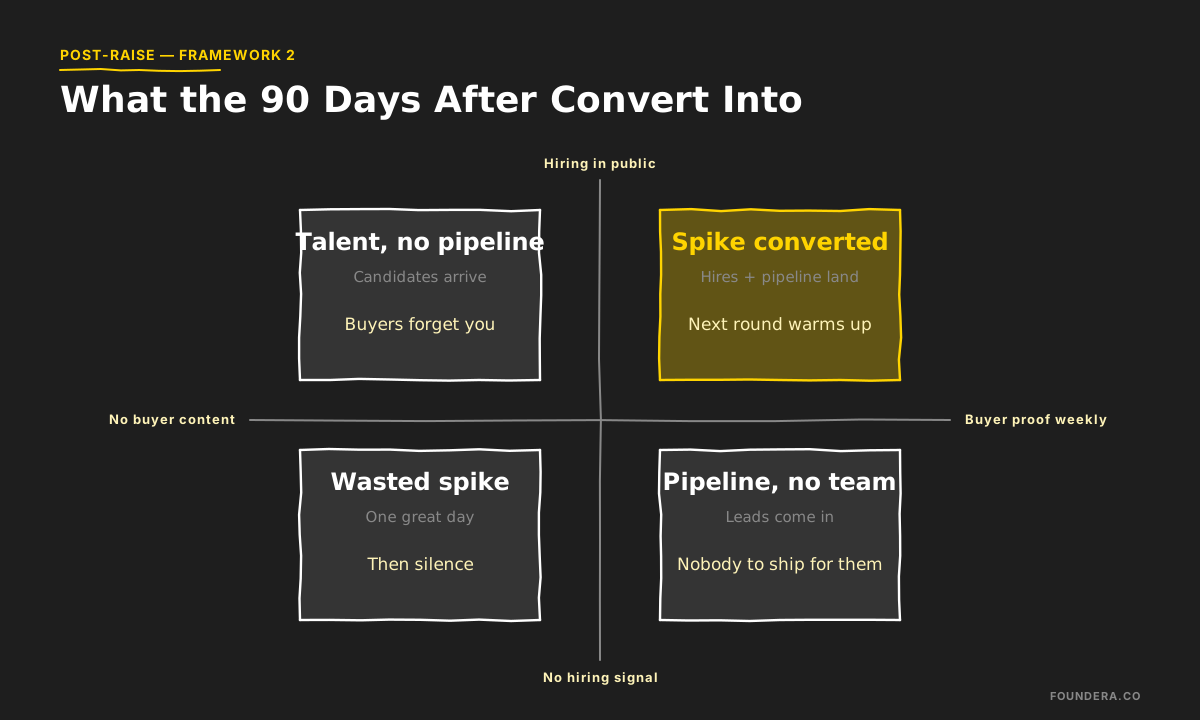
A funding announcement is a one-day reach event, not a growth channel. It puts your company in front of investors, candidates, and future buyers simultaneously — but none of them convert on announcement day. Conversion happens in the 90 days after, and only if the feed that made the announcement keeps talking.
The stakes are set by the fundraising calendar itself. Carta's data puts the median seed-to-Series-A interval at 616 days, and analysis of Carta cohorts (via SaaStr) shows only ~15% of seed startups graduate to Series A within 24 months — down from roughly 30% for the 2018-2020 cohorts. The next round isn't a distant event you'll prep for later. The clock started the day the wire cleared, and your public trajectory between rounds is part of the case.
That's the frame for everything below: the announcement bought you an audience. The next quarter decides what it becomes.
Who's Watching in the 90 Days After
Four audiences pay attention to a founder's LinkedIn after a funding announcement: next-round investors, candidates, hidden buyers inside target accounts, and your existing customers. Each one is asking a different question, and each one answers it from your feed — not your company page.
| Audience | What they're asking | What the data says |
|---|---|---|
| Next-round investors | Is the trajectory real? | 96% of institutional investors systematically harvest data from social and digital sources (Brunswick); ~30% say social information has directly influenced an investment decision (Coalition Greenwich) |
| Candidates | Do I want to work for this person? | Your feed is the culture preview — the only one most candidates get before applying |
| Hidden buyers | Does this founder understand my problem? | 63% of hidden buyers spend an hour or more per week on thought leadership (Edelman-LinkedIn 2025) |
| Current customers | Did we bet on the right vendor? | 73% of decision-makers trust thought leadership over marketing materials as a read on capability (Edelman-LinkedIn 2024) |
Notice what's absent from that table: anyone waiting for a press release. The 90-day plan is how you serve each of these four groups — deliberately, not accidentally.
Hiring: Turn Your Feed Into the Employer Brand
Post-raise hiring works best from the founder's profile, amplified by the team — not from the careers page. The reach math is not close. DSMN8's feed investigation found that 42.4% of LinkedIn feed posts come from first-degree connections while just 5.4% come from company pages — and not one organic company-page post appeared without individuals in the network engaging it first.
The same DSMN8 research, analyzing 11,107 employee posts, found a CEO could generate the same engagement as the company page with 98% fewer followers. And Ordinal's analysis puts organic company-page reach at roughly 1.6% of followers, down from about 7% in 2021. If your open roles live only on the page, they're broadcasting into the emptiest room on the platform.
Every raise comes with a hiring plan; almost none come with a hiring narrative. The founder feed fills that gap:
- Tell role stories, not job links. "Here's the problem our first product marketer will own, and why it's the hardest job at the company" outperforms a reposted job ad because it gives candidates a reason, not a requisition.
- Show what the money builds. Roadmap slices, new-team introductions, the first hire's first week. This is the employer brand candidates actually diligence.
- Put the team behind it. MSLGroup research (popularized by DSMN8) found an employee-shared post generates up to 561% more reach and 8x more engagement than the same post from the brand page. Every hiring post your team reshares lands in networks full of their former colleagues — exactly the talent pool you want.
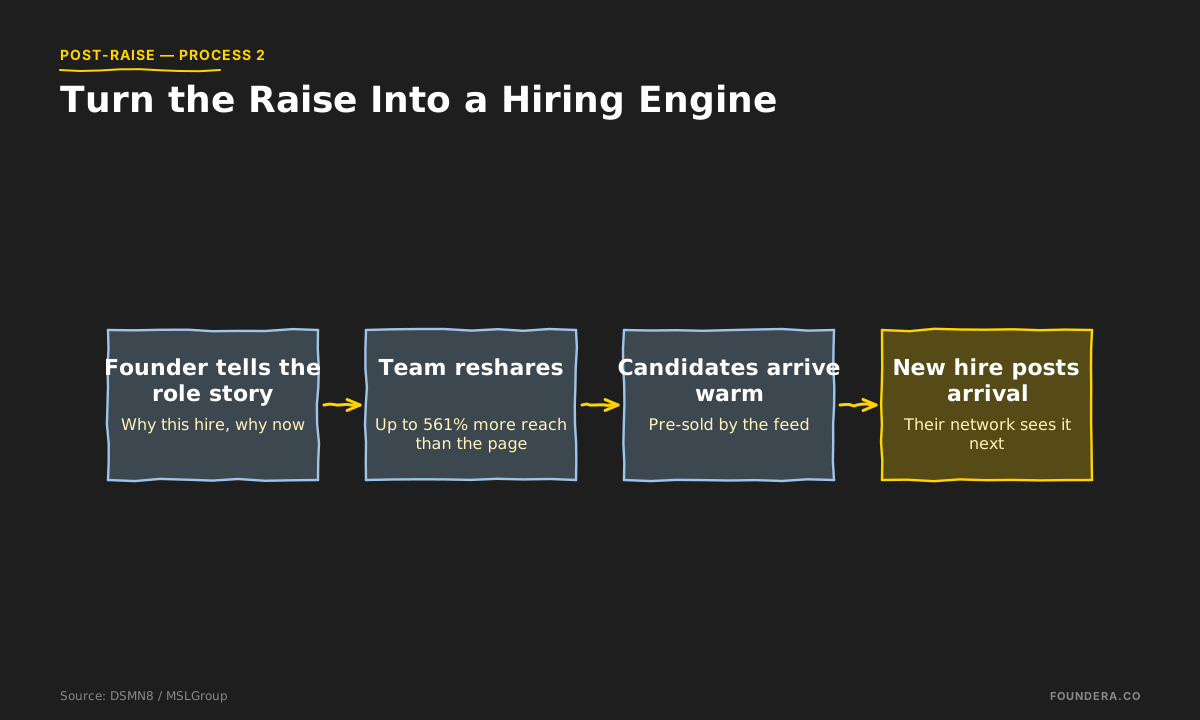
The founder-vs-page logic is the same one that carried the announcement itself: people follow people. Candidates especially.
Pipeline: Capture the Buyers Who Aren't Buying Yet
Your announcement reached hundreds of future buyers, and almost none of them will raise a hand — because they can't yet. The Ehrenberg-Bass 95:5 rule (cited in the 2024 Edelman-LinkedIn report) holds that at any moment about 95% of business clients aren't actively seeking goods or services. The post-raise job is staying present until they are.

The buyers you can't see matter most. Edelman-LinkedIn's 2025 research on "hidden buyers" — the internal stakeholders who shape purchases without being the final decision-maker — found that more than 40% of B2B deals stall due to internal misalignment, often driven by exactly these people. And they're reachable: 63% of hidden buyers spend an hour-plus per week on thought leadership, 71% say it demonstrates a vendor's value better than traditional marketing or sales material, and 79% say they're more likely to advocate for a vendor in the RFP process if it consistently produces high-quality thought leadership.

The 2024 Edelman-LinkedIn report maps how that attention becomes revenue: more than 75% of decision-makers say thought leadership led them to research a product they weren't considering, 86% would invite a consistent producer into the RFP process, 60% say it makes them willing to pay a premium — and among those it moved to research, 23% began buying.
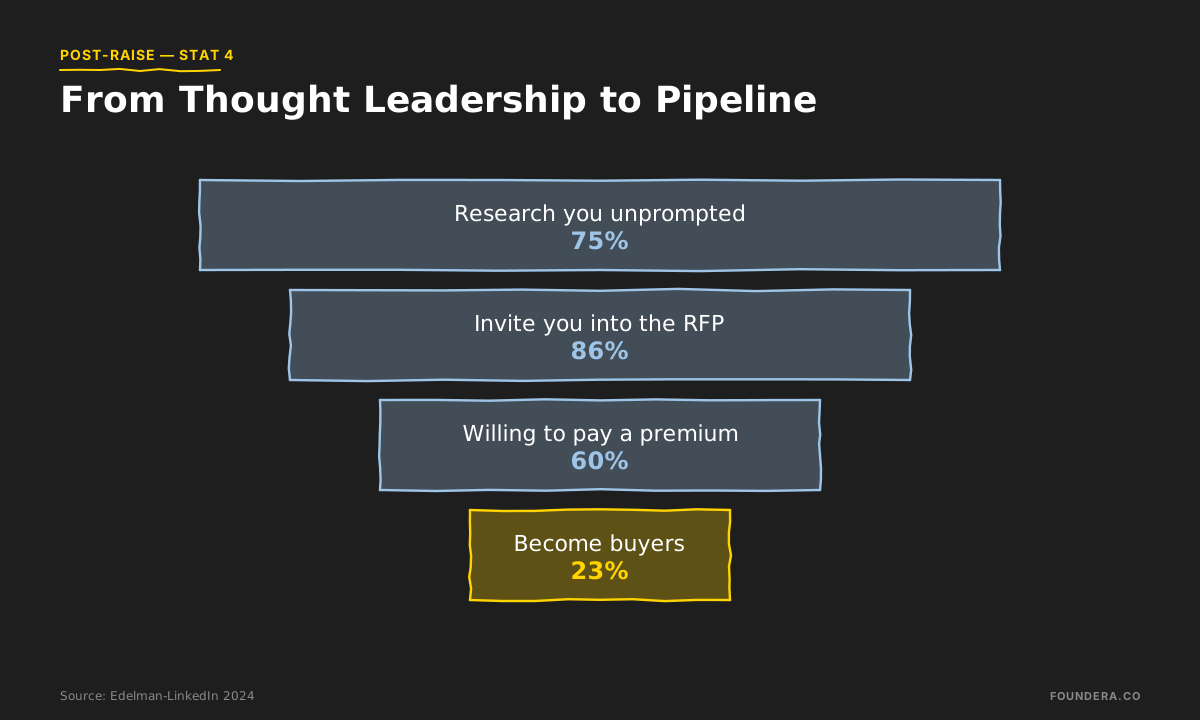
None of that funnel runs on product posts. It runs on perspective — the market takes, customer lessons, and category calls that make a not-yet-buyer bookmark you. The full content system is in thought leadership content for founders; the post-raise twist is simply that you now have a bigger audience to run it on than you've ever had.
Investor Updates: Public Rhythm vs Private Rhythm
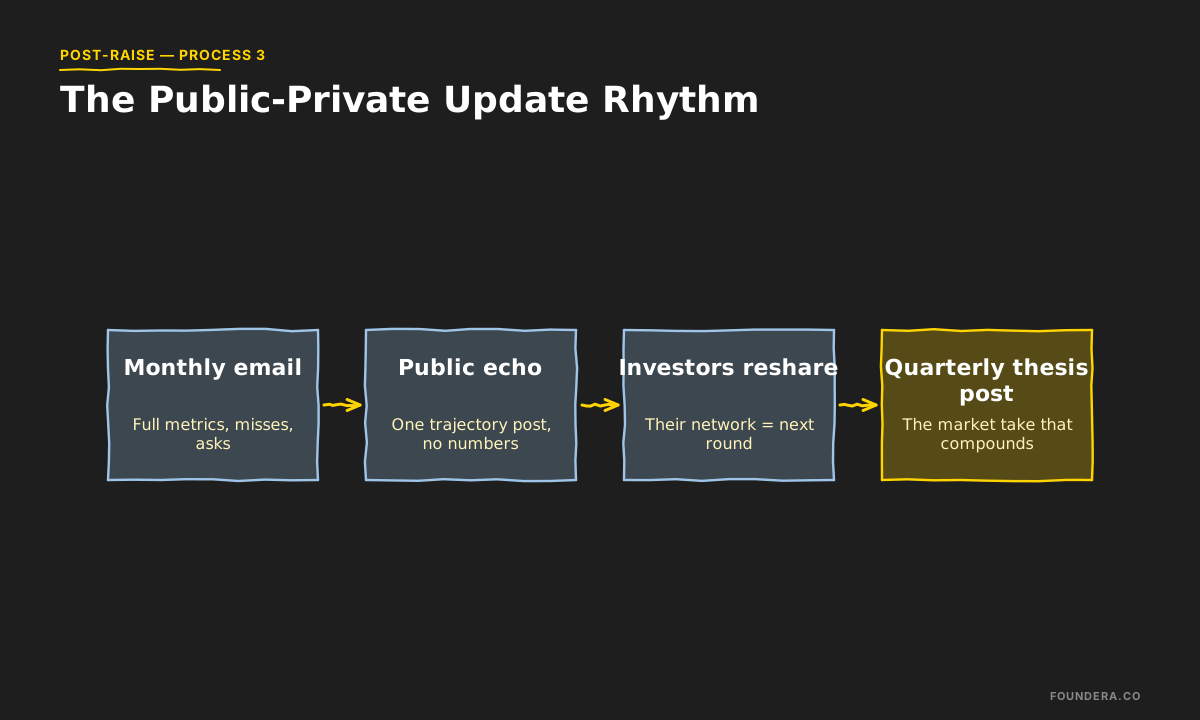
Run two update channels after the raise: a private monthly email to investors with the real numbers, and a public trajectory rhythm on LinkedIn without them. The two are complements, not substitutes — and confusing them is how founders either leak sensitive metrics or starve their public momentum.
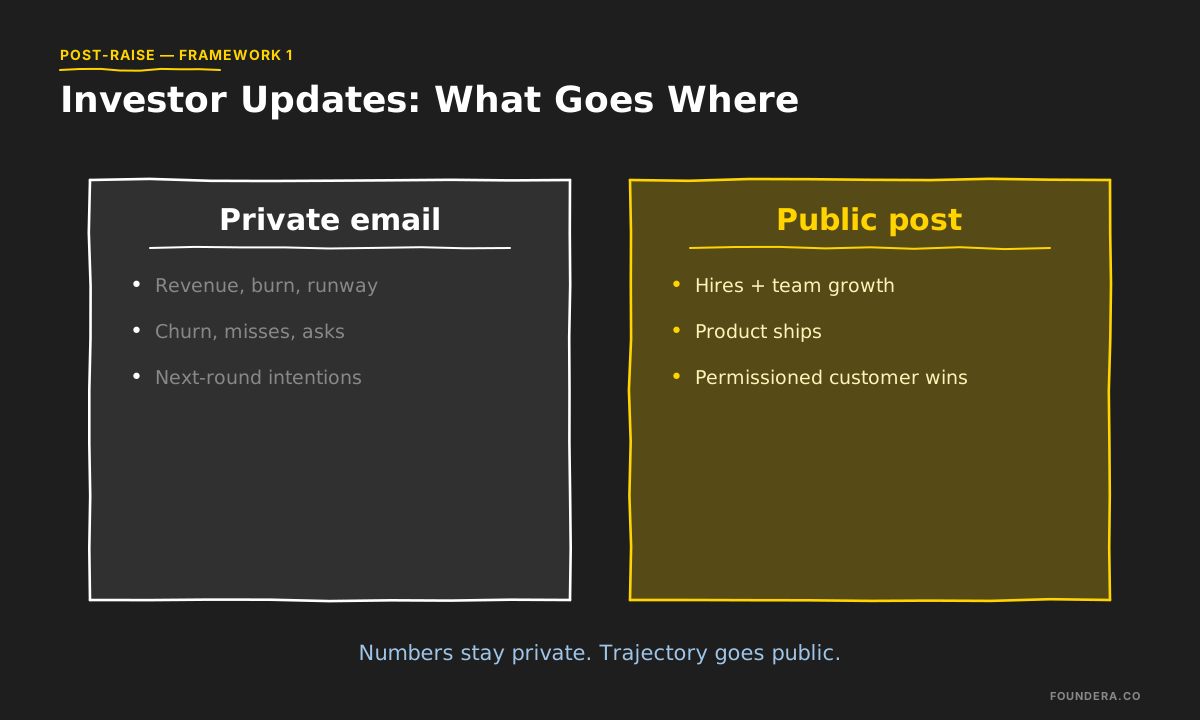
The private channel is where revenue, burn, runway, churn, and asks belong. The public channel is where the shape of progress belongs — and it matters more than most founders think, because investors keep watching between rounds. Brunswick found roughly nine in ten institutional investors have made a recommendation or investment decision based on information from digital or social sources, and they rate LinkedIn 7.83/10 as a research channel — second only to a company's own website. The NBER survey of 885 VCs found almost 30% of deals are proactively self-generated by the investor. A visible between-rounds trajectory is how you end up in that 30%.
| Signal | Private update (email) | Public post (LinkedIn) |
|---|---|---|
| Revenue, burn, runway | Yes — exact figures | Never |
| Churn, misses, risks | Yes — with your plan | Never |
| Hiring milestones | Summary line | Yes — role stories, team intros |
| Product ships | Roadmap context | Yes — what it unlocks for customers |
| Customer wins | Names + numbers | Yes — with permission, story-first |
| Next-round intentions | Yes — timing, targets | Never, until it's closed |
The public column follows the same rule as mid-raise content: one story, one proof point, no dashboard dumps. Which metrics can safely carry a public post — and in what form — is its own discipline, covered in startup traction metrics investors notice on LinkedIn.
The Quarter-After Cadence Plan
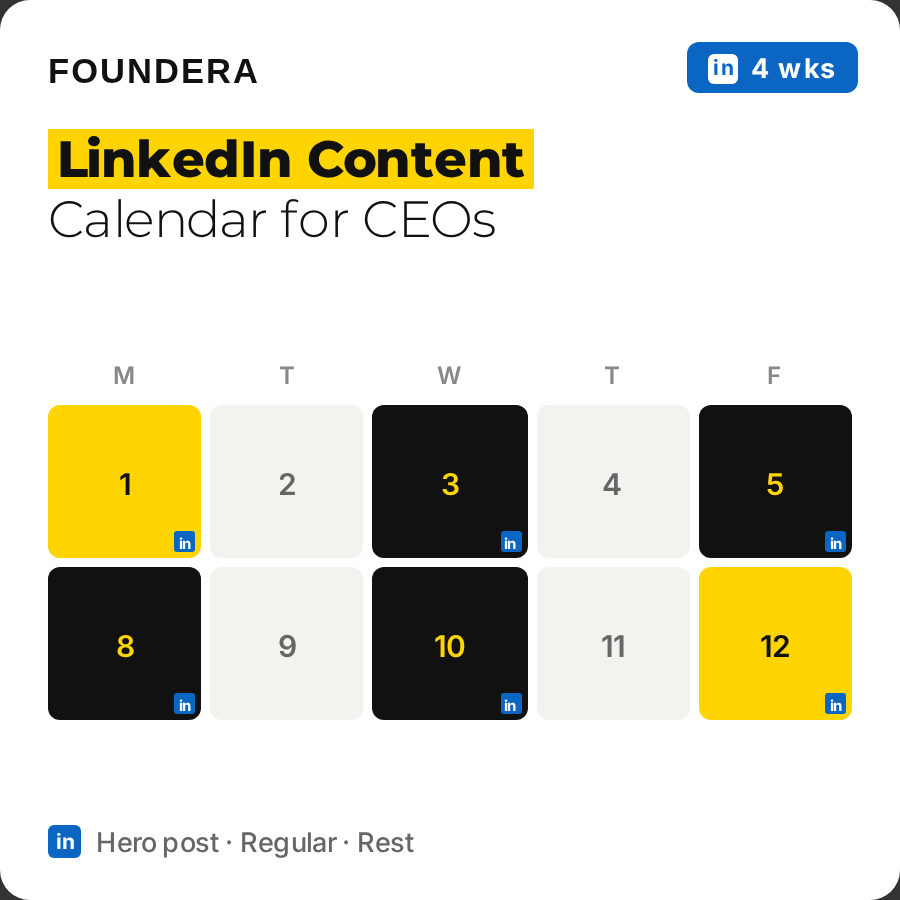
Two posts a week for 13 weeks, organized in monthly themes, converts the announcement spike into a durable audience. That's roughly 26 posts — a volume you can pre-plan in an afternoon while announcement-week attention is still warm.
| Window | Theme | What to post |
|---|---|---|
| Weeks 1-2 | Close the loop | Thank-you follow-through, "what we're building with it," first open roles |
| Weeks 3-6 | Building in public | Role stories, new-hire intros, roadmap slices, early product ships |
| Weeks 7-10 | Customer proof | Use cases, implementation lessons, customer-problem breakdowns |
| Weeks 11-13 | Market thesis | Where the category goes next — the posts that seed your next-round narrative |

Two execution notes. First, format: Socialinsider's benchmark of 1.3M posts puts native document posts (PDF carousels) at the highest average engagement rate on LinkedIn at 7.00%, ahead of multi-image (6.45%) and video (6.00%) — a natural fit for roadmap and hiring content. Second, sequencing: the month-three thesis posts aren't filler. They're the beginning of your next pre-raise runway, the same visibility compounding described in LinkedIn visibility before fundraising — except this time you start with an audience instead of building one from zero.
Founders who run this quarter well discover the flywheel: the raise fed the feed, and the feed now feeds the next raise.
Three Ways Founders Waste the Spike
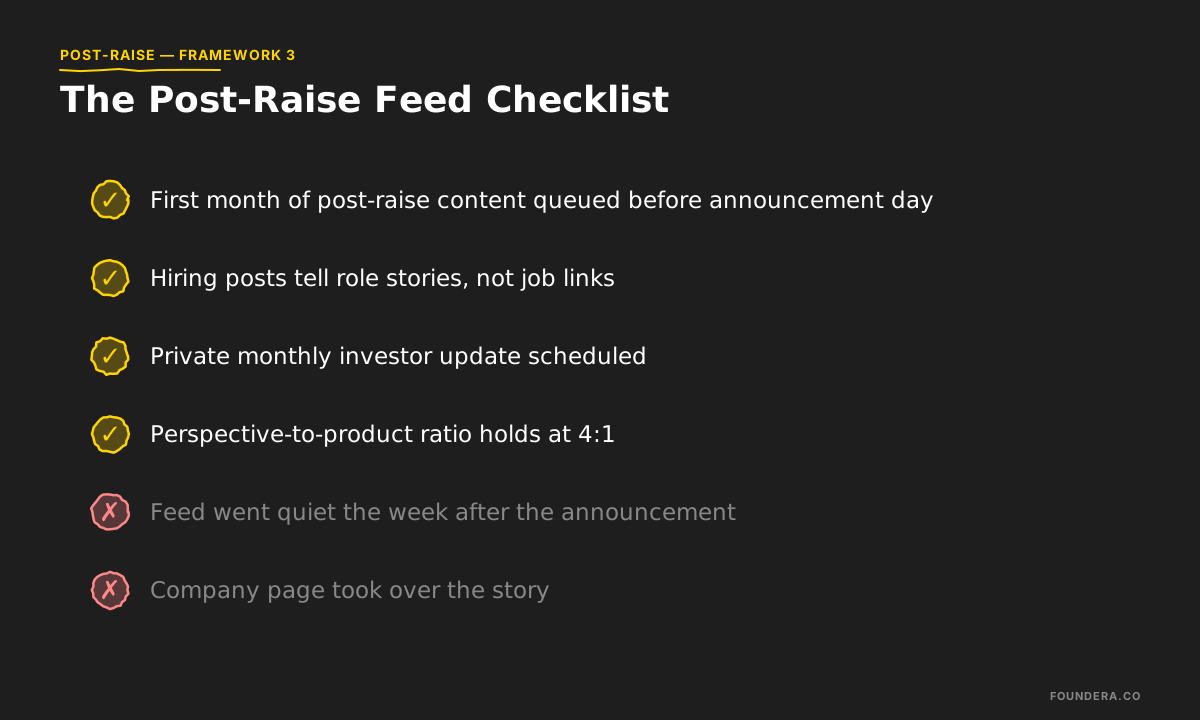
The three most common post-announcement failures are going quiet, handing the story to the company page, and turning the feed into an ad channel. All three squander an audience you just paid dearly to assemble.
Going quiet. The announcement gets a week of energy, then the feed flatlines for two months — the post-raise version of the mid-raise silence covered in our LinkedIn fundraising mistakes list. New followers churn out of the habit of seeing you before it forms.
Handing it to the page. After the raise, marketing "takes over comms" and the founder's profile goes dormant. But the feed math didn't change on announcement day: company pages are 5.4% of the feed, first-degree people 42.4% (DSMN8). The page echoes; the founder leads.
Selling in every post. New money often means new pipeline pressure, and the feed becomes a brochure. Remember what the audience trusts: 73% of decision-makers rate thought leadership above marketing materials as evidence of capability (Edelman-LinkedIn 2024). Keep the perspective-to-product ratio around 4:1, exactly as it was mid-raise.
Frequently Asked Questions
What should a founder post on LinkedIn after a funding announcement?
Run a 13-week plan at two posts per week: weeks 1-2 close the announcement loop (gratitude, what the money builds, first roles), month one covers hiring and product in public, month two covers customer proof, month three covers market thesis. Every post serves one of the four watching audiences — investors, candidates, hidden buyers, customers — and none of them dump private metrics.
How soon after the announcement should I go back to regular posting?
Immediately — the cadence should never actually stop. The followers the announcement brought in decide within a couple of weeks whether your feed is worth the follow. Pre-plan the first month of post-raise content before announcement day, the same way you pre-planned the announcement itself.
Should I share investor updates publicly on LinkedIn?
Share the trajectory, never the numbers. Revenue, burn, runway, churn, and next-round intentions stay in the private monthly investor email. Hiring milestones, product ships, and permissioned customer wins make strong public posts. Investors are watching either way — Brunswick found 96% of institutional investors systematically harvest digital and social data — so give the public channel a story worth finding.
How do I use LinkedIn for hiring after a raise?
Post from your personal profile and put the team behind it. First-degree connections make up 42.4% of the LinkedIn feed versus 5.4% for company pages (DSMN8), and an employee-shared post generates up to 561% more reach than the same post from the brand page (MSLGroup via DSMN8). Tell role stories — the problem the hire will own and why it matters — instead of reposting job links.
When should I start preparing for the next round on LinkedIn?
The quarter after this one closes — which means the groundwork starts now. The median seed-to-Series-A gap is 616 days (Carta) and only ~15% of seed startups graduate within 24 months, so your public trajectory between rounds is part of the next-round case. The month-three thesis posts in the cadence plan are deliberately the first posts of your next pre-raise runway.
Should the company page take over after the announcement?
No. The page's job is to echo, archive, and look alive when candidates and buyers check it — not to carry the story. A CEO can match the company page's engagement with 98% fewer followers (DSMN8), and organic page posts reach only ~1.6% of followers (Ordinal). Founder posts first, page reshares second — after the raise exactly as during it.
TL;DR
- The announcement is a spike; the 90 days after decide what it converts into. The next-round clock is already running — the median seed-to-Series-A gap is 616 days, and only ~15% graduate within 24 months (Carta).
- Four audiences watch the quarter after: next-round investors (96% systematically harvest digital data — Brunswick), candidates, hidden buyers (63% read thought leadership an hour-plus weekly — Edelman), and customers.
- Hire from the founder feed: first-degree connections are 42.4% of the feed vs 5.4% for pages, and employee shares add up to 561% more reach (DSMN8 / MSLGroup).
- 95% of the buyers who saw your announcement aren't in-market yet (Ehrenberg-Bass via Edelman). Thought leadership keeps you present until they are — 86% of decision-makers would invite a consistent producer into an RFP.
- Split investor updates: real numbers in the private monthly email, trajectory-only posts in public.
- Run 2 posts/week in monthly themes — loop-close, building in public, customer proof, market thesis — and month three quietly starts your next pre-raise runway.
Want the whole quarter — cadence, hiring narrative, investor-update rhythm — run for you while you run the company? That's what Foundera does. Let's talk.
Related Reading
- The Funding Announcement Post — the announcement-day playbook this quarter follows
- The Series A Founder LinkedIn Playbook — the full cadence for the raise and beyond
- Startup Traction Metrics Investors Notice on LinkedIn — which numbers can safely go public
- LinkedIn Visibility Before Fundraising — the pre-raise runway your month-three posts begin
- 11 LinkedIn Fundraising Mistakes Founders Keep Making — the mid-raise mistake list, most of which apply post-raise too
- How to Use LinkedIn for Fundraising — the end-to-end system