LinkedIn Visibility Before Fundraising: The 6-Month Plan
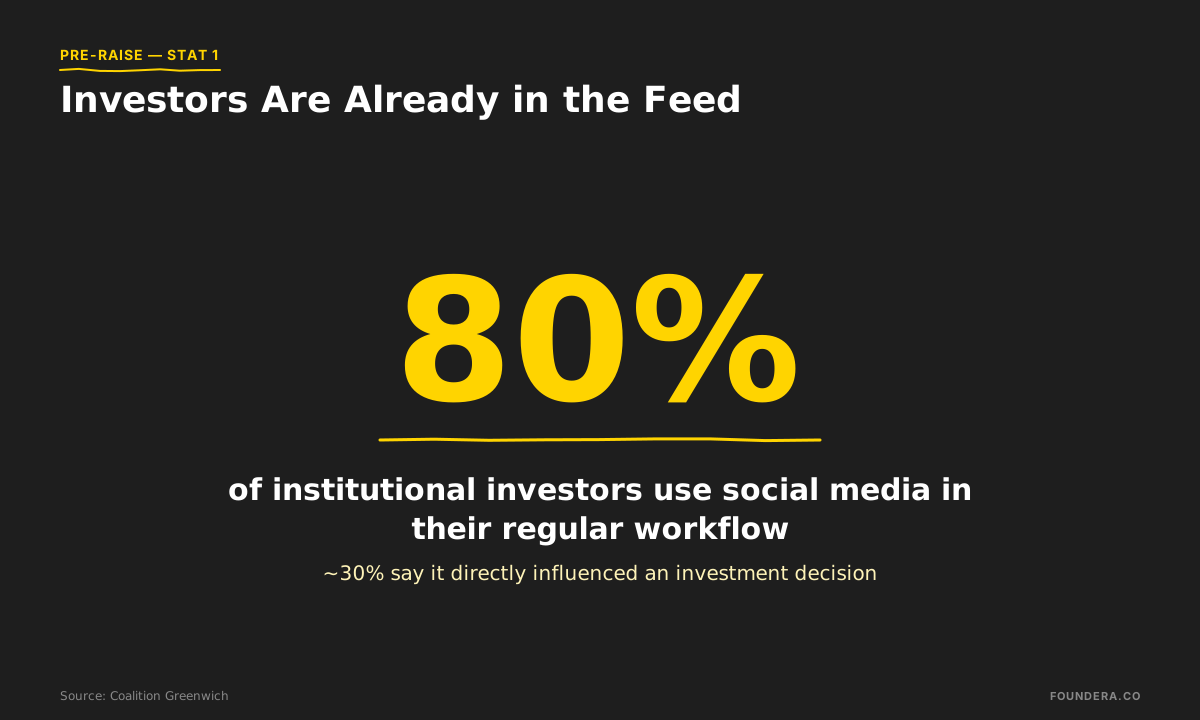
Almost 80% of institutional investors use social media as part of their regular workflow, and roughly 30% say what they found there directly influenced an investment decision, according to Coalition Greenwich. Not their mood. Their decisions.
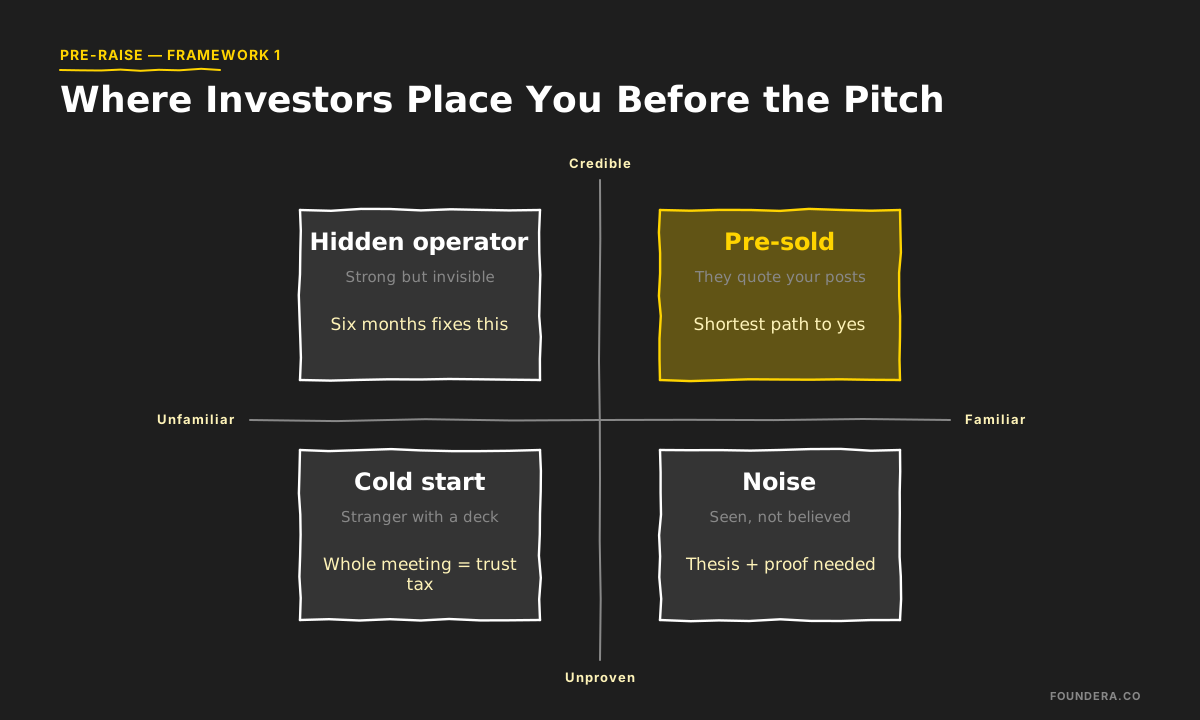
Here's the part most founders get wrong: that influence is built before you ever ask for a meeting. Investor familiarity compounds like interest — slowly, then decisively. You cannot manufacture six months of visible thinking in the two weeks before you open a round.
So this post is a countdown clock. T-6 months to T-0. What to publish, when, and why the trust data says it works.
Table of Contents
- Why Visibility Has to Come First
- The Trust Engine: What the Data Says
- The 6-Month Timeline
- What to Publish in Each Phase
- The Five Mistakes That Waste the Runway
- Doing This Without Losing Your Calendar
- Frequently Asked Questions
Why Visibility Has to Come First
Investors form their view of you before the first call, so your visibility has to exist before the raise does. The Coalition Greenwich research puts numbers on it: 48% of investors said information from social media prompted additional research, and 34% said it influenced a decision to work with a particular company. LinkedIn specifically has 52% penetration among institutional investors — and 85% of those who use it are on it at least weekly.
That means your target investors are in the feed, weekly, right now. The only question is whether you exist there.
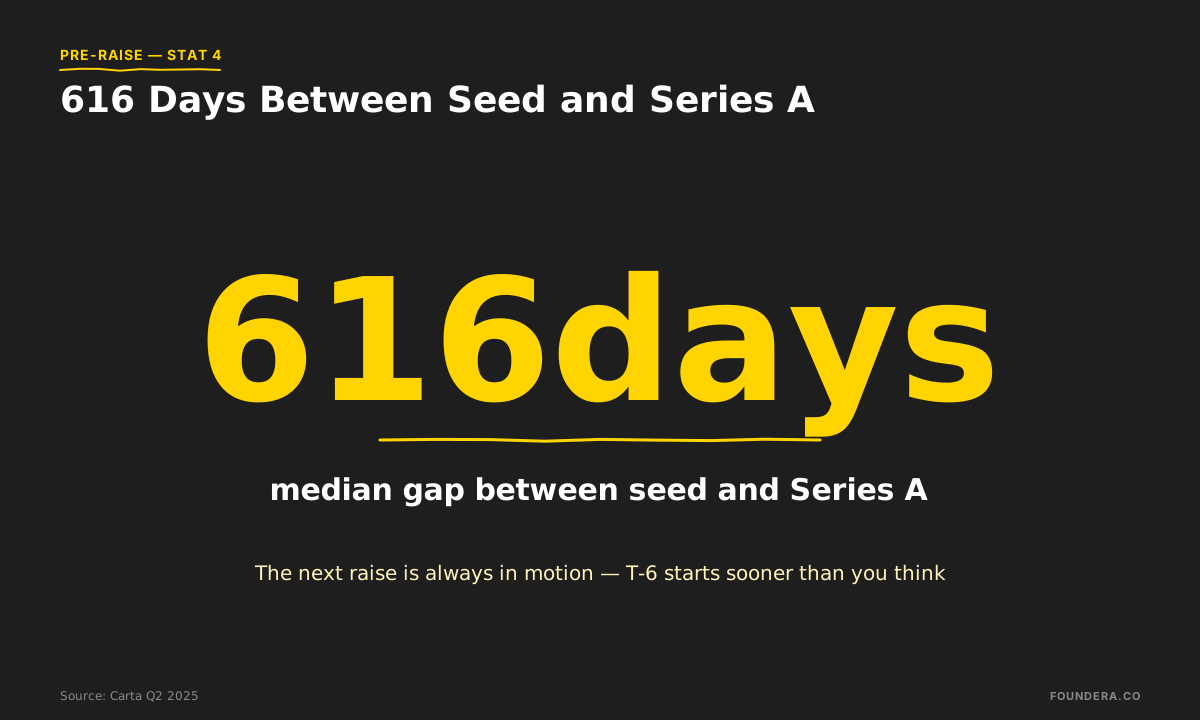
There's a hard deadline argument too. Fundraising timelines have stretched — Carta's data puts the median gap between seed and Series A at 616 days. Founders read that as "I have time." Wrong read. It means the market is slower, diligence is heavier, and the next raise is effectively always in motion. If you're 20 months from the next round, T-6 starts sooner than you think.
Visibility works because it front-loads the two things every pitch needs: recognition ("I've seen this founder's thinking") and credibility ("and it's good"). If you want the deeper case for the founder-brand asset itself, read why personal branding matters for tech entrepreneurs. This post assumes you're sold and shows you the schedule.
The Trust Engine: What the Data Says
Thought leadership is the highest-trust format a founder can publish — decision-makers say so explicitly. In the 2024 Edelman-LinkedIn B2B Thought Leadership Impact Report (3,484 management-level professionals surveyed), 73% of decision-makers said an organization's thought-leadership content is a more trustworthy basis for assessing its capabilities than its marketing materials.
The full engine, by the numbers:
| What thought leadership does | The number |
|---|---|
| More trustworthy than marketing materials for judging capabilities | 73% of decision-makers |
| Spend 1+ hour per week reading it | 52% of decision-makers; 54% of C-level |
| Led them to research a product they weren't considering | 75%+ |
| More receptive to outreach from consistent publishers | 9 in 10 |
| Willing to pay a premium to work with consistent publishers | 60% |
| Rate the thought leadership they actually read as very good or excellent | Only 15% |
Source: Edelman-LinkedIn 2024.
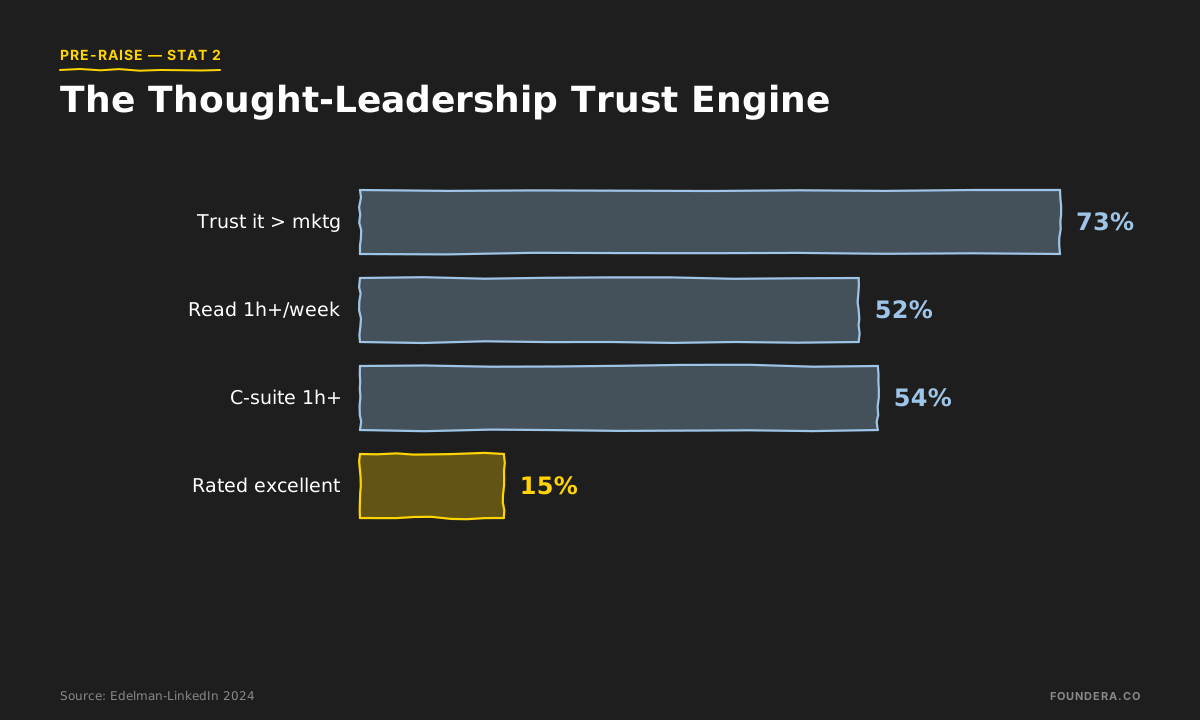
Now, this is buyer data — decision-makers evaluating vendors. But look at what a VC does all day: evaluates unfamiliar companies on thin information, under time pressure, with reputation risk. Same psychology, higher stakes. An investor who has read your thinking for months walks into the pitch already past the trust threshold that strangers spend the whole first meeting failing to clear.
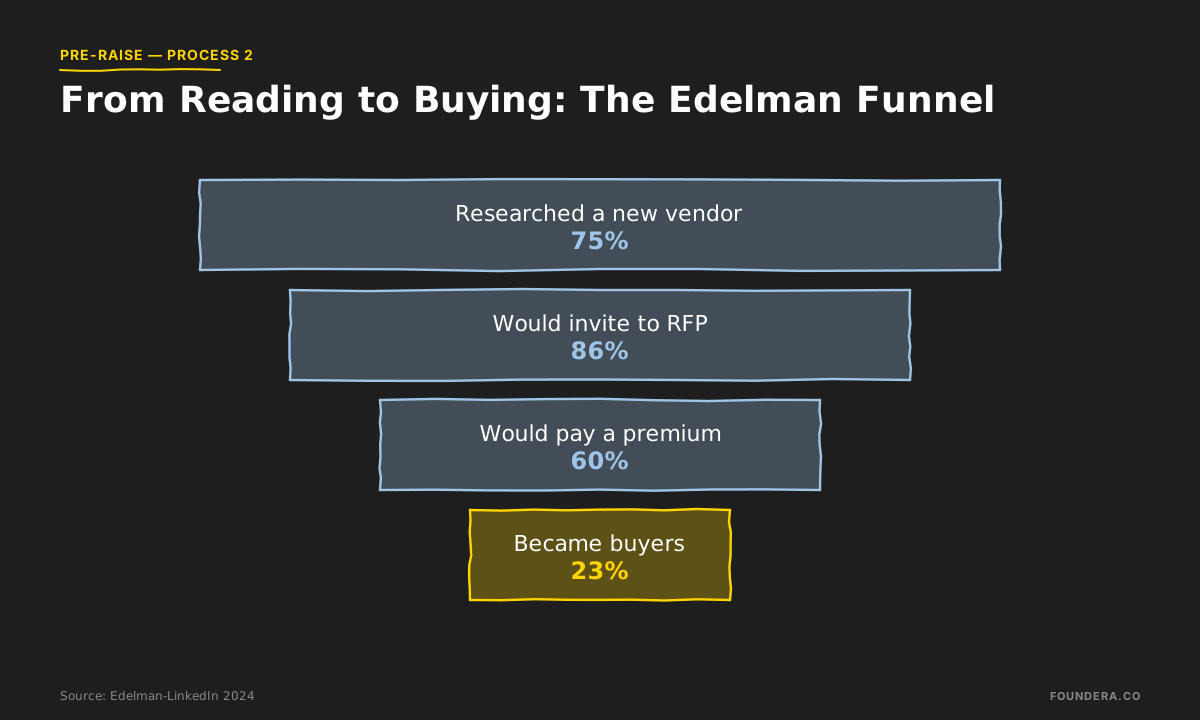
And that last row is your opening. Only 15% of the thought leadership out there is rated very good or excellent. The bar is on the floor. A founder with real conviction and specific experience clears it easily — the game is showing up consistently enough to be seen doing it.
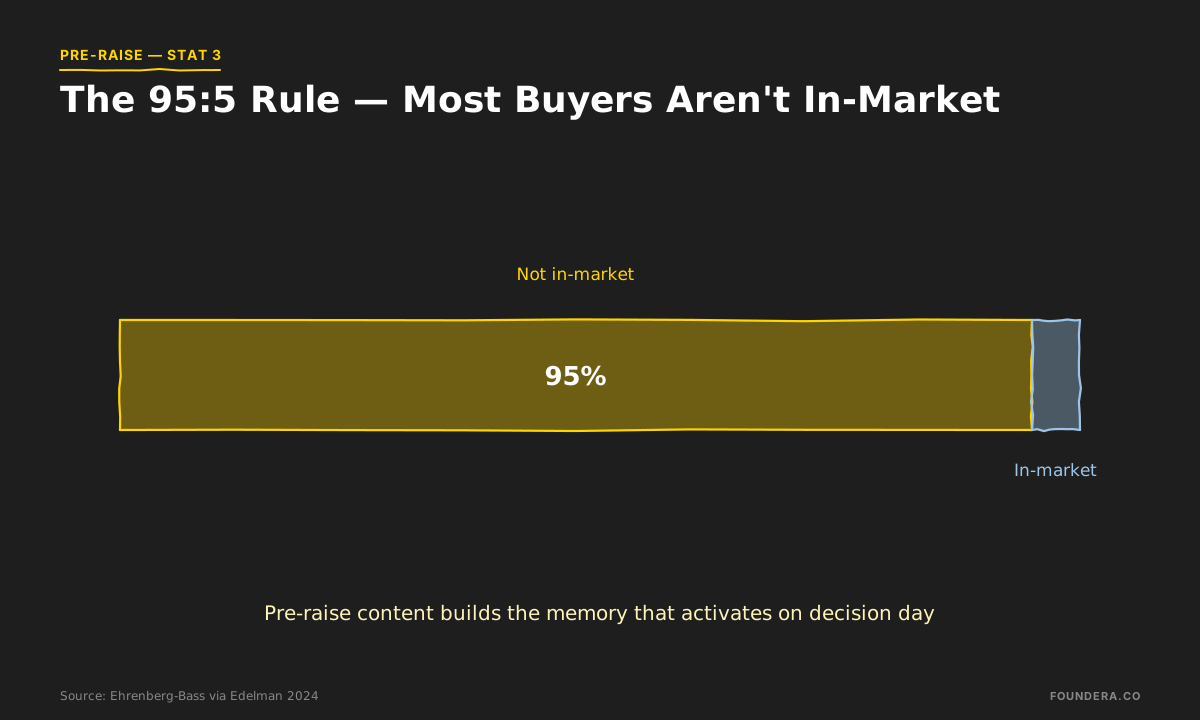
One more Edelman finding frames the whole timeline: the 95:5 rule. At any given time, 95% of potential buyers aren't in-market. Investors work the same way — most of the time, they're not actively evaluating you. Pre-raise content is how you build the memory that activates the day they are.
The 6-Month Timeline
Six months breaks into four phases: Foundation, Authority, Signal, and Raise. Each phase has one job, and each job builds on the last. Here's the map:
| Phase | Months | One job | You know it's working when |
|---|---|---|---|
| Foundation | T-6 to T-5 | Fix the surface, start the cadence | Profile reads like a data room; 2 posts/week shipping |
| Authority | T-4 to T-3 | Own a thesis | Comments from people you don't know; investors following you |
| Signal | T-2 to T-1 | Show momentum | Inbound "what are you building?" DMs; warm-intro paths mapped |
| Raise | T-0 | Stay visible, pitch privately | Investors reference your posts in meetings |
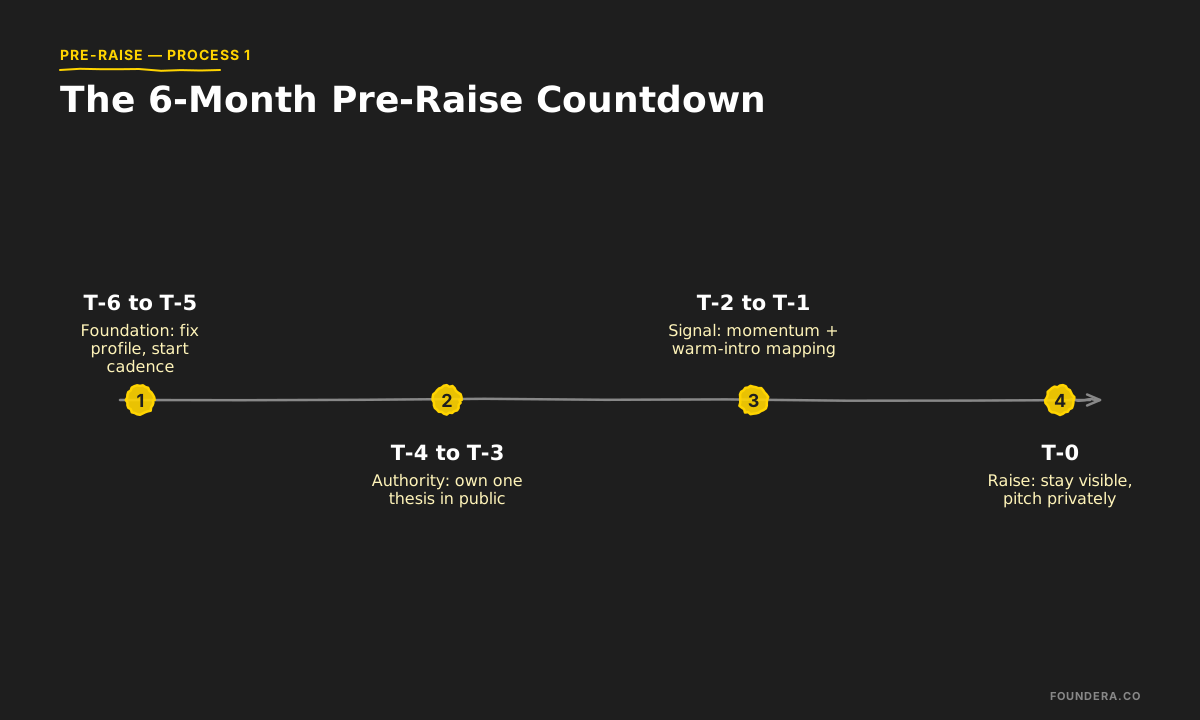
Two rules govern the whole timeline. First: never skip Foundation — content published on top of a broken profile leaks credibility. Second: the phases tilt, they don't switch. You don't stop thesis content at T-2; you add momentum content on top.
What to Publish in Each Phase
Each phase has a distinct content mix, and the sequencing matters more than any single post. Here's what ships when.
T-6 to T-5 — Foundation. Rebuild your profile first: headline that says what you're building and for whom, an About section that reads like your team slide, a Featured section with proof. Then start the cadence with the lowest-risk material you have — operating lessons, customer conversations (anonymized), how you think about the problem you're solving. The goal isn't reach yet. It's rhythm, and a feed that doesn't look like it started yesterday. If you're starting from zero, our guide to building a personal brand on LinkedIn as a startup founder covers the mechanics.
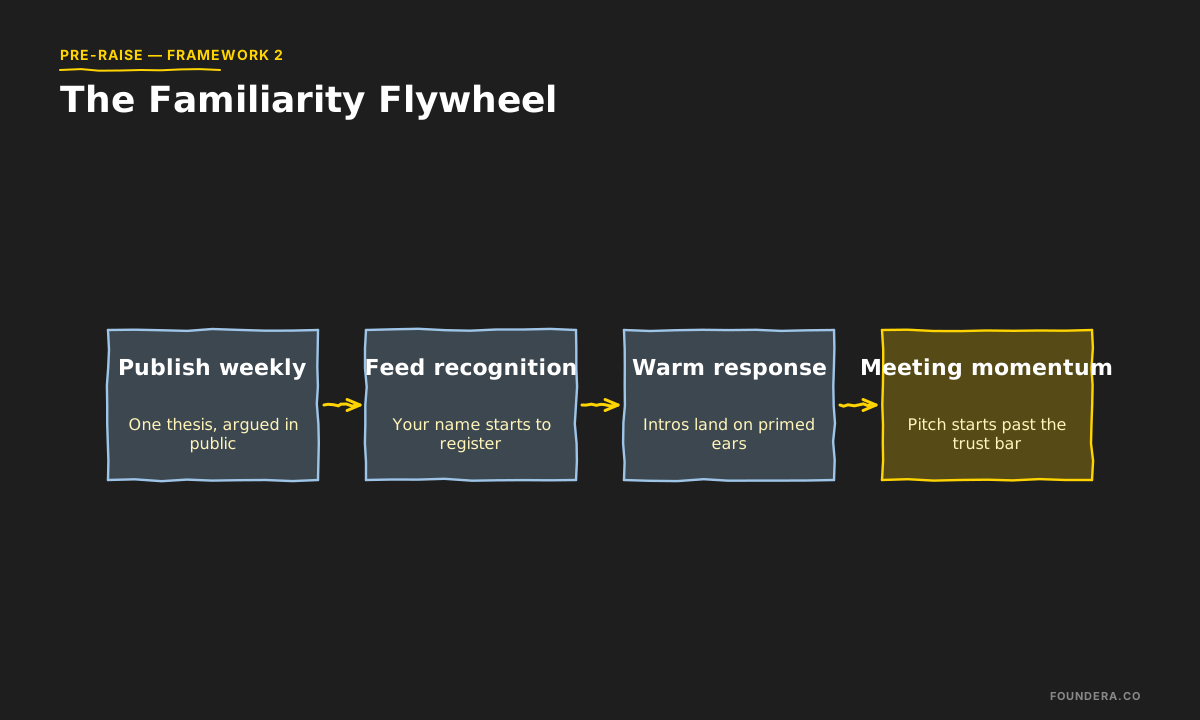
T-4 to T-3 — Authority. Pick the thesis your future round will be built on and start arguing it in public. Why this market, why now, what everyone else gets wrong. This is deliberate rehearsal: every objection in the comments is a preview of the partner meeting. Structure matters here — a scattered feed builds no memory. Use a deliberate thought-leadership framework so every post compounds toward the same position. This phase is also when you start engaging investors' content — real comments on their theses, not emoji applause.
T-2 to T-1 — Signal. Tilt toward momentum. Product milestones, team growth, customer proof — whatever you can share publicly. Numbers beat adjectives, and there's a right way to do this without leaking your metrics: see how to present startup traction metrics to investors on LinkedIn. In parallel, work the map: list target funds, find your second-degree paths to each partner, and warm those paths now — not the week you need them.
T-0 — Raise. Keep the cadence. Don't announce the raise in the feed; run it through the warm channels you built. Your content's job now is to be the thing investors find when they check you mid-process — and they will check. Founders consistently report the same tell that it worked: an investor quotes one of your posts back to you in the meeting.
The Five Mistakes That Waste the Runway
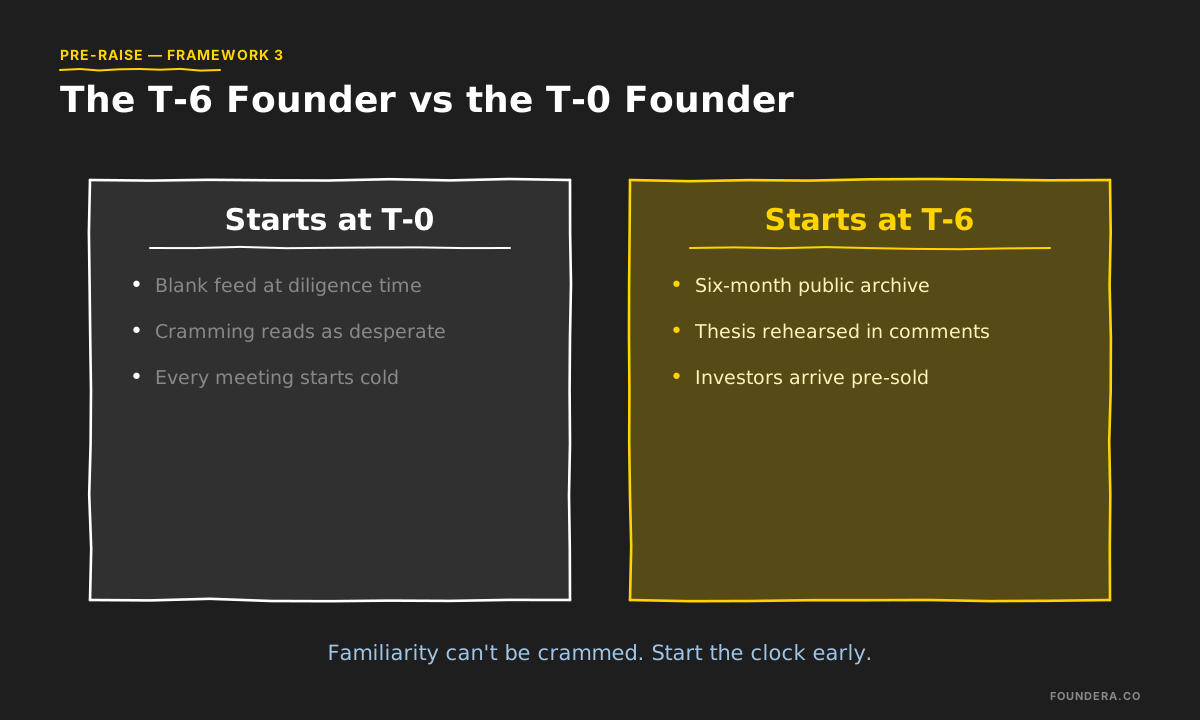
The most expensive mistake is starting at T-1 and posting like it's T-6 — cramming familiarity doesn't work, because trust is a function of consistency over time, not volume in a week. The other four:
| Mistake | Why it fails | The fix |
|---|---|---|
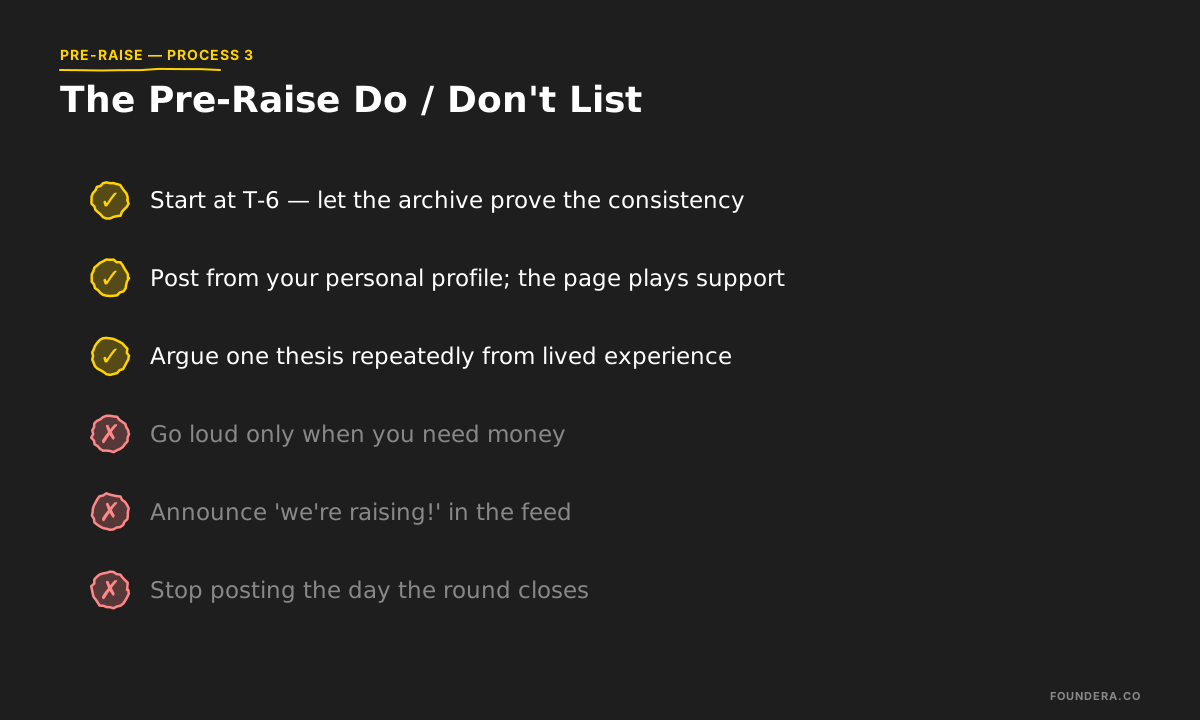
| Going loud only when you need money | Investors can smell an audience built last month | Start at T-6; let the archive prove the consistency |
| Publishing from the company page | Investors diligence people, not logos | Personal profile first; page in support |
| Generic "founder wisdom" content | Blends into the 85% of content rated mediocre | One thesis, argued repeatedly, from lived experience |
| Announcing "we're raising!" publicly | Starts a clock you don't control; signals scarcity | Raise privately; publish momentum, not need |
| Stopping when the round closes | Kills the compounding right when it's cheapest | The post-raise window is T-6 for the next round |
None of these are creativity problems. They're sequencing problems. The founders who win the pre-raise game aren't better writers — they started earlier and stayed consistent. Consistency is precisely the thing thought-leadership content rewards: remember, 9 in 10 decision-makers say they're more receptive to outreach from organizations that publish consistently.
Doing This Without Losing Your Calendar
The honest objection to everything above: you're running a company, and this is a second job. Two posts a week for six months is roughly 50 pieces of publishable thinking — while you're shipping product, closing customers, and preparing a raise.
That's the actual reason most founders start at T-1. Not ignorance. Bandwidth.
It's also exactly what Foundera exists to fix. We turn your thinking — calls, voice notes, the arguments you're already making to your team — into a consistent founder presence on LinkedIn. Your thesis, your voice, your name on it. The strategy, writing, and amplification run in the background. You get the credibility without the second job.
Your next investor is already on LinkedIn, weekly. The only question is whether the next six months build your case or stay blank. If you'd rather they build the case, talk to us.
Frequently Asked Questions
How long before fundraising should I start posting on LinkedIn?
Six months is the working minimum. Familiarity compounds with repeated exposure over time, and investors discount audiences that obviously appeared last month — the archive is part of the proof. Starting at T-6 gives you a Foundation phase (profile + cadence), an Authority phase (thesis), and a Signal phase (momentum) before you ever open the round.
Do investors really pay attention to founder content on LinkedIn?
Yes. Coalition Greenwich found almost 80% of institutional investors use social media in their regular workflow, 48% say it has prompted additional research, and about 30% say it directly influenced an investment decision. LinkedIn has 52% penetration among institutional investors, and 85% of those users are on it weekly.
What should I post before a raise — and what should I avoid?
Post your market thesis, operating lessons, and shareable momentum: the "why now" argument your round will rest on, argued in public. Avoid generic founder-wisdom content, anything that leaks sensitive metrics, and — above all — public "we're raising" posts. The raise runs privately through warm intros; the feed's job is credibility, not solicitation.
Should I post as myself or from the company page?
As yourself. Investors are underwriting a founder, not a logo, and diligence runs on the person. Keep the company page alive as a supporting surface, but the thesis, the lessons, and the momentum posts come from your personal profile — that's the name investors search.
Does thought leadership actually change how people judge a company?
The data says yes, strongly. In the Edelman-LinkedIn 2024 report, 73% of decision-makers said thought leadership is a more trustworthy basis for assessing an organization's capabilities than its marketing materials, and 75%+ said it led them to research a product they weren't considering. And only 15% rate what they read as very good or excellent — a low bar, waiting for founders with real conviction.
Can I compress the plan if my raise is three months away?
Partially. Do Foundation in two weeks (profile rebuild, cadence start), then run Authority and Signal in parallel — thesis posts plus momentum posts each week. You'll get maybe 60% of the compounding, which still beats walking in cold. But treat it as the exception that teaches the lesson: the post-raise window is T-6 for the round after this one.
TL;DR
- Almost 80% of institutional investors use social media in their workflow, and ~30% say it directly influenced an investment decision (Coalition Greenwich). Your visibility is being evaluated either way.
- Trust runs through thought leadership: 73% of decision-makers trust it over marketing materials, and only 15% rate what they read as excellent (Edelman-LinkedIn 2024) — the bar is low and the reward is high.
- Run the countdown: Foundation (T-6/T-5), Authority (T-4/T-3), Signal (T-2/T-1), Raise (T-0). Phases tilt; they don't switch.
- The 95:5 rule means investors aren't evaluating you most of the time — pre-raise content builds the memory that activates when they are.
- Don't start at T-1, don't post from the company page, don't announce the raise publicly, don't stop when the round closes.
- No bandwidth for a second job? That's the problem Foundera runs for you.